OpenAI has just released a new model.
By Gencay
Published: 2024-09-13
URL: https://www.learnwithmeai.com/p/gpt-o1-data-analysis-with-new-model

\Created with Abidin Dino AI, to reach it, consider being Paid subscriber to LearnAIWithMe,here\
Many benchmarks show the model's intelligence and reasoning improve, and yes, that may be true. However, I need to see it applied in Data Analysis, as I will likely use it.
To achieve this, we must divide Data Analysis into multiple parts, as we did in Data Science, starting with Data Exploration and progressing to Modeling.
In this comprehensive article, we will go through every stage of Data Science in detail.
If you want to follow this news, contact us and series, and consider being a paid subscriber to our substack.
Series
- Weekly AI Pulse: Get the latest updates as you read this.
- LearnAI Series: Learn AI with our unique GPT and empower with this series.
- Job Hunt Series: Discover freelance opportunities on Upwork here.
GPT’s
\Agents\
2023–2024 NBA Player Stats

\Photo byDean BennettonUnsplash\
We will use this dataset from Kaggle; here is the link. This dataset contains information on player statistics for the 2023–2024 NBA playoffs.
To do that, you can use one of our pre-defined custom functions; check, please.
df.head()
Here is the output.

\SS of the Output\
As you can see from the output, the dataset contains several columns, which gives us a good starting point. However, let’s stop and give GPT-o1 a chance to perform these steps for us.
Data Exploration
Data Exploration is the first step of Data Analysis. Don't skip this step to do better data analysis; build your model at once. If you skip this step, you might save minutes for today, but trust me, you’ll lose hours tomorrow.
We can not upload the dataset to the o1, but I am experienced with this. I remember the day we tried to copy-paste the dataset to the gpt; at that time, earlier GPT models prevented us from uploading datasets.
Let’s use the following prompt.
Here is my dataset's first row;
[copy-paste from jupyter notebook]
Here is my dataset description;
[copy-paste from kaggle]
Find the best functions for data exploration regarding this dataset
and create a custom function that provides a brief overview.
Great, here is the output’s first parts.
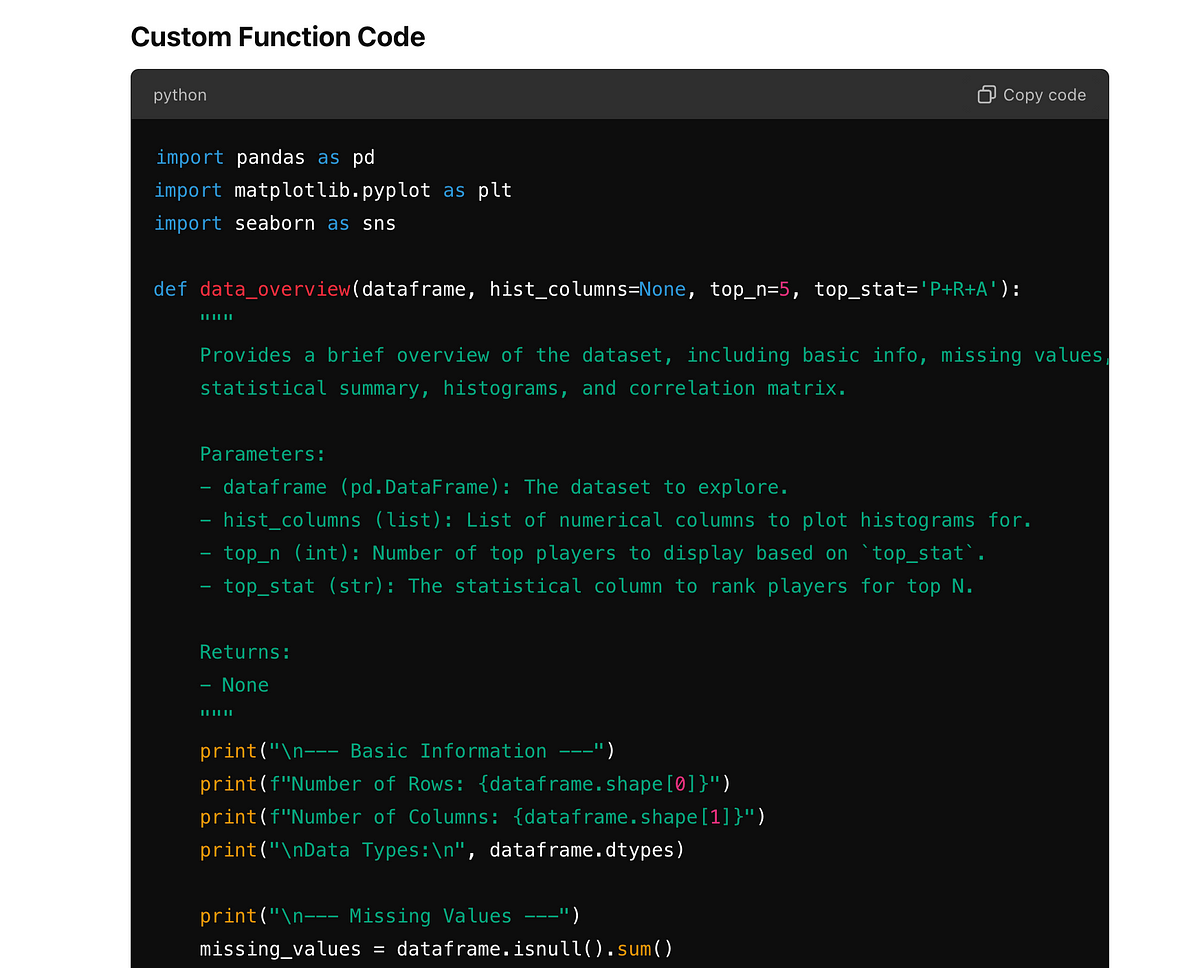
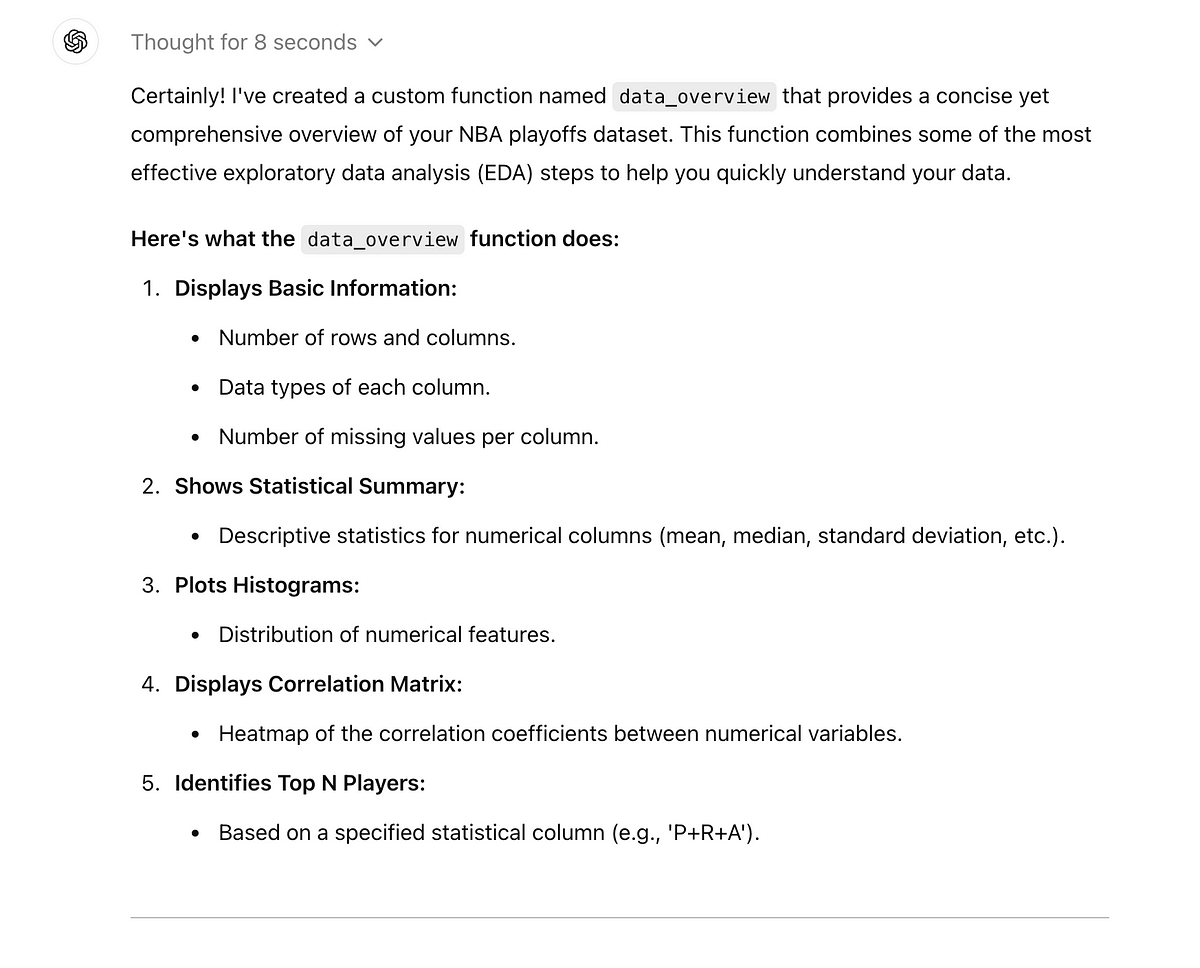
\SS of the output\
But one thing looks interesting to me. Let’s click on “thought for 8 seconds.”
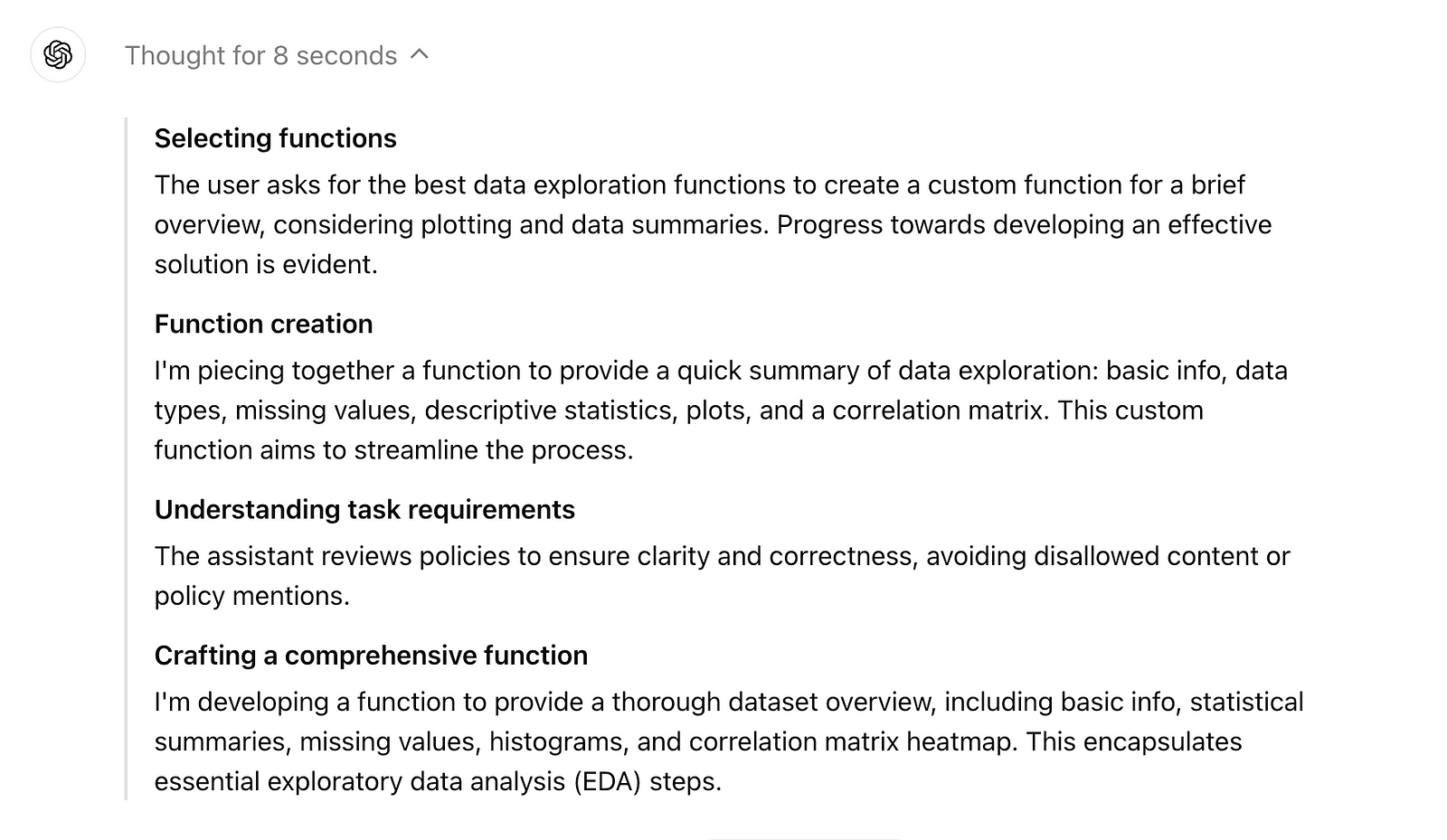
\SS Of the output\
GPT analyzes what the user wants and plans what to do here. This is very similar to agents like Devin and Devika.
Now, let’s apply the function GPT gave us in Jupyter Notebook.
Here is the output, but part by part.
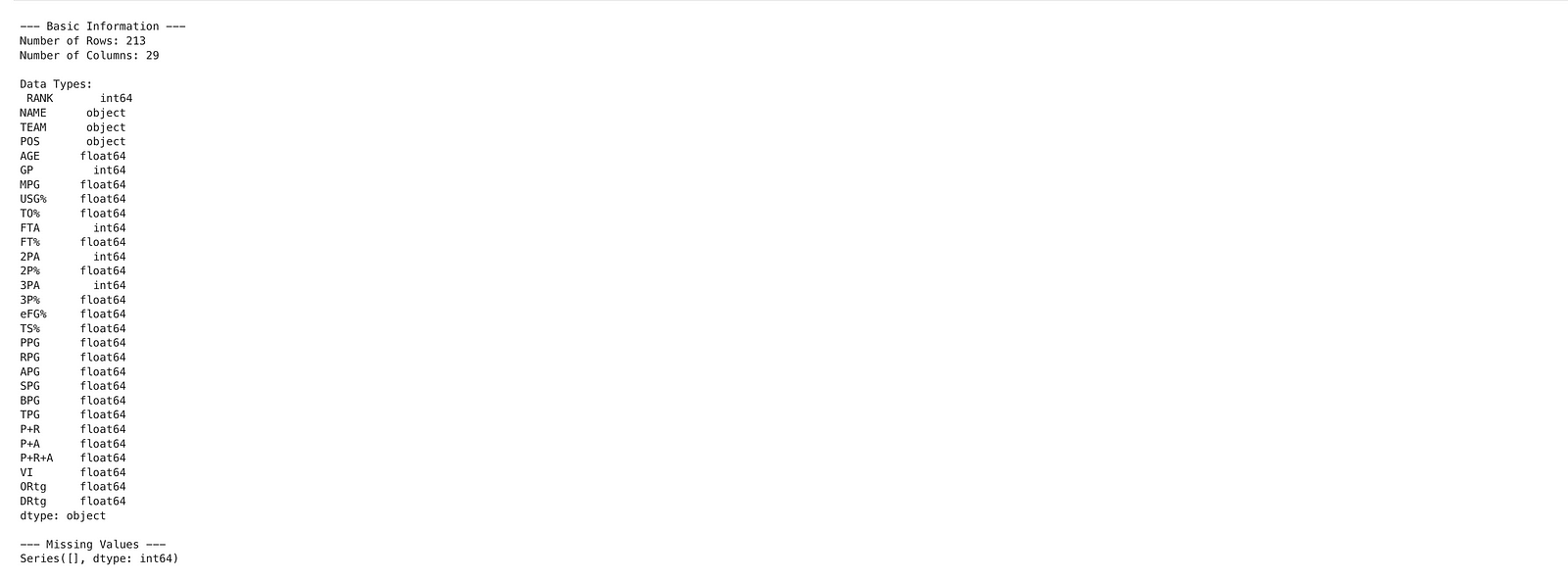
\SS of the Output-1\

\SS of the Output-2\
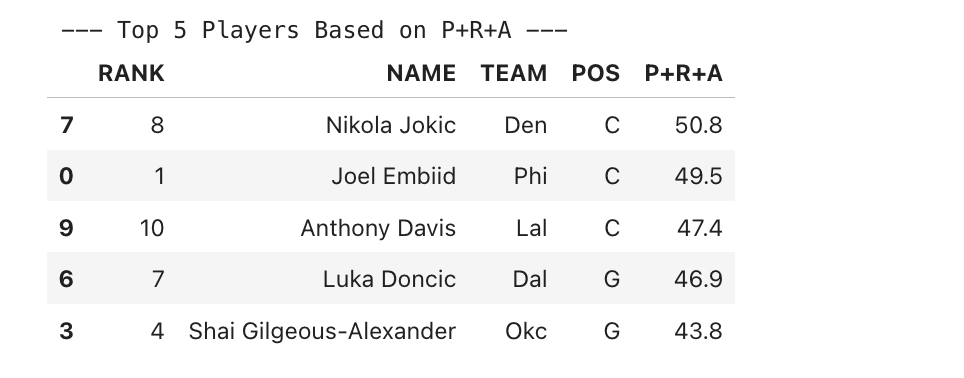
\SS of the Output-3\
Let’s see the graph it generates.
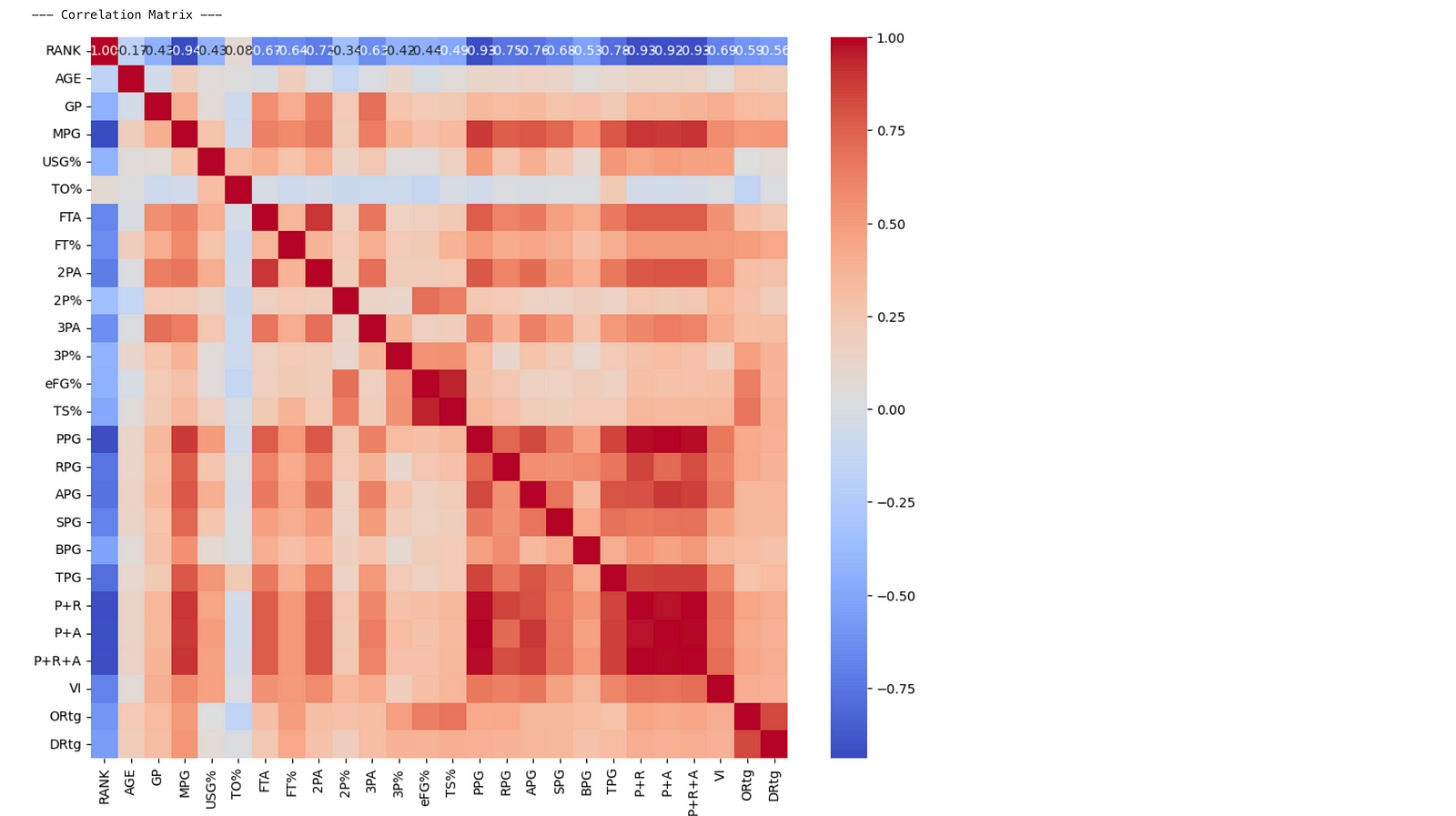
\SS of the Output-4\
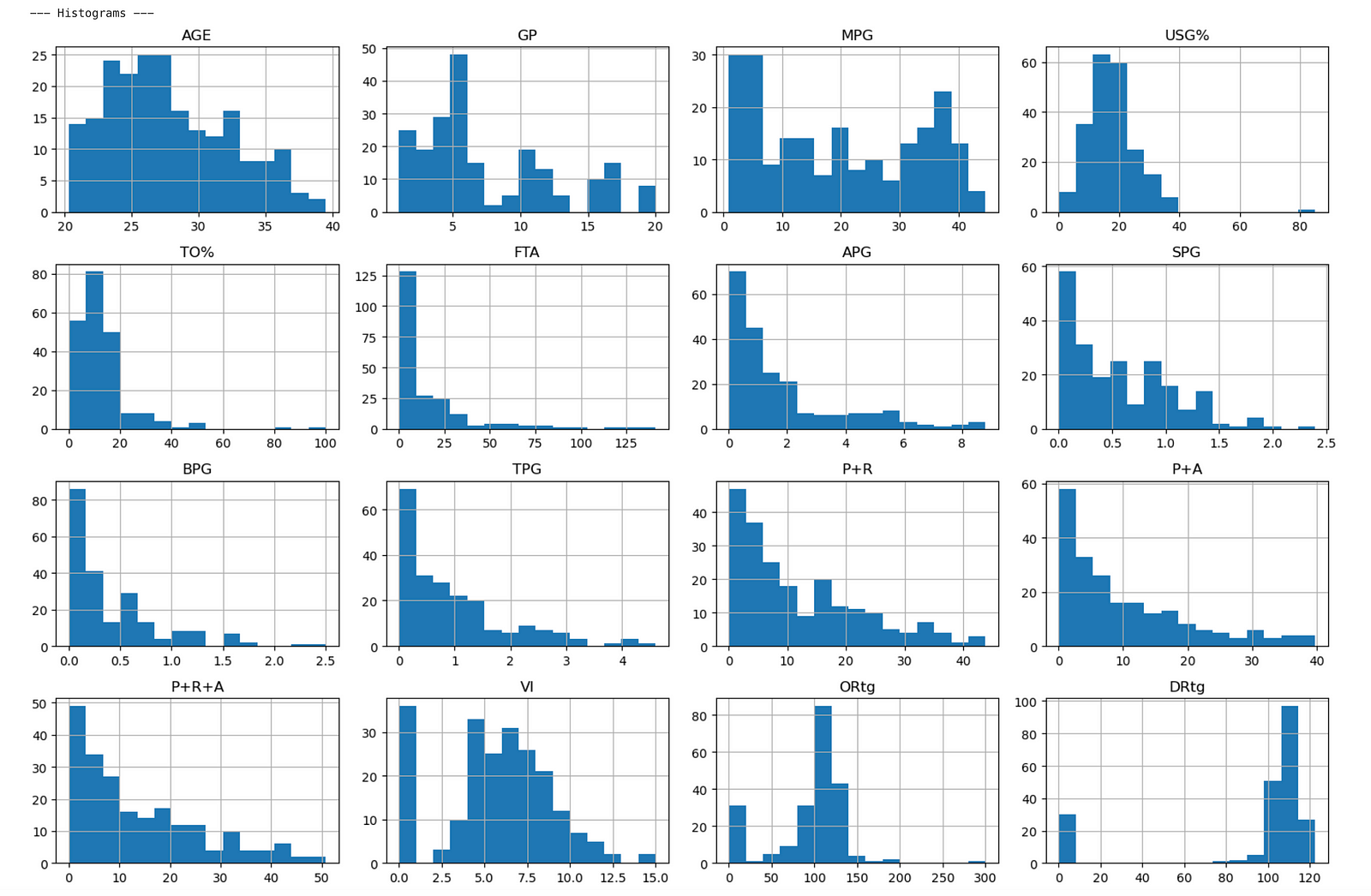
\SS of the Output-5\
If you want to automate the the data analysis process entirely, use Randy, available for LearnAIWithMe’s paid substack subscribers, from here.
\Randy\
Data Visualization
We have to visualize the dataset to detect underlying patterns and see how the data has changed over a certain period or with specific features. Let's use the following prompt to collect the best codes for our dataset.
Provide code to create graphs related to this dataset.
I want multiple graphs on one screen, maybe 3-4 together,
all representing the data.
Now, let’s run the code that GPT o-1 gave us.
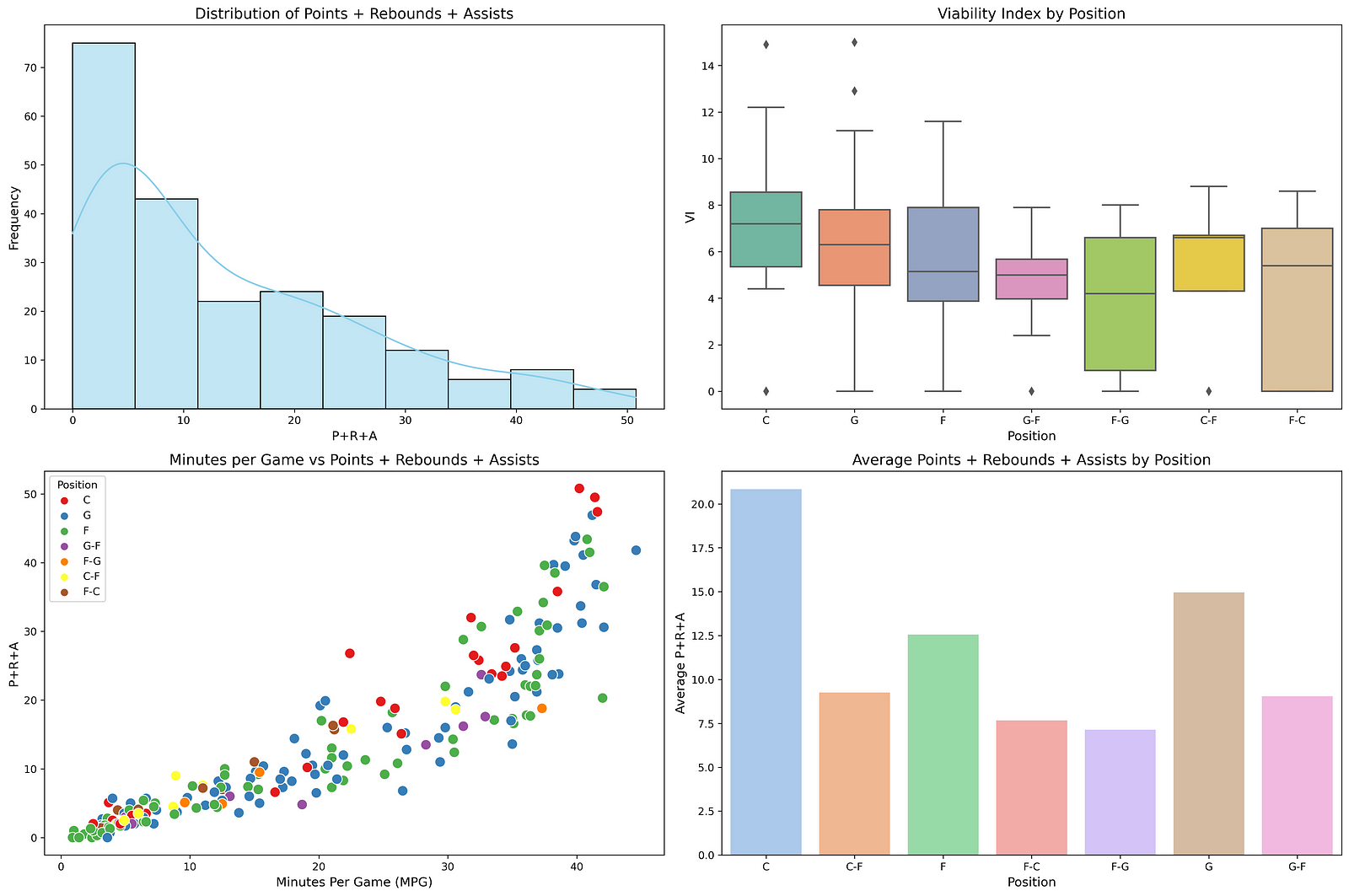
\SS of the code GPT-o1 give me\
Data Modeling
Now, we are at the funniest part of Data Science: Data Modeling. The most curious statistic is points per game, so let’s build a model to predict it. But there are too many things you have to do, right?
You are wrong! The code it provides with just a single prompt is fantastic. So, I will use the following prompt to ensure I’ll give it a hard time.
Using four different regression models,
build a machine learning model that predicts Points Per Game (PPG).
I want to see how each model performs with a line graph for each of these
model at once(4 graph in screen) that shows both the actual PPG and the
predicted PPG.
Back then, I remembered that doing similar tasks may take hours for me. But not now, not with AI. Here is the output of the code that GPT o-1 gave me.
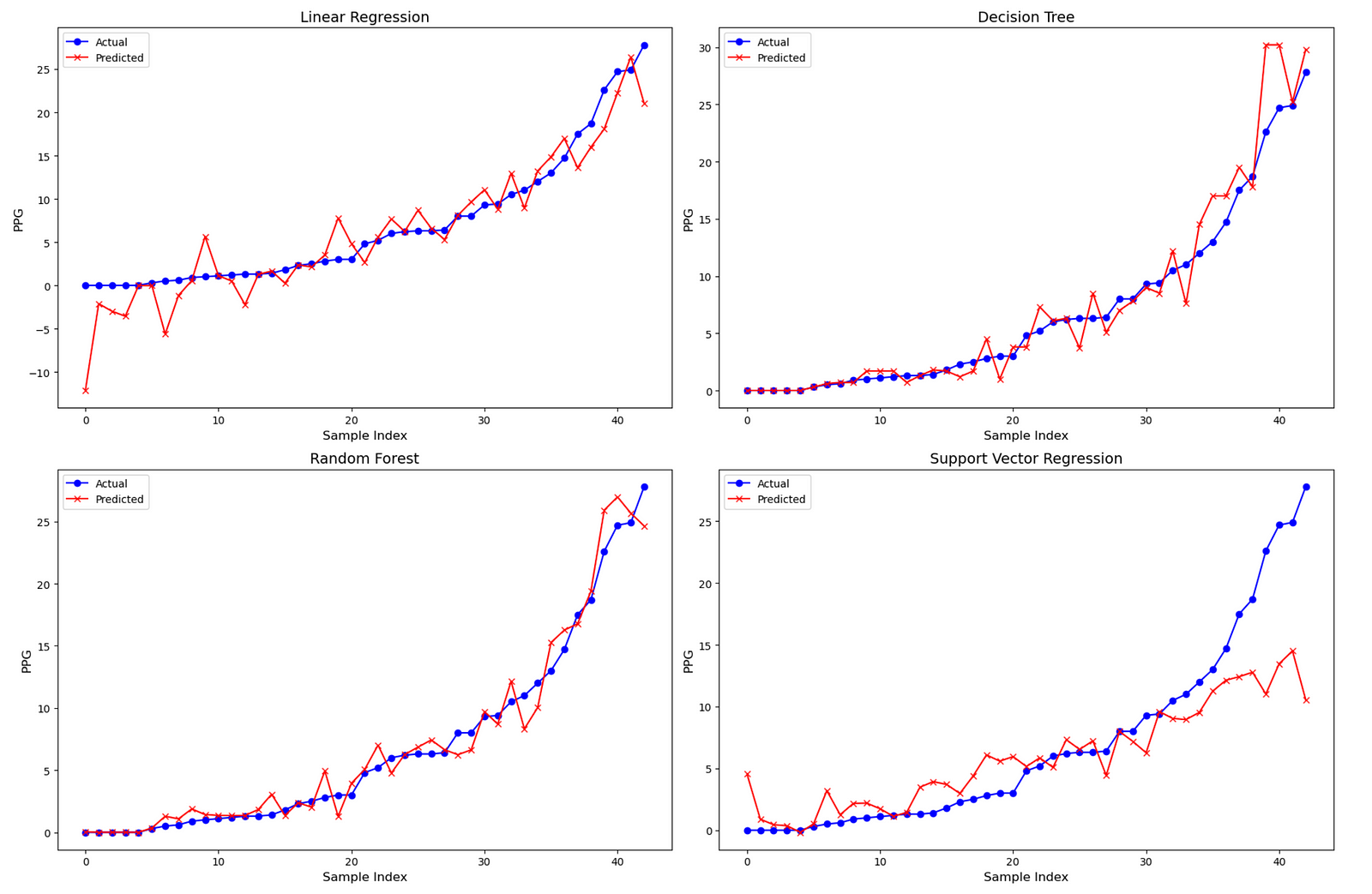
\SS Of the Output\
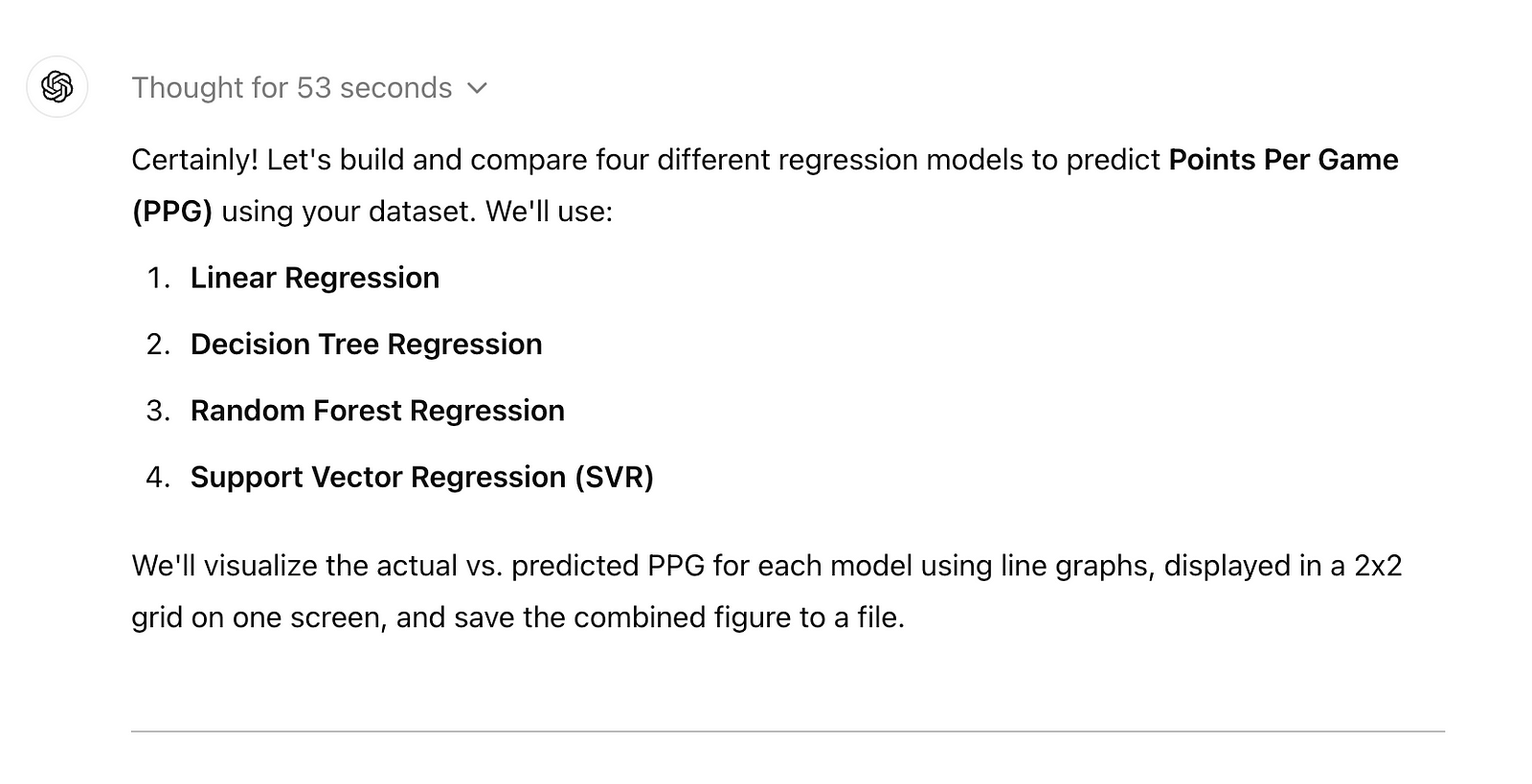
How long does it take to output this result?
\SS of the output\
Amazing!
Final Thoughts
Thanks for reading this one. As usual, we are chasing innovations in data science and analysis.