Inside the harnesses that let AI carry a job across hours, days, and conversations.
By Charlie Guo
Published: 2026-10-08
URL: https://www.ignorance.ai/p/agentic-primitives-101
I’m exploring making some video content with folks who are getting real value from AI (or could get real value with some help), especially for unexpected work or via interesting stories. If that sounds like you or someone you know, I’d love to chat!
I’m old enough to remember 2024, which many people dubbed the “year of the agent”. It seemed like every SaaS company was trying to add some sort of agent-powered product or feature to its software.1 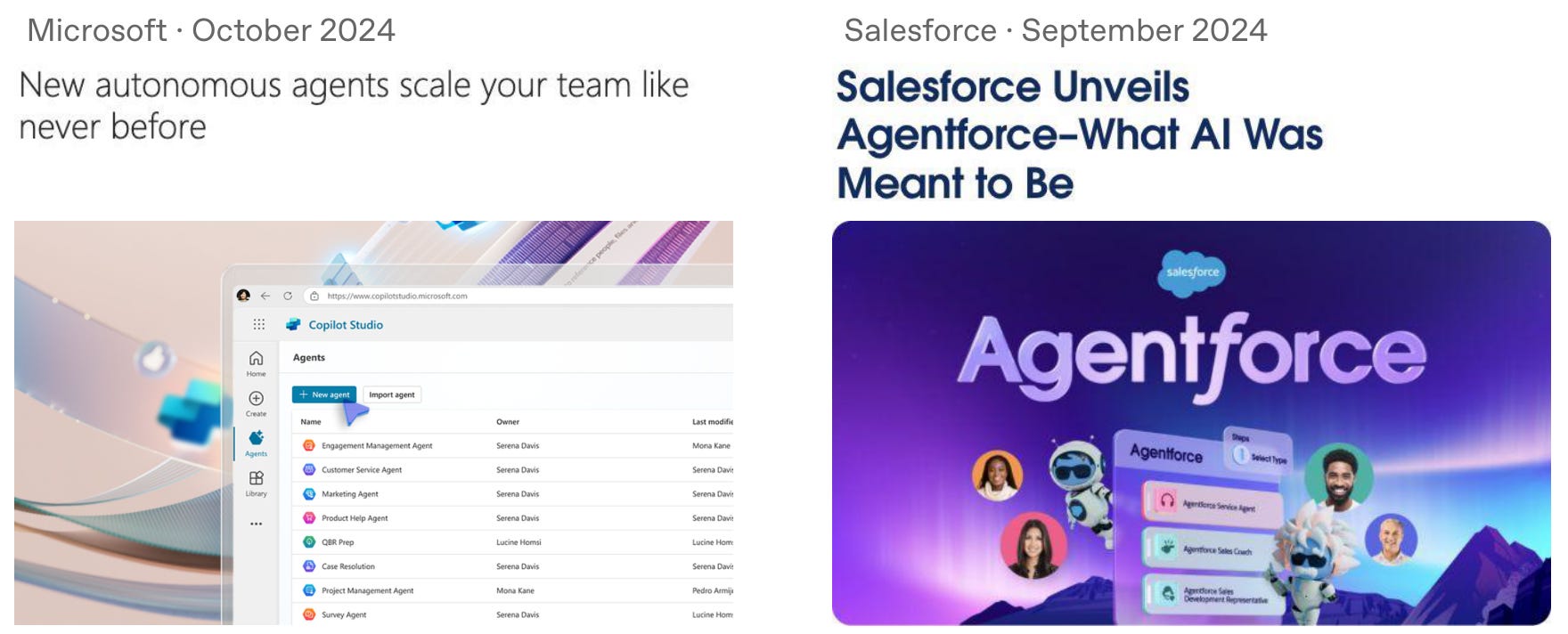
Everybody had this feeling that agents were going to be the next big evolution in AI, but nobody quite understood what that meant. But then, a funny thing happened: around late 2025/early 2026, agents started getting good.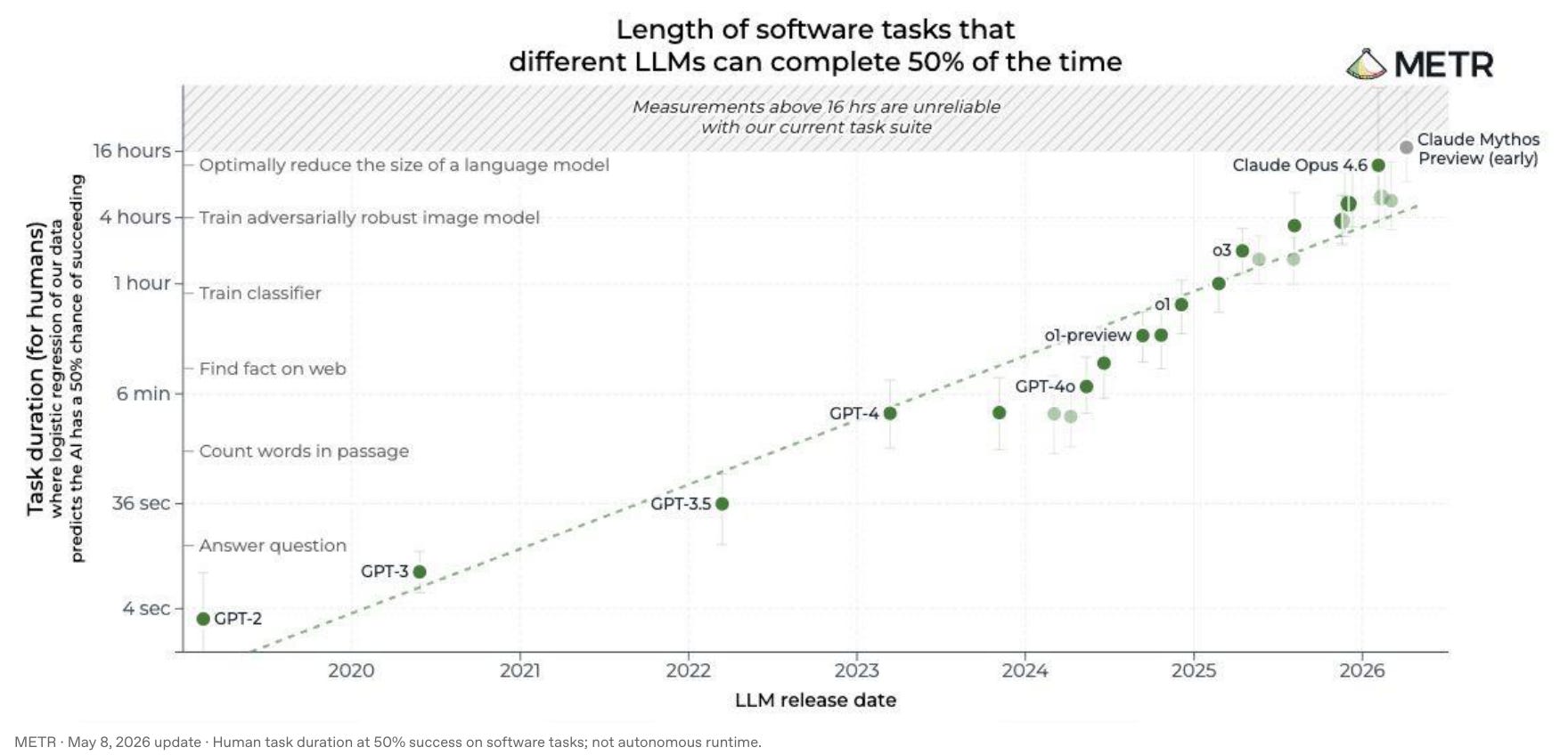
You may have seen the (in)famous METR chart, which shows the length of software tasks that coding agents can complete (relative to how long a human expert would take). GPT-4 could do tasks on the order of a few minutes. By 2026, we had models like Mythos reaching tasks on the order of tens to hundreds of hours. 2
This chart hasn’t been updated in six months. With the advent of models like Astra, Mythos, and Fable, we’ve reached a point where it’s increasingly challenging (if not impossible) to keep building harder and harder tasks that generate meaningful measurements of how long models can work.
But models have kept working longer all the same3. And as models have gotten better, we’ve had to think much more about the software around them.
At the beginning of the year, we were tentatively calling this the harness.
A harness is the set of constraints, tools, documentation, and feedback loops that keep an agent productive and on track. Think of it as the difference between dropping a new hire into a company with no onboarding versus one with clear architecture docs, linting rules, a fast CI pipeline, and well-defined module boundaries.

I remember reading a blog post from Thorsten Ball called How to Build an Agent - before we landed on the “harness” name. What struck me about it at the time was how simple the agent loop was at its core: a user sends a prompt, the model calls tools, gets the results or errors back, decides what it should do next, and keeps performing this loop on repeat.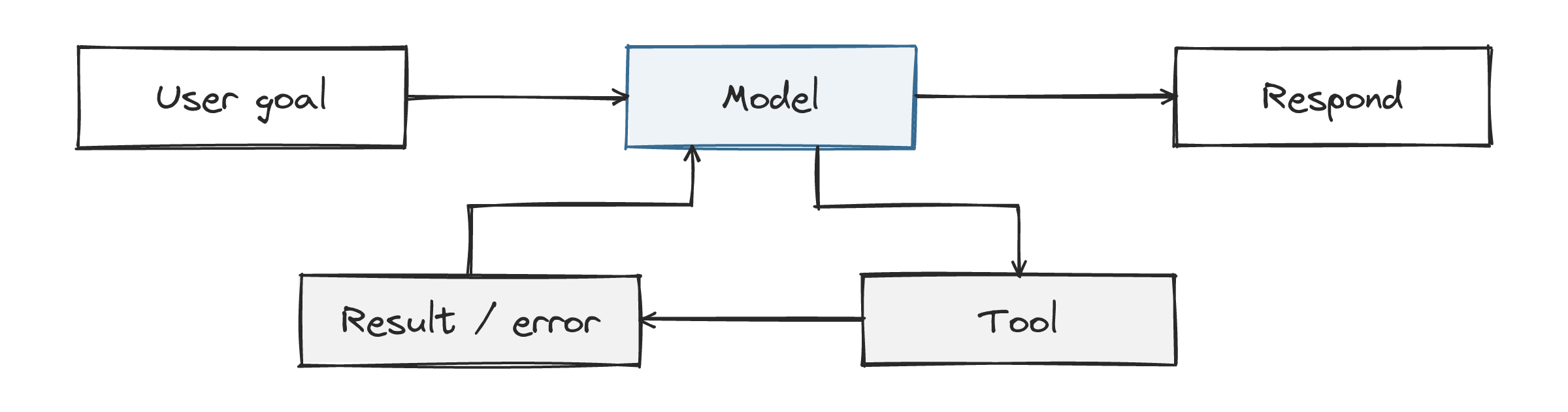
You could call the code that helps the model run this loop an early version of a harness. And what I’ve found interesting about the broader landscape this year is how quickly we’ve converged on a handful of shared primitives for building genuinely useful, long-running agents.
I wouldn’t necessary call these “stable” or “mature,” just yet, but they seem to be becoming table stakes for agents much in the same way that SQL databases, REST APIs, and MVC frameworks were table stakes for applications in the 2010s.
I tend to think of those features as falling into three different buckets: doing the work, continuing the work, and delegating the work4.
Doing the work
There are a few primitives that fall in this first bucket: instructions and skills, tools and connectors, and sandboxes. These give the agent the context and access it needs, along with a computer on which to do its work.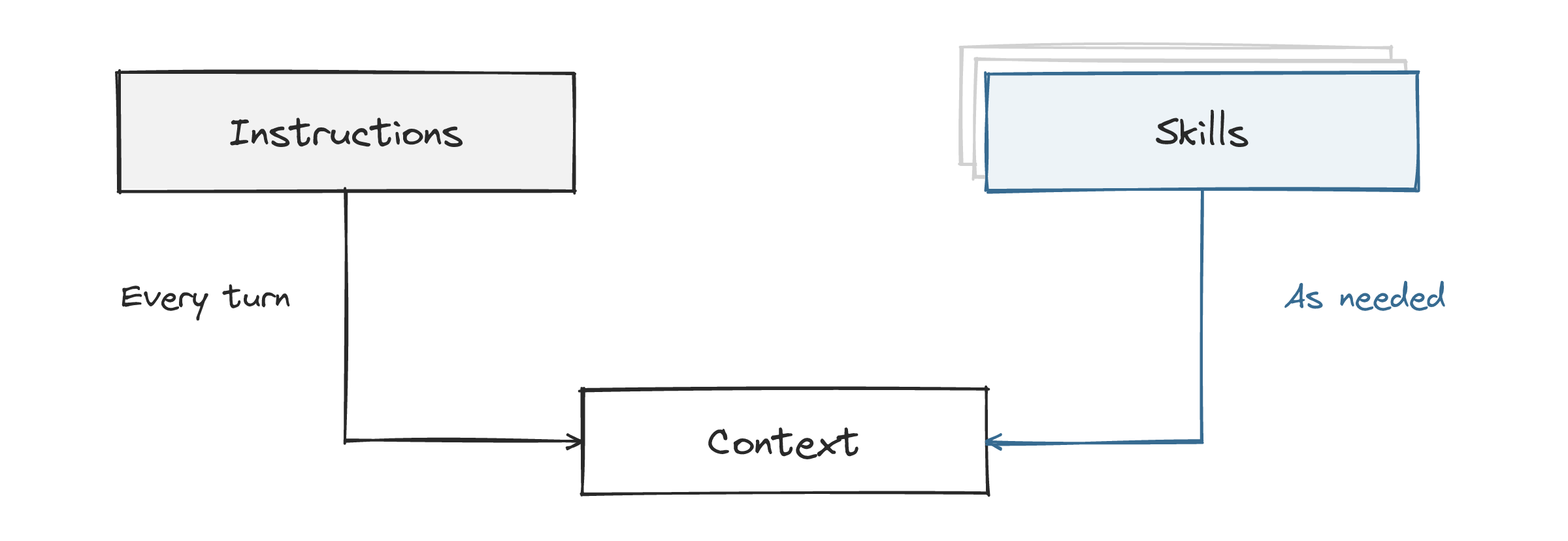
Instructions and skills
Instructions have been around for quite a while - since the earliest ChatGPT/GPT-3 days. System prompts and developer prompts give the model standing instructions at every turn, at the cost of continuously including them in the context window. This is useful for things you always want the agent to take into account whenever it’s working: “Ask me before you publish anything,” for example.
Skills take a different approach. They package natural language, often alongside executable scripts, in a way that’s designed for the agent to read when it needs to. They can go into far more detail and include task- or role-specific context you don’t want in the model’s context window all the time. Think of a launch checklist where the agent needs to check twenty different things before we consider a project ready for launch.
From my previous post on skills, tools, and MCPs:
Models need guidance on when and how to use their capabilities effectively. Just because a model can call a PDF manipulation library doesn’t mean it knows the proper sequence of operations to fill out a form cleanly, or how to preserve formatting, or what quality standards to aim for.
Technically, we know how to solve this problem: develop extensive prompts that detail the process, define edge cases, and preemptively address issues. But we haven’t had a standardized way to share “prompts that work,” nor have we had good patterns for managing them, such as version control and collaboration.
Tools and connectors
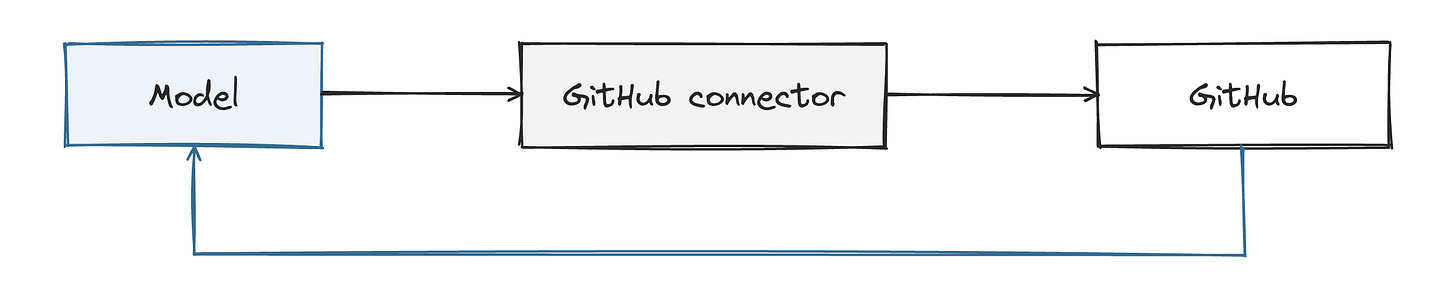
Similarly, tools were part of the very first agent loops. They’re essentially a way to tell the model: you have access to this software function. If you decide you need to call it, let me know, I’ll execute it for you, and then give you the results back.
But tools have come a long way. We’ve expanded into connectors, plugins, apps - whatever you want to call them - to give our agents more efficient and effective hooks into the wider world of software. We’ve gone from exposing tools that our software is expected to run locally, to giving agents more autonomy to call MCP servers or execute CLI commands.
Not everything will necessarily become a tool. I think about my most used apps like Slack or GitHub, and at some level, the model might be able to get by without an official connection - as computer use has gotten better, an agent can simply click through Slack or GitHub using a browser like we would. But that’s far less effective than having direct access via a CLI or MCP, so I suspect we’ll keep evolving tools and connectors for quite a while5.
Sandboxes
One major trend we’ve seen is agents moving from working on your device to working in the cloud. As part of that, they need a cloud computer to do their work. When you’re running Codex or Claude Code locally, they can use your computer. As you move things into the cloud, you have to give the agent its own environment - i.e., a sandbox.
This is more complicated than it seems. We’re used to thinking of software as a series of short-lived, ephemeral requests, and now we have these things that need to work for hours on end while retaining access to a persistent compute environment. We need to securely manage networking, generate artifacts and files, and make those available to the outside world. Ideally, the agent should also be able to use all the same connectors and plugins it would normally use on your laptop.
Sandboxes are useful for taking on larger pieces of work, but they also have an added benefit of helping manage context. As we give agents larger and more complex tasks, they’re often going to need to look through mountains of data (e.g. looking through gigabytes of server logs to investigate an outage), and sandboxes can exist as a place to offload the computation without taking up precious space in the model’s context window.
This is the basic idea behind “code mode,” or programmatic tool calling. The agent gets access to tools through a programming interface and writes code that calls them. In this case, you can imagine writing code to deterministically sift through the mountain of logs before returning what’s actually relevant to the model.
Continuing the work
Once an agent can do the work, we need ways for it to keep going: like sessions, compaction, and schedules.
Sessions
Sessions are a primitive you don’t necessarily need, but they’re convenient, and they let you start to bake in a lot of other things. With a stateless API, you send an input, get an output, and chain those together yourself. A session gives you a place to accumulate conversation history, tool invocations, and the other context that builds up as an agent works. 6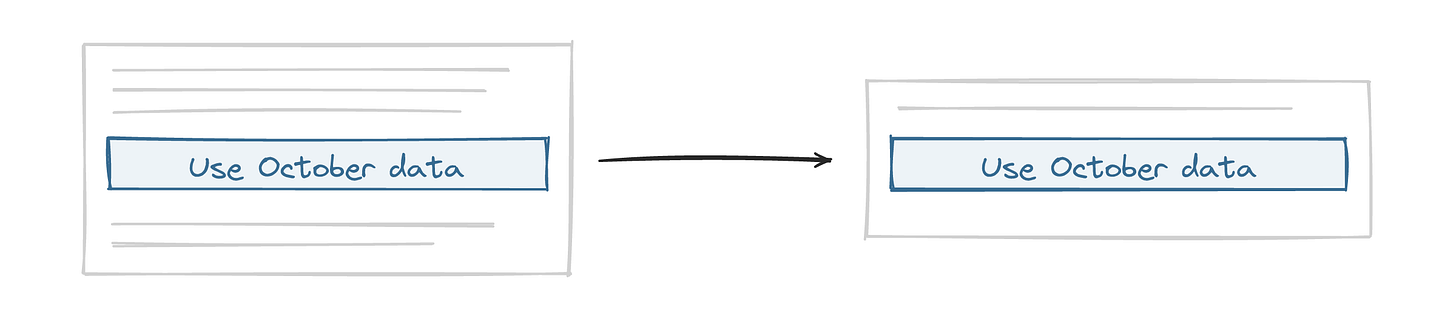
Compaction
Then there’s compaction, which I still find pretty magical. A year and a half ago, I was the type of person who would always create new threads in ChatGPT when I was working on different things. I was kind of afraid of, or perhaps paranoid about, context window pollution.
I worried that the model would do a worse job on my coding tasks because I’d previously asked it about shopping. I worried that I’d run out of context window because of irrelevant things, and the model would start forgetting important stuff I’d told it. Now in 2026, I don’t worry about any of that with Codex. It works continuously for hours or days on various things, and I don’t really worry about its short-term memory anymore. 7
Compaction reduces the conversation the model carries forward. In some harnesses this happens automatically, but there are ways to manually tune your own applications to use compaction. With Codex, the model gets encrypted “summaries” that it’s able to use moving forward.
One way to think about compaction is a way to unlock better “short-term memory” - the model is still forgetting some things, but it’s increasingly good at forgetting the things that weren’t useful to the work it was doing.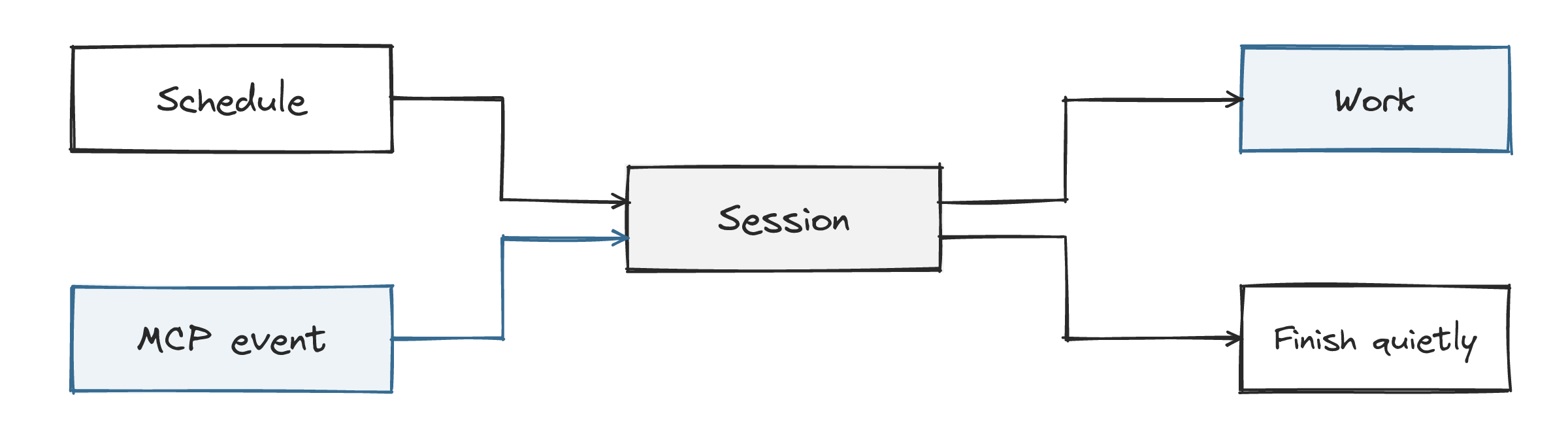
Schedules and events
I think OpenClaw deserves a lot of credit for making heartbeats a more visible part of how people think about agents. In the previous paradigm, nearly everything agents did was turn-based and driven by user prompts.
But what if we just woke these agents up on a schedule? Or woke them up based on certain events?
You can trigger an agent to check for work, and then either do the work or do nothing and send no message to the user. As simple as this sounds, making it a first class primitive for harnesses has been a major productivity unlock for me. It turns out there’s quite a lot of work that needs to get done either on a regular schedule, or needs to wait for some event which an agent can check for on a regular schedule.
OpenAI recently added support for MCP Events, which lets plugins trigger work when something happens in a connected application. They can roughly be thought of like webhooks, but they give MCP servers a way to advertise the events it supports upfront and register subscriptions.
ChatGPT creates a subscription, and the server sends matching events to the subscribed chat, where ChatGPT can pick up the work using the instructions already established there.
Delegating the work
The main primitive in this category is subagents. We’re still figuring out what it means for a model to be good at using them, and I think increasingly that’s a behavior you train into the model itself. That includes delegating to subagents and collaborating with other agents as equals or peers.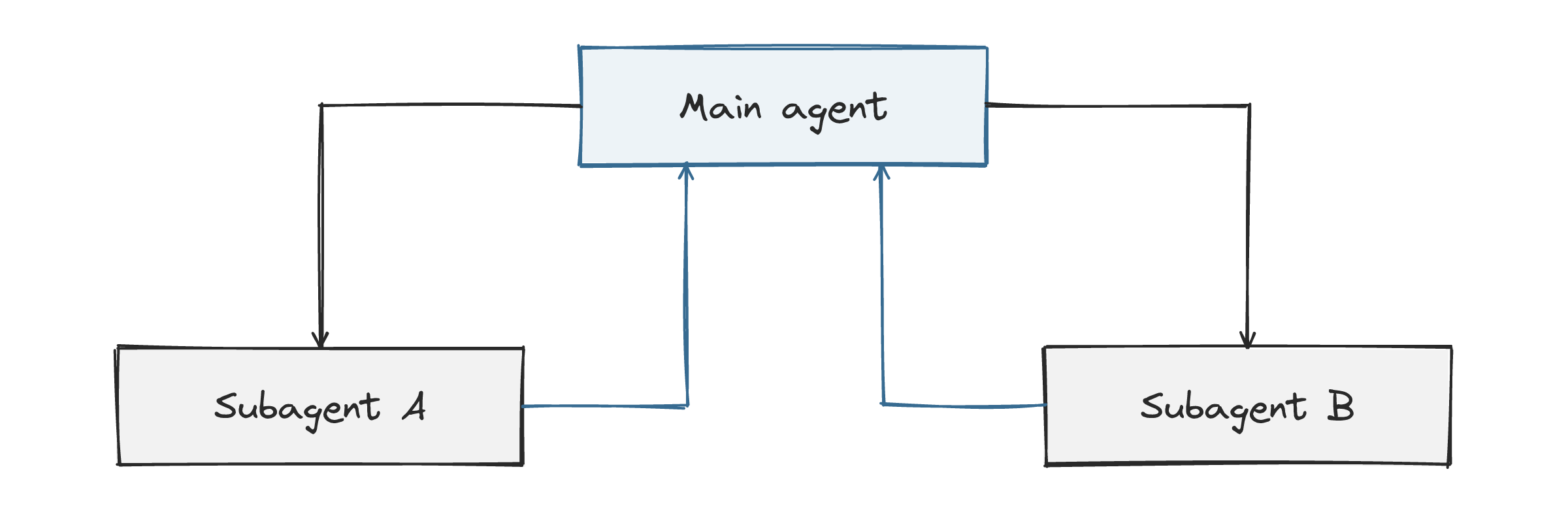
You can have a main agent give a subagent a bounded assignment and let it work in its own context. The subagent can return its findings without putting every intermediate tool call into the main agent’s conversation. That can help avoid context pollution, but the main agent still has to check what came back and combine the results. Note: subagents will also burn through your token budgets faster!
Another way to think about it is spinning off peers. Agents can create other threads or nudge existing ones, and you can start to orchestrate agents working in groups without necessarily having a centralized system.
We’re still exploring what these different forms of collaboration are good at, but it’s becoming increasingly clear that parallelism may be another scaling axis - the AI that solved the Navier-Stokes Millennium Prize Problem was in fact a group of around ten thousands agents.
Thanks for reading Artificial Ignorance! This post is public so feel free to share it.
Emerging patterns
We’ve started to converge on the pieces an agent needs to do useful work. But as agents work for longer and become more involved in our lives, I think we’re going to need more than what we’ve covered so far. Three areas I’m watching are memory, proactivity, and identity.
Memory
What should be remembered over time? There’s a rich history here, and we’ve tried many things in the LLM era to get good long-term memory. We touched on compaction as a pretty workable short-term memory, but as things get compacted over days or weeks, you need a system to remember details and important context for longer.
Some early experiments used simple Markdown files locally. Other approaches identify facts about the user, save them, and bring them back into context. We’ve also had embedding-based retrieval systems that encode semantic information, and hybrid systems that combine these approaches.
Ultimately, I think we’re going to have to keep combining systems. I do like the combination of short-term compaction and some sort of long-term durable memory. It mirrors the way we talk about human memory in laypeople’s terms, and that feels like a useful way to think about it.
Proactivity
What interests me about proactivity is that we can start to see the path toward ambient AI, something I’ve wanted for quite a while now. The idea is that eventually intelligence is going to be all around us, with access to the context it needs to help without waiting for us to start every interaction.
Think about a smart email assistant. A lot of the first wave of AI email products amounted to a chat sidebar next to your inbox, where you could ask it to summarize things or archive emails for you. What I actually want is an assistant that has access to my email, notices when something important comes in, and alerts me with a suggested reply already written, for me to review and approve.
In effect, this creates a new type of agent loop. Events and new information keep feeding into the same ongoing process, and the model decides whether to do work, leave things alone, or reach out to us. Messaging the user becomes one of many tool calls it might take, and a message to humans doesn’t have to be the end of the job.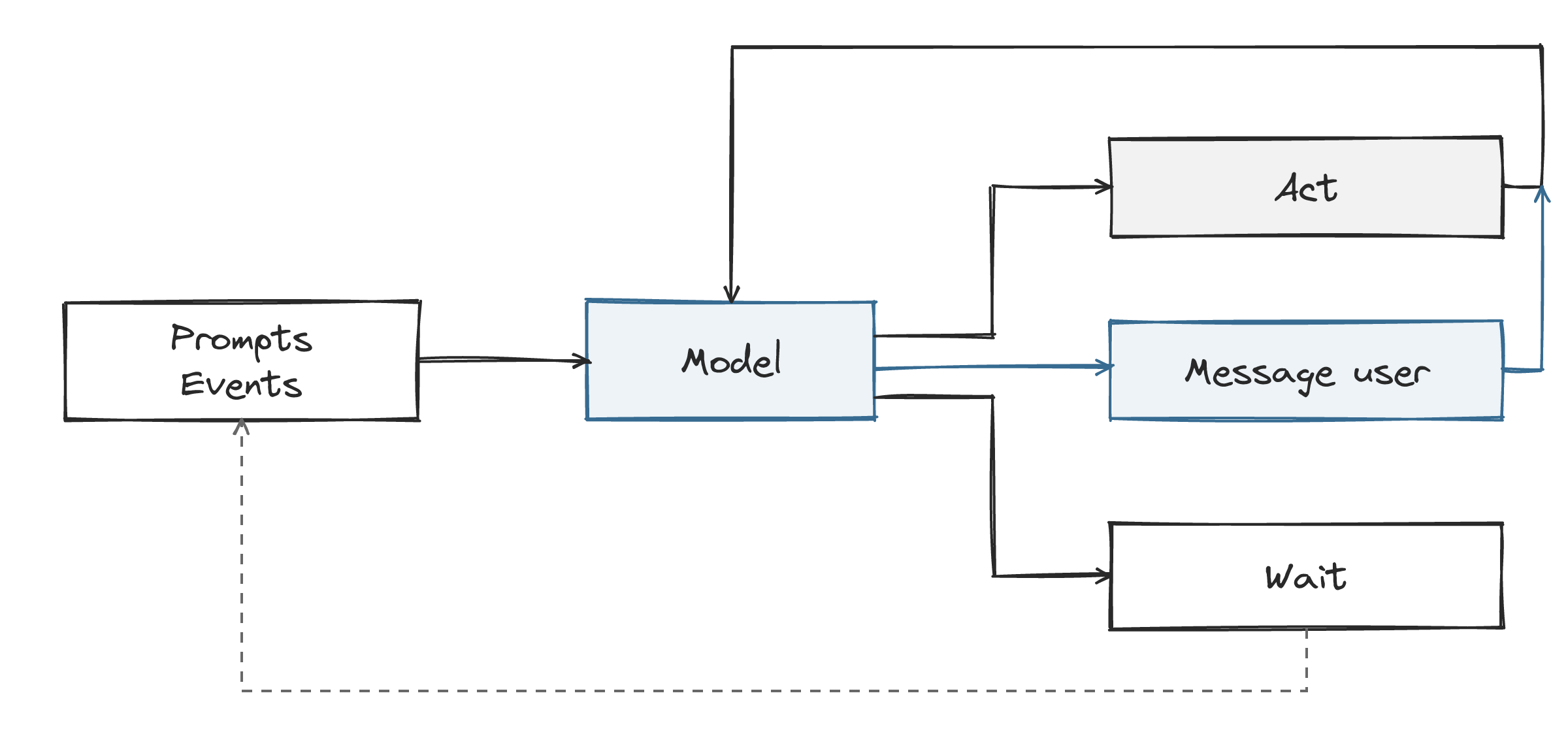
Identity
Historically, I think there have been two philosophies here. The first is impersonation: the agent assumes my identity and goes out into the world as me. The other is delegation: the agent has its own identity, accounts, and credentials, and the world understands it as an agent.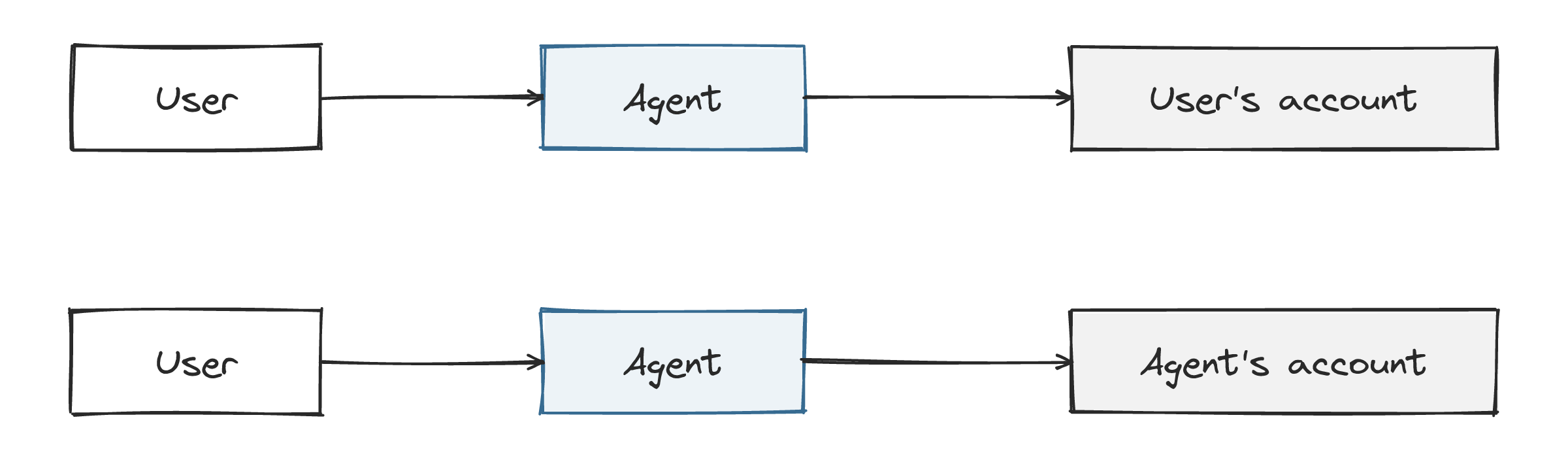
In the last few months, my thinking has shifted on this. I now feel that 90%-ish of the things you’d want to do should probably be delegation rather than impersonation. In the vast majority of situations, I don’t want to give an agent full read and write access to everything I have8.
There’s a very rough analogy to an API key or service account, which can have limited permissions relative to a full human user. I feel like we’re approaching something analogous with agent accounts, and we’ll likely need some new protocols or standards around how we give them access to things.
Either approach can have restricted permissions. Giving an agent its own identity lets other people and systems distinguish its actions from mine; we still have to decide what that identity is allowed to do.
For example, perhaps an agent can read all of my email and maybe send email to a handful of whitelisted recipients or other agents, but otherwise can’t just blanket-send email. It feels like we’re going to need ways to grant permissions at that level of granularity - which we don’t yet have.
The next checkpoint
We’re starting to see these pieces come together in products like OpenAI’s dots (and Muse/Instinct/Grok Bot), which combine memory, connected tools, and proactive work between conversations. You can give a dot an ongoing responsibility, and it can keep making progress while you’re doing something else. It has its own computer in the cloud, and you choose which applications it can access and when it needs your approval.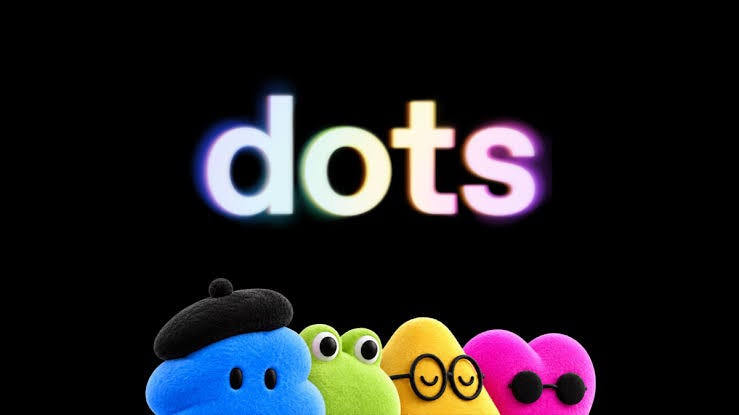
This is where the path toward ambient AI starts to feel more concrete. I want an agent that can take things off my plate, do work in the background, and reach out when it needs me. There’s still quite a lot to figure out about how to make that dependable. But these primitives give us enough to start building that kind of relationship with our software, and to learn where the next pieces are missing.
Artificial Ignorance is a reader-supported publication. To receive new posts and support my work, consider becoming a free or paid subscriber.1
Maybe what’s worse, if you asked ten different people for the definition of an agent, you’d probably get ten different answers.2
The task lengths in the METR chart are measured by human expert completion time at a given level of agent reliability. They don’t measure the agent’s own runtime. METR’s published page cautions that measurements above sixteen hours are unreliable with its current task suite. My understanding of why METR has stopped updating the chart comes from a talk given by a METR employee.3
Personally, I’ve seen a model work for about six weeks on a task.4
There’s a lot I haven’t touched on here. This doesn’t quite get into multimodality, for example: image, audio, and video inputs. As we build more complex harnesses and approach AGI, I think we’ll need to figure out how to make seeing, hearing, and speaking part of the same ongoing work.
I’ve also mostly been looking through the lens of an individual building or using a harness. There’s quite a lot at the team and organizational level that we’re still figuring out, including basic things like sharing skills. Right now, that seems to be getting solved at the product layer. Depending on how a product handles skills, I think there’s some potential for product lock-in there.5
This also reveals an interesting tidbit: our agents still need to use all the software we do. They need to collaborate with humans and teams. It’s not enough to say, “I’m going to build an agentic Slack and call it a day,” or an agentic Gmail and call it a day. Your agents have to be able to use the same tools you do, at least for now.6
Sessions are one of the fundamental primitives of the Agents API. OpenAI previously tried to approximate something like this with the Assistants API, which was perhaps its first foray into building an agentic API. But in my view, the model and the tools around it weren’t sufficiently powerful at the time to justify offloading so much to the cloud or to a third party.7
For what it’s worth, I still do create a lot of new threads, but they’re to help me stay organized and focused, not the model.8
And I’m also sidestepping the question of what level of disclosure we should normalize around when you’re interacting with an agent vs a human. Should you know when your coworker is using an agent to send you a Slack message or email? Should you know when a prospective customer is using an agent to call to book an appointment?