Why interactive notebooks matter more than ever in the age of AI
By Jeremy Jorgensen
Published: 2025-12-22
URL: https://whyedify.substack.com/p/the-case-for-paper-notebooks-in-the
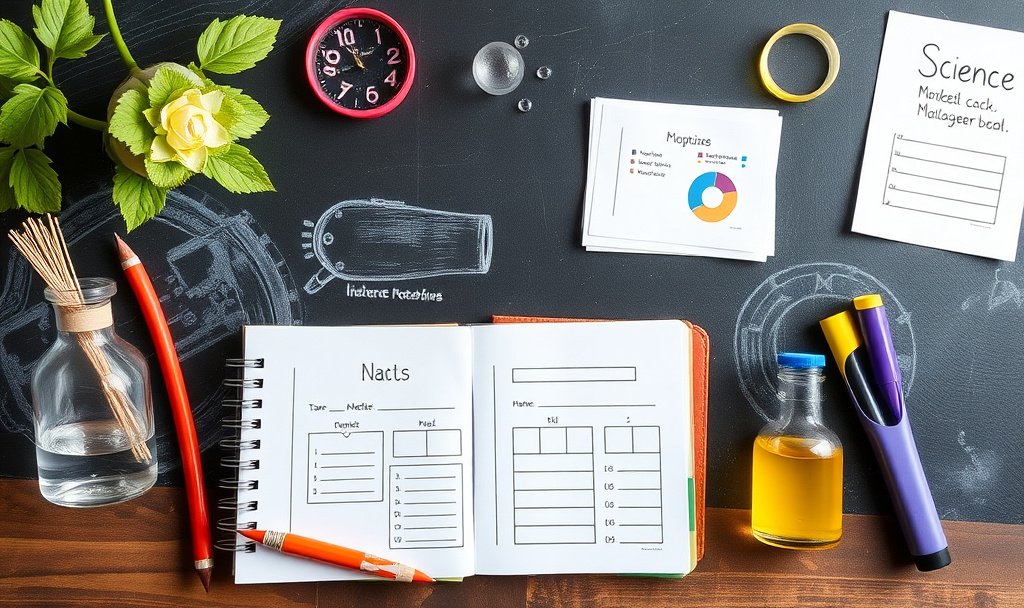 \interactive science notebook composition style\
As artificial intelligence becomes more integrated into education, it’s important to maintain a balance between digital innovation and hands-on learning.
While AI tools can enhance personalization and streamline certain tasks, they can’t replace the deep thinking, reflection, and creativity that come from putting pen to paper.
Jeremy’s Substack is a reader-supported publication. To receive new posts and support my work, consider becoming a free or paid subscriber.
Interactive notebooks offer a tactile, intentional space for students to process information, organize their thoughts, and make learning their own. They encourage active engagement—cutting, pasting, sketching, annotating—all of which help reinforce memory and understanding in ways that passive screen time often doesn’t.
In a world increasingly shaped by algorithms and instant answers, interactive notebooks provide a counterbalance.
They help students slow down, reflect, and develop foundational skills like critical thinking, synthesis, and metacognition.
These skills remain essential, especially as students learn to evaluate and work alongside AI tools responsibly.
By blending tech-rich instruction with notebook-based learning, educators can create classrooms that are both future-forward and grounded—where students harness the benefits of AI without losing the human touch that deep learning requires.
What the Research Shows
I recently reviewed several studies on the benefits of taking notes by hand. As someone who uses interactive notebooks with students, I needed to confirm what I was seeing in my classroom was backed by research—especially as digital notebooks gain traction.
Here’s what the science says:
Taking longhand notes forces students to slow down. That extra time creates more effective absorption of material. When students type, they tend to transcribe verbatim. When they write by hand, they must synthesize and summarize—which deepens understanding.
Handwritten notes are higher quality. Research published in Forbes highlights that the act of writing by hand requires more cognitive processing, resulting in notes that are more meaningful and useful for review.
Writing by hand activates different brain regions simultaneously. A study from the University of Tokyo found that writing on paper engages spatial memory and encoding processes in ways that typing or tablet use doesn’t. The physical act of writing creates stronger neural pathways, making information stick better in memory.
The study noted something particularly striking:
“The significant superiority in both accuracy and activation for the Note group suggested that the use of a paper notebook promoted the acquisition of rich encoding information and/or spatial information of real papers and that this information could be utilized as effective retrieval cues.”
In other words, the tactile experience of paper—the texture, the spatial layout, the physical act of turning pages—creates additional memory cues that digital formats simply can’t replicate.
Paper provides a multi-sensory experience. Using ink and paper engages touch, sight, and even sound in ways that screens don’t. There’s a reason e-readers like Kindle add a “whoosh” sound when pages turn—they’re trying to recreate what paper naturally provides.
Paper doesn’t emit blue light. For students spending hours in front of screens daily, notebooks offer a cognitive and visual break that may be better for brain health and eye strain.
Why This Matters Now
We’re at an inflection point in education. AI can answer questions instantly. Screens are everywhere. Information is abundant.
But information abundance doesn’t equal learning. In fact, it often works against it.
Students need space to slow down, to think, to make meaning. Interactive notebooks create that space. They force a different kind of engagement—one that’s active, not passive.
When students cut and paste elements into their notebooks, annotate readings, sketch diagrams, or respond to prompts, they’re doing more than just taking notes. They’re constructing knowledge. They’re making learning visible. They’re creating a record of their thinking that they can return to, revise, and build upon.
This isn’t about rejecting technology. It’s about using the right tool for the job.
Screens are excellent for research, collaboration, simulations, and creation. But for deep processing, reflection, and memory consolidation? Paper still wins.
How I Use Interactive Notebooks
In my classroom, interactive notebooks serve as a central learning tool. Here’s how:
They’re personalized. Students customize their notebooks with duct tape covers, making them easy to identify and giving students ownership from day one.
They’re structured but flexible. We use a consistent format—table of contents, numbered pages, left side for processing, right side for content—but within that structure, students have creative freedom.
They’re low-stakes writing spaces. One of my goals is to encourage frequent, informal writing. The notebook becomes a place where students can think on paper without the pressure of formal assessment.
They’re visible records of growth. When students flip back through their notebooks, they see how far they’ve come. That tangible evidence builds confidence and metacognitive awareness.
Making It Work in Your Classroom
If you’re considering interactive notebooks—or if you’ve tried them before and they didn’t stick—here are a few essentials:
Keep it simple. Classic composition notebooks work perfectly. Add colored duct tape for customization and basic supplies like colored pencils and glue sticks.
Establish routines early. Teach students how to set up their notebooks, where to find materials, and what your expectations are. The first few weeks set the tone for the entire year.
Use them consistently. Notebooks work best when they’re integrated into daily practice, not treated as an occasional add-on.
Make the purpose clear. Explain to students why you’re using notebooks. When they understand that this isn’t busywork—it’s brain work—buy-in improves.
The Bigger Picture
In an age of AI, instant answers, and infinite scrolling, paper notebooks offer something increasingly rare: friction that serves learning.
They slow students down in the best possible way. They make thinking visible. They create lasting memory traces that screens can’t replicate.
This isn’t nostalgia. This is neuroscience.
And it’s a reminder that sometimes the most powerful learning tools aren’t the newest ones—they’re the ones that align with how our brains actually work.
If you found this helpful, I’d love to hear from you. Hit reply and let me know: What’s your experience with paper notebooks in increasingly digital classrooms? What’s working? What’s challenging?
And if you know an educator who’s wrestling with this balance, please share this post with them.
Resources for Going Deeper:
- Four Reasons to Take Notes by Hand (Forbes)
- 4 Reasons Writing Things Down on Paper Still Reigns Supreme (Psychology Today)
- Stronger Brain Activity After Writing on Paper Than on Tablets or Smartphones (Neuroscience News)
For more on interactive notebook implementation, including rubrics and setup guides, visit jeremyajorgensen.com.
Originally published at jeremyajorgensen.com
About Jeremy
I’m a teacher, Ikigai-certified coach, and content creator focused on educator well-being and sustainable teaching practices. I run The STRONG Teacher Ecosystem and host The Why Edify Podcast, exploring how teachers can build practices that actually sustain them—not just survive, but thrive.
If you’re looking for a community of educators working on this stuff together, check out The STRONG Teacher’s Lounge.
Jeremy’s Substack is a reader-supported publication. To receive new posts and support my work, consider becoming a free or paid subscriber.