3X Challenge EduProtocol: 3xPOV, 3xGenre, and 3xCER Explained
By Jacob Carr
Published: 2026-08-02
URL: https://whatteachershavetosay.substack.com/p/what-happens-when-students-write
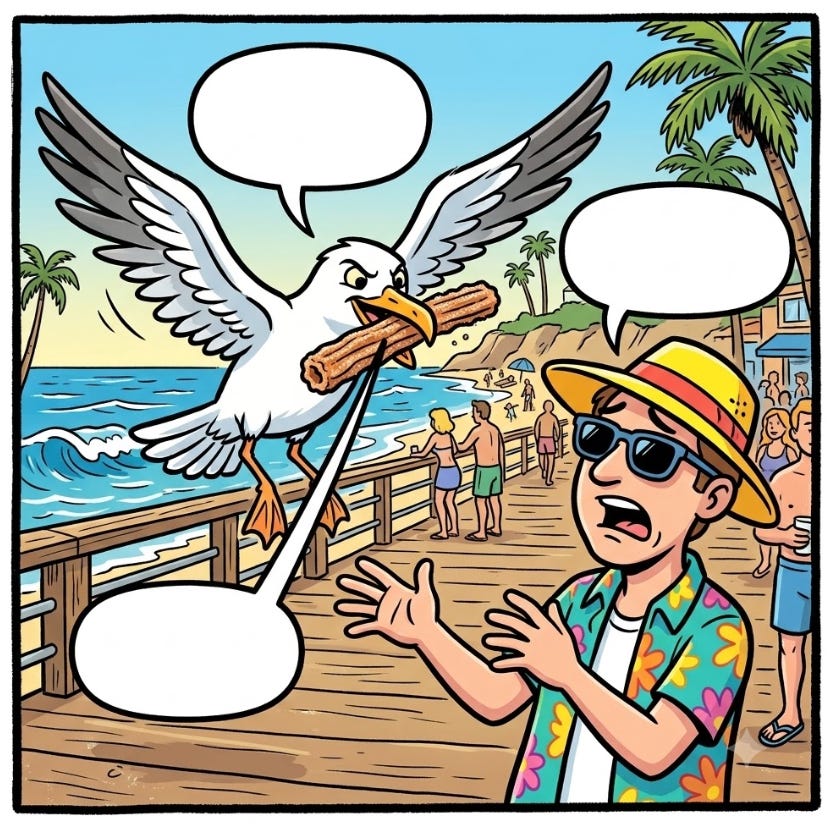 Image created with Gemini Nano Banana 2
A seagull stole a churro on the boardwalk, and the room had three minutes to explain it using dialogue. That was the opener at my 3X Challenge session at the EduProtocols Summer Academy in Laguna Beach, California: a cartoon of the heist with three empty speech bubbles, one each for the seagull, the tourist, and the churro. Teachers filled them in using Snorkl. The seagull cackled “I’ve got you my pretty! Stupid human!” The tourist demanded it back, “Bruh.” And one churro, apparently a hostage negotiating its own release, pleaded “Take me back to Taco Bell!” Another churro saw the bird as a rescue: “thank goodness, taken from the tourist, might get out of this alive.”
Three voices. Same event. Zero pressure. In three minutes, everyone in the room had run the entire protocol in miniature and learned the tech along the way. That is the whole 3X move, simplified: one input, three perspectives, and thinking that gets more flexible with every rep. But don’t think that’s the best version of it. Just keep reading.
What the 3X Challenge is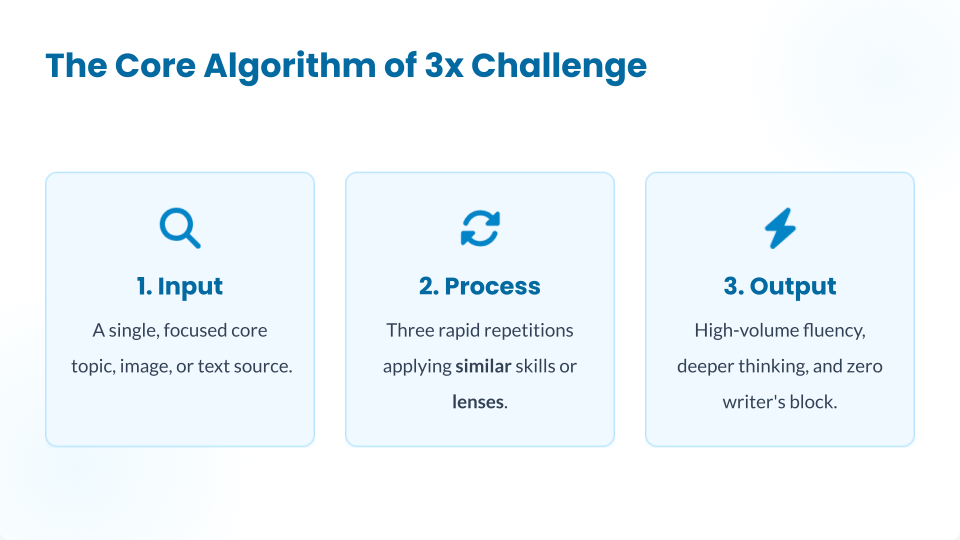
The 3X Challenge was originally developed by Josie Wozniak, and it’s one of the EduProtocols I cover in my book. It’s definitely a frequent-flyer! The flow is almost embarrassingly simple. Start with one focused input. It could be a topic, image, a commercial, text, anything that prompts thinking. Then, three rapid repetitions of writing, each applying a different lens. The output is high-volume fluency, deeper thinking, and a natural skill transfer.
If we look back at the SmartStart with the seagull and the churro, it was practicing simple dialogue three times. But, it could as easily been given other constraints to practice other things without changing the image. See examples below. It could be 1st, 2nd, and 3rd person perspective. Or, types of sentences: simple, compound, complex. Or even declarative, interrogative, and imperative constructions. The combinations are almost limitless. 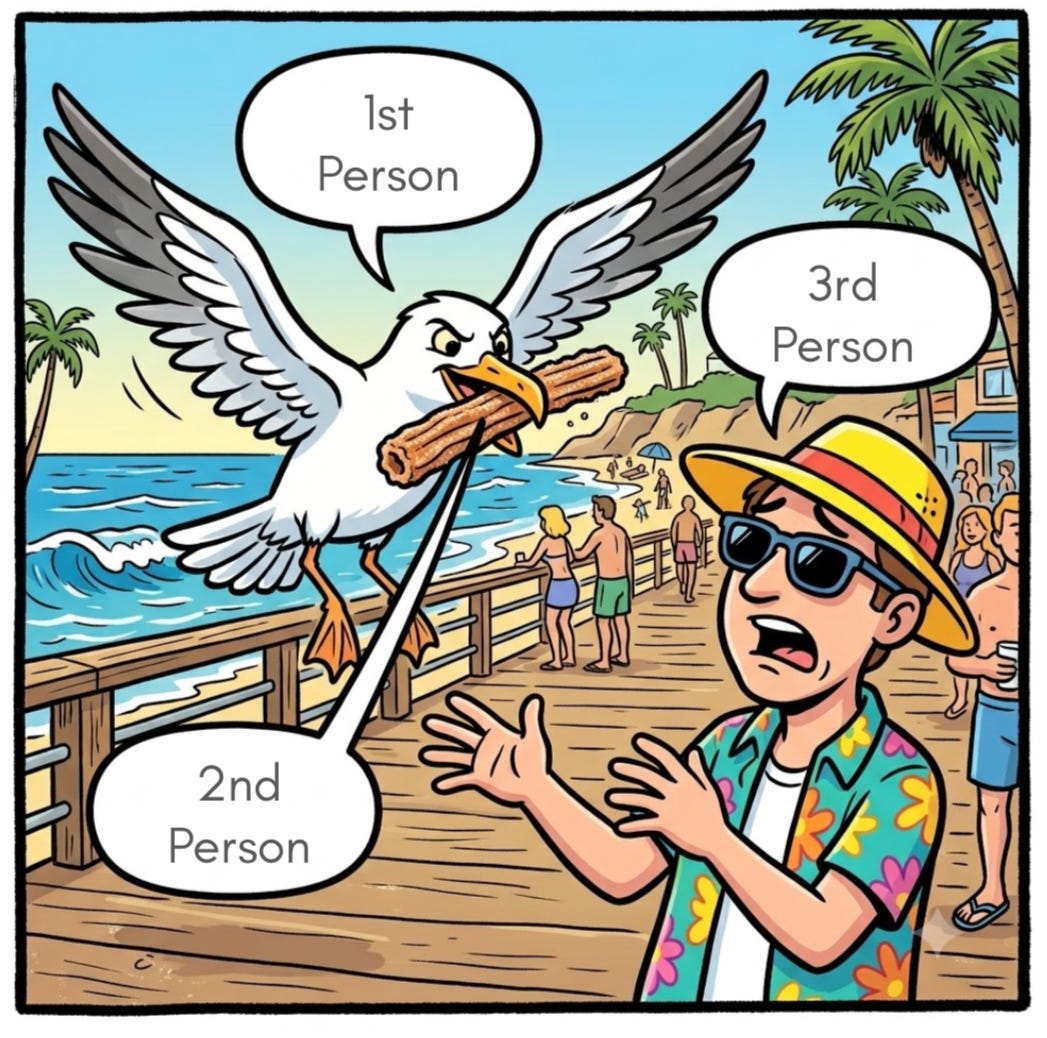
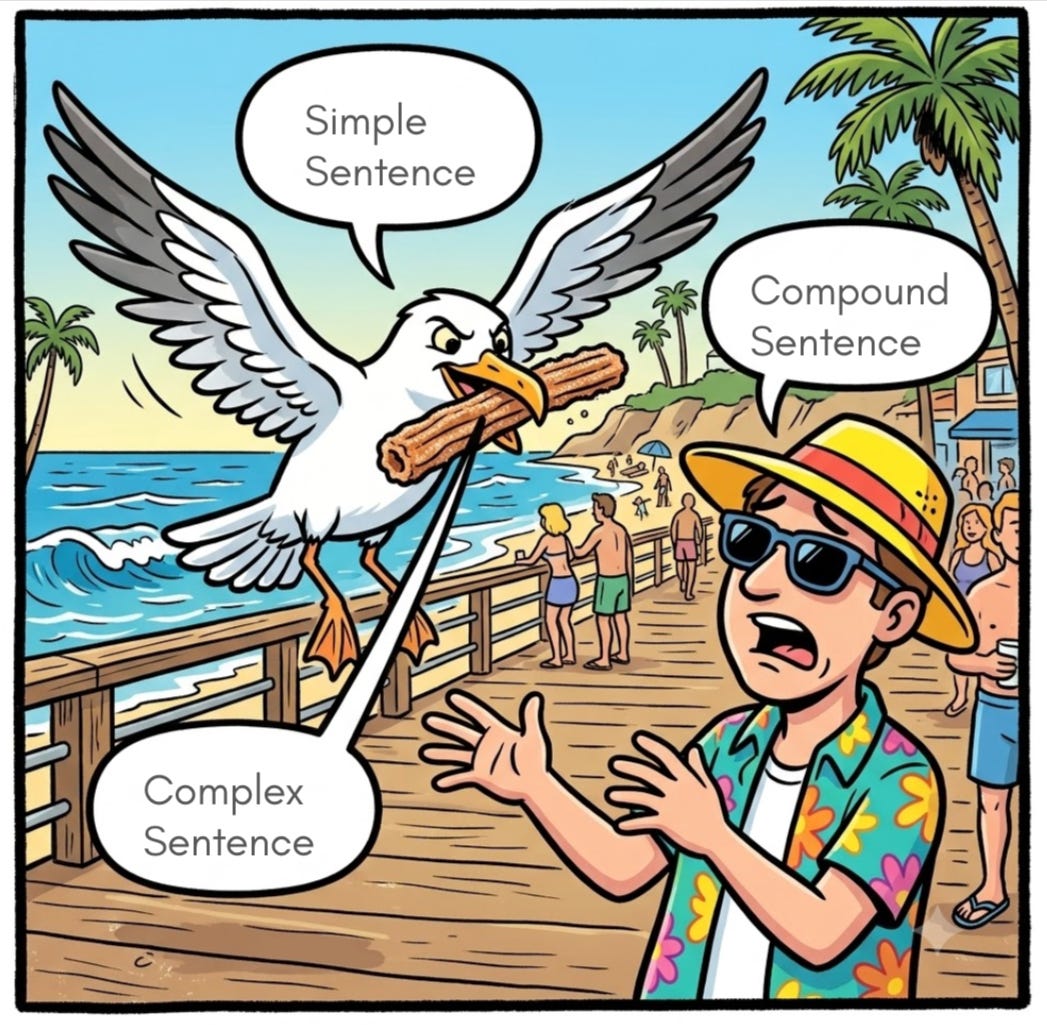
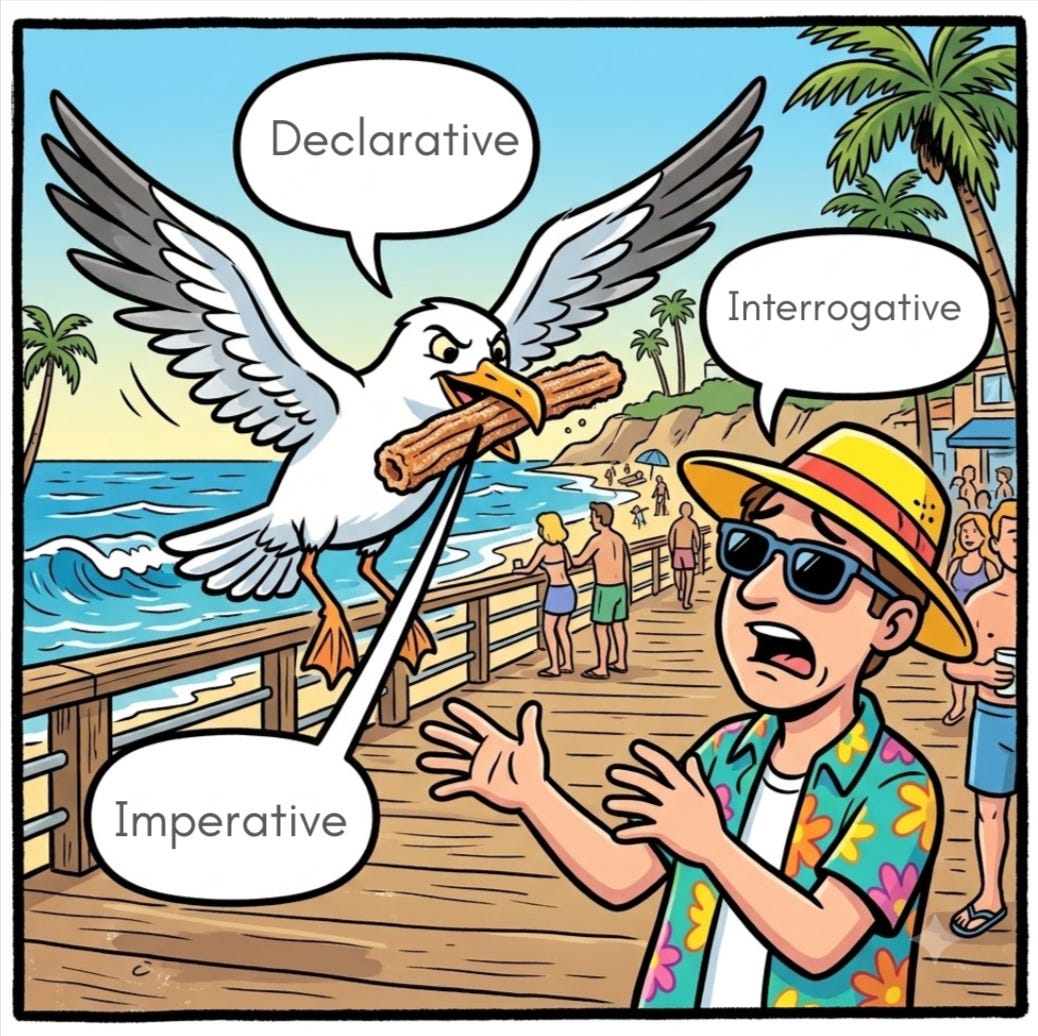
But, these aren’t the only ways to use it. The lenses are where the flavors come in. Here are some of the most widely used:
3xPOV shifts perspective: first, second, and third person, three different characters watching the same moment, etc. One from my own classroom (see image below) asked students to introduce Minerva from In the Time of the Butterflies three times: as she’d introduce herself, as her community would, and as the government would. Same woman, but three completely different people on the page. For the assignment, I took it a little further. Each group was given a slide deck with the four main protagonists and each student completed one slide. After completing their own slide, students met quickly with other students who did the same character to compare and contrast their writing, and come up with a summary to share with the class. After that, a representative of each character shared their findings to the class. 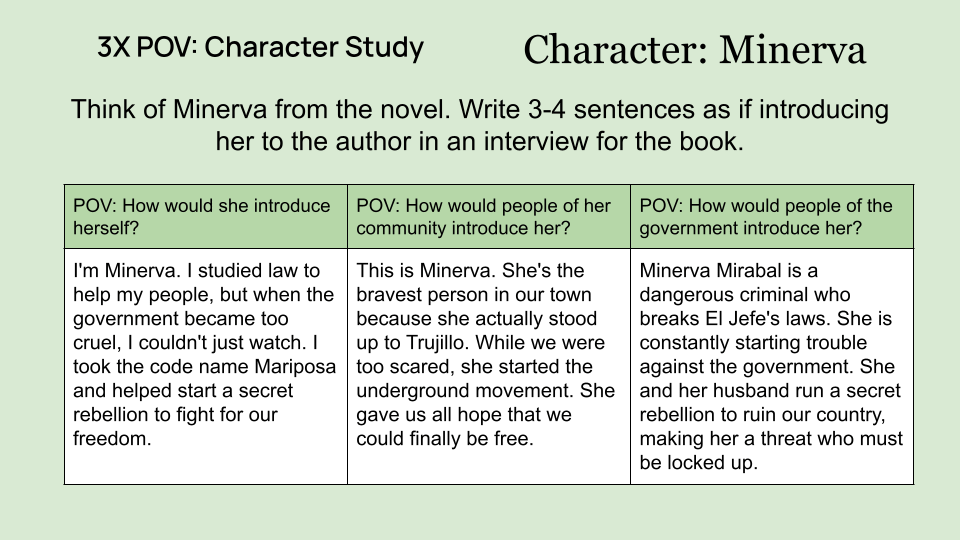
But my favorite comes from my wife’s sixth grade history class where they described a snapshot of daily life from the perspective of an Egyptian, an Israelite, and an inanimate object in the same vicinity. That one is what really struck me, and i really wish I had a copy of it to share! Of course, students wrote the Egyptian from a place of authority. The Israelite wrote of hard labor and hope. But one student chose to write from the cart path, explaining their sadness that they couldn’t keep dry and how the mud made the work of the Israelites so much harder. Pure glory. There’s your simple, embedded SEL moment, for sure.
3xGenre shifts text type: informational, narrative, persuasive. A science class could run one rock type through a factual paragraph, a first-person origin story told by the rock, and an argument for why igneous deserves the crown. A history class could examine the geography of the Tigris-Euphrates river valley, known as Mesopotamia, with writing focus of a wikipedia entry (informational), Journal entry (narrative), and the script from a travel influencer (persuasive).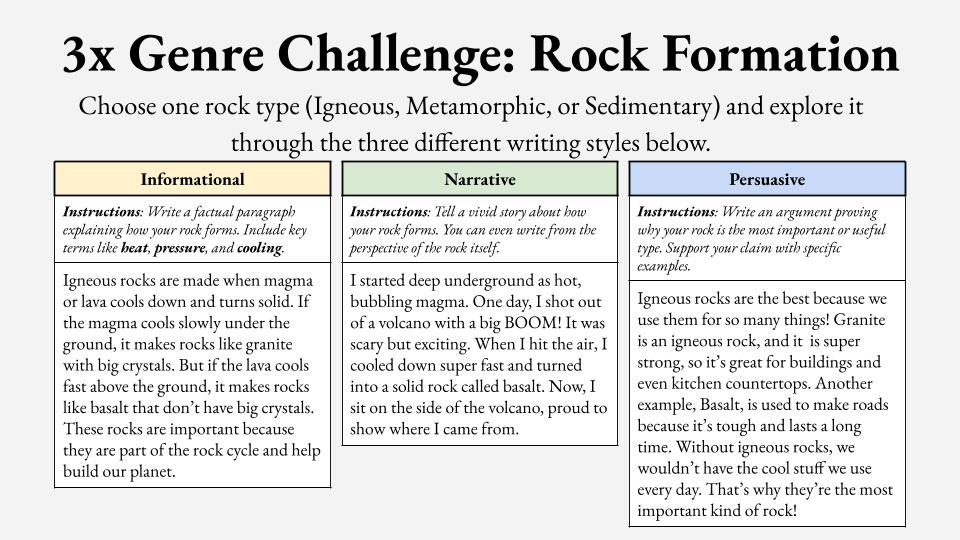
3xCER shifts the argument: three rounds of Claim, Evidence, Reasoning on the same source. This works great in science, history, ELA, and just about anywhere.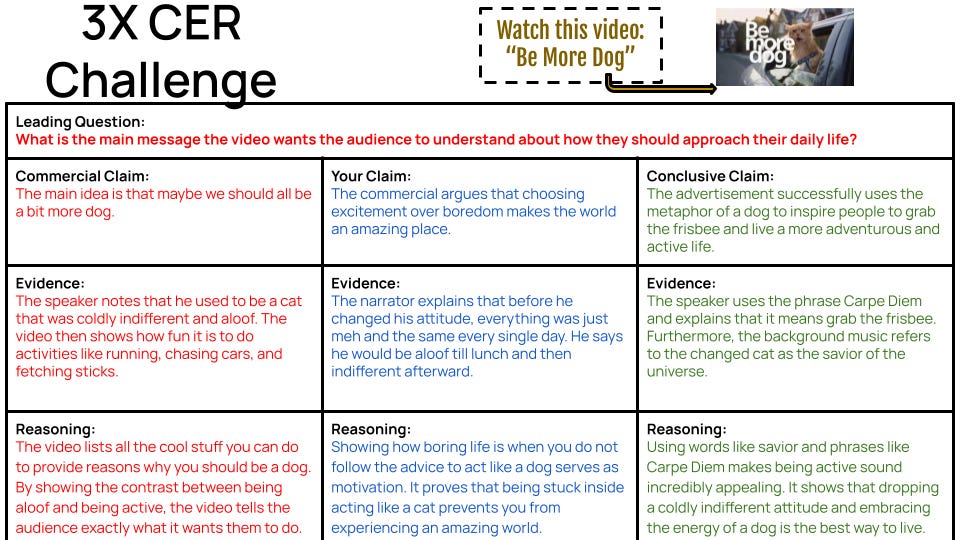
But the flavors keep going. Thesis statements. Tone. Rhetorical devices. Introductions and conclusions. If a skill benefits from repetition with variation, there’s a 3X for it.
Here’s one last great example from using the Monroe Doctrine as content to practice writing as narrative, happy and angry tones, persuasive, an POV.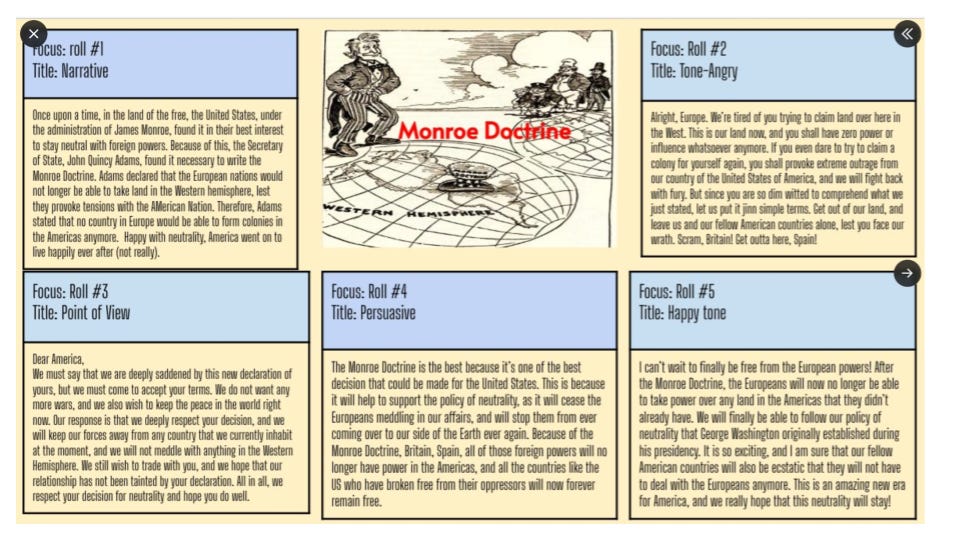
The academic round: a fake pirate tower
For the full academic rep in the workshop, we used a piece of local history. The Pirate Tower at Victoria Beach in Laguna looks like a wizard’s keep rising out of the sand, but no pirate ever lived there. William E. Brown built it in 1926 as a covered staircase from his clifftop house to the beach. A later owner, Harold Kendrick, loved pirate stories so much that he’d dress the part and hide coins in the tower for neighborhood kids to find. The name stuck.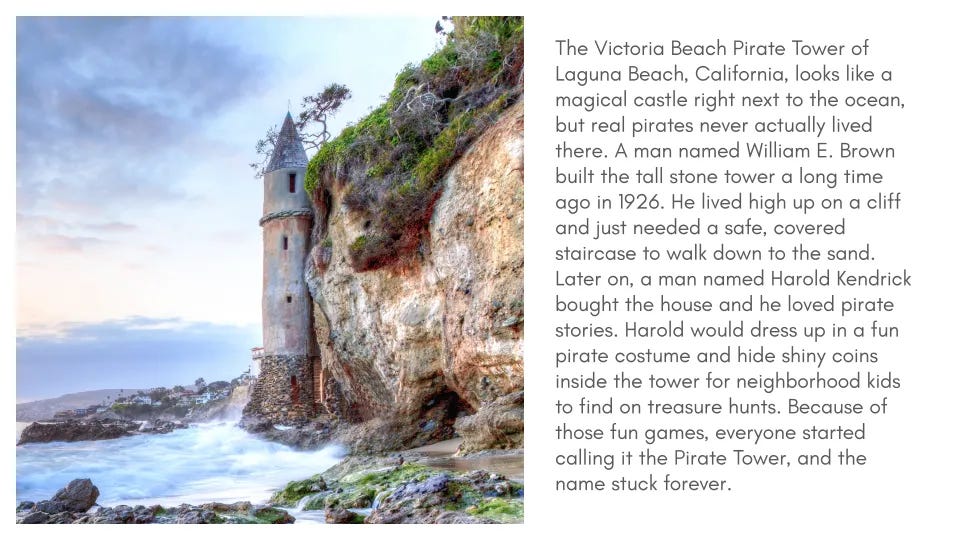
Teachers read that history and ran a 3xGenre in three-minute rounds: an exaggerated real estate listing, a campfire story that stops at the strange noise, and a four-line sea shanty about the fake pirate hiding coins.
During the academy, we did this in Snorkl. You’re welcome to try it out! head to join.snorkl.app and use the room code HSCP7R. Log in as a guest, and give it a whirl. Hit submit at the bottom to see your feedback.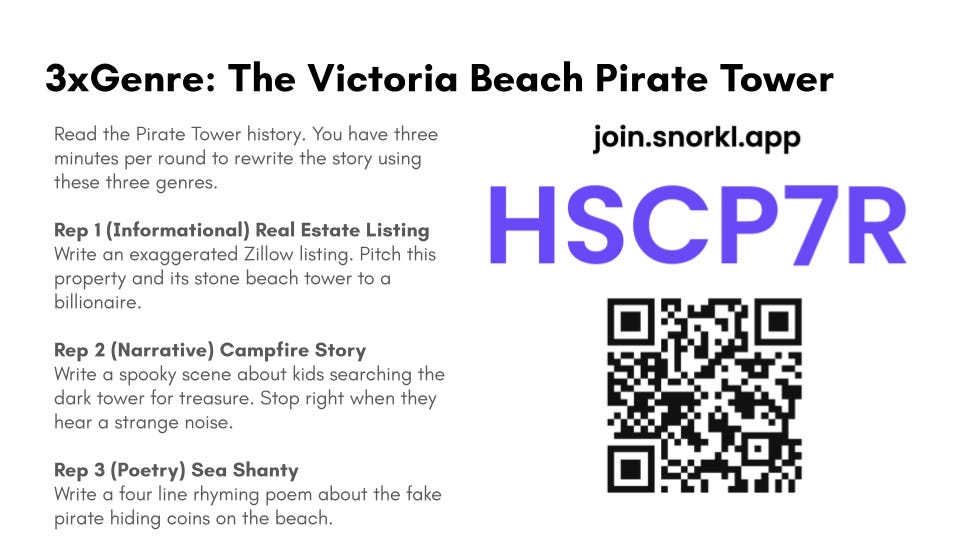
The range that came back was awesome. One listing pitched “ocean views, sand at your feet, literally” for a cool four million. Another conceded the handicap accessibility was limited but promised a home to rival Iron Man’s Malibu mansion. A campfire story opened on “Squish-Squash, Squish-Squash,” feet moving through muddy brush toward the cliffside, and stopped dead at a scratching noise in the tower. A shanty closed with the tower watching the ships come sailing home. Same 200 words of history, wildly different writing, and every writer practiced three times in about ten minutes, which was arguably too quick. In a classroom, with students well-practiced in writing these forms, I would extend that time, especially the sea shanty :).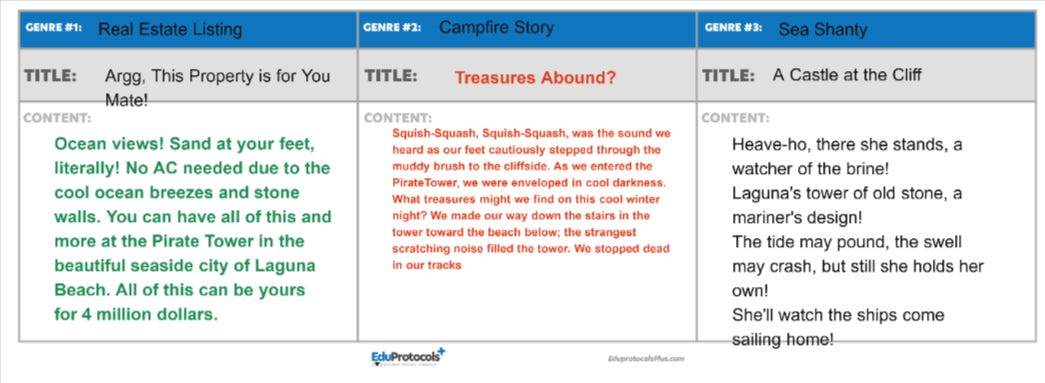 An example from participant K.B. at the EduProtocols Summer Academy in Laguna Beach, CA 2026.
Why it works
The repetition is the point, but it’s also the variation. Three reps on one input builds stamina and fluency without three separate prep cycles or grading windows for you to deal with (i.e. avoid). The shifting lens builds the mental flexibility that helps students learn to transfer one structure while testing another, deciding what matters most in a given frame, accepting that meaning changes with perspective. And because the input stays constant, you can see the thinking clearly (especially if you use Snorkl). When the content doesn’t change but the writing does, whatever changed is skill being practiced.
Get the recipe
Templates for 3xPOV, 3xGenre, and 3xCER are in the session resources: tinyurl.com/Laguna20263x
The 3X Challenge appears alongside its remixes, including the 5x version with five techniques, in The EduProtocol Field Guide: ELA Edition.
What’s the one text or image your students would happily write about three times? That’s your first 3X. Tell me what you’d use in the comments. If this lands, pass it to a teacher who needs it.