I didn’t know what to teach 30 yogis until I was on the highway. Maybe inspiration is a side effect of paying attention.
By Ashley Evans
Published: 2026-08-26
URL: https://wannabewisdom.substack.com/p/the-case-for-leaving-it-until-the
6:30 a.m. Sunday arrived like an eviction notice from sleep.
The night before, S and I drove to get a double-scoop gelato cone: one scoop white chocolate and peanut butter, the other hazelnut. We tug-of-warred over the cold, melting creaminess as it dribbled down our hands. Thor, our dog, licked up the milky drops from the cement. Afterwards, we walked along the harbour, passing a margarita back and forth and grieving the end of our gelato.
By 7 a.m. Sunday, I was driving up the highway to teach, eyes half open. I still hadn’t decided what my main Pilates move would be or what intention I’d set for yoga.
Wannabe Wisdom is a reader-supported publication. To receive new posts and support my work, consider becoming a free or paid subscriber.
I like to have both pre-planned. In Pilates, I place the hardest sequence, often a six-minute thigh exercise, at exactly the right moment. I think of it like the first major turning point in a movie, the moment when a student realizes they’re fully in the drama of it.
If they can muscle through the burn, the adrenaline and endorphins help carry them into the rest of the workout. There’s a glorious high on the other side.
In yoga, I set an intention at the beginning of class. We revisit it through the postures, and at the end, in Savasana, we go deeper with a longer visualization.
Shaping the collective energy of a class is one of my favourite parts of teaching. And yet, on this particular morning, I didn’t know what I was going to say until I was already driving down the highway. (If you read my latest essay on procrastination, this should not come as a surprise.)
My stomach started to flutter. Why did I do this to myself?! I never learn.
Except, it’s not that I hadn’t been thinking about it. I had pre-planned my playlist. I’d been reading all kinds of beautiful books, thinking about things, making loose connections between ideas, and collecting little scraps and bits in my notebook. I was waiting for something to hold my attention.
There was one quote that had been beaming around my head all week. In The Seat of the Soul, Gary Zukav writes:
“When the personality comes fully to serve the energy of its soul, that is authentic empowerment.”
I kept wondering what that actually meant. What is the energy of my soul? And is my personality helping it along, or constantly getting in its way?
Three minutes before class, I leafed through the book. I’d brought it with me because I had a sense there was something in there I needed. And voilà. I found a beautiful passage about intention and light. Immediately, I knew I would read it at the end, during the final Savasana.
I walked into the 37°C room. The room was silent, with 30 people lying on their mats. I introduced myself and guided them to imagine each breath moving in and out of their heart. Then, I asked them to imagine blood pumping from their heart to every corner of their body: their blood carrying energy, and carrying light.  Thor loves coming into the hot room with me. I let him in while I clear my props at the end.
Some of the students put their hands over their hearts. I encouraged them to picture someone they loved. A partner. A family member. A pet. I asked them to notice the energy running up, down, and all around their bodies. Then I got them to their feet, and we moved through the 60-minute class.
At the end, I brought them back into Savasana and read the passage from the book. We placed our hands back on our hearts, and I read the quote again: “When the personality comes fully to serve the energy of its soul, that is authentic empowerment.”
Then I left them with the last few minutes in silence.
I noticed one man with tears streaming down his face.
And somewhere in there I realized: maybe I hadn’t left everything until the last minute after all. I may not have known exactly where I was going with the class...but I’d been paying attention all week to the things that kept arising around me.
I didn’t know where this Substack post was going either. There were about three different versions before I started to write, and this is the one I landed on.
It’s not really procrastinating when you’re silently collecting things
Writing this newsletter is basically the same job I do in the yoga room. I’m listening throughout the week and letting thoughts bounce around between my head and my heart. I spend time with them, write things in my notebook, and see what resonates and what keeps resurfacing. And then, eventually, I have the courage to bring it into a collective space.
Maybe that’s how inspiration actually works. We’re taught to think inspiration is like being struck by lightning. But most of the time, you have to go looking for connections.
Ideas are like little animals that run away from you and hide in the bush. You have to grab them by the tail, yank them into the light, throw them onto the page, and let them squirm until they settle.
, author of Bird by Bird, arguably one of the best books ever written about writing, talks about something similar through an analogy borrowed from E.L. Doctorow: driving at night.
“…it’s pretty foggy. I might have an image. I might have a theme. I might have something I really want to talk about on paper. But then I can’t see how it’s going to turn out. I can’t see where it’s going to end […] but I’ve learned through habit that that’s okay. I can see the set of headlights in front of me, and thank God for that set of headlights so that I can get from at least point A to point B! When I get to point B, which might be two paragraphs later, it will inform me of where we might go next.”
Maybe inspiration is just a by-product of paying attention.
If you’re feeling blocked, I highly recommend this conversation Anne had with David Perell.
So that’s what today’s essay is. I’m giving you exactly what’s in front of me.
Maybe next week I’ll start a little sooner.
Probably not.
With love and rebellion, ❤️
Ashley
New here? 👋
I know I’ve had some new subscribers lately, so here’s a little bit about what you’ve signed up for. 👇
Wannabe Wisdom is personal essays on creativity, ambition, and the strange work of becoming on the page. Perfectionism comes up a lot. 🙌
I also write about the more technical side of Substack: how to grow here, how to keep showing up, and how to build a consistent creative practice.
I work with writers, professionals, and business owners who want to build a thoughtful presence on Substack, whether they’re starting from scratch or trying to grow something they’ve already begun.
I’m not a Substack guru, per se, but I have spent the last three years learning this platform from the inside out.
🎥 For Substack nerds
I just put out a video on the difference between followers and subscribers.
🎙️ Coming up: Slow AI
“Thank God there’s an adult in the room.” That was my first thought when I started reading ’s work on AI.
On Friday, September 11 at 2 p.m. PT / 5 p.m. ET / 10 p.m. UK, I’m talking with the bestselling author of Slow AI about AI, creativity, writing, and what art might look like on the other side of all this.
Meet Sam before the conversation.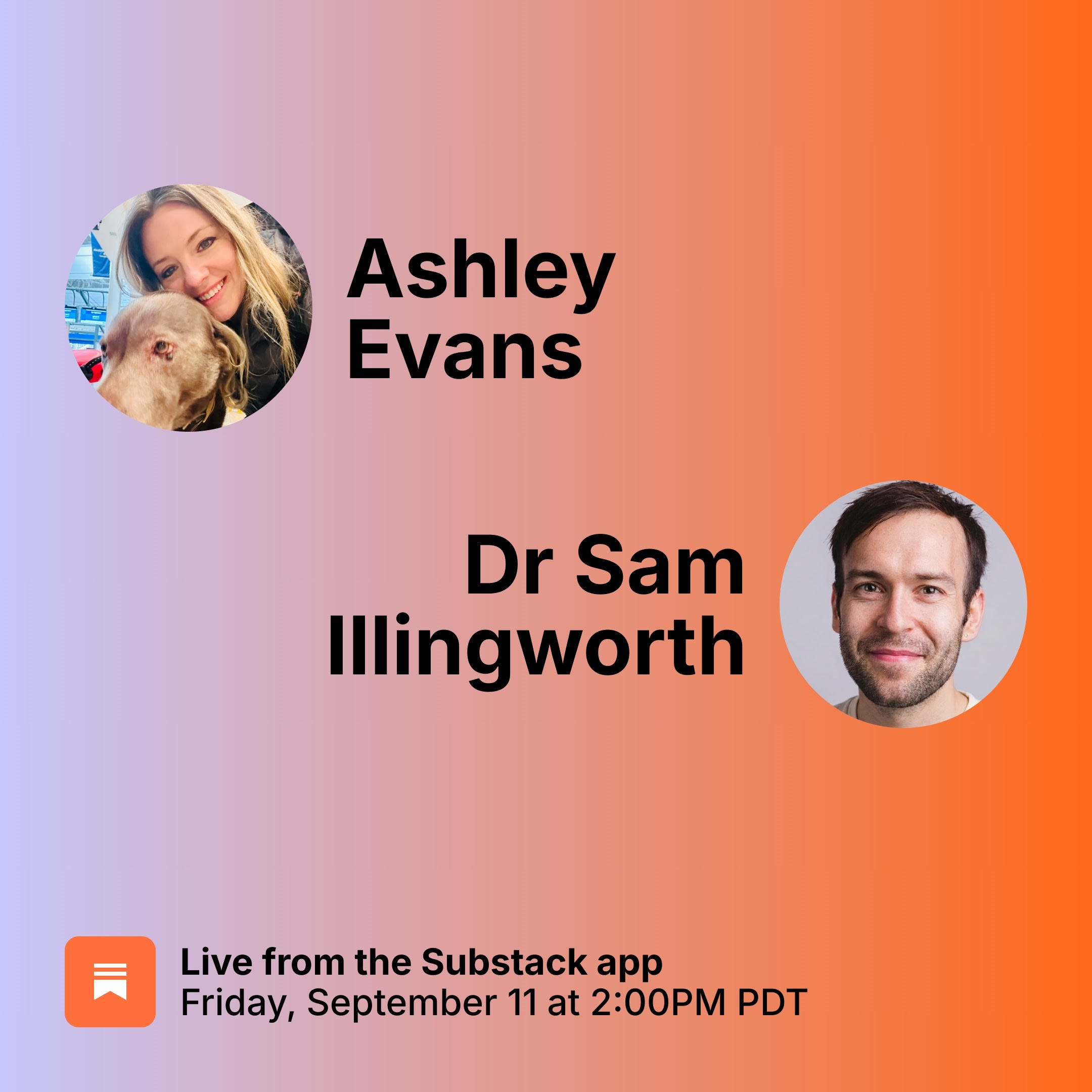
✨ Want to go a little deeper?
You can also find Drift & Deepen, my meditation and hypnotherapy YouTube channel, where I share guided visualizations for creative and personal blocks.
If procrastination or creative resistance has been getting in your way, start here.
💌 Work with me
I’m currently working with clients one-on-one. If that interests you, DM me to learn more.