I taught a robot to roast my Substack. Here’s how to run the same brutally honest audit on yours.
By Ashley Evans
Published: 2026-07-25
URL: https://wannabewisdom.substack.com/p/dare-ai-to-roast-your-substack-i
Hey friends,
Last week the universe staged an intervention and said, “rest girlie!” when I tweaked my back, and couldn’t teach fitness. Suddenly I had hours to fill. So I taught myself to build a tool that roasts your Substack. A gift from the Gods (or Antichrist depending on your camp). And before I let any of you near it, I used it on myself: twice.
Why, darling, would you want to do that to yourself? 😌
I’ve been running this newsletter for three years on pure instinct (well, instinct sharpened by 16 years as a professional communicator, but instinct nonetheless). I’ve managed to write 90 essays and grow it from five subscribers to nearly 3,000. I thought I was doing pretty good. I’ve helped other Substackers grow. Heck, I have a YouTube video with 13K views that teaches beginners to get on Substack.
Surely, my Substack reflects my communications experience. And a roast by a robot would only confirm what I already know: that I am doing brilliantly! 

…It did not.
If you asked me whether my newsletter was actually healthy, I’d hand you a big confident YES and absolutely zero evidence. I run this whole thing independently, with my husband’s good advice, and aside from him there has never been anyone here to tell me otherwise.
I don’t have any kind of overseer patting me on the back telling me I’m doing a good job. I gain 20 subscribers on a Thursday, make a post on a Tuesday, lose more than half of them, and I have no idea why.
Somewhere in the last couple months Claude became the manager I needed, to give me the performance review I’d been dreading and asking for.
✨It handed me a golden document.✨
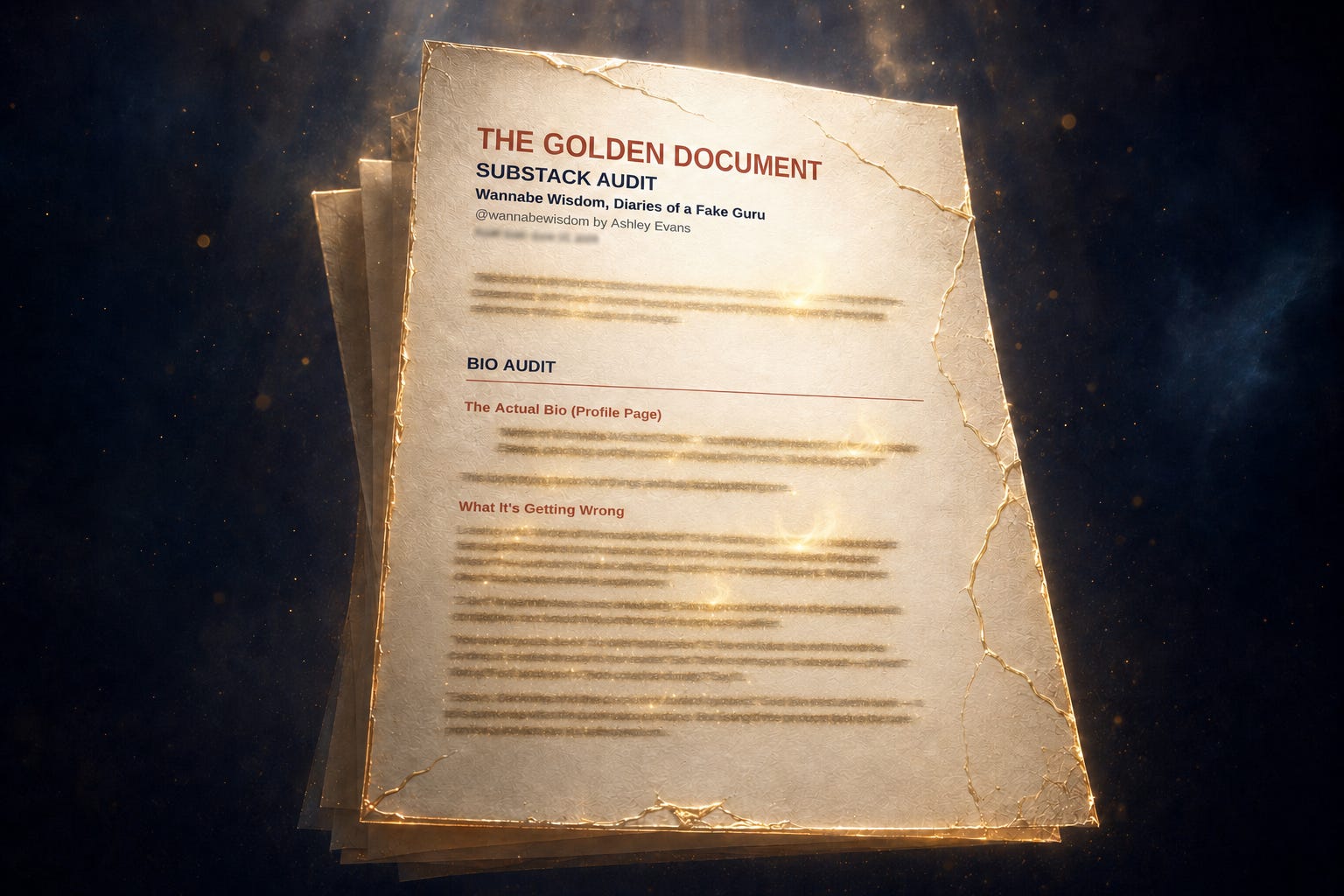
It analyzed my profile and told me I was doing too many things at once and accomplishing only one of them. I held my breath. I exhaled for a second as it declared my About page was pretty good. But then, it unleashed.
“Your bio is basically saying nothing! It’s like you’re handing someone a business card saying ‘Person of Business Cards’.”
Then it made its way down to my archive. My eyes scrolled the page.
“Your most magnetic work is behind you!” 

It told me my best work was buried, and it dated back to last October. It also pointed to the sobering fact that my open rate is at 22%, and it’s sinking!
What did this all mean?
Don’t ask questions you don’t want the answer to, Ashley!
But I wanted to face this straight on! I started looking a little closer. Which is always a mistake.
My heartbeat stuck in my throat. It told me someone else’s newsletter was responsible for two-thirds of my new subscribers from recommendations. Meaning that my entire growth engine is dependent on one person. She could wake up one day and just decide she no longer liked my writing.
I closed my laptop. And curled up with my dog Thor on his bed, the place I do my best sulking thinking. I kept waiting for someone to say, “No, that’s not actually the case. It’s them, not you.” But it never came.
That’s the problem with mirrors: they show you what you don’t want to see.
So I ran the whole audit on myself again, on purpose. I know that might sound slightly deranged. I was in a mood. This time I took the notes like I was taking direction from a director I respected and I started integrating them.
And now, I want to hand this over to you so you can do your own sulking thinking, and understand what the numbers are telling you.
But before I do, I want to address the elephant in the room…
The Elephant in the Room
I’d like to acknowledge the big news we all got this week. Substack announced its partnership with Pangram, giving readers a tool to scan people’s text for AI.
Substack is trying to clean up AI slop and make the platform better for all of us. And perhaps this is the best way forward at this time, but there are problems with the technology, which others have addressed eloquently, including Sam Illingworth’s eerie parallel to Arthur Miller’s The Crucible. And if you really want to understand how the AI detector works: Ruben Hassid exposes it by swapping one item and watching the verdict flip from “100% AI” to “100% human.”
I use AI, let’s talk about it.
I use AI as a collaboration partner to research and edit my final drafts. I don’t use it to think for me. I love writing, thinking, analyzing and finding the words to express myself. Writing is how I sort out my ideas. I like to feel my own thoughts. I never want to outsource that to a robot. But, to have a partner to bounce ideas off and edit my run-on sentences and comma splices: yes, please.
There’s controversy around AI. For many good reasons. Let’s not even get started on its implications for cybersecurity or labour market disruption. And yes, creativity too. If you use the tools lazily, readers feel it, and so will your brain. It’s called cognitive offloading. But used sparingly, like a touch of salt to enhance what’s already good, AI is incredibly helpful.
It’s taken me a while to finagle my relationship with AI, and it continues to evolve. I empathize with the fear and grief people are experiencing around it. But I also know that grief is something we must move with and through.
It’s ALSO an incredibly exciting time to be alive!
I have a lot more to say on this topic, and I started writing about it, but then I realized I wrote an essay. It’s about the day I had to fire my dad as my editor. 🤷♀️😅 That one’s coming another time.
FYI - Because this is a paywalled post, you won’t be able to use the AI scan to see if it’s human. Everything above the paywall is. And honestly, I had to change how I wrote this one to meet the green mark of purity. I can’t promise all future articles will. But this one did! ✅ 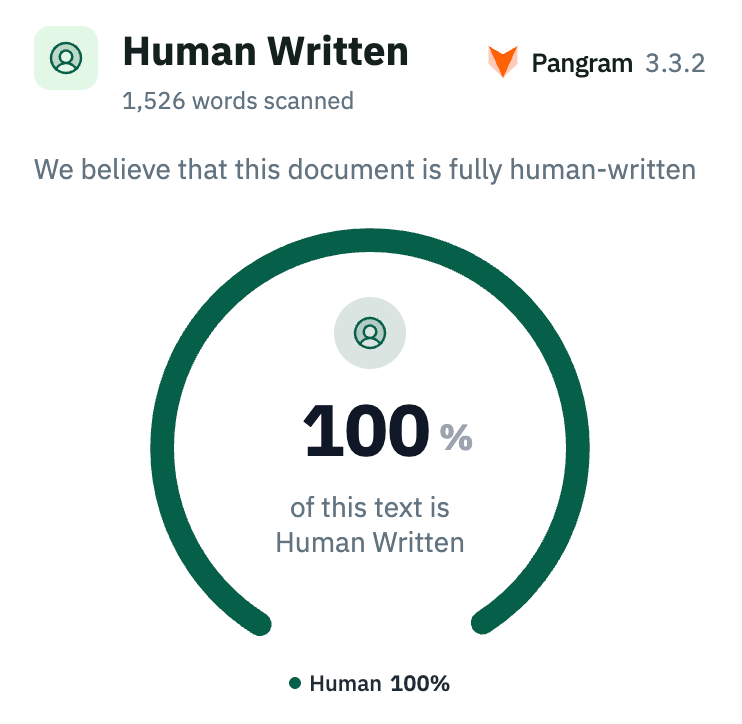
Below the paywall, my score was brought down. Claude and I did some good work together! ✨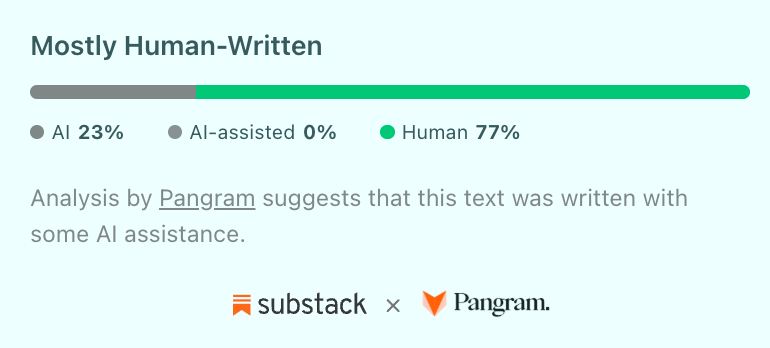
Let’s get back to it, shall we! 👇
You’re Doing Everything Right But Not Growing
Maybe you’re doing all of the things: you’re publishing regularly on schedule; writing notes and replying genuinely to other people’s comments; restacking notes with actual comments. But still, your dashboard is a puzzle! You’re up, you’re down, with nobody to consult.
I’ll be the one to tell you right now: your effort is not the problem! I see you trying. I’m trying. We’re all trying!
The problem is that we’ve been running our newsletters on feel and calling that feeling a strategy.
You know how that went for me. 👀
A Quick Word About The Robot
I want to give you a quick rundown of my new colleague Claude. I’ve been talking about it as if you already knew Claude, but maybe you don’t.
Claude is an AI assistant in the same family as ChatGPT. Claude Cowork is like 100 times? 1000 times? more powerful than a mid-tier marketing team and allows you to do some pretty cool things like set up connectors to your Gmail. I’ve created a morning brief where it reads my emails to me; tells me what my to-do list is; checks my calendar. It even unsubscribes me from newsletters that I don’t want to be on anymore.
Claude Cowork is the desktop app. This is one of the most interesting features of it: it can go through your desktop, open folders, read files and clean your life up. I got it to re-organize my desktop and sort 4,000 files. (Of course, with my permission.)
You don’t need to be super technical to set this up. I’m not technical, and I managed to set it up in an afternoon, and I took notes along the way so wherever I got stuck, I could share that with you.
Ten Minutes From Now
So, how it works is, you sit down and follow my instructions step-by-step. You tell Claude to look at your Substack. It will open your Substack page for you (after you’ve connected it).
It’s like a ghost in your computer. Yes, we’re living the science fiction movies we grew up watching.
You copy and paste the prompts that I put below, and you let it do its work. Then you walk away and make yourself a sandwich. When you come back, Claude will have presented you with a very official Substack audit guide.
It’s going to give you a sobering overview of your bio, of your About page, your post titles, what’s working, what’s not, of your engagement rate. You’re going to have your own “person of business cards” problem. You’re going to wince, you’re going to smile! It will EVEN tell you (because I programmed it to do this) other Substacks with your vibe, who you can learn from.
Is this the same as hiring an actual human communications strategist? No. (Hi, I’m one. We’re lovely!) But it ends the guessing and you’ll learn new tools that are becoming a big part of mainstream society.
Before You File This Under ‘Someday’
If you’re reading this thinking, “Yeah, okay, I’ll do this someday down the line,” that was me too. I thought, “I’ll just keep writing and learning,” but if you don’t ever stop to assess what you’re doing, you’ll just keep doing the same thing and we know that’s the definition of crazy, right?
The audit took about ten minutes.
I wrote the whole audit and crafted the prompts below the same way a communications strategist would deep dive into your branding materials.
We’ll look at your calls to action, your bio, your About page, your post titles, and we’ll look at the psychology of what makes a subscriber subscribe and leave. All of this is below for paid subscribers.
✨ Instead of offering it as a paid product, I’m offering it for free for paid subscribers. That’s $8 a month to be a paid subscriber of Wannabe Wisdom. It includes step-by-step actions, screenshots included. You just need to follow it. I’ll walk you through it kindergarten style.
Be brave, friend! Your transformation is ahead.
What You Get When You Upgrade:
-
Every step of the setup, with screenshots, prompts, and the exact buttons you need to click (for the non-technical. Breathing and patience are required)
-
Instant access to the whole paid archive: the prompts and frameworks on voice, communication, and your personal ‘why’ statement
-
The complete Substack Beginner’s Guide: a ~1-hour video walkthrough plus a written document covering everything from basic branding to Posts vs. Notes to finding your publishing rhythm
-
Cheat sheets, bonus resources, and behind-the-scenes notes for your eyes only
-
Guided theta therapy sessions for the inner work that actually runs your outer work: recorded meditations for clarity, confidence, imposter syndrome, attracting abundance, nervous system regulation, creative blocks, and one specifically for flight phobias (you’re welcome).
-
Direct DM access to me when you’re stuck on Substack
-
Preferred pricing on 1:1 coaching
-
The community chat: a place to share your work, meet other people building in public, and get more eyes on what you’re making
It costs less than a monthly London Fog and unlocks everything above.
Here’s a little love from my most recent client:
“I cannot say enough positive things about how much Ashley taught me about Substack in our first four lessons. Even after my package ran out I have not let her go. She is a wealth of knowledge and a great teacher, with the best personality to boot. She made my transition from Substack Luddite to Substack newbie as smooth as possible.”
— Allison, who launched her Substack after one month working together and hit the Rising Bestseller list in Food & Drink.
Quick one before I go: my next author conversation is going live Tuesday, August 4th 11am ET / 8am PT.
is hard to sum up in one line. He's spent twenty years as an editor, he's a dad of boy-girl twins whose fatherhood fails have become his writing material, and his stated purpose is "hope, healing, and hard laughs." He calls his writing the truth on acid. I can confirm. He’s a Bestseller and Rising in Humour. His book and newsletter are both called Fraternal Youth, and the book is here.
Substack Live. Come ask him things, or catch the replay after. Here’s the link. Put it in your calendar!