By Carrie Loranger
Published: 2026-10-04
URL: https://thrivewithcarrie.substack.com/p/the-substack-notes-crash-course

You post a Note. It gets four likes, two of them from people you already know, and no new subscribers. You post another one the next day, and the same thing happens. After a few weeks, you start to wonder whether Notes are worth the time.
Meanwhile, other writers in your niche pick up new subscribers from Notes every day. Some of them started after you did.
Why your Notes aren't bringing in subscribers
In most cases, the problem isn't your writing. It comes down to a few things you can fix:
-
You post whenever you remember. The algorithm never sees enough Notes from you to learn who to show them to.
-
Your Notes start slow. People decide in about two seconds, and the good part is buried in line three.
-
You judge Notes by their likes. So you repeat the ones that feel good instead of the ones that bring subscribers.
-
You post and leave. Notes reward conversation, and replies are what put your name in front of new readers.
-
Your profile doesn't close the deal. When someone clicks your name, nothing tells them why to subscribe.
What's at stake
Notes are where most new readers find a Substack before they ever open a post. If you aren't showing up there, you're counting on people stumbling onto your posts, and most of them won't. Every month you skip Notes is a month of readers subscribing to someone else.
The writers who use Notes well grow faster, get more Recommendations and collaboration offers, and have a bigger list ready when they launch a paid tier or a product.
How this guide helps
This page shows you what to fix: how many Notes to post, how a strong Note is built, and 9 Note formats with screenshots and the number of subscribers each one brought in. The orange number at the bottom of each screenshot is new subscribers from that Note.
These are my own Notes. This approach helped me grow 9-To-Thrive to more than 12,500 subscribers and a Substack Bestseller badge in 18 months, and during my fastest growth stretch, more than 60% of my new subscribers came from Notes. Read this once, then keep it open while you write.
What Notes do for you
Your posts are where readers go deep with you. Notes are where they find you before they’ve subscribed.
A Note can lead to a profile visit, a conversation, a follow, a subscriber, a Recommendation, a collaboration or someone finding one of your long-form posts. I’ve watched every one of those happen on my own account.
How many Notes to post
I post somewhere between 4 and 10 Notes a day now, and about 10 is my sweet spot when I have the system to support it. That number came from testing my own publication. If you’re newer, build up to it:
-
Months 1 and 2: 1 to 3 Notes a day.
-
Months 3 to 6: 3 to 5 a day.
-
Month 6 and beyond: 5 or more, once you know what works for you.
If you’re just starting, one Note a day is plenty. Your first goal is learning what gets replies, what feels natural to write and which Notes bring subscribers.
If you struggle with Notes Consistency
WriteStack made me a better Substack writer — not by writing for me, but by showing me what was already working.
It allows you to schedule Notes in advance, it learns your voice, surfaces your patterns, and points you toward the Notes and timing that grow your list. You stop guessing and start compounding. Try it.
Likes can fool you
One of the first things my data taught me is that engagement and subscriber growth are different things.
My most-liked Note got more than 3,600 likes and brought in 219 subscribers. My best identity call-out got about 2,700 likes and brought in 699, more than three times as many.
Big likes feel great. Subscribers are what build the business.
Comments and restacks tell you more than likes, and they carry more weight in who sees your Note next. The Notes that grow your list are usually the ones that get people talking to you and then clicking your name. So watch new subscribers, profile visits, restacks, replies and whether the people joining fit your audience. Write down your subscriber count before you start posting daily, then check it again three weeks later. That number tells you more than any like count.
How a strong Note is built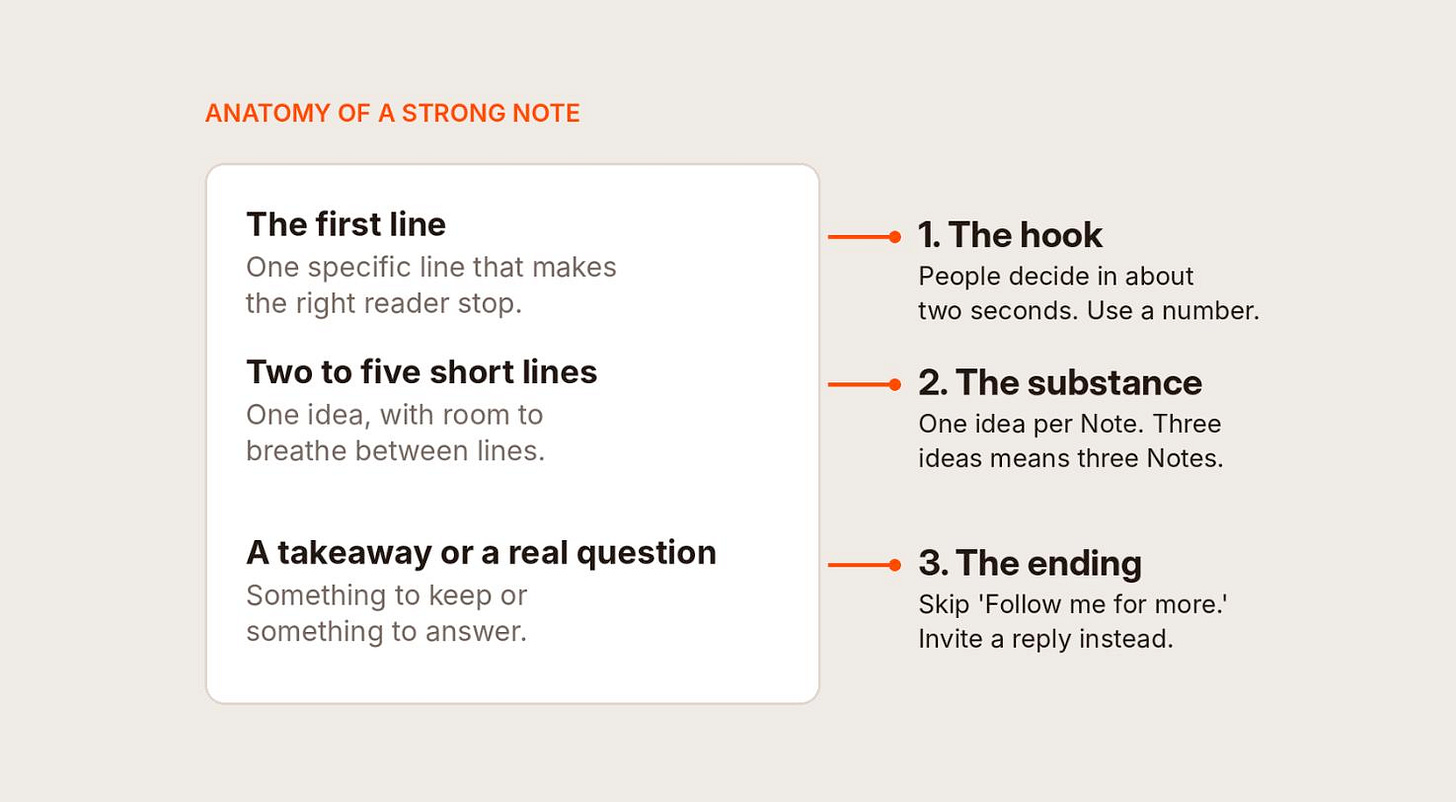
-
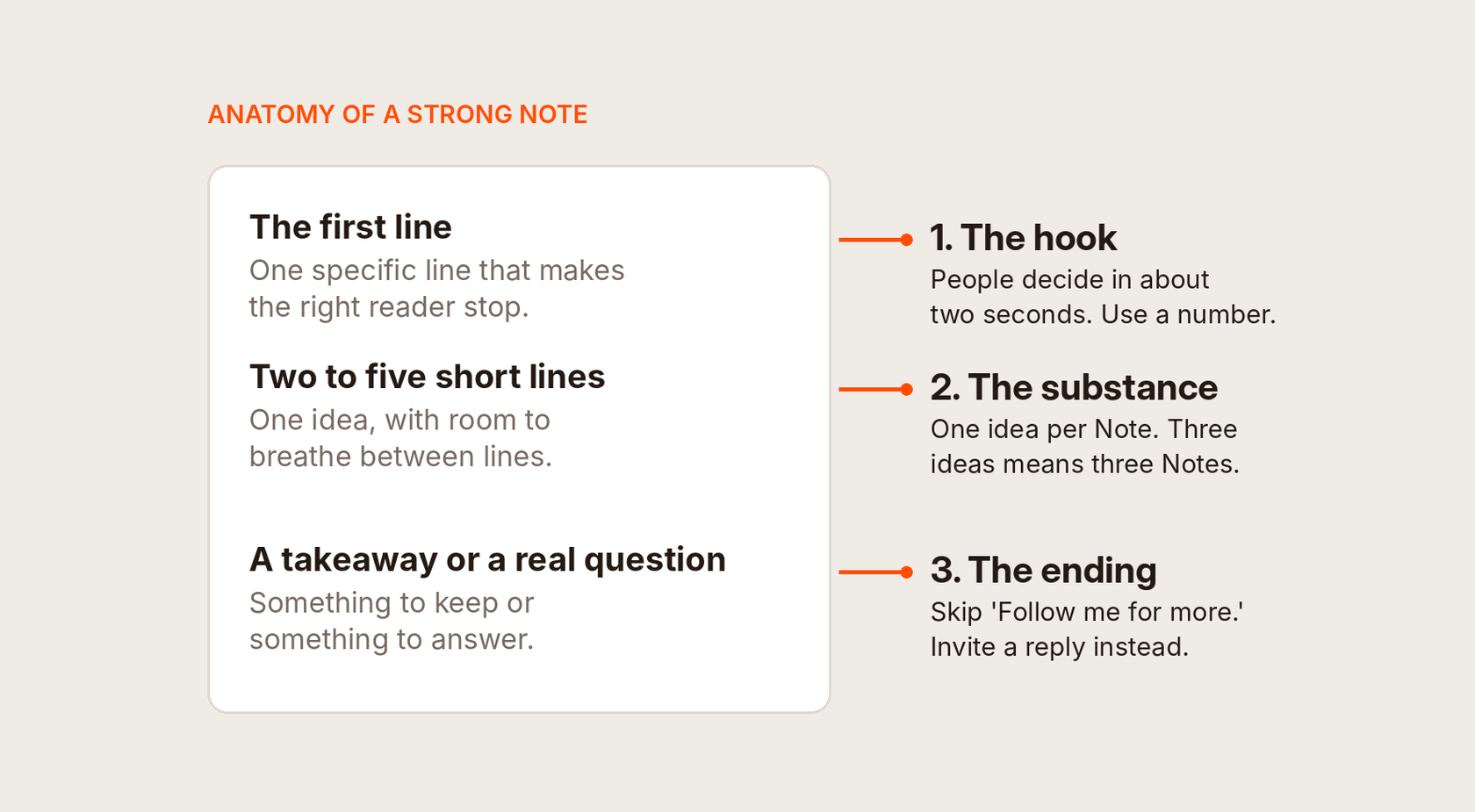
The first line does the heavy lifting. People decide in about two seconds. Be specific, and use a number when you have one.
-
Then 2 to 5 lines of substance. One idea per Note. If you have three ideas, you have three Notes.
-
End with a takeaway or a real question. Skip “Follow me for more.” Give people something to keep or something to answer.
-
Leave white space. Short lines read well on a phone, and that’s where most people read Notes.
Write from your reader’s problems
The best Note ideas come from your readers. Keep a simple document with the phrases people use in your DMs, comments, emails and polls, then use their words in your Notes. When I passed 10,000 subscribers, one of the habits I credited was solving 4 core reader problems over and over.
Pick one problem. Write one Note about it. Tomorrow, pick another.
Before you post, ask
-
Does somebody understand this without knowing me?
-
Does it make the right person feel seen?
-
Is there something worth responding to?
-
Does it sound like something I’d say?
-
Does my profile make sense if they click through?
9 Note formats that work
These are ranked by what they did for my subscriber count. The numbers are per run, straight from my Notes dashboard, and I’ve posted several of these more than once.
Each format comes with a fill-in template. Swap in your own words, numbers and story. Borrow the shape, never the wording.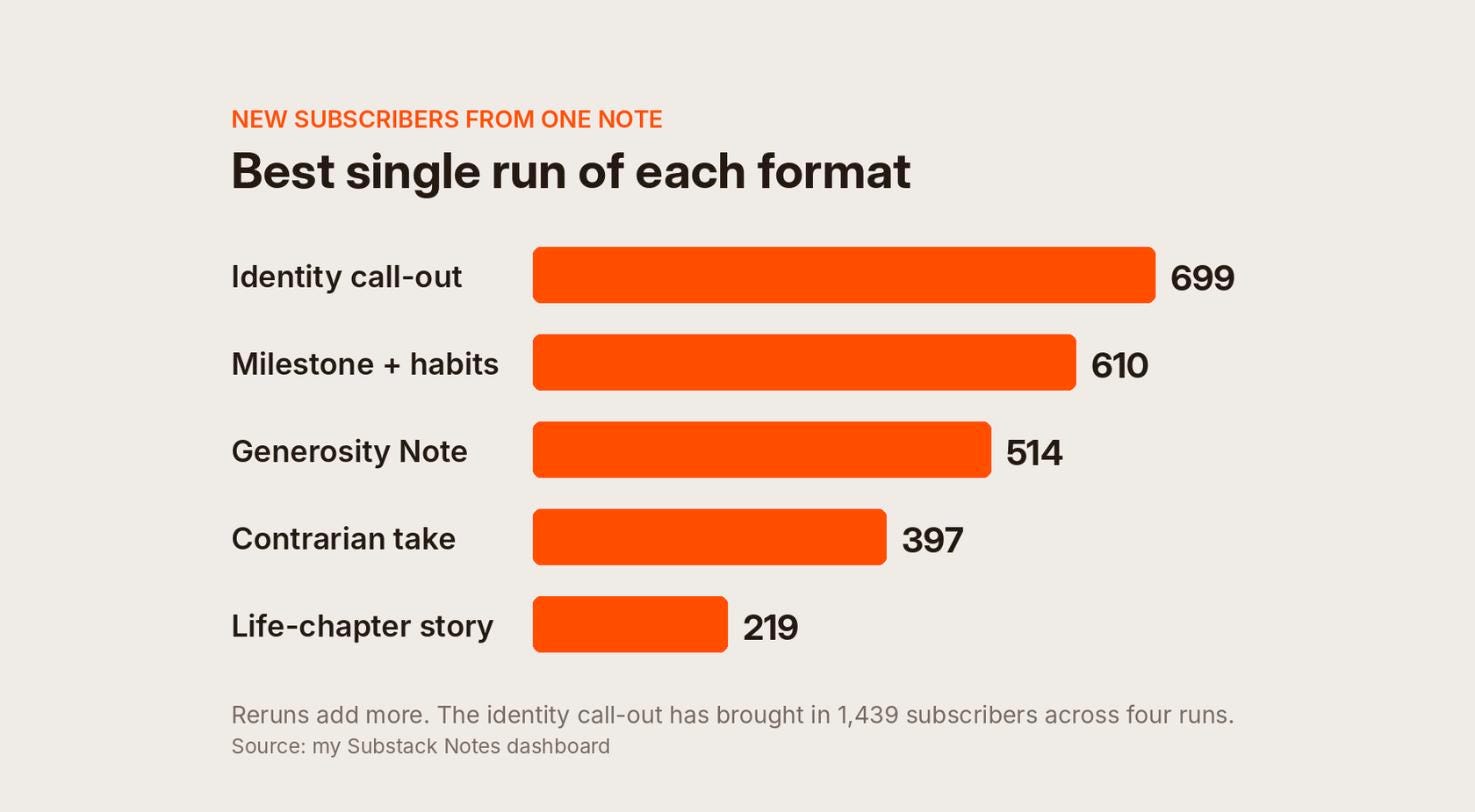
The ones that bring subscribers
1. The identity call-out. Name your reader in the first line and let them raise their hand.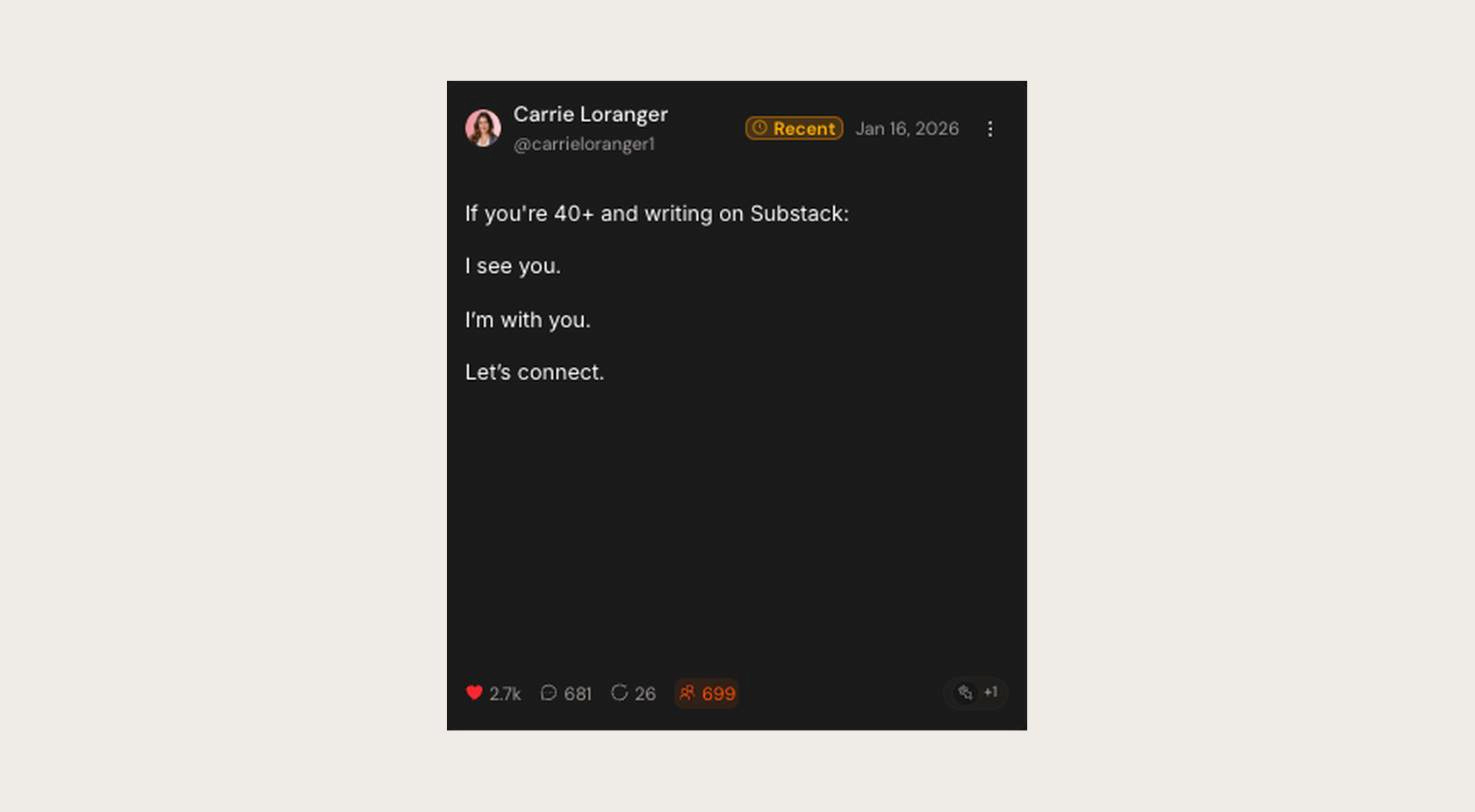
Result: 699 subscribers the first time I posted it. I’ve rerun it three more times since, and it brought in 368, then 239, then 133. That’s more than 1,400 subscribers from one short Note. Recognition converts. Post it when you want new readers to find you.
Your template:
If you're [who your reader is] and [what they're doing]:
I see you.
[One line about what you know they're going through.]
Let's connect.
2. The milestone + the habits behind it. Share a number the week you hit it, then list the plain habits that got you there.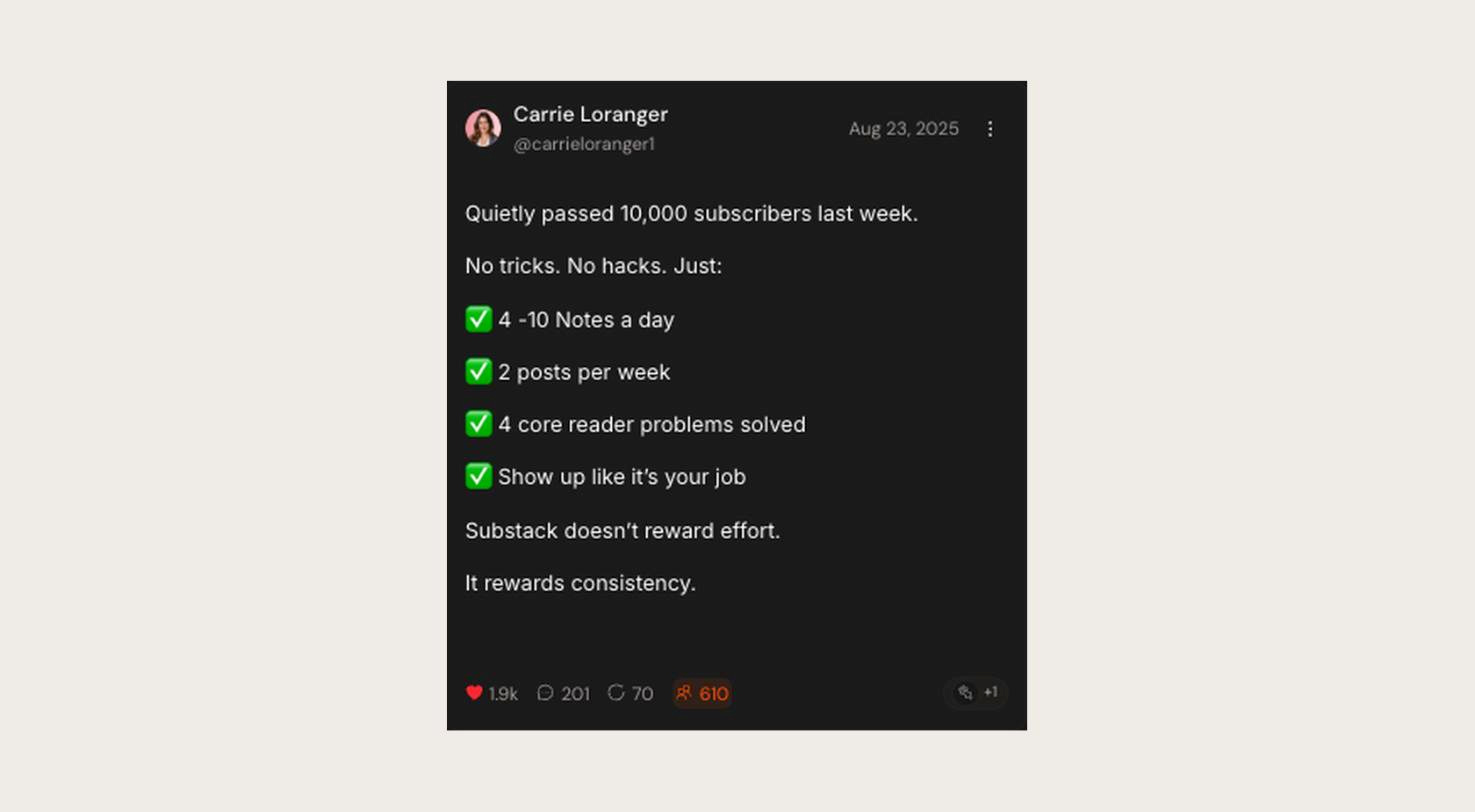
Result: 610 subscribers. An earlier version, when I passed 5,500, brought in 214. A real result gets attention, and the lesson underneath it makes people follow you. Your milestone doesn’t need to be big. Your first 10, 50 or 100 subscribers count. Post it the day you hit a number.
Your template:
Just passed [number] subscribers.
Here's what got me here:
✅ [habit 1]
✅ [habit 2]
✅ [habit 3]
[The lesson in one line.]
3. The generosity Note. Invite people to share their Substack and promise to look at every one.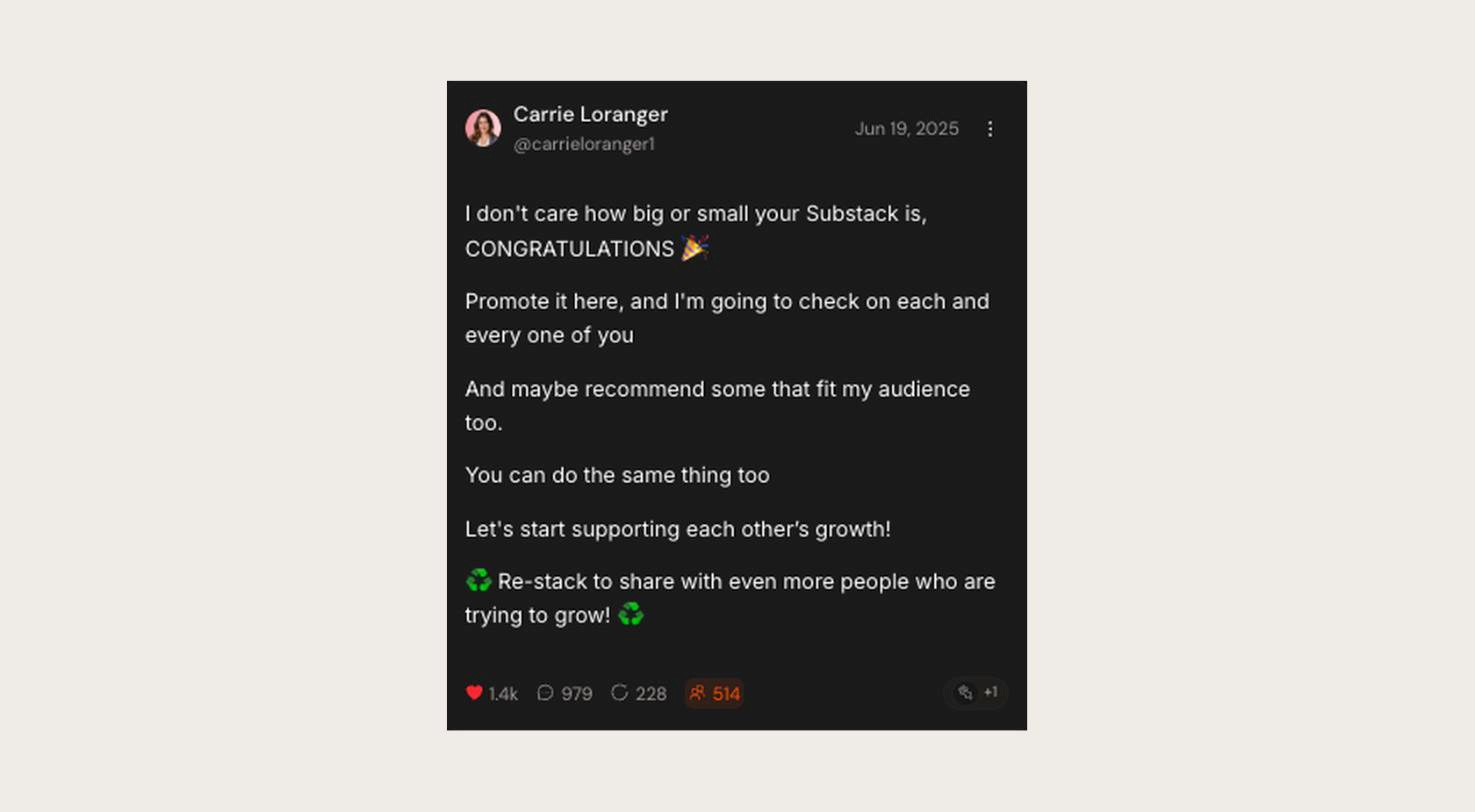
Result: 514 subscribers and 979 comments the first time, and 254 subscribers when I ran it again. Variations work too: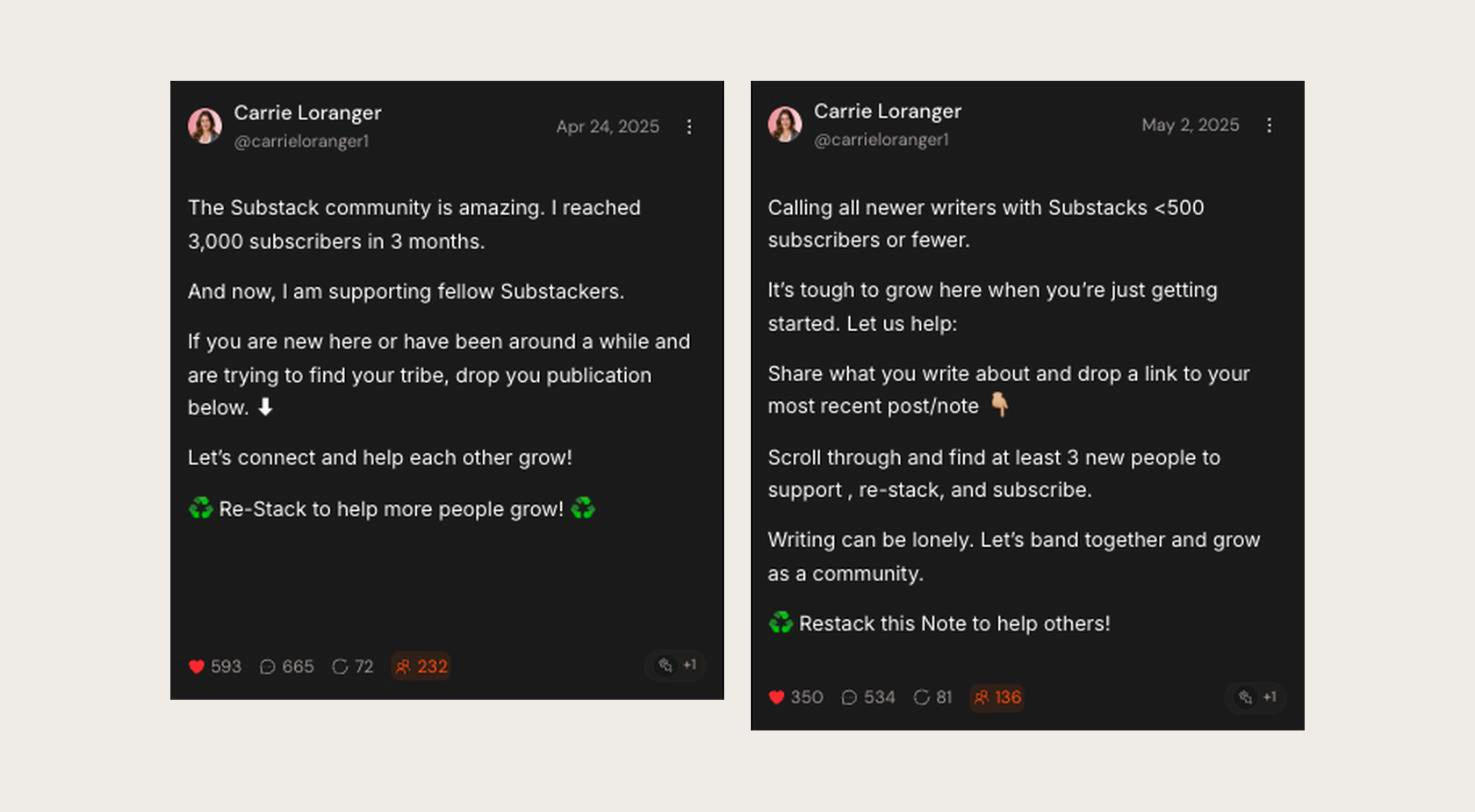
I didn’t plan any of these as lead magnets. The data told me afterward what generosity and participation can do. Only post one if you’ll read the replies, because people remember who kept their word. Post it when you have time to read every reply.
Your template:
I don't care how big or small your Substack is.
Drop it in the comments and tell me what you write about.
I'll check out every single one.
Restack this so more writers can find each other.
4. The contrarian take. Open with a choice most people in your niche wouldn’t make.
I quit 90% of social media.
Focused on Substack.
Result: 397 subscribers in January, with about 1,400 likes and 236 comments. When I updated the numbers and reran it in July, it brought in 259 more. A strong opinion gives people something to agree with out loud. Post it when you hold a view your niche argues about.
Your template:
I stopped [something most people in your niche do].
[What you do instead.]
[The result.]
[The lesson in one line.]
5. The life-chapter story. A whole life in a few short lines, ending on the choice you made.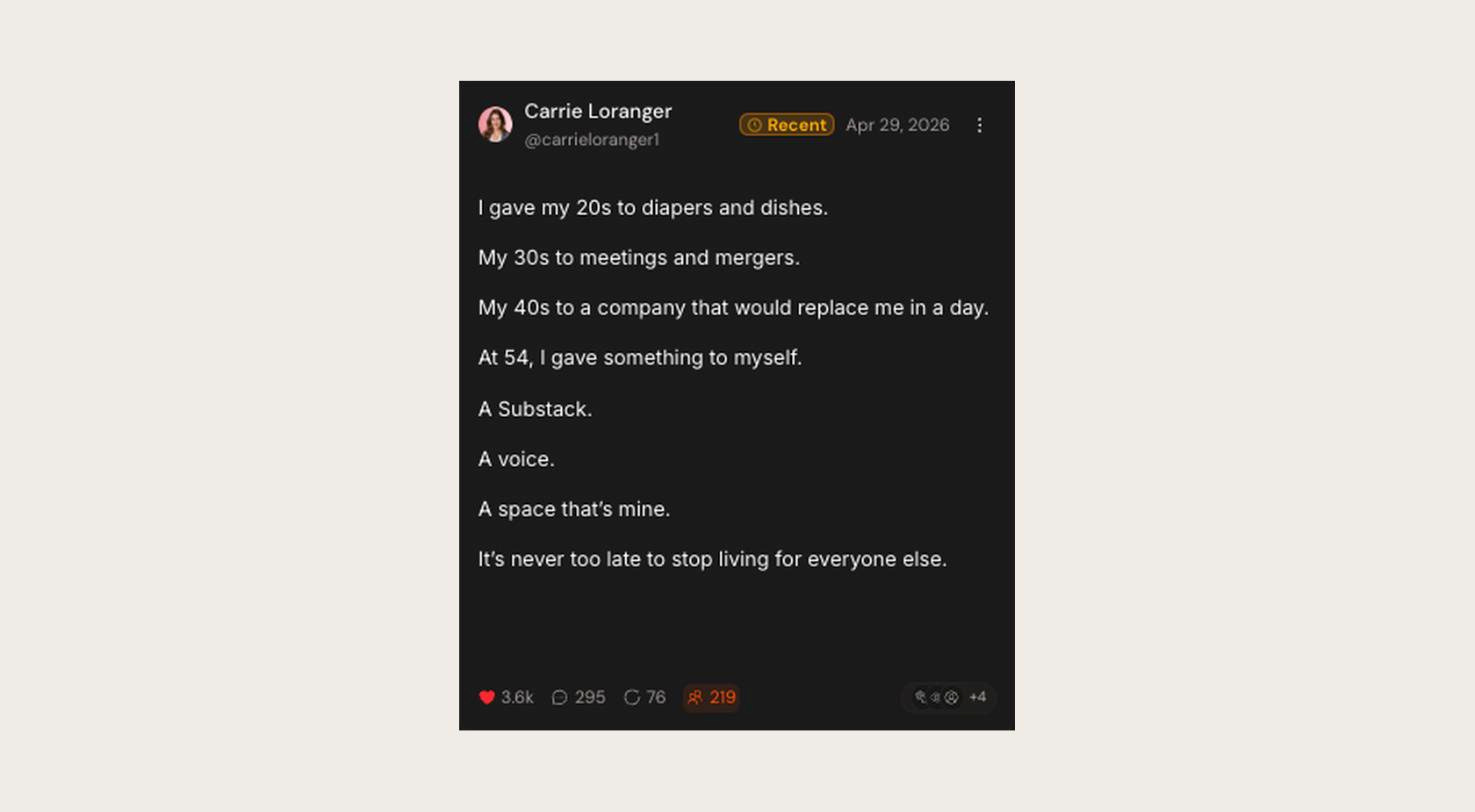
Result: more than 3,600 likes, 295 comments and 219 subscribers. An earlier run got 2,800 likes and 105 subscribers. It works because readers fill in their own version and want to tell you about it. It brings subscribers, just fewer than its likes would suggest. Post it when you want readers to get to know you.
Your template:
I gave my [season of life] to [thing].
My [next season] to [thing].
My [next season] to [thing].
At [age or moment], I [the choice you made].
[One line on what it means to you now.]
The ones that start conversations
6. The vulnerable confession. A low moment, one small thing that changed it, and what you learned.
I nearly quit Notes in my second month.
Zero likes. Zero subs. Zero hope.
Then one reader commented: “I needed this today.”
Result: 471 likes. Vulnerability draws more conversation than authority. Post it after a hard week, once you know what it taught you.
Your template:
I almost gave up on [thing] [when].
[What it looked like: a number or a moment.]
Then [the small thing that changed it].
[What you learned.]
7. The conversation starter. Ask a question you want answered, then reply to every answer. Questions get more comments than statements, and stories get more than tips. A Note that only makes a statement leaves nowhere to join in. One of my statement Notes got 3 comments. One of my story Notes got 260. Use it any day you want the comments to flow.
Your template:
[A real question your readers have opinions about]
I'll go first: [your answer in one line].
[Optional: give them two options to choose from.]
8. The quick fix. One problem, one fix, in a few lines.
If your Substack emails are landing in spam, it might be this one setting.
Quick fixes get saved and shared, and they show people you know your stuff. Post it whenever a reader asks how to fix something.
Your template:
If [specific problem], it might be [the cause].
Here's the fix: [one or two steps].
[What changes once they fix it.]
The one that sends people to your posts
9. The post bridge. Pull one idea from a post into a Note, then point to the post for the rest. One 2,000-word post can give you a week of Notes. Write one before you publish, one after, and restack a line from the post with a sentence about why it matters.
The single best thing you can do when your Notes engagement suddenly drops:
Nothing.
For 48 hours.
…
I break it all down in this week’s free newsletter.
Bridge Notes usually get fewer likes than the others. Their job is to send the right readers to your post, where they decide to subscribe or upgrade. Use it any day you publish a post.
Your template:
The [best thing to do / biggest mistake / one thing] about [topic]:
[The answer in a few words.]
[One supporting line.]
I break it all down in this week's [free or paid] newsletter.
Rerun your winners
Here’s the same identity call-out, posted again in April, May and August. Same words, and it brought in subscribers every time.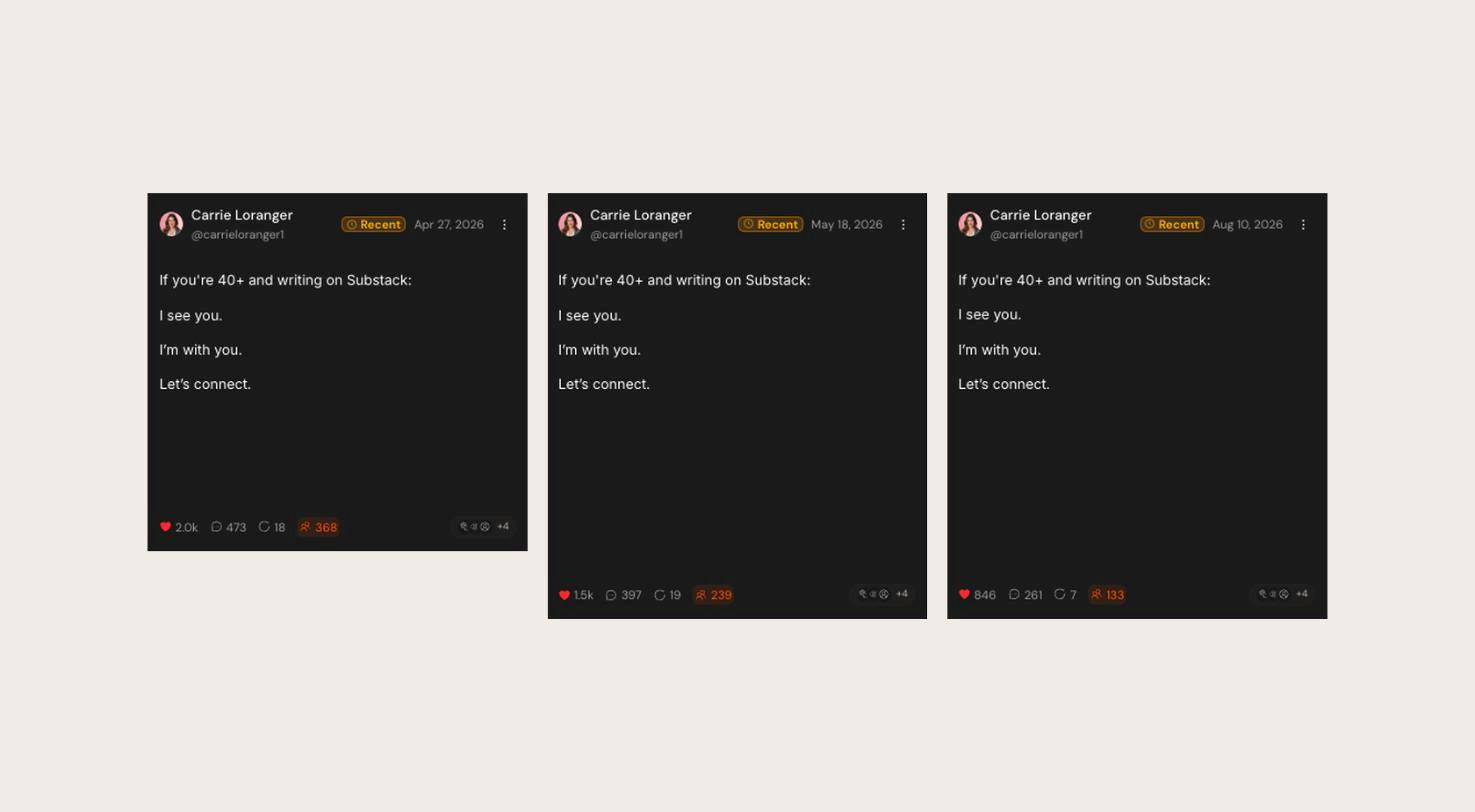
Most of your followers missed your best Note the first time, and new people arrive every week. When a Note brings in subscribers, save it. Wait a few months, update the numbers or the wording so it’s true today, and post it again.
Most people don’t know this one: you can restack your own Notes. Restack a Note that did well to put it back in front of people. Later, undo the restack and restack it again to bring it back one more time.
Earn attention first, link sparingly
My highest-performing Notes have no links in them at all. My Notes with product links mostly sit around 9 or 10 likes. Mention your newsletter when it fits naturally, like “I write about this every Tuesday,” but not in every Note. Most days, give. Some days, link.
Reply like you mean it
Notes work like a coffee shop, not a broadcast. Reply to every comment on your own Notes, ideally within the first hour. Leave real replies on other people’s Notes too. A good reply adds a story, a detail or a question, and it makes the other person feel smart. Every reply puts your name in front of someone who might click it. Ten focused minutes will do more for you than 45 minutes of scrolling disguised as work.
Your profile has to close the loop
Someone sees your Note. They click your name. Now they’re deciding whether to subscribe.
Your description, your bio, your Start Here post and your recent posts all matter in that moment. You worked to earn that click, so give the person somewhere useful to land. More on turning that visit into a subscriber: How to Get Followers on Substack (and Turn Them Into Subscribers).
What to skip
-
Treating Notes like an RSS feed for your posts.
-
Posting in bursts and then disappearing for a week.
-
Asking for a subscribe in every Note.
-
Judging a Note by its likes alone.
-
Copying someone else’s Note word for word. Borrow the format, never the words.
Borrow the format, never the words.
What to expect
Prepare for a few quiet months before Notes start to compound. Reach usually feels slow in months 1 to 3 and picks up from there.
I know this one personally. In my first four months on Substack, I barely used Notes and had 11 subscribers to show for it. Once I started posting daily and checking my data, I reached roughly 5,800 within about 90 days. Today it’s more than 12,500, and on a good month I still bring in around 1,000 new subscribers.
I wrote a Note about this once, and it brought in 74 subscribers on its own: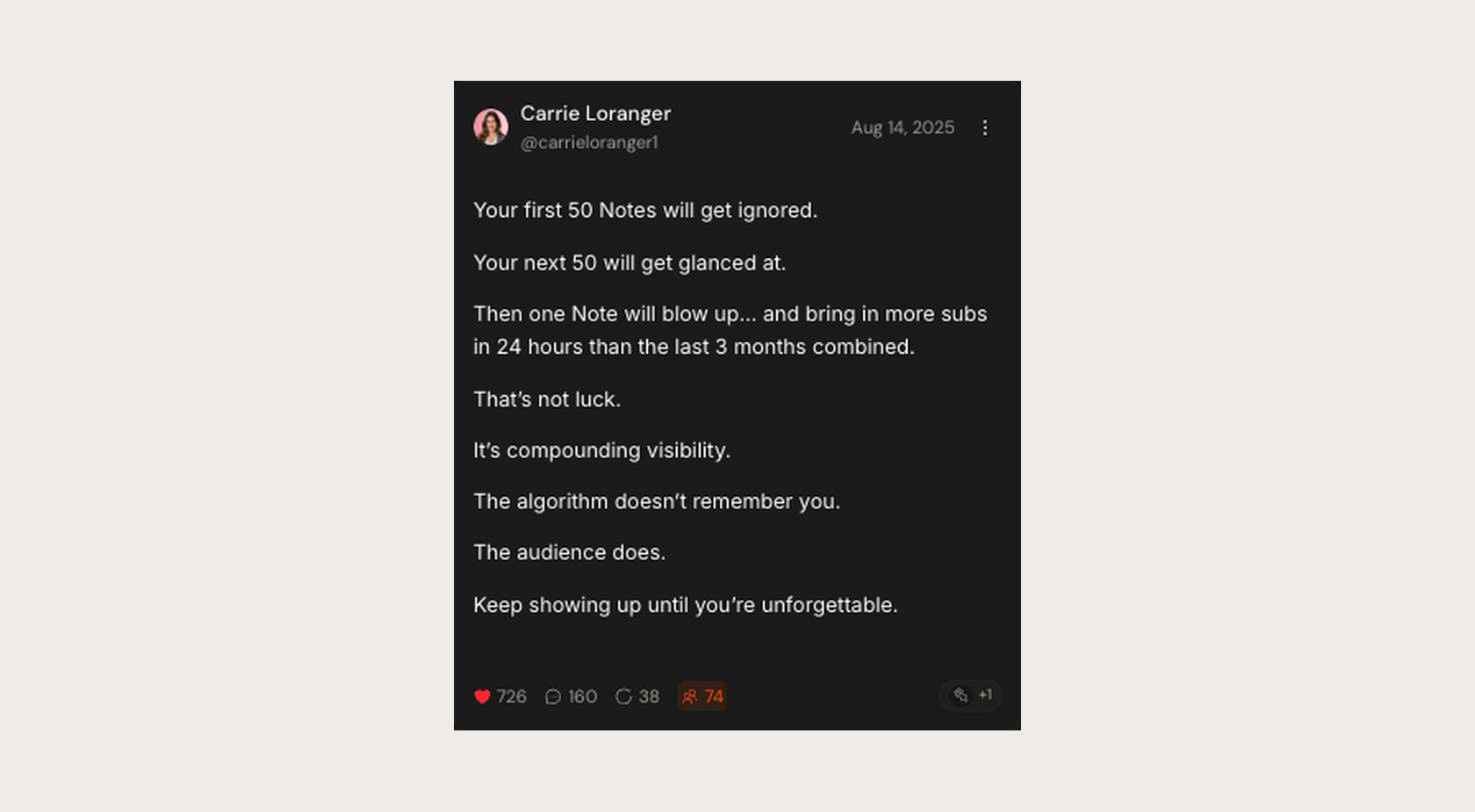
A slow start tells you what happened so far. It doesn’t tell you what happens next. If your reach drops suddenly, read Your Notes Performance Just Fell Off a Cliff before you panic.
Beyond your own Notes
Build relationships with writers serving related readers. Recommendations matter too: more than 1,500 of my subscribers came through them, and I got there by recommending writers I read and then talking to them. My engagement mini-course goes deeper on all of this, and I’ll link it here when it’s live.
A simple daily routine
-
Pick one reader problem and one format from this page.
-
Write and post your Note.
-
Reply to every comment, ideally within the first hour.
-
Leave real replies on at least five other writers’ Notes.
-
Once a week, check which Notes brought in subscribers, and write more like those.
Practice with us every month
Every month I run a challenge for my paid and VIP 9-To-Thrive subscribers, like the 21-Day Notes Challenge. You get daily prompts, a tracker, and a Chat thread where everyone posts their Notes and supports each other’s. Each month’s winner gets featured in the Win Wire, my monthly case study post, which puts their name, their Substack and their results in front of more than 12,500 subscribers. That kind of visibility sends new readers straight to your publication.
Save me a spot in the next challenge
Keep reading
-
Substack Notes Strategy 2026: The System That Drove 60% of My Subscriber Growth
-
Why One Substack Note Got 260 Comments and Another Got 3
-
Substack Notes System: 10+ Subscribers Per Day
-
How to Schedule Substack Posts and Notes in 2026
-
The Zero to Bestseller Blueprint
-
For Paid members: 3 Substack Note Types That 10X Your Subscribers (Data-Backed)
-
The 12-Day Substack Jumpstart: my free mini course, one lesson a day, from deciding what you’re building to your first 30-day plan
-
The Zero to Bestseller Blueprint: the plan I’d follow if I lost my Substack tomorrow
Want the full system?
Paid members get the Notes Secrets Course, my full system for turning Notes into subscribers. It covers the formats behind my highest-converting Notes, including some that brought in 600+ subscribers, and how to build your own.
Paid members also get every other course in The Academy, my bestselling digital products free and every monthly challenge. VIP adds a 60-minute 1:1 strategy call with me and Academy LIVE group coaching.
Tools That May Help You
-
Wispr Flow: I use it to brain dump. Talk your Notes out loud and get clean text.
-
WriteStack: I use it to create, schedule and analyze my Notes. It’s what made posting several Notes a day manageable.
Some of these are affiliate links. I only recommend tools I use.
See you in Notes.
Carrie