Your brain was never meant to manage your entire life. Here are the five tools I'm using to take the mental load off mine.
By Maryam Mehrtash
Published: 2026-10-15
URL: https://thisisnotamemo.substack.com/p/how-to-build-a-second-brain
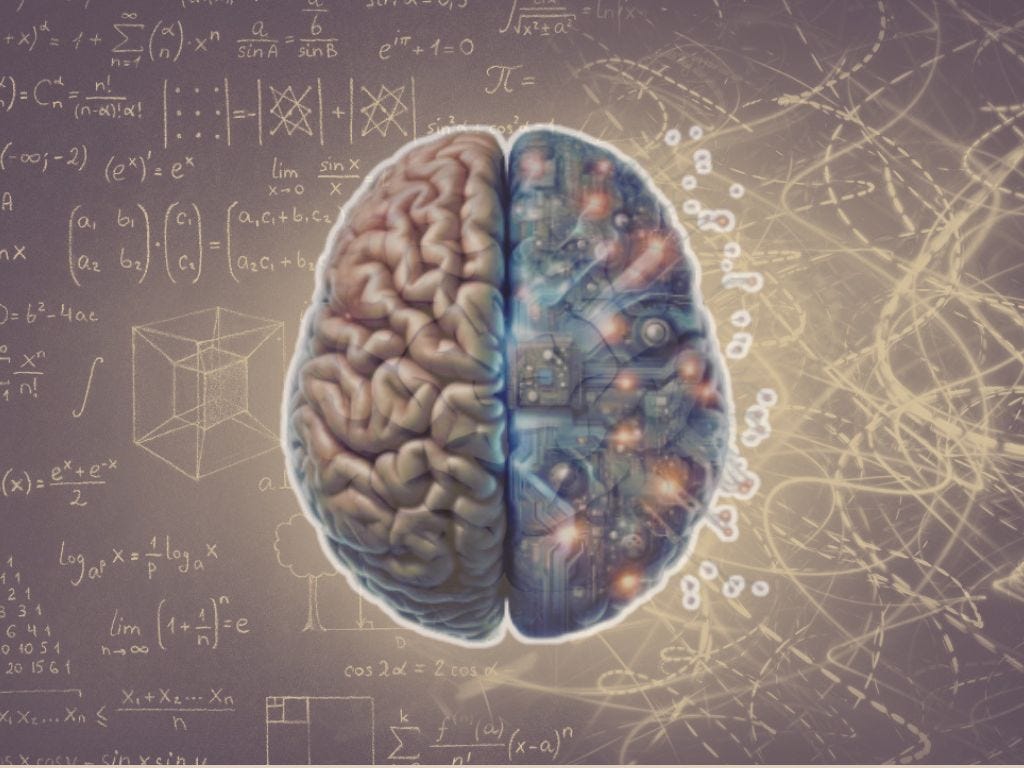
There’s a specific kind of frustration in opening your Notes app, finding something you wrote three days ago, and having no idea what it means.
“Spotlight friends.”
I knew it was important when I wrote it, and I had an entire stream of thought that came with it, I can even remember where I was standing, but what I wrote down was the trigger instead of the thought, and by the time I came back to it the trigger didn’t open anything and now I’m searching inside my brain for it. Has this ever happened to you?
For most of my life I prided myself on having the best memory in the room. So when I started losing track of things like that, it was hard to accept that something had changed in me. I blamed childbirth, I blamed hormones, I blamed age, and I said “I’m so bad at remembering things now” often enough that it started to feel like a fact about who I am. And some of those things may be true and may have contributed to some of my newfound brain fog over the last several years, but I know it’s not the whole story.
If you’ve been saying the same thing about yourself, I don’t think it’s a fact about you either. When I went looking at the research, I found that the amount we can actively hold in our heads hasn’t really changed. What changed is how much we’re now expected to hold, and somewhere along the way we started treating a capacity problem like a character flaw.
On any given day I’ll have an idea for a video in the car, a line for an essay in the shower, something a friend says at dinner that I know I’ll want later, and a reminder that my kid’s school needs a form filled out. Some of that lands in my Notes app and some lands in my calendar. Some lands in the physical notebook I still keep, because I’m old school about handwriting. Some of it just evaporates. Between the notes, the notebook, the documents and the platforms, my way of keeping track started getting in the way of the work I actually want to do.
Four Things, Not Seven
George Miller published “The Magical Number Seven, Plus or Minus Two” in 1956, and it’s been repeated ever since as the number of things working memory can hold at once. It turns out to be generous. The research that has held up since, starting with psychologist Nelson Cowan’s reconsideration in 2001, puts the real number closer to four meaningful chunks, with estimates running a little higher depending on what’s being counted and how. Four things is nowhere close to the twenty you’re probably trying to keep in your head while you answer an email.
That doesn’t mean your brain can only remember four things, because your lifetime of knowledge lives somewhere else entirely. Working memory is the temporary workspace, more like the kitchen counter than the pantry, and most of us have been asking that counter to run an entire life without much storage.
The amount coming at it has exploded. Think about how much information we take in on any given day, and I wish someone had a current way to measure it. Between the smartphone we carry everywhere, the group chats for every activity our kids do, and the projects and conversations that live across multiple platforms, we’re handed far more than four things at once, all day long. How many gigabytes of data do you think we’re actually storing and processing in a day?
The Invisible Work
What finally made it click for me was realizing how much of what I’m holding isn’t the task itself. It’s anticipating the task, deciding what needs to happen, and remembering to check whether it did. That’s called the mental load.
A 2024 study of 322 mothers of young children found they reported carrying about 73% of their household’s cognitive labor, compared with about 64% of the physical work, and the cognitive share was the one tied to stress, burnout and depression. Planning the thing and doing the thing are separate kinds of work, and we tend to notice only one of them.
If you’re in perimenopause, there’s one more layer. In the long-running SWAN study of women in midlife, about two thirds reported memory complaints during the transition. The good news is that the dip appears to be temporary, and the learning gains that disappear during perimenopause come back afterward. Hooray!
So before you make “I’m bad at remembering” part of your narrative, look at how much you’re being asked to keep track of without any support. For years the advice has been to get more organized, as if the problem were us and not the load, and I believed it long enough to start blaming myself. No wonder we feel like we can’t remember everything, because we were never meant to hold all of it in our heads.
I Started Thinking About My Brain Like A Business
I spent two decades inside entertainment companies, and what I saw over and over is that the operations that ran well never depended on one person remembering where everything lived. There were systems for intake, for filing, for handing work off and for knowing what came next. Operations is one of the most undervalued skills there is, and I had never once applied it to my own head.
With everything I want to build now, I don’t want my business to depend on me remembering which document has the latest draft or which note holds the next good idea. I don’t need a more complicated dashboard. I need fewer things that only work because I’m personally keeping track of them.
That’s the idea behind a second brain, a term popularized by Tiago Forte: a way of keeping useful knowledge outside your head so you can find it and work with it later. I’ve spent the last few months watching tutorials, taking AI courses and testing tools. What I didn’t understand at first is that having somewhere to put information is only the beginning. Most notes apps are built for input, so they catch things in the moment and then hand you a pile. What I needed was a way to connect what I capture to what I’m actually working on and turn it into something, because an idea shouldn’t have to stay in my attention to survive.
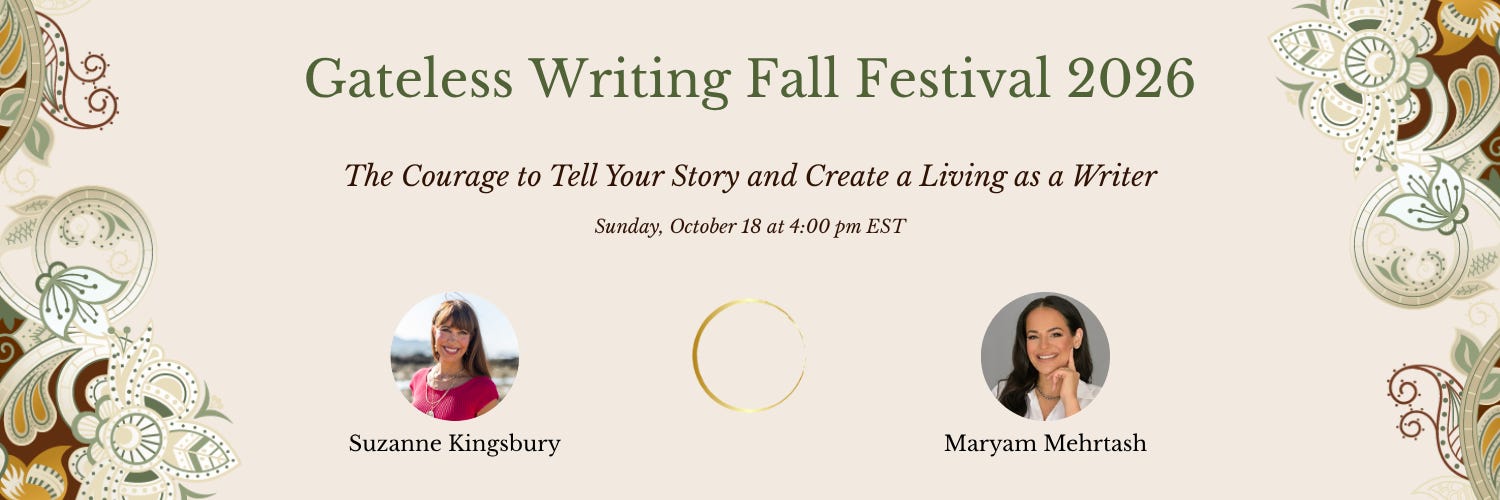
SIDE NOTE: If one of the ideas you keep saving is a book you want to write, come join me and my writing mentor and award winning author, of Gateless Writing, for a free live session this Sunday called The Courage to Tell Your Story and Create a Living as a Writer.
It’s Sunday, October 18, at 1 p.m. PT / 4 p.m. ET. If you’ve been circling your story wondering how to begin, I would love to see you there.
The Jobs I Took Away From My Memory, Without Guilt
What changed everything recently was asking a different question. Instead of asking what app I should use, I started asking which jobs my memory was doing that it was never built to do. When I listed them out, there were five:
-
catching ideas the second they show up
-
remembering what was said in meetings
-
connecting thoughts to each other
-
knowing where every document lives
-
turning all of it into finished work
That’s five full-time jobs assigned to a workspace that holds about four things, so I started hiring and planning out my operations team.
Below the line, I’m sharing the exact system I’m building:
-
the five tools I use and which job each one does
-
how my Google Drive folders connect to my Claude projects
-
the handoff that lets me keep my paper notebook without losing what’s in it
-
the starter template I open every new project with
-
the fifteen-minute weekly review that keeps the whole thing from turning into another pile
You can set up the first version this week without reorganizing your life.