Why the future of storytelling depends on our ability to hold complexity
By Maryam Mehrtash
Published: 2026-04-14
URL: https://thisisnotamemo.substack.com/p/were-starving-for-competence
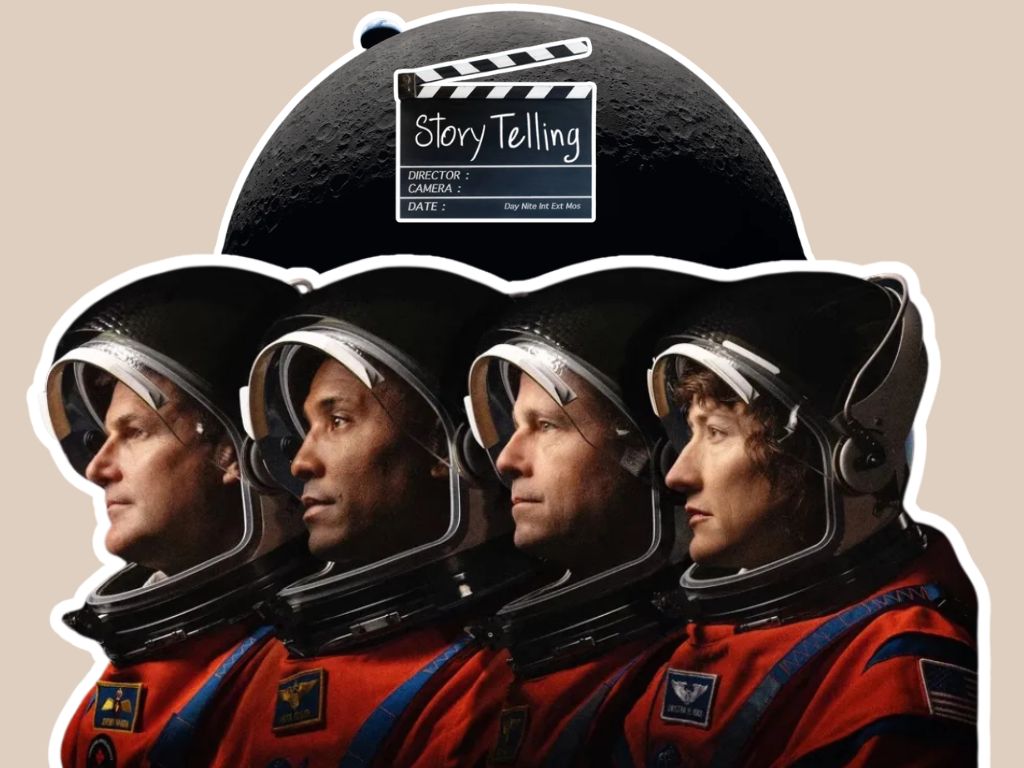 \Image Source:NASA\
What if the hardest part of creativity isn’t coming up with ideas, but holding opposing lenses in tension?
This past weekend, I spent eighteen hours in a room of powerhouse executives and creatives across Hollywood. We weren’t there to pitch projects, debate box office returns, or discuss the latest streaming mergers.
We were there to do something far harder:
To learn how to communicate, both as people and as storytellers, about charged, complex topics in ways that allow us, and our audiences, to truly take each other in.
The retreat was part of an Impact Fellowship hosted by Resetting the Table, an organization rooted in conflict resolution, mediation, and psychology. Their work focuses on helping people communicate across deep divides, and hold opposing perspectives in the same room.
Their co-founders, Melissa Weintraub and Eyal Rabinovitch, are doing the kind of grueling work most institutions avoid, teaching us how to engage in generative conflict, listen without defensiveness, and build narratives that don’t immediately collapse under pressure.
As an Iranian woman whose homeland is caught in ongoing conflict, and whose community is deeply divided, I walked into that room already exhausted by the state of our public discourse.
I walked out with something I didn’t expect.
Hope.
This Is Not A Memo is a reader-supported publication. To receive new posts and support my work, consider becoming a free or paid subscriber.
The Cost of the Echo Chamber
Last year, I wrote about how echo chambers, algorithms, and comfort culture are eroding our courage to think for ourselves, in an essay titled “We've Become A Society of Groupthink On Steroids.”
We live in a culture that rewards certainty and punishes nuance. Dissent is quickly shut down, in comments, in DMs, and increasingly in leadership itself. The danger isn’t just disagreement; it’s losing the ability to hold complexity. We boil things down to binaries. We flatten people into caricatures. We reduce entire communities into monoliths.
We avoid the hard conversation. And creativity suffers.
Because creativity requires tension. It requires contradiction. It requires the willingness to sit in discomfort long enough to discover something new.
In many spaces, decisions are increasingly shaped by fear, because the wrong decision can cost you your job.
Courage feels like it’s disappearing in creative rooms, across dinner tables, and on social media.
And we are paying the price for it.
DEI and What We’re Missing
Over the past several years, “DEI” in Hollywood has become a loaded term.
Funding has been cut. Programs have been scaled back. And much of the progress made in recent years is stalling.
And behind those shifts are real people, teams and individuals who dedicated their work to this space, many of whom have lost jobs, resources, and momentum.
The UCLA Hollywood Diversity Report (2026) shows that representation gains have slowed or reversed in key areas. Women’s representation in lead roles fell below 2022 levels.
At the same time, mentions of diversity initiatives dropped 72% in Fortune 100 company reports between 2024 and 2025.
The fight for representation in front of and behind the camera mattered—and it still matters. I say this as a Middle Eastern immigrant who grew up not seeing myself reflected in media. But too often, diversity has been reduced to a checklist about optics, which risks losing its power.
Real diversity requires a both/and approach.
Yes, representation is essential. And perhaps there is another layer we have been missing: the diversity of perspectives, lenses, life experiences, and interpretations of what is good, right, and true.
What if diversity isn’t just about who we see on screen, but how we think, speak, and tell stories?
Think about it this way:
Casting a diverse actor into a story where the worldview, dialogue, and motivations all align with a single, comfortable narrative doesn’t fully capture what diversity can offer. It can become visual diversity without fully engaging the diversity of perspectives behind it.
Diversity means writing characters whose perspectives challenge your own, with empathy, with dignity, and with enough depth that audiences are invited to wrestle with those differences. Representation is part of that foundation.
That is much harder work.
And it’s the work that creates better stories.
Why We Are Starving for Competence
Trust is low, institutions feel fragile, and leadership often reads as performative.
And people can feel it. We’re in a kind of trust regression.
That’s why the cultural reaction to the Artemis II mission hit differently.
It reminded us what real leadership looks like under pressure: composure, clarity, and standards that don’t bend to noise.
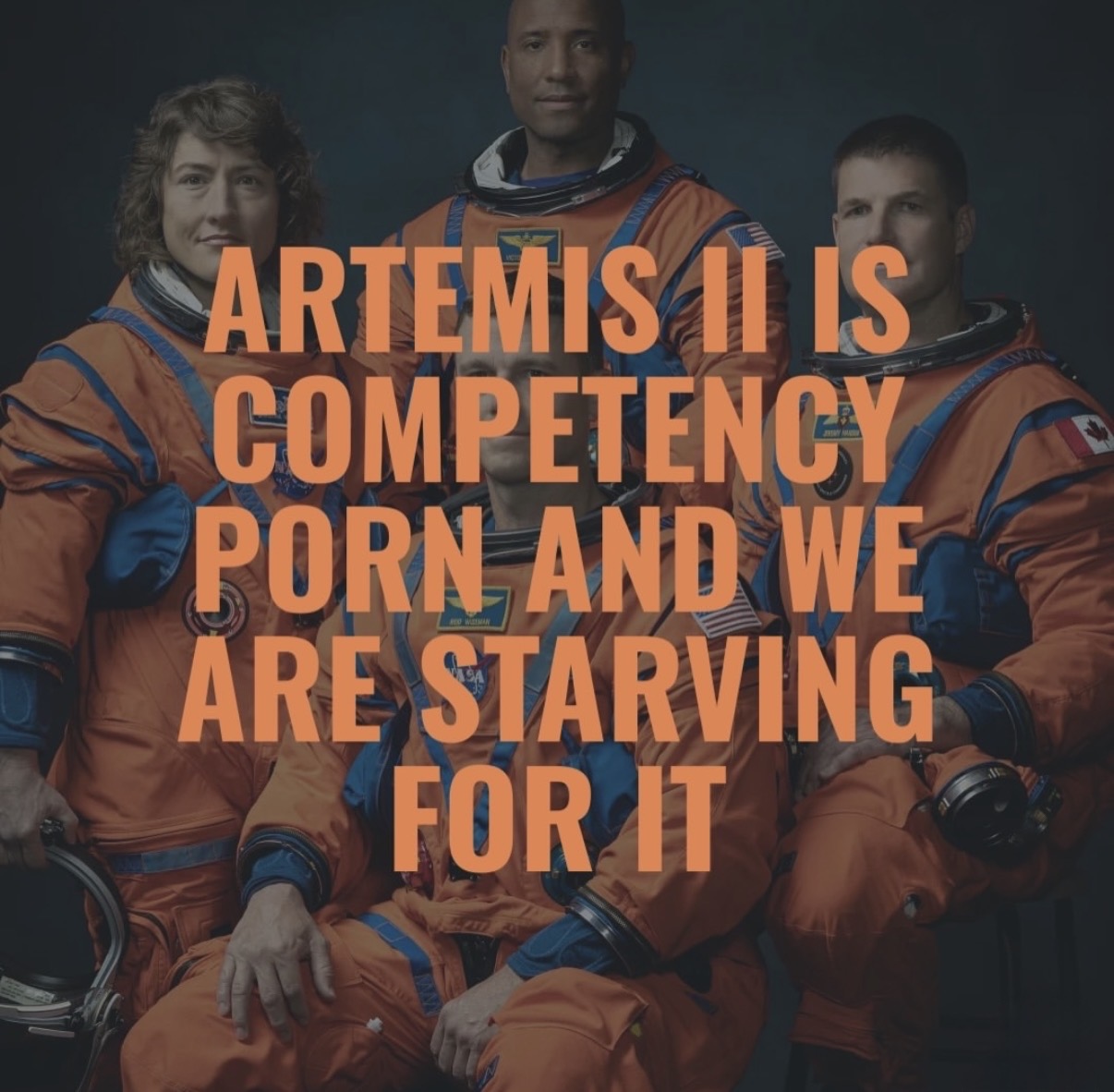 \Image Source:Liz Plank’s Instagram @feministabulous\
As put it in her viral Substack post, it’s “competency porn”, a disturbing realization that extraordinary performance can shock us into belief when we’ve grown used to seeing failure.
“We have gotten so used to watching the people who are supposed to be in charge fail loudly, fail publicly, fail in ways that feel designed to make us feel small and powerless, that watching four people simply be extraordinary at an extraordinarily hard thing produced in many of us something close to shock.”
That’s the shift.
In a world that feels fake, polarized and chaotic, we are desperate for competence.
The Role of Storytellers Now
What gave me hope this past weekend wasn’t just the ideas. It was the people.
Executives and creatives who are actively choosing to think differently. Who are willing to build stories that engage real differences with care, depth, and rigor.
Who are engaging in what Resetting the Table calls multivocal storytelling.
At its core, multivocal storytelling is about ensuring that when stories engage real societal differences, multiple lenses are represented with enough depth and dignity that those who identify with each can feel accurately seen.
And those lenses are not isolated. They are in conversation with each other.
Not collapsing them into a single point of view. Not pretending all perspectives are equally right. And not abandoning objective reality.
But making differences visible, and allowing that tension to drive the story forward. When that happens, something shifts.
People feel seen enough to stay engaged, and look at their differences without getting reactive and shutting down. It allows the audience to take each other in. And possibly even be moved by the experience.
Done well, this kind of storytelling doesn’t just reflect the world more honestly, it creates better stories, reaches wider audiences without alienating them, and allows people to feel heard and understood across difference.
That’s not just good conflict resolution. That’s great storytelling.
The Work Starts With You
Storytelling is not neutral, it shapes how we see the world, what we believe is possible, and how we treat each other.
And that power is no longer centralized. It’s been democratized. Which means this responsibility doesn’t just belong to studios or networks anymore.
It belongs to all of us. Every creator, storyteller, every person with a platform.
Ideas spread like viruses. So do narratives, bad assumptions, and misinformation. Every single one of us has a responsibility to be intentional about what we put into the world.
Change doesn’t start with institutions. It starts with individuals.
The path forward is personal first: ask better questions, stay relentlessly curious, and practice looking at the world through a lens that isn’t your own.
The future of storytelling won’t belong to the loudest voice in the room, it will belong to the one that can hold the most complexity.
When was the last time you had to hold two opposing perspectives at once, at work, in your community, or in your own life? How did you respond?
And what, if anything, from this post might have changed how you showed up in that moment?
With Courage,
Maryam
P.S. If this resonated with you and you’re a storyteller working in film, TV, or digital creator, you can learn more, and sign up to be notified about upcoming workshops from Resetting the Table here.
Thanks for reading This Is Not A Memo! This post is public so feel free to share it.