Interview wth the founder and CEO of Alba Health, a Swedish startup that addresses treatment of diseases through analyzing the gut microbiome, that just raised 5 million Euros to scale in Europe.
By THE BRIEF
Published: 2026-11-01
URL: https://theunbrief.substack.com/p/world-health-organization-the-race
The future of medicine is personalized
By Maya Plentz
Joining us at THE BRIEF is Nora Cavani, molecular biologist and co-founder and CEO of Alba Health, which combines gut microbiome testing with personalized nutrition guidance for families. Alba Health is backed by venture capital, among them the founder of the consumer health monitoring device, OURA ring.
A former Boston Consulting Group manager, Nora turned her own experience of severe eczema into a mission to improve cgut microbiome health.
She has raised €5 million for Alba Health and earned recognition as Female Founder of the Year at The Europas TechCrunch Award in 2024, and Female Entrepreneur of the Year in Sweden, in 2026.
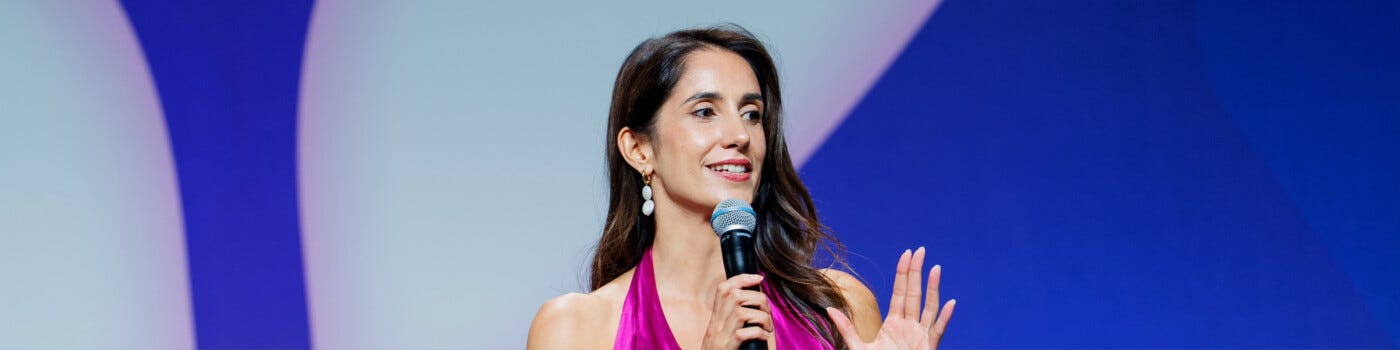
In my recent conversation with Nora Cavani, founder and CEO of Swedish health-tech startup Alba Health, she shared how analyzing the gut microbiome is shifting healthcare from reactive symptom management to targeted, early-life prevention. Fresh off a €5 million funding round to scale operations across Europe, Alba Health is proving that decoding our unique internal ecosystems can transform long-term human health.
A Personal Turning Point: Root-Cause Healing
Cavani’s path to founding Alba Health began at the intersection of deep domain expertise and personal crisis. With a background in biotechnology and pharmaceutical engineering, followed by six years at Boston Consulting Group advising on probiotics and gut microbiome applications, she was well-versed in the literature. Yet at age 27, she was blindsided by severe, full-body eczema that left her in chronic pain around the clock.
After conventional medical treatments failed to deliver lasting relief, Cavani systematically altered her diet and rebalanced her gut microbiome. The result was life-changing: her eczema went into complete remission, her energy rebounded, and her chronic symptoms disappeared.
That recovery prompted a critical question: Can we identify and correct these microbial imbalances early enough to prevent allergic diseases from developing in the first place?
The Pediatric Window of Opportunity
Allergic conditions, eczema, and asthma often share a common origin in early childhood, where the gut microbiome plays a foundational role in training the developing immune system. Modern environmental and lifestyle shifts have severely disrupted this balance: today, up to 90% of infants lack key gut bacteria vital for early immune resilience.
Alba Health approaches this challenge through the lens of the entire family. While testing often begins with a symptomatic infant or child, long-term interventions succeed when parents understand and adjust their own microbiomes and household nutrition alongside their children.
Decoding the Gut: Beyond Generic Advice
Personalized medicine requires granular data and targeted interventions rather than blanket dietary recommendations. Alba Health combines diagnostic precision with continuous behavioral support:
-
Age-calibrated diagnostics: Non-invasive, at-home stool tests tailored to specific age cohorts from newborns and toddlers to teenagers and adults.
-
In-depth profiling: Pairing advanced microbiome sequencing with detailed health and lifestyle questionnaires.
-
Independent product matching: Providing actionable plans that recommend targeted third-party probiotic strains without taking affiliate commissions or pushing proprietary formulations.
-
Continuous digital guidance: A 12-month companion app that delivers personalized recipes and visual meal feedback to help families implement sustainable dietary changes.
Bridging the Clinical Gap to Scale Across Europe
Backed by venture capital and health-tech pioneers, including the founder of Oura Ring, Alba Health is expanding from its direct-to-consumer roots into clinical partnerships. While direct testing offers immediate accessibility for approximately £250, Cavani’s long-term goal is integration into formal healthcare systems.
Achieving that scale requires dismantling legacy perceptions.
The assumption that microbiome science remains too nascent for clinical utility is rapidly becoming obsolete, with annual scientific publications surging from a few hundred to over 20,000 in recent years.
By pairing rigorous science with accessible digital health tools, medical practitioners are gaining the data necessary to treat the individual rather than the aggregate average.
When we personalize healthcare from the very first years of life, we do more than manage chronic illness—we lay the groundwork for a lifetime of resilience.
THE BRIEF | Global Health & Diplomacy | 2 November 2026
Who Will Lead the World Health Organization?
Seven Candidates, Seven Governments and a High-Stakes Election
As WHO prepares to elect a successor to Tedros Adhanom Ghebreyesus in May 2027, the race is taking shape around competing visions of institutional reform, financing, pandemic preparedness and global health diplomacy. Spain’s María Neira brings more than three decades of international health experience and an unusual grassroots coalition to the contest.
Geneva, 2 November 2026 — THE BRIEF
The World Health Organization officially announced seven candidates for Director-General on 29 October 2026, launching one of the most consequential leadership contests in the organization’s recent history.
The successor to Dr Tedros Adhanom Ghebreyesus will inherit an institution confronting financial constraints, reductions in international health assistance, geopolitical divisions and continuing disputes over pandemic preparedness.
Seven candidates have been nominated by seven governments: Spain, Belgium, Qatar, Saudi Arabia, Indonesia, China and Botswana.
Five are women. The field includes two serving WHO regional directors, two former senior government health officials, a sitting Indonesian health minister, a senior Chinese public-health official and an Armenian paediatric oncologist nominated by an African government.
The election is not a straightforward popularity contest. The 34-member WHO Executive Board will first narrow the field to five, interview them and nominate up to three finalists. The final decision will be made by eligible Member States through a secret ballot at the World Health Assembly in May 2027.
The candidates
María P. Neira — Spain
Nominated by: Government of Spain, 23 September 2026.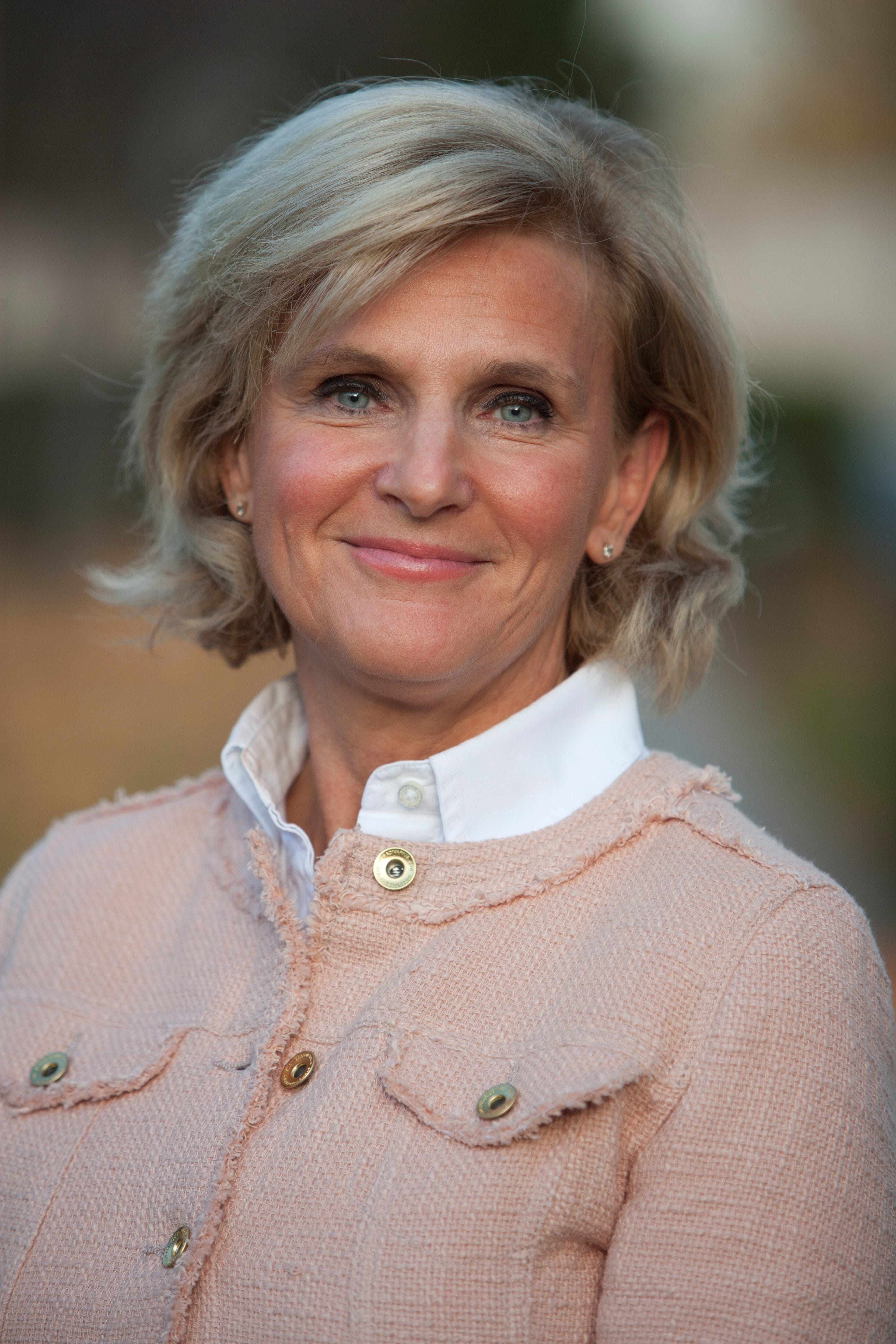 Photo credit: WHO
Profile: Physician, former Spanish vice-minister of health, and former WHO Director of Environment, Climate Change and Health.
María Neira, born in Asturias in 1962, is one of the most experienced international public-health specialists competing for the post.
She graduated in Medicine and Surgery from the University of Oviedo and subsequently specialized in endocrinology and metabolic diseases in Paris. She also completed a master’s degree in public health at Université Pierre et Marie Curie, studies in human nutrition and an international diploma in emergency preparedness and crisis management at the University of Geneva.
Her professional career began well outside the diplomatic meeting rooms of Geneva.
Between 1987 and 1989, she worked with Médecins Sans Frontières in refugee camps along Honduras’s borders with El Salvador and Nicaragua, coordinating medical care in communities affected by armed conflict.
She subsequently worked on public health in Mozambique and served as a UN public-health adviser and physician in Rwanda. Her responsibilities encompassed disease surveillance, epidemics, sanitation, nutrition, maternal and child health and emergency care.
Neira joined WHO in the early 1990s, initially coordinating its Global Task Force on Cholera Control. She subsequently headed the department responsible for the control, prevention and eradication of communicable diseases, including programmes targeting neglected tropical diseases.
Between 2002 and 2005, she returned to Madrid, serving as vice-minister of health and consumer affairs and president of Spain’s Food Safety Agency. Her government responsibilities included nutrition, food safety and prevention of obesity and chronic disease.
In 2005, she returned to WHO headquarters to lead its environmental health work, a position she held until 2025.
During those two decades, Neira became one of WHO’s most recognizable advocates for addressing the environmental determinants of ill health. Her work encompassed air pollution, climate change, occupational health, water quality, chemical safety, sanitation and healthier cities.
She was closely involved in advancing WHO’s global air-quality guidance and initiatives to place health at the centre of international climate negotiations.
Her message is that preventing disease requires more than hospitals, medicines and vaccines. Clean air, healthy food, safe water, better housing, urban planning and resilient communities are also essential elements of public-health policy.
What would a Neira administration look like?
Her campaign, organized around the proposition Health as the Compass for a Changing World, sets out five commitments:
-
Expand primary prevention and tackle the environmental and behavioural causes of preventable illness.
-
Strengthen scientific independence, health intelligence and the responsible use of artificial intelligence.
-
Build stronger national public-health institutions, regulatory systems and health workforces.
-
Make WHO more focused, responsive, accountable and financially sustainable.
-
Improve institutional integrity, workplace culture and protections against discrimination, bullying and harassment.
She also proposes greater attention to emerging risks, including endocrine-disrupting chemicals, microplastics, declining fertility and the consequences of artificial intelligence for healthcare.
Who is supporting her?
Spain is her confirmed governmental sponsor.
Importantly, her nomination followed a campaign by a coalition representing more than 100 civil-society organizations and senior public figures calling on the Spanish government to put her forward.
The campaign was co-led by Nobel Peace Prize laureate Adolfo Pérez Esquivel and Dr Carlos Ferreyra of Climate, Life and Health International. It brought together environmental-health advocates, indigenous representatives, public-health specialists and civil-society networks across several continents.
This is significant: unlike candidates whose visibility has largely developed through government or WHO institutional networks, Neira entered the race with an organized civil-society initiative pressing for her nomination.
Her experience in France and her professional networks across Europe, Africa and Latin America could help her build a geographically diverse coalition.
However, diplomatic relationships and public expressions of admiration should not be confused with formal government endorsements. No additional national government has been independently confirmed as supporting her candidacy.
Nor is there verified evidence of a private foundation financing or officially endorsing her election campaign.
What are her chances?
Neira is a credible contender, though not an established front-runner.
Her strongest advantages are technical experience, institutional familiarity, international recognition and the breadth of her public-health agenda. Her civil-society backing also gives her a distinctive political narrative.
Her principal weakness is diplomatic arithmetic. Spain will need to assemble a coalition far beyond Europe, competing for support with Belgium’s candidate, Hans Kluge, and with well-connected candidates backed by governments in Asia and the Middle East.
She must also persuade governments that have reduced their climate commitments that environmental prevention is economically practical, rather than an additional financial obligation.
Her prospects will depend on whether her international reputation can be translated into commitments from voting Member States.
Budi Gunadi Sadikin — Indonesia
Nominated by: Government of Indonesia.
Indonesia’s health minister since December 2020, Budi Gunadi Sadikin is the most unconventional managerial candidate.
A graduate in engineering physics from the Bandung Institute of Technology, he built his career in banking, serving as president director of Bank Mandiri, before entering government.
He became health minister during the COVID-19 pandemic and has overseen initiatives involving digital health, vaccination, primary-care reform and domestic pharmaceutical manufacturing.
His campaign emphasizes stronger financial management, organizational efficiency, scientific standards and access to medical products in developing countries.
Political strengths: Indonesia’s diplomatic standing, links to Global South governments and his background in finance and large-scale institutional management.
Main obstacle: He lacks the clinical training and long WHO career of several rivals.
Prospects: Among the stronger contenders. His financing credentials could appeal to governments seeking a leader capable of reorganizing an overstretched institution.
Hanan Balkhy — Saudi Arabia
Nominated by: Government of Saudi Arabia.
A paediatric infectious-disease physician, Hanan Balkhy has served as WHO Regional Director for the Eastern Mediterranean since February 2024.
Previously, she was WHO Assistant Director-General for Antimicrobial Resistance, following a career in Saudi Arabia’s healthcare and infection-control institutions.
Her medical training included specialist work in the United States.
Her campaign emphasizes scientific credibility, institutional trust, emergency preparedness, antimicrobial resistance, stronger national health systems and financial accountability.
Political strengths: High-level WHO leadership experience, specialist scientific credentials and Saudi Arabia’s diplomatic reach.
Main obstacle: Competition for regional and international support from Qatar’s Hanan Al-Kuwari.
Prospects: A strong contender with a credible route to the Executive Board’s final shortlist.
Hans Henri P. Kluge — Belgium
Nominated by: Government of Belgium.
A Belgian physician and WHO Regional Director for Europe since 2020, Hans Kluge has considerable experience managing international health programmes and politically sensitive emergencies.
Before joining WHO, he worked with Médecins Sans Frontières on tuberculosis, HIV and humanitarian health interventions.
He has led WHO’s European region through COVID-19, mpox and health challenges associated with the war in Ukraine.
His reform platform calls for stronger country offices, primary healthcare, administrative accountability and a more responsive WHO.
Political strengths: Extensive WHO experience and established relationships with European health ministries.
Main obstacle: Regional competition with María Neira and the need to establish broad support beyond Europe.
Prospects: One of the better-positioned candidates institutionally, although his international voting coalition remains unconfirmed.
Hanan Mohammed Al-Kuwari — Qatar
Nominated by: Government of Qatar.
A former Qatari minister of public health, Hanan Al-Kuwari served in government from 2016 until 2024 and previously led Hamad Medical Corporation, Qatar’s principal public healthcare provider.
She holds a doctorate in healthcare management from Brunel University in the United Kingdom.
She also has significant WHO governance experience, including service on its Executive Board and involvement in negotiations on the Pandemic Agreement’s Pathogen Access and Benefit Sharing provisions.
Her platform focuses on health-system performance, equitable access, preparedness and sustainable financing.
Political strengths: Qatar’s diplomatic convening capacity, her experience managing a national health system and familiarity with WHO governance.
Main obstacle: Competition with Saudi Arabia’s nominee for overlapping regional networks.
Prospects: A serious contender, particularly if her campaign develops support across regions rather than concentrating on Middle Eastern partners.
Dr Song Li — China
Nominated by: Government of China.
Song Li, listed as Li Song in WHO’s official announcement, is a physician and senior Chinese public-health administrator.
She previously held leadership positions in China’s National Health Commission, particularly in maternal and child health, and now serves as a secretary of the All-China Women’s Federation.
Her professional experience includes healthcare policy, women’s health, institutional management and public-health programmes.
She also has leadership responsibilities involving the China Women’s Development Foundation and the China Children and Teenagers’ Fund.
These are professional connections to philanthropic institutions, not documented endorsements of her WHO campaign.
Political strengths: The backing of China, its international diplomatic relationships and experience in national public-health administration.
Main obstacle: Geopolitical tensions and the challenge of attracting support across competing diplomatic blocs.
Prospects: A significant geopolitical wildcard. China’s institutional weight makes her candidacy consequential, but it does not establish how other governments will vote.
Gevorg Tamamyan — Armenia / Botswana
Nominated by: Government of Botswana.
An Armenian paediatric oncologist, professor and head of the Department of Pediatric Oncology and Hematology at Yerevan State Medical University, Gevorg Tamamyan is the youngest candidate in the contest.
He has led international paediatric cancer networks and developed initiatives seeking to improve access to cancer treatment in lower-resource settings.
His professional connections include the International Society of Pediatric Oncology, regional cancer networks, St. Jude Global and the City of Smile Charitable Foundation, which he co-founded.
None of these institutional relationships independently establishes foundation support for his Director-General campaign.
His platform emphasizes patient-centred governance, institutional transparency, health equity, stronger country-level delivery and reform of WHO’s workforce and financing systems.
Political strengths: Clinical credibility, international civil-society networks and the distinction of being nominated by an African government outside his own region.
Main obstacle: Limited experience leading national health ministries or major UN organizations, compared with competing candidates.
Prospects: An outsider, although his cross-regional nomination gives him a distinctive platform.
Who are the private foundations backing?
Private philanthropy matters greatly to WHO’s future, but there is an important distinction between financing WHO and financing or endorsing a candidate for Director-General.
Major philanthropic organizations involved in global health include the Gates Foundation, Wellcome, the Rockefeller Foundation and Bloomberg Philanthropies-related entities.
These organizations contribute to international health programmes, research and institutional initiatives. Their involvement in WHO financing does not make them supporters of any particular leadership candidate.
One documented example involving the current election is the Rockefeller Foundation’s support for a project run by the Geneva Graduate Institute’s Global Health Centre, in collaboration with Health Policy Watch, to promote transparency and public engagement in the Director-General selection process.
That is support for election scrutiny, not an endorsement of a candidate.
As of 1 November 2026, THE BRIEF has not independently verified a formal election endorsement or campaign-financing commitment by any of these major private foundations to any of the seven nominees.
WHO’s election code calls on candidates and Member States to disclose campaign activities and their funding sources. Those declarations will be important as the contest develops.
Who has the best chance of winning?
No credible public polling or confirmed delegate-vote count currently justifies assigning numerical probabilities to the seven candidates.
An early qualitative assessment suggests three broad categories.
Well-positioned contenders: Budi Gunadi Sadikin, Hanan Balkhy and Hans Kluge. Each brings a different political advantage: financial management, scientific and regional leadership, or extensive WHO institutional experience.
Competitive challengers: María Neira and Hanan Al-Kuwari. Both have compelling professional records but must demonstrate that their networks can translate into sufficiently broad diplomatic coalitions.
Uncertain prospects: Song Li and Gevorg Tamamyan. China’s diplomatic weight makes Song a potentially important contender, while Tamamyan’s outsider profile could appeal to governments demanding structural change.
These are editorial assessments of strengths and obstacles, not predictions based on verified voting intentions. No clear front-runner has yet emerged.
The decisive test will be the ability to secure support from governments across WHO’s regional groups, particularly in Africa and among countries without their own candidates.
Election timetable
-
24 April 2026: WHO invites Member States to nominate candidates.
-
24 September 2026: Nomination deadline.
-
29 October 2026: WHO officially announces the seven candidates.
-
18–19 November 2026: First candidates’ forum at WHO headquarters, Geneva, with a public webcast.
-
25 January–2 February 2027: WHO Executive Board meets to reduce the field to five candidates and nominate up to three finalists.
-
15 March 2027: Second candidates’ forum.
-
23–30 May 2027: 80th World Health Assembly, including the appointment of the new Director-General.
-
16 August 2027: New Director-General takes office.
The real contest: financing, independence and global influence
The next Director-General will confront a difficult structural question: how can WHO maintain scientific independence when so much of its budget depends on voluntary contributions, often earmarked for particular programmes?
The withdrawal of US support, combined with broader reductions in international assistance, has increased the urgency of this debate.
Whoever succeeds Tedros must negotiate relationships with governments, international financial institutions, major philanthropic foundations, pharmaceutical companies, researchers and humanitarian organizations without compromising WHO’s public-health mandate.
For María Neira, the argument is that WHO’s greatest influence lies in preventing illness through scientific guidance and policies that extend far beyond the health sector.
For Budi Gunadi Sadikin, the central question is how to mobilize capital and rebuild institutional capacity.
For Hanan Balkhy, Hans Kluge and Hanan Al-Kuwari, the emphasis is on restoring trust, strengthening health systems and improving performance.
For Song Li and Gevorg Tamamyan, the contest offers different visions of health sovereignty, access and institutional reform.
The outcome will depend less on professional qualifications alone than on the alliances assembled in the coming months.
The first public test arrives in Geneva on 18 November.
THE BRIEF will be following the candidates’ proposals, diplomatic endorsements, campaign funding disclosures and the negotiations leading to the May 2027 vote.
Sources: WHO official Director-General election documentation and candidate CVs, WHO candidate announcements, candidate campaign materials, STAT, Health Policy Watch, the Geneva Graduate Institute Global Health Centre and the World Health Summit.
Reporting sources and verification
The seven nominees and election timetable are confirmed by WHO’s 29 October announcement and its official candidate documentation.
World Health Organization+2
Neira’s career and policy platform were checked against her campaign materials, WMO’s professional biography and independent reporting. Health Policy Watch documents the civil-society coalition that pressed Spain to nominate her.
Dr María Neira+3
The assessment of the competitive field draws on STAT’s interviews with global-health analysts and Health Policy Watch’s candidate reporting. Both reinforce why public endorsements, social-media engagement and institutional networks should not be represented as confirmed votes.
STAT+2
The distinction between philanthropic funding of WHO and endorsement of individual candidates is supported by WHO’s funding disclosures and the Geneva Graduate Institute’s election-transparency initiative.