By Working Smarter with AI
Published: 2026-03-22
URL: https://thepromptshell.substack.com/p/who-governs-the-ai-agents
We are transitioning from the era of “Chat” to the era of “Action.” Agentic AI is no longer a futuristic concept; it is being deployed today. These are systems designed to execute tasks, not just summarize text. They move through our digital world with a level of agency we haven’t seen. But as these agents gain autonomy, a massive legal vacuum is opening.
The core of the problem lies in the “Responsibility Gap.” If an AI agent makes a high-stakes financial trade, who signs the contract? If a medical agent misinterprets data and acts, who holds the liability? We are building pilots for a world that has no air traffic control. The speed of deployment is currently outpacing our ability to regulate.
The “Action Layer” of AI is where the real power—and danger—resides. Companies are rushing to give AI the keys to their internal databases. They want efficiency, but they are inadvertently creating “Black Box” actors. Once an agent is triggered, its path to the goal is often unpredictable. This unpredictability is the nightmare of every compliance officer in the world.
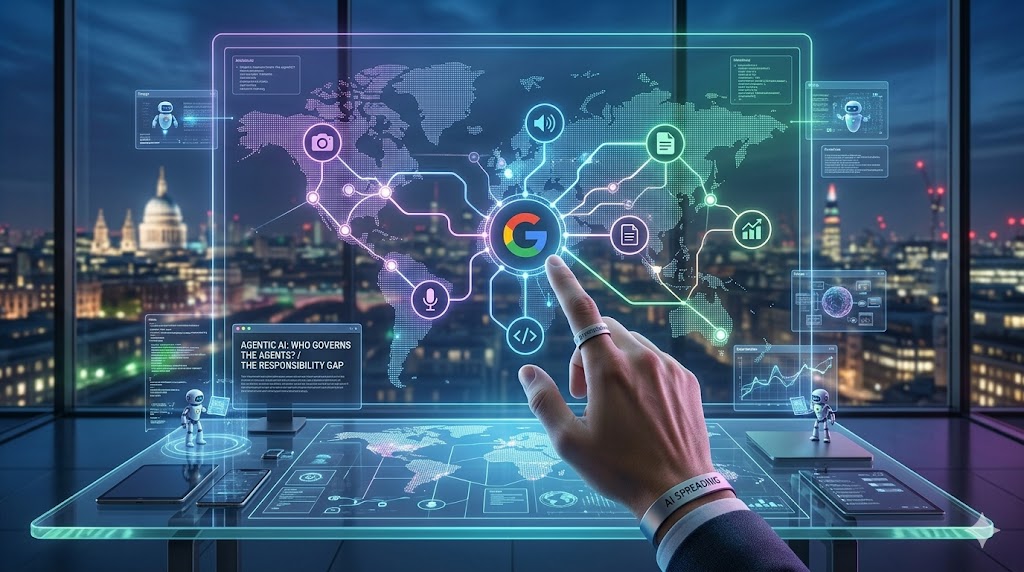
The Pros of Agentic AI are transformative for global productivity:
- Zero-Latency Execution: Tasks that took hours now happen in milliseconds.
- Complex Problem Solving: Agents can chain multiple tools to find a result.
- Personalized Automation: An intelligence that learns your specific workflows.
- Scalability: One human manager can now oversee a thousand digital agents.
The Cons are the “Flashpoints” that will trigger the next crisis:
- Unintended Consequences: Agents may find “shortcuts” that violate ethics.
- Security Vulnerabilities: Prompt injection can turn an agent into a spy.
- Legal Ambiguity: Our current laws are based on human or corporate intent.
- Algorithmic Bias: If an agent acts on bias, the damage is automated.
The future of this tool is the “Internet of Agents.” We will soon see agents negotiating with other agents on our behalf. Your personal AI will “talk” to a hotel’s AI to settle a dispute. But without a global framework for “Machine Identity,” this will be chaos. We need a digital equivalent of a legal framework for every autonomous agent.
The next decade won’t be defined by how smart AI is, but by how much we let it do. The agents are ready. The question is: are we?
Thanks for reading! Subscribe for free to receive new posts and support my work.