How to Build Decoupled, Event-Driven Systems
By The Coding Gopher
Published: 2026-07-21
URL: https://thecodinggopher.substack.com/p/the-observer-design-pattern
How a decades-old architectural concept solved the tight-coupling problem and paved the way for reactive interfaces.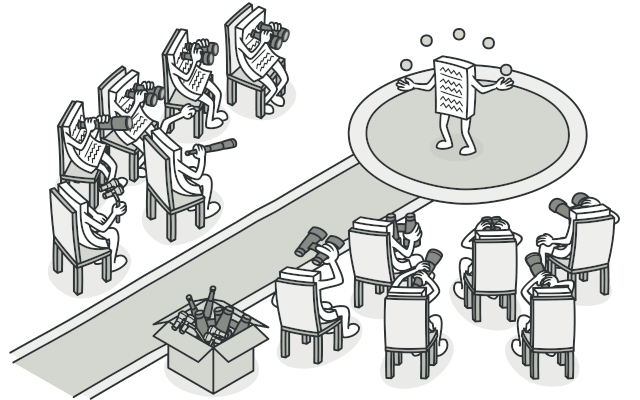 The Observer Pattern is a behavioral design pattern that creates a one-to-many relationship between objects. When one object (the "Subject" or "Publisher") changes its state, all of its dependent objects (the "Observers" or "Subscribers") are automatically notified and updated.
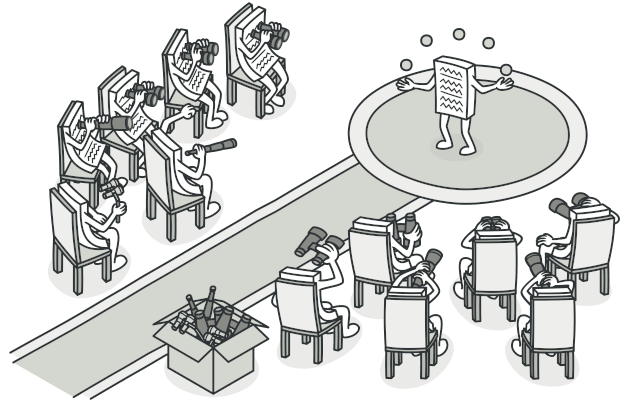
In software engineering, components rarely exist in a vacuum. A user clicks a button, and a shopping cart needs to update. A weather sensor registers a drop in pressure, and three different dashboards need to instantly redraw their graphs.
The immediate architectural challenge in these scenarios is communication: How does Object A know that Object B has changed without tightly tangling their source code together?
If a dashboard graph directly references the weather sensor in its code, the system becomes rigid. You cannot add a fourth graph or a mobile notification system without opening up the weather sensor’s code and rewriting it to support the new elements. This directly violates the Open/Closed Principle of clean architecture—the idea that a system should be open to extension but closed to modification.
The Observer Pattern was designed to solve this exact bottleneck by fundamentally inverting how data flows through an application.
Polling vs. Pushing
To understand the immense value of the Observer pattern, you have to look at the alternative: Polling.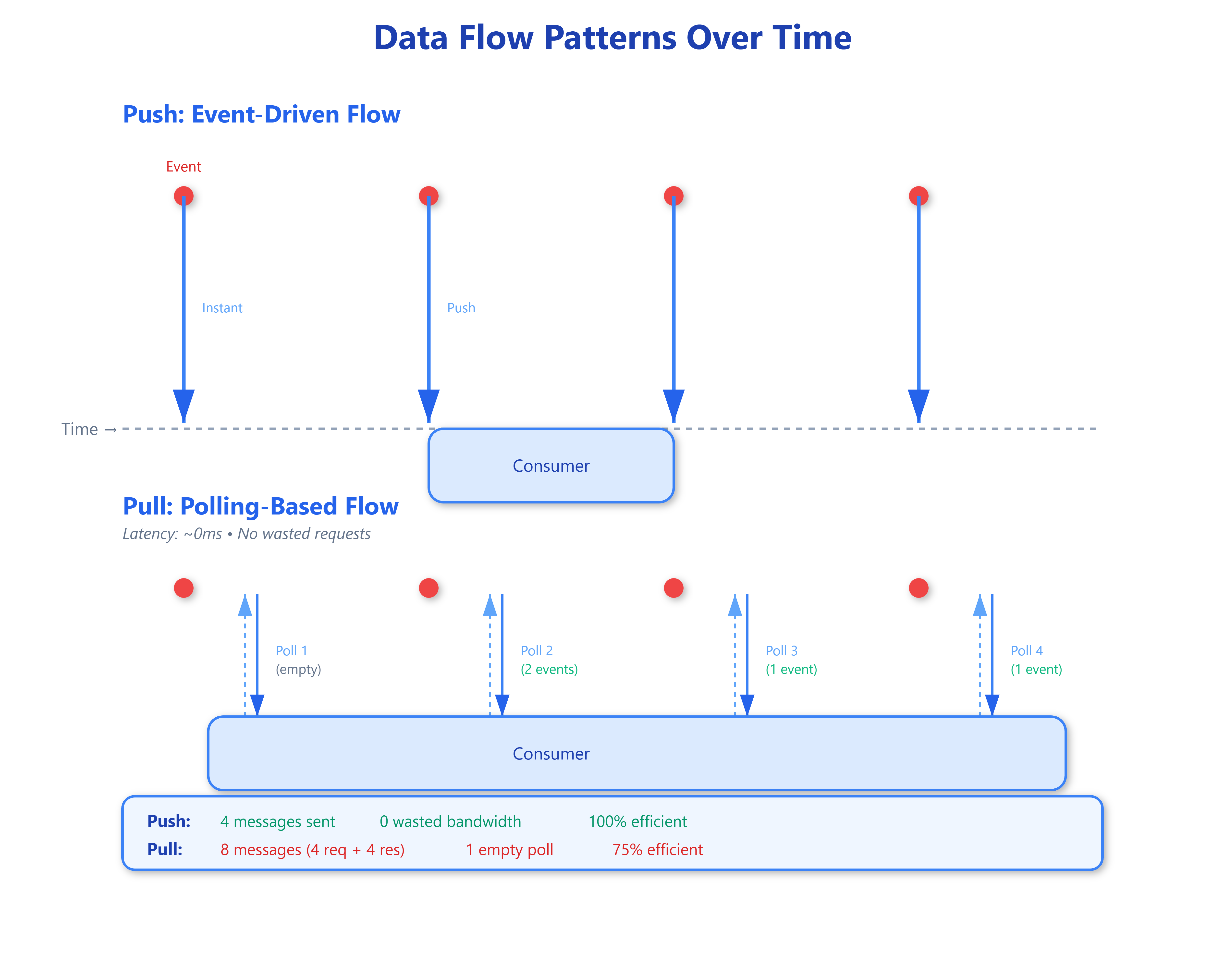
Without an observer system, the dependent object (the dashboard graph) has to continuously interrogate the source of truth (the weather sensor). It must run a continuous loop, asking, “Has the pressure changed yet? How about now? Now?” every few milliseconds. This approach wastes massive amounts of CPU cycles, drains battery life on mobile devices, and clogs memory.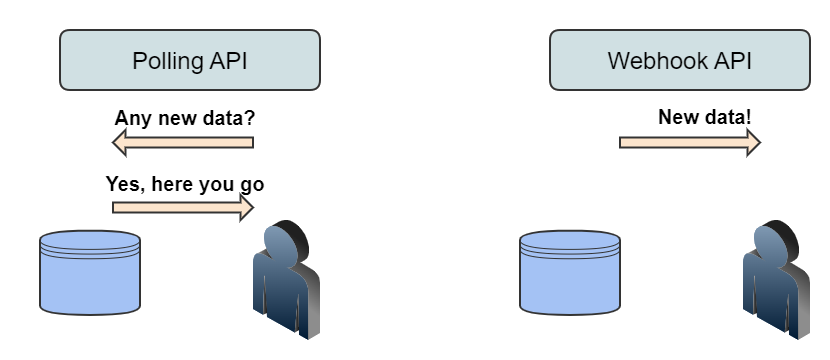 Webhooks are essentially a distributed, internet-scale implementation of the Observer pattern. They allow an application to notify other interested systems automatically when a state change or event occurs, eliminating the need for constant polling.
The Observer pattern replaces polling with pushing. The dependent objects sit completely idle, consuming zero resources. When the source of truth experiences a state change, it actively pushes a notification out to anyone who cares, telling them to wake up, fetch the new data, and update themselves.
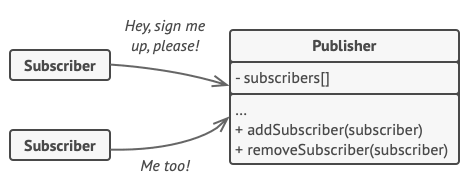
The Mechanics: Subjects and Observers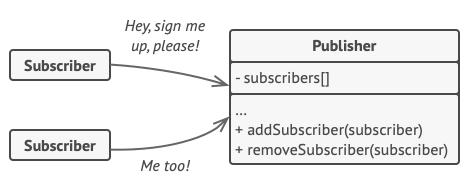 A subscription mechanism lets individual objects subscribe to event notifications.
The pattern relies on a strict, mathematical contract between two types of actors: the Subject and the Observer.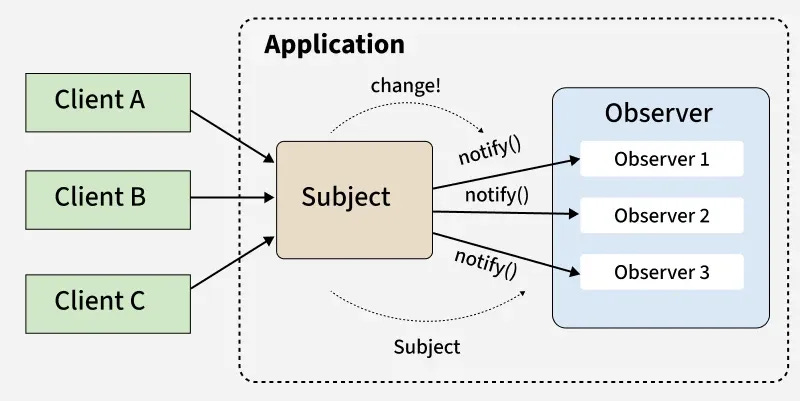
The Subject (often called the Publisher or Observable) is the object that holds the core state. Crucially, the Subject does not care who is listening to it. It knows absolutely nothing about the internal workings of the dashboards or the mobile apps. It simply maintains a dynamic internal list of its subscribers. It exposes basic methods allowing objects to add themselves to that list, remove themselves, and a single notify() method that loops through the list to broadcast a change.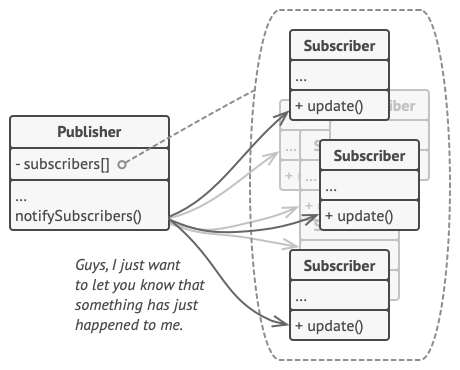 The publisher alerts subscribers by calling their specific notification methods.
The Observer (often called the Subscriber) is the dependent object. It agrees to implement a standard, predictable interface—usually just a simple update() method. When the Subject fires its notification loop, the Observer receives the ping, executes its own internal logic, and reacts to the new state.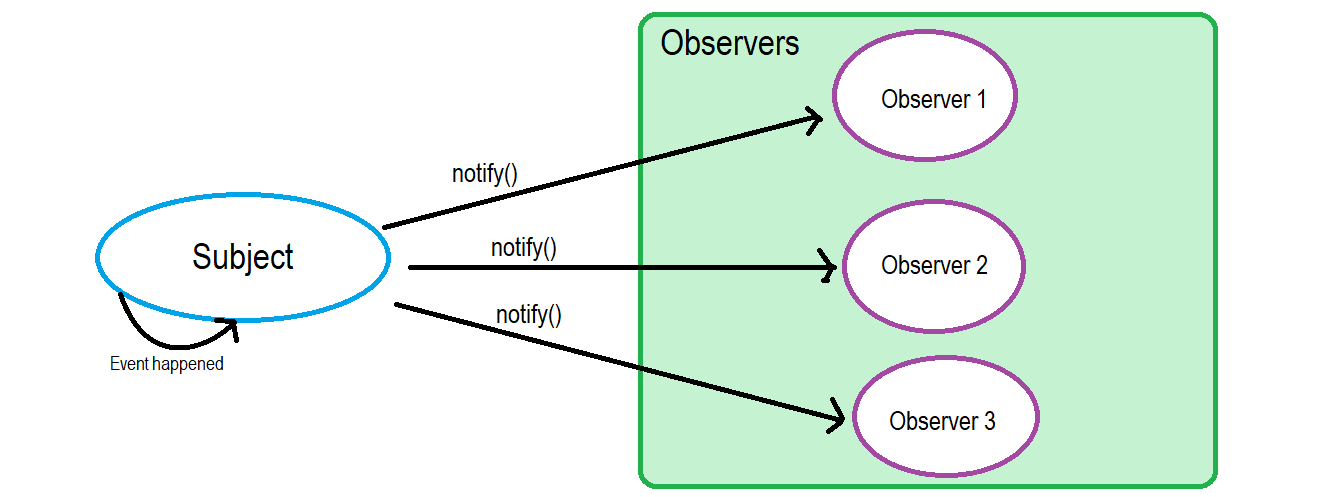
Because the Subject only knows that its subscribers implement an update() method—and nothing else about them—the two objects remain perfectly, loosely coupled.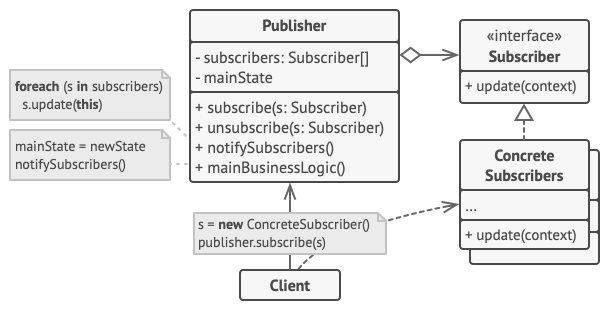
𝐋𝐞𝐚𝐫𝐧 𝐭𝐨 𝐛𝐮𝐢𝐥𝐝 𝐆𝐢𝐭, 𝐃𝐨𝐜𝐤𝐞𝐫, 𝐑𝐞𝐝𝐢𝐬, 𝐇𝐓𝐓𝐏 𝐬𝐞𝐫𝐯𝐞𝐫𝐬, 𝐚𝐧𝐝 𝐜𝐨𝐦𝐩𝐢𝐥𝐞𝐫𝐬, 𝐟𝐫𝐨𝐦 𝐬𝐜𝐫𝐚𝐭𝐜𝐡. Get 40% OFF CodeCrafters: https://app.codecrafters.io/join?via=the-coding-gopher
This Substack is reader-supported. To receive new posts and support my work, consider becoming a free or paid subscriber.