In 1983, federal judges considered whether a union could buy workers a drink without buying their votes.
By Alex Press
Published: 2026-11-13
URL: https://thealexpress.substack.com/p/the-union-election-with-an-open-bar
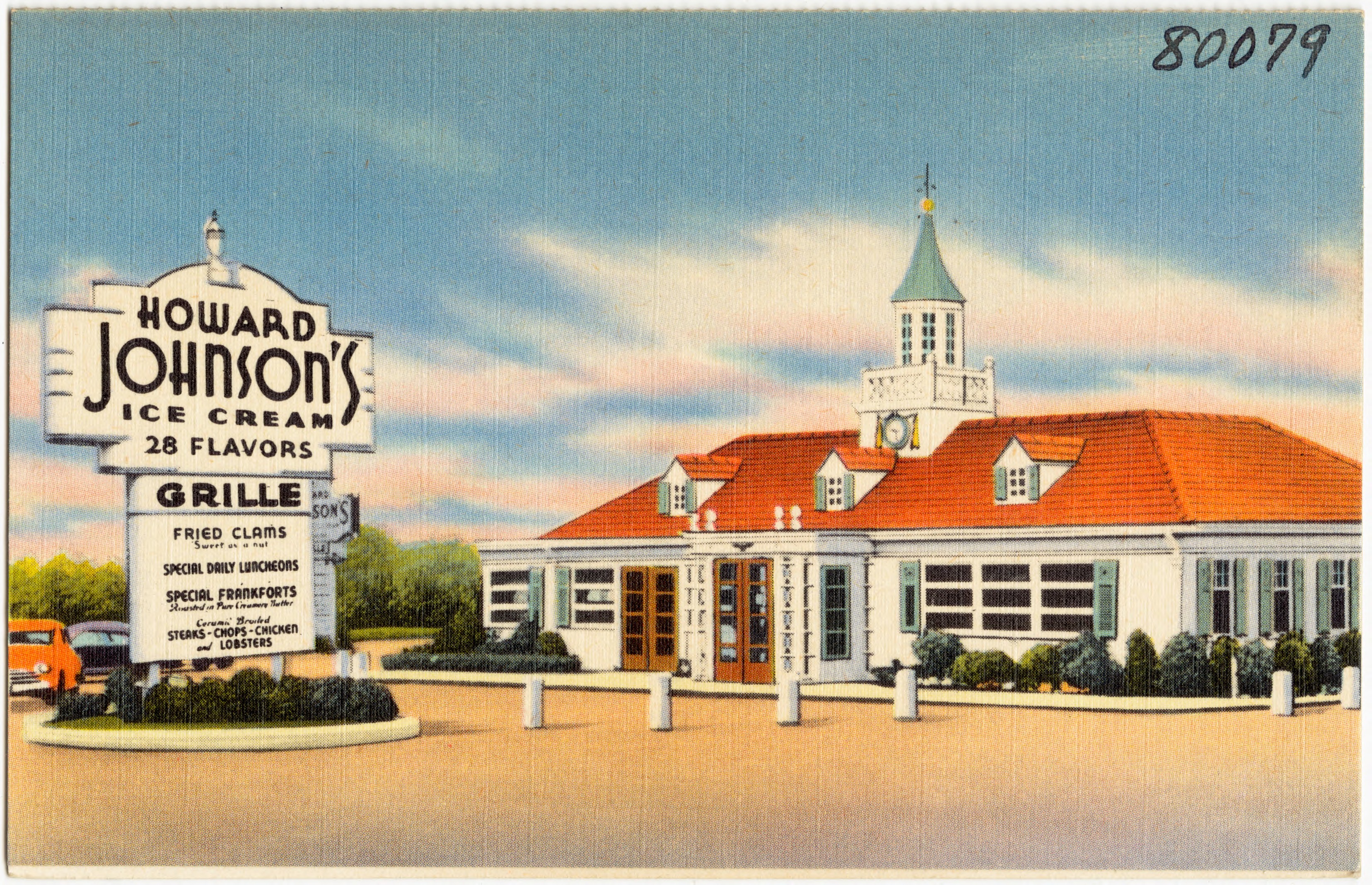
\Howard Johnson's Restaurant and Motor Lodge, circa 1950s. Vintage postcard via Wikimedia Commons.\
At approximately 4:15 one afternoon, Richard Stromberg walked into the bar at a Howard Johnson Motor Lodge in Pawtucket, Rhode Island, accompanied by two other men. Stromberg was the business manager of a union seeking to represent eighteen employees of Labor Services, Inc., who were about to vote on whether to unionize. Polls were scheduled to open at five, in a room nearby.
Around 4:30, five or six more men arrived, and Stromberg told the bartender that he was picking up their tab. When some of the men got up to leave shortly before five, he encouraged them to have another drink. There was still time before they had to vote. As they left, he reminded them, “Don’t forget how to vote.”
The Alex Press is a reader-supported publication. To receive new posts and support my work, consider becoming a free or paid subscriber.
After voting, the men returned to the bar, where others joined them. By the time the polls closed at seven, an estimated twelve to fifteen of the eighteen eligible voters had been drinking on Stromberg’s tab. The union won, thirteen votes to five.
Two Pawtucket police officers, Champagne and Randall, had been in the bar on an unrelated assignment and witnessed the proceedings. According to the officers, at 6pm, when the bartenders changed shifts, Stromberg reportedly produced a “heavy roll of bills” to settle his tab. He then opened another with the incoming bartender, telling her that the workers’ drinks were still on him. (The NLRB’s regional director accepted the officers’ version, though other witnesses disputed it.)
At 6:20, Labor Services president Robert Blanchette and the company’s attorney, Robert Corcoran, entered the bar and spoke with the officers. The company subsequently challenged the election, using the officers’ account as a basis for a challenge that reached the First Circuit Court of Appeals.
The NLRB’s regional director declined to overturn the election. Nobody had been promised drinks beforehand, there was no evidence that Stromberg had made his generosity conditional on voting for the union, and no one was shown to have gotten drunk. The bar was outside the polling area, and the drinks weren’t worth enough to constitute a serious inducement. The Board agreed, three to two, and certified the union. Labor Services refused to bargain, setting up a fight in federal court.
On November 7, 1983, Judge Frank Coffin, joined by Judge Thomas Fairchild, sided with the company. Coffin was troubled by the possibilities of the NLRB’s reasoning. If a union could buy drinks throughout an election, what would stop an employer from doing the same? Management could presumably afford better liquor, and more of it. The Board’s attorney conceded at oral argument that the rule would apply equally to employers.
Coffin envisioned a “bibulous competition” between the two sides, reminiscent of the days when politicians bought liquor for prospective voters. Nor was he satisfied that nobody had been shown to be drunk. “Inebriation is not the only form of interference; induced fellowship is another,” he wrote. He invoked Edwin O’Connor’s novel The Last Hurrah, in which an old politician explains the persuasive value of throwing a good party.
The NLRB had encountered this problem before. In 1969, inJacqueline Cochran, Inc., it allowed an election to stand despite a union’s offer of free turkeys to employees attending a campaign meeting, along with a Christmas party. The following year, inLach-Simkins Dental Laboratories, the union had supplied sandwiches and soft drinks during an election. Voting took place upstairs, while fifteen to twenty of the forty-four voters ate lunch in the basement. The Board saw no reason to throw out that election either.
Coffin thought the NLRB was stretching the sandwich precedent a bit far. As he put it, the Board was equating “a tuna on rye and Pepsi” with a “double scotch.”
Coffin also thought the bar’s proximity to the polling place mattered. Workers might forget a campaign leaflet or something said to them before they voted, but drinking was another matter. And if the NLRB required proof that someone was drunk, would union votes eventually need breathalyzers?
Stephen Breyer dissented. He thought the NLRB was perfectly capable of deciding whether a few drinks warranted throwing out an election, and wondered why the court was so determined to distinguish between free sandwiches and free liquor. “Perhaps it is a matter of hunger versus thirst,” he wrote.
Breyer also pointed out that coworkers routinely bought one another drinks. Treating such exchanges as grounds for overturning an election would give employers a plethora of opportunities to challenge results they disliked on a trivial basis.
He surveyed the laws governing alcohol and political elections. Massachusetts, he observed, had repeatedly changed its mind about whether political committees could spend money on liquor, reversing its position several times between 1973 and 1975. The Federal Election Commission had recently approved alcoholic drinks at hospitality suites during national political conventions.
Breyer ended his dissent with a question: “Will we have to decide where beer and hamburgers fit on the spectrum?” He thought the NLRB, rather than federal judges, should decide the matter.
The First Circuit refused to enforce the NLRB’s bargaining order, but it didn’t throw out the election. Instead, it sent the case back to the Board, since the officers’ account was disputed by other witnesses. There was no evidence that Stromberg’s drinks had changed anyone’s vote.
The NLRB has continued to refine its standards for such cases, weighing the value of a gift, the number of workers receiving it, and its timing and purpose. In 1998, the Board threw out an election after the Chicago Tribune spent some $8,000 on a lavish brunch for employees three days before voting. That same year, it invalidated another election over an employer-sponsored crab boil, held after a campaign meeting that nearly all employees were required to attend. Free sandwiches and soft drinks, however, remain permissible under the Board’s precedents.
In 2022, after workers at Amazon’s JFK8 warehouse on Staten Island voted to join the Amazon Labor Union, the company filed twenty-five objections to the election. Among them was an allegation that the union had given workers free marijuana in exchange for their support.
Chris Smalls, the ALU’s president, had talked publicly about handing out weed during the campaign. Amazon went further in its formal objections, accusing the union of using marijuana to secure votes. The NLRB rejected the challenge in August 2024. Amazon hadn’t proved its allegation, the Board found, and distributing marijuana wouldn’t necessarily have invalidated the election anyway. Marijuana was legal in New York, and the amount at issue was relatively small.
The ALU ran its campaign from a bus stop outside the warehouse, with donated supplies and a shoestring budget. Amazon spent millions on anti-union consultants, who had access to workers inside the facility. Back in Pawtucket, Coffin had worried that employers could outspend unions in a competition to buy drinks, since they could afford better liquor. Employers could also influence workers through their wages, benefits, schedules, and job security.
The amount Stromberg spent at the Howard Johnson’s, meanwhile, does not appear in the court’s opinion.
The Alex Press is a reader-supported publication. To receive new posts and support my work, consider becoming a free or paid subscriber.