Turns out accountants aren't great at making reservations.
By Alex Press
Published: 2026-02-20
URL: https://thealexpress.substack.com/p/shift-notes-bartending-in-san-francisco
Someone who works at a bar and restaurant in SF sent a beautiful essay. I won’t editorialize other than to say that it brought me back to the years I spent working in restaurants and cafes, the things I loved about those jobs despite all the headaches. Enjoy!
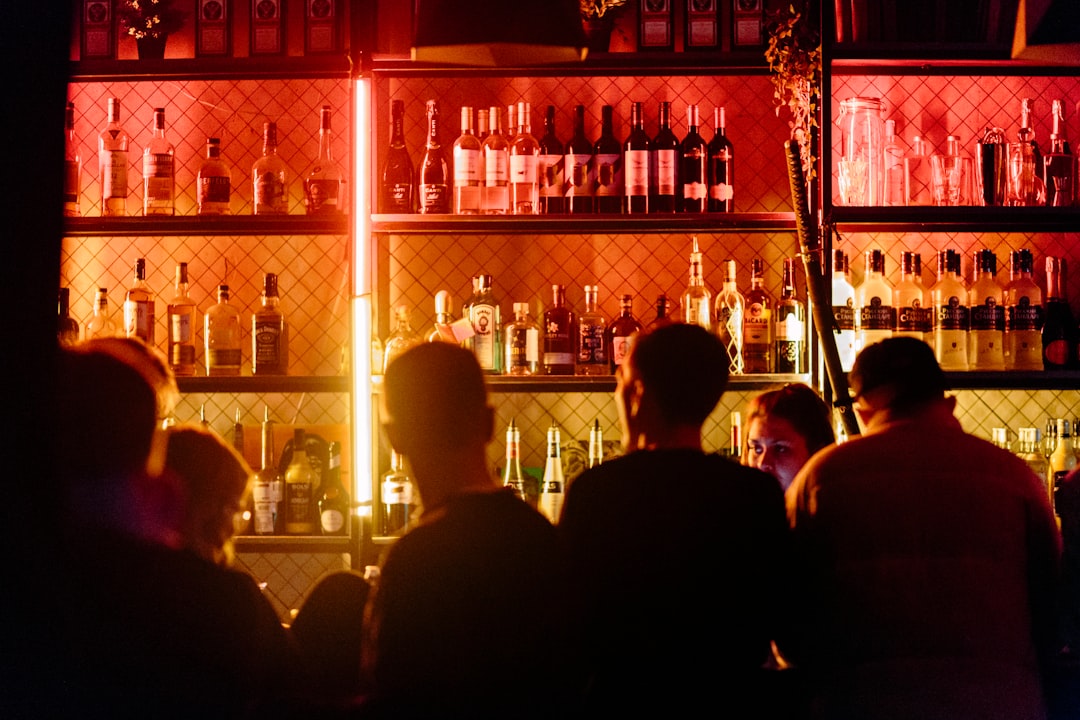 \Photo byAleksandr PopovonUnsplash\
I work at a bar and restaurant in downtown San Francisco. I was hired as a server with zero experience, but now, several years in, I’m a bartender with what feels like a weary lifetime of experience. It’s a small crew, so our roles are fluid. On a busy shift, I do a little bit of everything: bussing tables, making drinks, bringing out food, changing kegs. I never know when I walk in what kind of shift it’s going to be, whether it’s going to be slow and uneventful, or so busy that I won’t have time to take a break and will end up scarfing down lukewarm steak fries in the back in between bussing tables.
People are always surprised to hear that Fridays and Saturdays are some of our slower days. But that’s just the nature of the financial district: we’re a weekday happy hour bar, not a weekend bar. On weekends, it’s mainly tourists staying at nearby hotels. Before the pandemic, every day was busy, but now Thursdays carry the rest of the week; people don’t have to go into the office every day anymore. On a typical Thursday at 6pm you’ll see maybe fifty people milling around in the alley, fifty more inside. Fridays are starting to recover, but they’re nowhere near what they were.
The clientele is mostly white-collar workers in the neighborhood. It’s not just tech, though we do get a fair amount of that: Amazon, Salesforce, and Google all have offices nearby. (Not really the hardcore AI crowd as much; those guys hang out elsewhere, thank God.) The diversity of the crowd is a beautiful thing, a useful reminder that the city isn’t merely a parking lot for the tech industry (yet), as much as the billboards would have you believe that. We get elevator repair guys, construction workers, lawyers, advertisers, journalists, salespeople, schoolteachers, hairdressers. There’s an architect meetup on the last Friday of every month. Pilots from all over the world love our onion rings. The kids who work at the Apple store nearby love our well tequila. Bartenders on their 30-minute breaks love our shot and beer special. And I always know when some important tax deadline has been reached because the accountants will show up unexpectedly, 20-30 of them, eager for 8-10 rounds of drinks on the corporate card. You’d think that people who scrutinize dates and numbers for a living would excel at making reservations, but alas.
People always say that working in service teaches you to hate people. In theory, you’re exposed to the worst of humanity: people at their most unhinged, people ignoring common sense. Especially at a bar, where decorum drops significantly as the night goes on. So far, though, this job has taught me the opposite: I’ve found a surprising kinship with strangers. When you walk into my bar, it feels almost like a dance: you and I both know our respective roles in this ritual, this miraculous bridge that can transcend cultural and language barriers, united by the universal desire to eat and drink. By the time you walk out, I’ll have contributed to your life in some small but meaningful way.
That doesn’t mean I always love the crowd. There are particular recurring conferences that we dread. You can tell a conference is in town by the awkward lanyard-wearers sporting giant backpacks in the middle of the bar, eyes sliding past the staff as if we were wallpaper. And I have to confess I’ve developed an uncontrollable antipathy towards Europeans, with their notorious low tips and their inability to say IPA correctly, as petty as that is. But then I’ll have times when every single person at the bar is someone whose order I know as soon as they walk in. I may not know their name, but I know they’ll want iced tea with chili cheese fries, or a double IPA and a BLT with cheddar and avocado, or just a glass of wine on their way home from work. And in some small way, I feel like I’ve been knitted into the social fabric of the neighborhood.
Some shifts are harder than others. Recently, I had a walkout. I was working the day shift solo, trying to manage dozens of customers all eating and drinking on my own. The J.P. Morgan healthcare conference was in town and I was swamped. Downtown was crawling with navy blue suits and brown shoes. I didn’t even realize a table had walked out without paying until maybe ten minutes after they’d left. A $66 tab, unpaid. They’d stacked the empty plates behind them, implying a genuine mistake rather than a deliberate dine-and-dash. Still, that didn’t make much difference to me: the owner’s policy with walkouts is that staff have to pay half the bill.
For the rest of that shift I was angry with the job, with the industry, with the whole world. You can’t trust strangers, I thought furiously, people will always disappoint you. For a wild moment I thought about quitting, just walking out, in protest of this policy with questionable legality. But then the moment passed. So much of this industry exists in grey zones anyway: the comped drinks for friends, the heavy pours for regulars, the pay-to-play nature of the specials board. I had made over $400 in tips that day, and if I had to pay $33 as a penalty for my mistake, so be it. There’s no perfect workplace. Mine wasn’t all that bad.
And I didn’t want my takeaway from the experience to be that you couldn’t trust strangers. How many people did I serve that day, after all? Over a hundred, probably, the vast majority of whom paid their bill and then some. People stacked their plates, tucked their chairs back in, left twenty-dollar bills on top of a 20% tip on the company card. People are, for the most part, trustworthy and generous. Remembering that flips my worldview, makes me feel good about the job again. And if I feel good about the job, this microcosm of interacting with society, then I feel good about society as a whole.
Sometimes at the end of a busy night after the tables have been stacked away and the dishes have been cleaned and the surfaces have been wiped down I like to take a moment to look at the empty alleyway, which just a few hours prior was a sea of tables, packed with people drinking and eating and smoking. And it’s kind of amazing to think that our tiny crew made all this happen. That all this was just us. All those hundreds of people celebrating birthdays and bachelor parties or just the arrival of another Thursday, gossiping and scheming and flirting with strangers. All they had to do was show up; we provided everything else. Our contribution to our little corner of the world. There’s a magic to it. And by the time I clock out I feel like I’ve achieved something beyond the money I made.
P.S. I can count on two hands the total number of submissions to this project; thank goodness the people who have written in have offered great stuff. However, I urge you to rectify the situation by sending your own notes at [email protected]. People want to read what you have to say! As ever, more on what to write here.
The Alex Press is a reader-supported publication. To receive new posts and support my work, consider becoming a free or paid subscriber.