I thought better AI meant bigger models and bigger bills—until smaller models, smarter routing, and efficient inference completely changed my view of AI.
By Sherif Saad
Published: 2026-10-04
URL: https://theaioperators.substack.com/p/i-stopped-chasing-the-biggest-ai

\Photo byRubaitul AzadonUnsplash\
I had fallen for the biggest-model illusion 🧠
For months, I treated AI like a race.
New model announced?
Try it.
Bigger context window?
Upgrade.
More parameters?
Interesting.
New reasoning capability?
Absolutely.
Somewhere along the way, I quietly adopted an assumption I never consciously agreed to:
The best AI must be the biggest AI.
It sounded logical.
More parameters.
More compute.
More reasoning.
More capability.
Therefore, better results.
Simple.
Except reality started becoming more complicated.
I began noticing that I wasn’t actually asking AI to solve the hardest problem imaginable every time I opened it.
Sometimes I wanted a sentence rewritten.
Sometimes I needed information classified.
Sometimes I wanted a document summarized.
Sometimes I needed ten pieces of text sorted into categories.
And occasionally, yes, I needed serious reasoning.
But I had been using the equivalent of a supercomputer to open a jar.
That awareness was uncomfortable.
Because once I noticed it, I couldn’t unsee it.
The bill was telling me something 🔥
There is an economic side of AI that doesn’t get nearly as much attention as benchmark scores.
Inference.
That’s the process that happens every time an AI model generates an answer.
Every question costs compute.
Every generated token consumes resources.
And when you introduce reasoning models, long outputs, agents, repeated calls, or complex workflows, those costs can multiply.
Research on inference scaling in 2026 highlights how reasoning workloads can shift the computational bottlenecks of AI systems, making efficiency a fundamental systems problem rather than an afterthought.
I started looking at AI differently.
Not just:
“How intelligent is this model?”
But:
“How much intelligence am I getting for the resources I’m spending?”
That question felt surprisingly powerful.
Because suddenly, model selection became less like choosing the most expensive car and more like choosing the right engine for the journey.
Then the small models started getting interesting ⚡
This was the part I didn’t expect.
I had mentally categorized small AI models as compromises.
Useful if you didn’t have access to something better.
Budget versions.
Lightweight alternatives.
The little brother of the real model.
That mental model is becoming increasingly outdated.
Hugging Face’s August 2026 analysis found that models below 1 billion parameters account for the overwhelming majority of model downloads, while models above 70 billion parameters represent only a small fraction of current download volume.
The report argues that small models remain the practical layer because they can run on hardware developers actually have.
That statistic stopped me.
Because downloads aren’t just popularity contests.
A model downloaded once is interesting.
A model repeatedly embedded into products, pipelines, applications, and infrastructure is something else.
It’s becoming a tool.
Infrastructure.
A habit.
And that’s where I started seeing the bigger picture.
Intelligence was becoming modular 🧩
I had been thinking about AI as one giant brain.
But the emerging architecture looked more like a team.
A small model could handle classification.
Another could extract information.
Another could summarize.
A stronger reasoning model could handle difficult decisions.
A specialized model could process images.
Another could generate embeddings.
Another could evaluate the output.
Instead of sending everything to the most powerful model available, you could decide which level of intelligence the task actually requires.
This sounds obvious.
But it represents a profound change.
Because it means an AI system doesn’t necessarily need one model.
It needs an intelligence strategy.
And suddenly the question becomes:
“What is the cheapest reliable way to solve this particular problem?”
That’s a much more interesting question than:
“What’s the smartest model?”
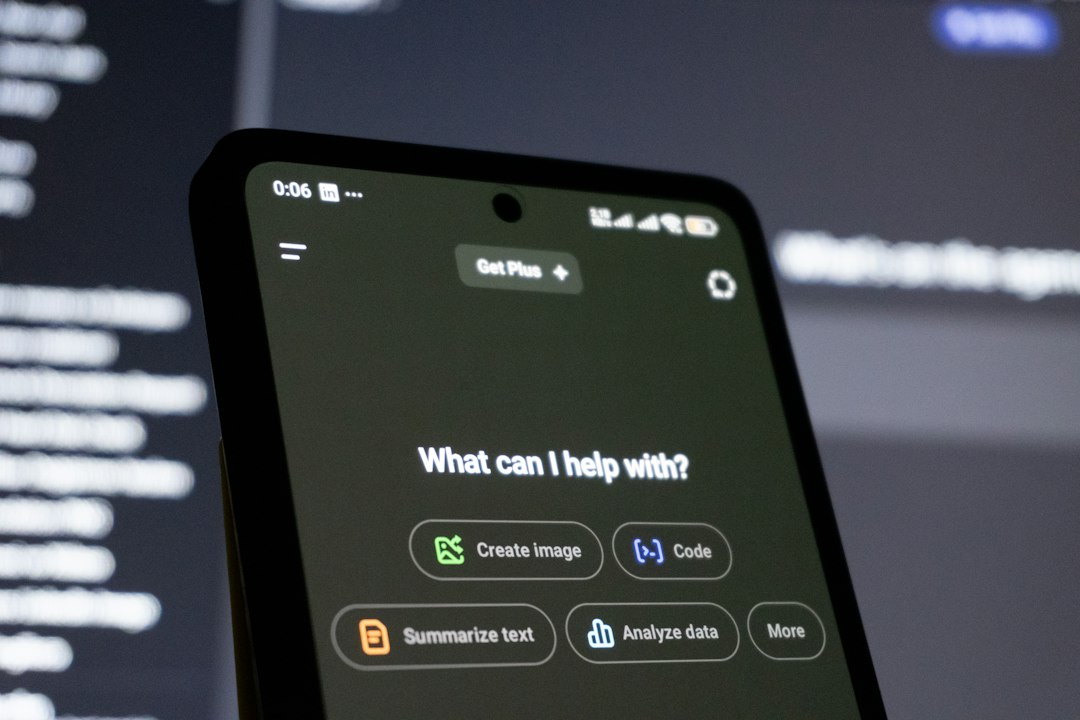
\Photo byZulfugar KarimovonUnsplash\
I discovered the 90% problem 💸
One of the most fascinating recent research directions makes this even clearer.
A 2026 study on smaller AI agents found that small language models can match frontier-model performance on many routine business tasks when paired with appropriately optimized instructions, tools, and orchestration—reporting cost reductions of up to 90% in the studied settings.
That doesn’t mean small models are suddenly better at everything.
They aren’t.
A frontier model can still be dramatically more capable for difficult reasoning, ambiguous problems, advanced coding, complex research, and other demanding workloads.
The lesson is different.
Model intelligence and system intelligence are not the same thing.
A mediocre model inside an excellent system can sometimes outperform a powerful model used badly.
That idea changed everything for me.