The important signal is not any single feature. It is the direction: creator platforms are absorbing more of the work required to build an audience and business.
By The Agentic Teacher
Published: 2026-07-18
URL: https://theagenticteacher.substack.com/p/substack-is-becoming-creator-economy
Substack is changing.
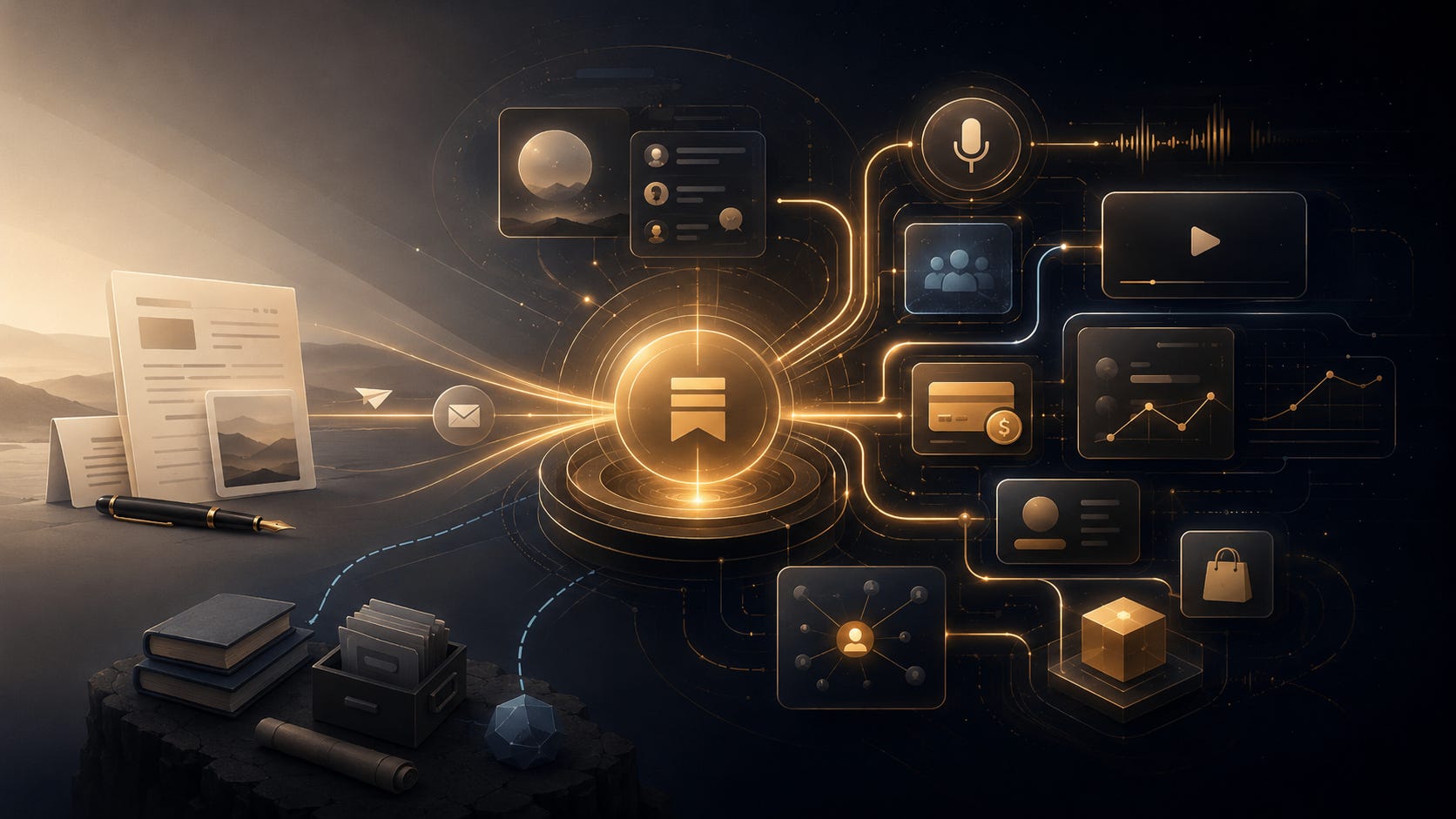
A creator can begin with a newsletter, add Notes for discovery, turn on paid subscriptions, experiment with audio or video, build community, and use recommendations to reach new readers. Each move can feel like a useful improvement.
The harder question appears later: when more of the audience relationship, media, payments, and customer knowledge live in one place, what exactly is the creator building—and what would be difficult to take elsewhere?
The useful question is:
What kind of platform is Substack becoming?
If you are building an audience, publishing knowledge, selling access, or turning expertise into a business, the answer matters. The platform you choose is not only a distribution channel. It increasingly shapes how people discover you, relate to you, pay you, and encounter the rest of your work.
Substack is no longer only a place where creators publish writing and collect subscriptions. It is becoming part of the infrastructure through which creators build audiences, relationships, media, revenue, and identity.
The platform is expanding toward a larger role in the creator economy.
From publishing platform to creator environment
Substack now supports posts, Notes, podcasts, video, Chat, recommendations, subscriptions, and app-based discovery. Its own reader guide describes a service where people can read, listen, watch, or chat with creators in one broader environment.
That changes the strategic category.
A newsletter platform helps you send email. A creator environment helps coordinate publishing, relationships, media, community, payments, and business.
Substack is not necessarily becoming a complete operating system in the technical sense. A more precise description is that it is becoming an orchestration layer for a larger share of the creator relationship.
It is trying to coordinate more of what happens between creator and audience.
The broader signal is platform convergence
Substack is one visible example of a wider movement.
Beehiiv is expanding beyond newsletters into podcasts, digital products, community, recommendations, analytics, AI assistance, and MCP connections. Google is connecting AI Mode in Search to other services so users can move from recommendation toward action without rebuilding the task elsewhere. Meta is extending AI across social apps, business tools, and devices.
These companies are not identical:
Substack begins with publishing and creator relationships.
Beehiiv begins with newsletters and growth infrastructure.
Google begins with search, productivity, and action.
Meta begins with social interaction, identity, and attention.
The evidence is not that every platform will become everything. The signal is that major platforms are competing to coordinate more of the user’s activity—and creators are increasingly building businesses inside those environments.
AI is accelerating the convergence
Platforms have always expanded. Microsoft Office became a work environment. WeChat combined messaging, payments, commerce, and services.
AI did not invent platform expansion. What AI changes is the speed and range of expansion.
When a platform has an intelligence layer, it can apply that layer across writing, search, recommendations, customer support, design, analytics, commerce, and workflow automation.
The progression looks like this:
task compression → workflow compression → tool-stack compression → platform convergence
First, AI makes an individual task faster. Then it reduces workflow handoffs. Then it allows one platform to absorb capabilities that once required several specialized tools.
The boundaries between product categories begin to blur. A newsletter platform starts to resemble a community platform. A social network starts to resemble a business assistant. A search engine starts to resemble an agent.
The measured claim is simple:
Major platforms are under pressure to orchestrate a larger share of the user’s activity.
Why this matters to creators
The creator economy is moving beyond audience-building and monetization. The next phase is infrastructure.
Creators are increasingly dealing with community, media formats, audience data, recommendations, products, services, partnerships, customer relationships, recurring revenue, and AI-assisted operations.
That consolidation can be valuable. A creator may move from an idea to a post, from a post to a relationship, and from a relationship to an offer without stitching together as many tools.
But each convenience can also deepen dependence. Imagine a creator who moves discovery, community, media, payments, and customer knowledge into one platform. The business becomes easier to operate—and harder to rebuild elsewhere.
The questions become:
Who controls the audience relationship?
Who owns the data?
What happens if discovery rules change?
Can the creator export the content and customer knowledge?
Which activities become dependent on the platform?
The future advantage may not belong to creators who use the most tools. It may belong to creators who know which layer they are building on—and which assets they still need to control themselves.
Trust, audience relationships, content archives, customer knowledge, and portable offers are what make adaptation possible.
What creators should watch next
The important question is not whether Substack adds another feature. It is what those features begin to coordinate.
Watch for these developments:
-
Are platforms bundling more creator functions—publishing, community, audio, video, payments, analytics, and discovery?
-
Is AI becoming grounded in a creator’s actual content, audience, offers, and history?
-
Are creators consolidating more of their business inside one platform?
-
What remains portable when the platform becomes convenient?
-
Are integrated platforms producing better outcomes—or merely more features?
Use the questions as a small portability check: list the content, audience knowledge, customer relationships, and offers you could export today. Then mark what would be difficult to rebuild if the platform changed its rules tomorrow.
The next creator-platform question
You do not need to predict the exact next feature. You need to recognize the direction early enough to adapt.
The old model was:
publish, attract an audience, and collect subscriptions.
The emerging model is:
publish, build relationships, distribute media, understand the audience, create offers, operate a business, and let the platform coordinate more of the system.
AI is accelerating that shift because it lowers the cost of connecting separate activities.
That does not mean creators should rush to consolidate everything. It means they should ask better questions before convenience becomes dependence.
When we revisit this signal, the test will not be whether Substack added one more feature. It will be whether creators are moving more of their work and relationships inside the platform—and whether that produces more leverage, more dependence, or both.
How much of the creator’s operating environment will platforms eventually coordinate—and what will creators choose to keep under their own control?
Sources
Substack: A reader’s guide to Substack
beehiiv: Platform and pricing overview
Google: Connect more of your apps to Search
Meta: Introducing Muse Spark
Meta: Meta Business Agent
This Substack is reader-supported. To receive new posts and support my work, consider becoming a free or paid subscriber.