Before adding another AI tool, ask whether it improves the system your work already depends on.
By The Agentic Teacher
Published: 2026-07-10
URL: https://theagenticteacher.substack.com/p/why-i-wont-be-using-chatgpt-work
Every new AI tool arrives with a quiet suggestion: if you are not using it, you may be falling behind.
That pressure is understandable. The tools change quickly. A new agent can write, research, analyze, plan, and produce work that used to take hours.
But I am becoming more careful about what I call leverage.
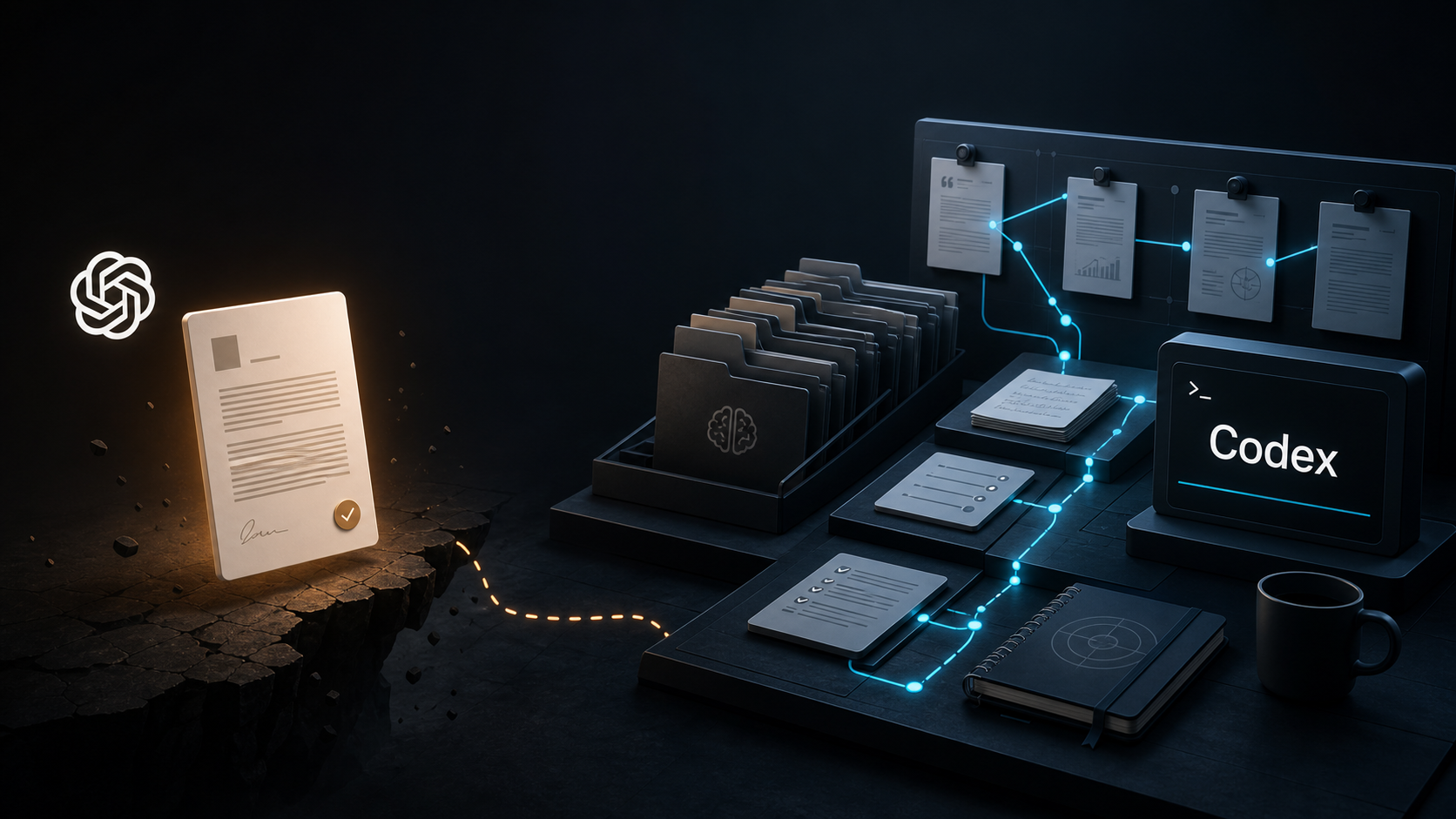
Recently, I used The New ChatGPT Work feature to create an article. It completed the assignment. The draft was usable.
Then I looked for the rest of the work.
It had not created the Markdown source file where I keep working drafts. It had not created the Google Doc I use to review and publish. It had not placed the article inside the project system where the related decisions, standards, and assets already live.
The article existed. But it had not joined the body of work it belonged to.
This is not a negative verdict on the tool, or a claim that it will be the wrong fit for everyone else. It is a judgment about fit within my own operating system.
A Completed Assignment Can Still Leave Unfinished Work
When an AI tool gives you a good output, it is easy to call the task complete.
But real knowledge work is rarely only the visible output. The work also includes where the output lives, which version becomes authoritative, what standards it must follow, what related files need to change, and how someone will find and reuse it later.
That is what happened to me. The tool created a useful article outside my system, and I had to carry it back in: copy it, file it, connect it to the right project, preserve the decisions that shaped it, and make sure the next piece of work could build on it.
That handoff may be small once. Repeated across research, planning, writing, client work, and operations, it becomes coordination work.
And coordination work is often the part AI was supposed to reduce.
New Capability Is Not Automatically New Leverage
The question is not whether a new tool can do something impressive.
Most modern AI tools can now produce a draft, summarize documents, create a plan, or research a topic. Capability matters, but it is no longer the whole decision.
The more useful question is: what does this tool do to the system around my work?
Does it work from the files, standards, source material, and past decisions that already matter? Can it create or update the assets where the work belongs? Does it reduce the number of places where I have to remember what happened?
If the answer is no, the tool may still be useful. But it has not automatically earned a place in the workflow.
This is especially important for knowledge workers who already feel buried under disconnected chats, duplicated files, repeated explanations, and outputs that cannot be found when they are needed again.
Adding another intelligent tool does not solve that problem if it creates another island of work.
The Three Questions I Use Before Adding A Tool
Before adopting a new AI tool, I now start with three questions.
1. Can it do the task?
This is the obvious question. If the tool cannot reliably help with the task, there is no reason to keep evaluating it.
But this question only tells you whether the tool is capable.
2. Can it do the task inside the workflow where the work belongs?
This is where the decision becomes more practical.
A task may depend on source files, a project folder, approved language, prior drafts, business rules, or a specific place where the finished asset has to live. If the tool sits outside that environment, you may have to recreate the context before the task and repair the handoff afterward.
The output may still be good. The workflow may still be worse.
3. Does it reduce coordination, or create another handoff to manage?
This is the question that protects you from novelty for novelty’s sake.
An AI tool creates leverage when it removes repeated explanation, reduces retrieval problems, makes the right context easier to use, or helps the next task start from what the last task produced.
It creates friction when it gives you one more inbox, one more isolated output, one more version to reconcile, or one more place where important work can disappear from the system.
Coherence Is A Better Default Than Novelty
This does not mean you should refuse every new AI tool.
It means the tool should have to earn its place.
Adopt it when it offers a clear advantage: access to a needed system, a capability your current environment cannot provide, a materially better way to collaborate, or a real reduction in coordination.
Until then, the most rational default may be to keep doing valuable work inside the environment that already preserves your files, standards, decisions, and continuity.
That is not resistance to innovation. It is good operations.
The AI industry trains us to compare tools: Which model is better? Which agent is newest? Which feature can do more?
Professionals need to compare systems.
The better question is not, “Can this new AI tool complete an assignment?”
It is, “Will using it make the next piece of work easier to trust, find, continue, and improve?”
If the answer is no, it may be an impressive tool.
It is not leverage yet.
This Substack is reader-supported. To receive new posts and support my work, consider becoming a free or paid subscriber.