The pipeline that scaled the last decade of software will break under the weight of autonomous AI. Here is what comes next.
By Sumant Thakur
Published: 2026-04-30
URL: https://sumantthakur.substack.com/p/cicd-is-dead-long-live-continuous
For the last decade, CI/CD (Continuous Integration and Continuous Deployment) has been the undisputed holy grail of software engineering. It allowed us to ship faster, break things safely, and automate the mundane.
But traditional CI/CD is built on a fatal assumption for the AI era: It assumes that code is static and deterministic.
It assumes that if you put X in, you will always get Y out.
But what happens when the software writes its own software? What happens when a system doesn’t just execute logic, but makes autonomous decisions based on probabilistic reasoning?
If you try to force an AI agent through a traditional CI/CD pipeline, the pipeline chokes.
CI/CD is dead. The future belongs to Continuous Agency (CA/CD).
Thanks for reading Autonomous AI Architect! Subscribe for free to receive new posts and support my work.
Here is why the old model is breaking, and what the new architecture requires:
1. Integration: From Syntax to Semantics
In traditional CI, we run unit tests to check if the code compiles and if the syntax is correct.
But an AI agent doesn’t fail because of a missing semicolon. It fails because it hallucinated a step, misunderstood a prompt, or used flawed reasoning to achieve a goal.
- The CA/CD Shift: Continuous Agency requires Behavioral Testing. We need pipelines that can simulate edge cases, run synthetic agent-to-agent interactions, and automatically evaluate the logic and safety of an agent’s decisions before it ever touches production.
2. Deployment: From Rollbacks to Blast Radiuses
In traditional CD, if a deployment breaks production, you hit a button and roll back to the previous stable state.
But how do you “roll back” an autonomous agent that just sent 500 incorrect emails to your clients or modified database records using a third-party API? You can’t just revert the code; the actions have already been taken in the real world.
- The CA/CD Shift: Continuous Agency requires Dynamic Guardrails. Instead of just focusing on the deployment event, we have to deploy the agent with a strict “blast radius.” If the agent starts exhibiting anomalous behavior or burning too many tokens, the infrastructure must automatically throttle its permissions in real-time, severing API access before the damage is done.
3. Monitoring: From Uptime to Agency-Time
Traditional DevOps monitors server health, latency, and uptime.
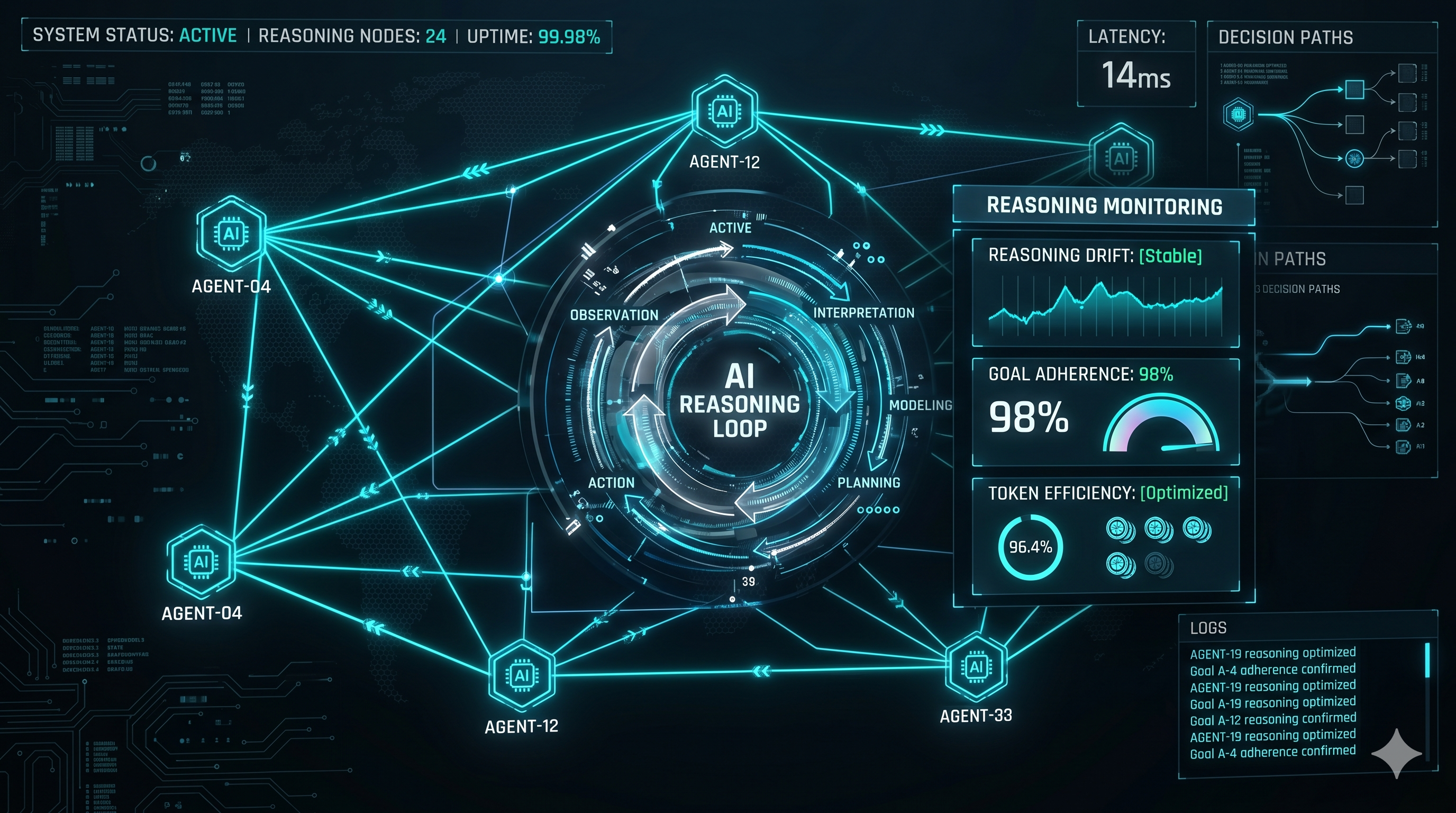
- The CA/CD Shift: In Continuous Agency, 99.9% uptime means nothing if the agent is hallucinating 50% of the time. We need entirely new observability metrics: Reasoning Drift, Goal Adherence, and Token-to-Outcome Efficiency.
The Next Frontier of Engineering
Transitioning from CI/CD to CA/CD is not just an infrastructure upgrade. It is a fundamental paradigm shift in how we think about software lifecycles.
We are no longer just shipping code. We are deploying digital workers. And they require an entirely different operational core.
This is the exact architecture we are pioneering at Flurit.ai.
We are building the foundational platform for Continuous Agency, giving engineering teams the enterprise-grade infrastructure they need to scale autonomous systems safely.
If your team is ready to move beyond legacy pipelines and help define the future of Agentic DevOps, we want you to build alongside us.
Apply to be a Flurit.ai Design Partner and get direct influence over the CA/CD platform of the future.
The pipeline is evolving. Are you?