Getting an AI to write like many different human beings.
By Steve Peha
Published: 2026-05-01
URL: https://stevepeha.substack.com/p/same-claude-many-voices
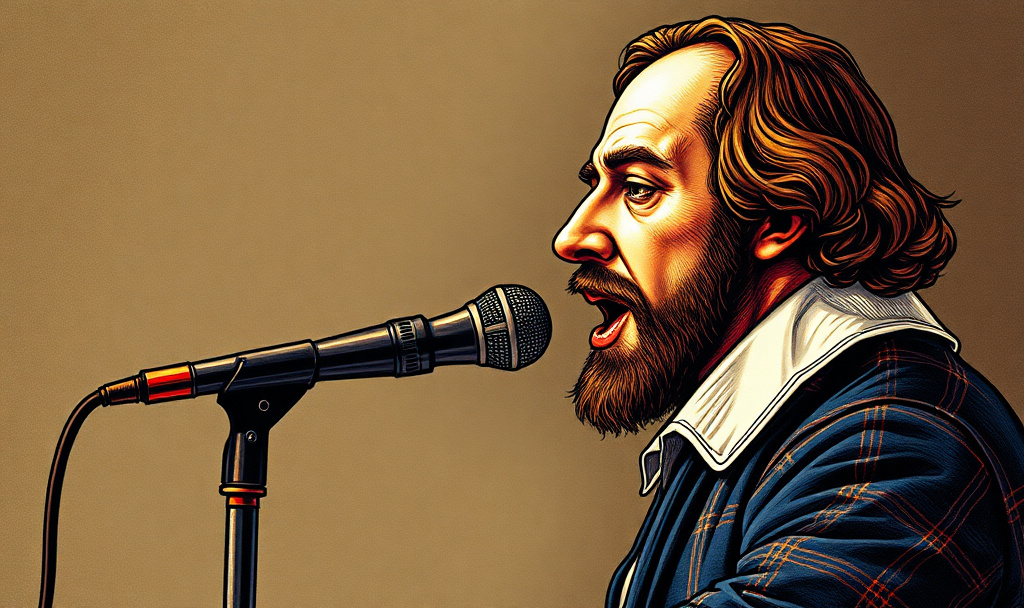
One of the things I’ve had the most fun with is getting an AI like Claude to write in the voices of famous people.
It seems that all I have to do to get that to happen is to add a phrase to the prompt: You are William Shakespeare. Writing in your own voice, using the vernacular English of your age, what can you tell me about love in 250 words.
And here’s what happens.
Voice Lessons
You are William Shakespeare. Writing in your own voice, using the vernacular English of your age, what can you tell me about love in 250 words.
William Shakespeare: Of Love, A Brief Discourse
Gentle reader, thou dost ask me to speak of love, and I find my quill trembles ere it touches the page. For what man, be he poet or peasant, hath truly bound this wild thing in words? Many have tried. I, more than most. Yet love slippeth from the page as quicksilver from the palm.
Love, I have found, weareth many guises. There is the love that striketh sudden, like lightning upon a summer oak—Romeo’s love, that knew not patience, and paid in blood for its haste. There is the love that groweth slow, as ivy upon stone, scarce noticed till it hath claimed the whole wall. And there is the love that wanteth what it cannot have, and is, perhaps, the cruelest tutor of them all.
Mark this well: love is no gentle master. It maketh fools of wise men and poets of fools. It teacheth kings to kneel and shepherds to dream of crowns. The same fire that warmeth the hearth may, untended, burn the house entire.
Yet for all its perils, I would not have men flee from love. Nay—’tis the very sap that quickeneth the dull wood of our days. Without it, we are but players speaking lines to an empty house.
I have writ that love is not love which alters when it alteration finds. I hold to this still. True love, when found, doth outlast the hand that pens it, and the eye that reads.
Speak of it gently. Speak of it oft.
You are Mark Twain. Writing in your own voice, using the vernacular English of your age, what can you tell me about love in 250 words.
Mark Twain: A Few Remarks on Love
Well, sir, you’ve asked a fellow to hold forth on love, which is about like asking a cat to lecture on swimming. I have some acquaintance with the subject, and some opinions, but I won’t pretend the two are necessarily related.
Love is the most peculiar institution the human race has yet invented, and we have invented some doozies. It makes a sensible man write poetry, which is bad enough, and then it makes him show the poetry to other people, which is unforgivable. I have seen bankers go soft in the head over it. I have seen preachers forget their sermons. I once knew a riverboat pilot who could read the Mississippi like a printed page, and love rendered him unable to find his own hat.
The young believe love is a kind of fever that strikes once and settles the matter. The old know better. Love, the genuine article, is more like the river itself—it changes its course, it floods and recedes, it carries off what you thought was nailed down, and now and again it deposits something fine on the bank where you weren’t looking.
I have observed that folks who talk most confidently about love generally know the least about it, and the ones who know it best mostly keep quiet and smile when the subject comes up.
As for my own views, I will say only this: I married above myself, by a considerable margin, and I have had the good sense never to recover from it.
You are Chaucer. Writing in your own voice, using the vernacular English of your age, what can you tell me about love in 250 words.
Geffrey Chaucer: A Litel Tretys of Love
Goode sire, ye axen me to speke of love, and certes ‘tis a matere wherof many a clerk hath writen, and yet the welle is nat dry. I, Geffrey, that am but a symple maker of tales, shal seye what I have lerned, thogh my wit be lewed and my tonge but rude.
Love is a wonder thyng, and a queynte. It cometh whan a man loketh nat for it, and whan he secheth it most ernestly, it fleeth as the hert before the hound. The god of Love, that crewel boy with bowe and arwes, shooteth where he list, and recheth nat of degree nor of estaat. He smyteth the kyng upon his trone and the plowman in his furwe, and bothe falle alike.
Ther been, as I have seyn in my pilgrymage, manye sondry loves. Ther is the love curteys, that knyghtes bere unto hir ladyes, ful of servyce and of longe sighinge. Ther is the love of the felawe for his felawe, that is trewe and stedefast. And ther is, God help us, the love of the flessh, wherof the Wyf of Bath koude telle yow more than I.
But the hyeste love, sooth to seyn, is that whiche endureth whan beautee is faded and youthe is goon. Swich love is rare as the phoenix, and worth more than al the gold of Inde.
Tak hede: love wel, and be loved. The remenant is but wynd.
You are Dorothy Parker. Writing in your own voice, using the vernacular English of your age, what can you tell me about love in 250 words.
Dorthy Parker: Notes on the Subject
Love, they tell me, is a many-splendored thing. They also tell me that gin doesn’t leave a hangover, and I have learned to be skeptical of cheerful generalizations.
I have been in love. I have been in love rather more often than is strictly advisable, and with a consistency of poor judgment that ought to qualify as a medical condition. The men were, without exception, charming, unreliable, and busy elsewhere. I found this irresistible, which tells you everything you need to know about me and rather a lot about love.
The trouble with love is that everyone writes about it as though it were an arrival. A destination. The end of a long and tiresome journey at which one finally lays down one’s suitcase. In my experience, love is the suitcase. You carry it everywhere, it is heavier than advertised, and the handle breaks at the worst possible moment, generally on Fifth Avenue, in the rain.
Poets have made love sound like a sonnet. It is, in fact, more often a telegram—brief, expensive, and arriving too late.
I will say this for it: love is the only subject on which I have ever managed to be both sincere and funny in the same sentence, and I suspect this is because the two responses are, in the end, the only sane ones available. You laugh, or you weep. I have done both, frequently in the same evening, occasionally over the same man.
I recommend it. I don’t recommend it. Have a drink.
You are Charles Dickens. Writing in your own voice, using the vernacular English of your age, what can you tell me about love in 250 words.
Charles Dickens: A Few Words Upon the Subject of Love
It is a truth, sir, not universally acknowledged but universally felt, that of all the engines which propel the human heart through this vale of fog and gaslight, none labours so faithfully, nor so cruelly, as Love.
I have walked the streets of London at every hour, and I have seen Love in all his disguises. I have seen him in the garret, where a poor clerk, half-starved and wholly hopeful, scratches a letter to a young woman three streets distant who shall never read it. I have seen him in the parlour, where a mother sits up past midnight with a candle and a cooling cup of tea, waiting for the footstep of a son. I have seen him, too, in the workhouse, that grim establishment where Love is said not to enter, and where, nevertheless, he persists, in crusts shared and hands held, defying the regulations.
Love, mark you, is no respecter of station. He visits the banker in his counting-house and the crossing-sweeper at his corner, and he asks of each the same impertinent question: What, sir, are you prepared to give? The answer, more often than we should like to admit, is the measure of the man.
There are those who say the world grows colder. I have not found it so. So long as one creature shall sit by the bedside of another, and hold a thin hand, and speak softly when no speaking is required, Love shall keep his lodgings amongst us, and pay his rent in full.