A CMU-trained roboticist who shipped consumer robots at Anki and Apple is building Goose, a home robot designed to feel like a friendly pet, not a humanoid
By Drake Dukes
Published: 2026-11-13
URL: https://stealthstartupspy.substack.com/p/a-closer-look-the-robot-works
Today's Closer Look: The Robot Works.
I see a lot of robotics startups come through our data-driven tracking efforts, many of them led by researchers. But one name caught my attention earlier this year: Humphrey Hu. He had left Apple, where he was the first hire for its consumer robotics team, to build something of his own in stealth. (Featured in Stealth Startup Spy #306) I remember wondering what Apple was doing in robotics in the first place… Fast forward to recently, and Humphrey emerges from stealth with a robot of his own. I did a double take when I saw it was a goose. Naturally, I had to dig deeper to understand the thinking behind it.
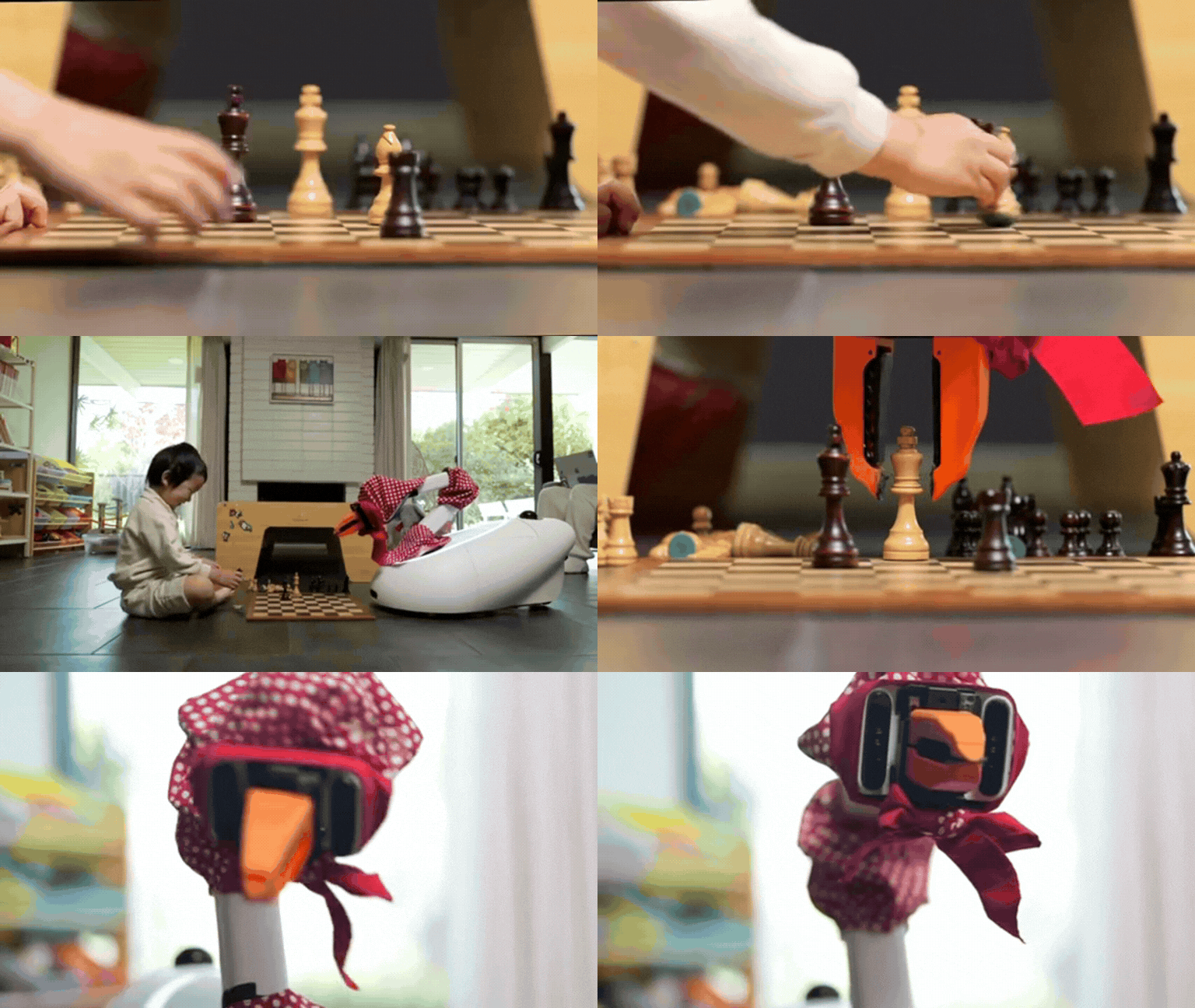
\Say hi to the Goose, a robot built to work and play alongside people.\
The Story
Humphrey spent seven years at Anki and then Apple, two companies that deeply valued robots that could coexist with people. The surprise came after he left: hundreds of robotics startups, and so few thinking about what it takes to be welcome around people. "Everyone is just missing the plot," he says. "Families don't really want a backflipping humanoid robot in their house." Robots that look cool in videos, as he puts it, "are often terrifying in person." His wife put it more simply: her fear is waking up at night for a glass of water, flipping on the lights, and finding the thing standing in the corner.
The data backs him up. The Robot Works ran 120+ interviews of its own and reached the same conclusion as an Altman Solon survey: 4 out of 5 people said they could justify getting a robot for help, but not a humanoid. The objections were blunt: "It would scare the dog." "I wouldn't trust it around my kids unsupervised." "It would take up too much room." Physical AI has made robots ready for work, but it hasn't made them pleasant to be around.
His background is the unusual part. Humphrey double-majored in mechanical engineering and EECS at Berkeley, working with Prof. Pieter Abbeel as an undergrad, then earned a robotics PhD at CMU. Instead of staying in research, he went to product: a year at Anki on next-gen product development, then six years at Apple as its first consumer robotics hire, always on small, high-initiative teams moving fast to find and prove ideas. As he puts it, investors "shouldn't be investing in researchers. They should be investing in veteran product people who bring things from zero to a million."
After exploring a few directions early in the year, he came back to home robotics with one idea: make the robot feel like an animal. "They're autonomous, they move around already. You trust them in your house... they're around your kids, around your elderly parents."
Acceptance is the secret sauce. "It feels alive, it feels like I know what it's looking at, I know what it's thinking about," Humphrey says of watching people meet the Goose. The lesson he brought from Anki and Apple: a family gives a new robot about 30 seconds of first impression. "You have to really nail that. Everything else from there on out is built on top of that starting point."
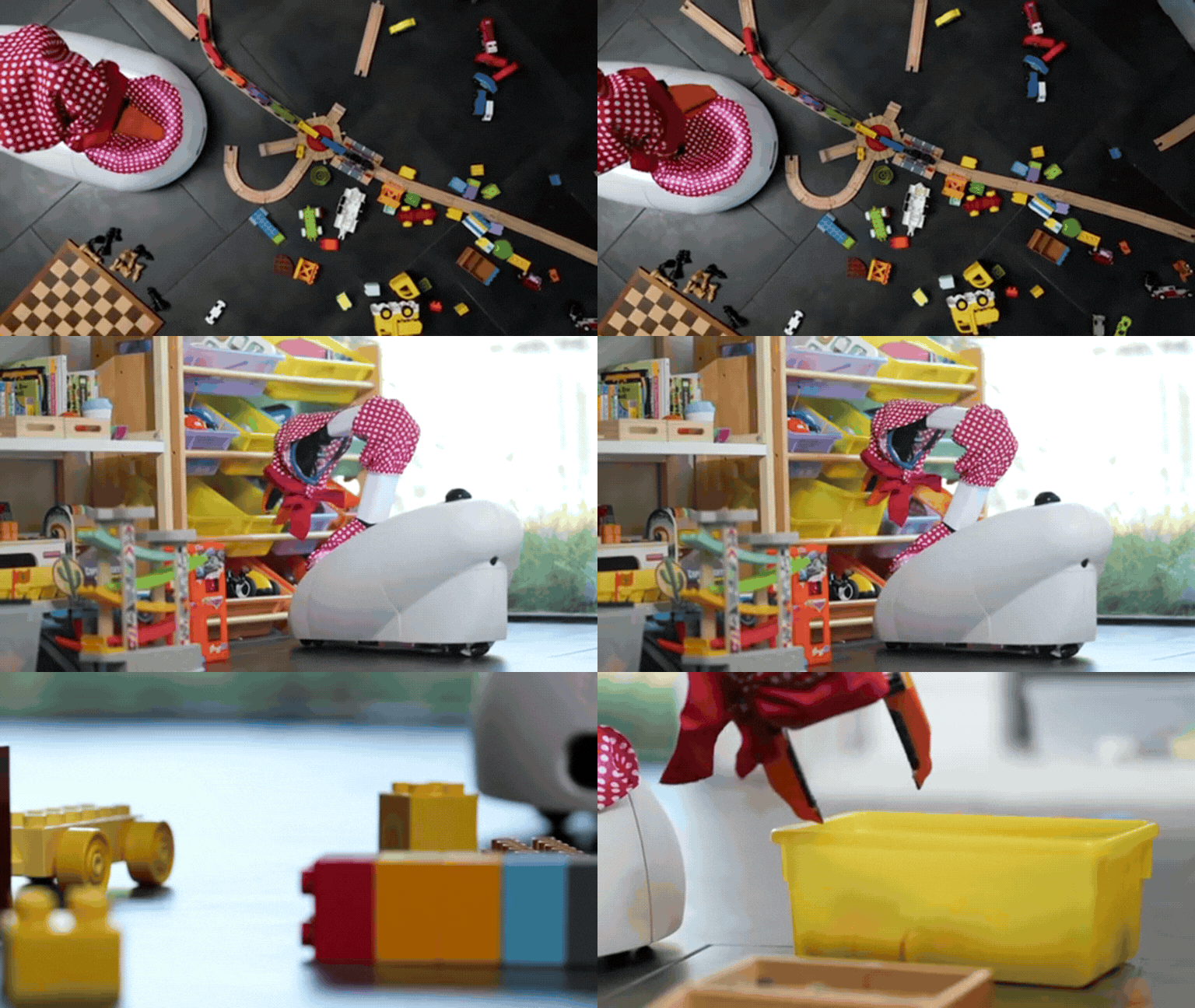
\Starting by helping families around the house.\
Why now? The hardware and AI are ready; robots are finally becoming viable products. But in chasing new capabilities, the industry forgot that acceptance is a must-have. The biggest players are coming to the same conclusion: on Sunday, CNBC reported that Amazon has assembled a new team building a "new-to-world" home robot after Astro never made it out of beta, folding in Fauna Robotics, the maker of the 3.5-foot Sprout humanoid it acquired in March. And earlier this week, Ring announced Ring Drone Cam, a flying indoor security camera, and Ring Rover Cam, an autonomous security robot designed for businesses.
One Amazon job post's stated goal is to "make robots people actually want to live and interact with in everyday human spaces." That's Humphrey's acceptance thesis, except Amazon is starting from a humanoid, the very shape he argues families don't want at home. And the home is only the start: front-of-house work like hospitality, retail and home care is a $613B labor market with 14.2M workers, and those are jobs where being accepted by the people around you is part of the job.
The Product
The Goose is The Robot Works' first general-purpose AI robot: a goose-shaped helper with a charming personality, designed to live and work in human spaces. It's low, wide and short enough to fit under a coffee table, with a long neck that reaches the floor, the counter and the door handle.
- Tidying: picks toys up off the floor, drops them into bins and moves the bins where they belong, the never-ending job in any house with a toddler, and the one the team is sure will win parents over.
- Playmate apps: creative play is just the start. The team is developing apps for learning to read, drawing and language immersion, alongside storytelling and play with the kids' toys.
- Character, by design: the team includes an ex-Pixar character animator, because motion is how a robot earns trust. "The experience of having something that's got body language that can both read your intent but also express it is so much better." For now it wears a bonnet. It doesn’t come with a name or gender; every family names their own. (It's always something with a G: a Gwenda, a Gilbert.)
Who it's for: upper-income, dual-income parents with a child aged 2 to 6, about 4M US households. The first units will be built in the US and ship in 2027. Preorders are now open at therobotworks.ai/reserve. After the home, the plan is enterprise in year 4+: hospitality, retail and eldercare. As a dad with a 15-month-old and more toys than floor space, I'll admit I want one.
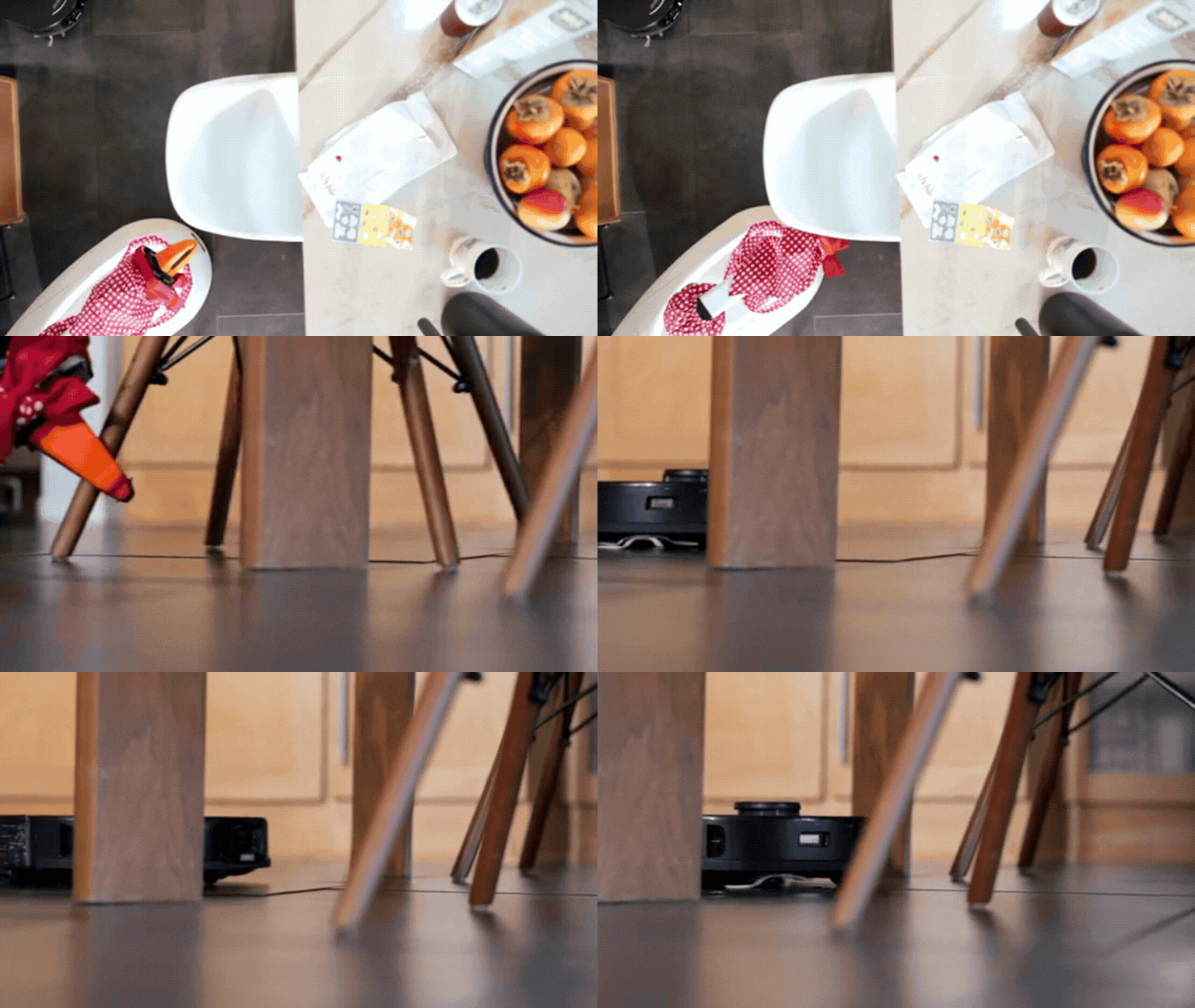
\Enabling a new paradigm for home automation through physical interaction.\
The Team
- Humphrey Hu, Co-founder & CEO: Seven years building consumer robots, six at Apple as its first consumer robotics hire and one at Anki. Robotics PhD from Carnegie Mellon, ME and EECS at Berkeley, where he co-founded a robotics nonprofit that's still running 17 years later. Father of a one- and a four-year-old, which is where most of the Goose's job list came from.
- Richard Wei, Co-founder & COO: Fourteen years as an operator, eight in health tech. Founding PM at Truewind and product and growth at DrChrono, and he founded a preventative-care group for older adults that's now 700 members strong. New father.
- Sikand Srinivas, Character Animator: Ex-Pixar. He was most recently working on the Bluey movie in Australia before coming home to animate the Goose.
- The team is 8 today, including founding engineers from Kodiak, Lyft, Amazon Lab126 (where they worked on Astro), Nuro and Brembo.
Backers
The Robot Works has been funded so far by its founders, friends and family, and a group of angels. Backers include Ryan Julian (NVIDIA GEAR), Stephen Miller (Fyusion), David Hodge (Standard Fleet), Andreas Schobel (Catch) and Alex Lee (Truewind). As Humphrey puts it, "We're pretty scrappy. We know exactly what to do, so we can be scrappy."
The team was able to get 2 prototypes built from the ground up in 5 weeks, from initial idea to finished robot, including a battery the team assembled from cells. The Goose debuted publicly on September 22.
What the team is working on now: build Gen2 hardware with full autonomy and the full product experience, convert home trials and get the first units into homes.
Get in Touch
Interested in learning more? Reach out to Humphrey directly:
- Email: [email protected]
- LinkedIn: Humphrey Hu
- Website: therobotworks.ai, where families can reserve a Goose
- Follow along: @thehumhuworks on X
Want a warm intro? Just reply to this email. If The Robot Works looks interesting to you, I'm happy to introduce you to Humphrey myself.
Stay Stealthy,
Drake Dukes