Book2: On My Own Terms: Digital Agency for the Global South. Women in under-resourced communities reclaim their voices and sovereignty through purposeful AI use.
By SheWritesAI
Published: 2026-06-16
Welcome to the premiere of the She Writes AI interview episodes covering our second book collaboration for the AI Everywhere series. We are kicking off this new cohort by exploring the personal journeys and professional expertise of 31 authors from 18 countries worldwide who are redefining our relationships with machine intelligence.
This is the 1st episode in our interview series with book2 chapter authors.
If you’re new to , welcome! We’re a free, inclusive community of 750+ women and nonbinary writers in 60+ countries worldwide, with a focus on AI and data. Allies of all genders are welcome.
Learn more: About | Books | Categories | Directory | Digests | Donate | Herstory | Join | Subscribe | Updates | Welcome | World Map
About My Guest: Verónica Ponce
Today I () am joined by . As a journalist and radio host in the highlands of Ecuador with over two decades of experience, Verónica brings a uniquely grounded and serene perspective to a field often dominated by urgency and hype. Representing the Global South perspective in our book series, her chapter On My Own Terms: Digital Agency for the Global South addresses a major AI barrier for women in under-resourced and rural communities: the feeling of being “left out” of a technological revolution that wasn’t designed for them.
Verónica shares a deeply critical and sovereign lens in this conversation. Through her work and her writing, she explores what it means to enter the digital area without “leaving your voice at the door,” specifically resisting the “vanishing accent” and generic personas often imposed by Western-trained AI models. She moves beyond the idea of AI as a tool for mere speed and introduces the concept of Digital Agency: the practical capacity to decide for oneself how, when, and if technology enters one’s life.
 \Covers for these new volumes will be revealed this summer. Stay tuned!\
In this first interview for our second book collaboration, Verónica explores her three “ways in” to AI, including using it to prepare for the high-stakes “15-minute window” of medical or banking appointments to shift vertical power dynamics. She also shares how the Andean philosophy of Sumak Kawsay (Good Living) can help us reclaim our time and curiosity for learning’s sake, rather than just for productivity. Whether you are a woman over 40 feeling bypassed by the digital age or a technologist looking for a more equitable way to design the future, Verónica’s insights offer a roadmap for engaging with AI on your own terms.
Interview With: Verónica Ponce
Below is ’sfull interview response to ’s questions on her chapter, On My Own Terms: Digital Agency for the Global South.
Intended Audience: For women over 40, residents of the Global South, and those in under-resourced communities seeking a sovereign practice of digital agency to reclaim their unique voice and navigate life’s essential conversations on their own terms.
Part 1: The Reality of the Global South
Negotiating with Cows: You open your chapter with the vivid image of having to “negotiate with a cow” before opening your laptop in rural Ecuador. How does this grounded, rural perspective help you maintain a sense of calm in a tech draft world that constantly demands urgency?
Verónica: Living in rural Ecuador teaches you that everything has its own rhythm. A plant doesn’t flower faster just because you want it to. You have to be patient, tend to it, water it, clear the weeds, and then wait, knowing that even if you do everything right, a hailstorm might still decide otherwise. That relationship with time is not a limitation. It’s a lesson.
When AI arrived, the message was loud and clear: you’ll lose your job, you’ll be replaced, you’ll become one of the new illiterates if you don’t adapt immediately. All of that generates anxiety, and most of it isn’t even true. Approaching fifty, and having been considered unhireable for years already, I had to find a perspective that actually worked for my circumstances, not for someone else’s timeline.
What Guaranda taught me that Silicon Valley hasn’t learned yet is that time lasts as long as it needs to. That a life spent running, stressed, and always wanting more is not my definition of success. The urgency the tech world sells is a product. The calm is mine.
The Vanishing Accent: You mentioned that the first time you used AI to help with your radio program, it gave you a response that sounded younger and more like someone from the Northern Hemisphere, erasing your Andean Spanish cadence. Why is it so dangerous for women in the Global South to “leave their voice at the door” when using these tools?
Verónica: The first time AI gave me back a version of myself I didn’t recognize, I felt frustrated. The words were technically correct, but they weren’t mine. Not my rhythm, not my references, not my reality. Over time I’ve learned to teach the AI that the world it knows is not the only world that exists, that there are many realities and each one relates to its context differently. But that took work, and not everyone knows they need to do it.
What I see among women I know — smart, creative women — is that many have quietly displaced their own voice. They publish texts that are grammatically perfect and completely generic, texts that smell like AI. The spark that made their writing theirs has disappeared, and I’m not sure they’ve noticed.
For women in the Global South, this has a particular weight. We’ve been taught, for generations, that everything foreign (especially from the north) is better than what’s local, what’s ours. We copy trends, behaviors, words, celebrations that don’t belong to us; and little by little, our own identity gets erased. If we don’t know who we truly are, it will be very hard to recognize ourselves in the enormous changes humanity is going through right now.
And an AI that was never trained on your reality cannot help you find that answer.
“This morning, before opening my laptop, I had to negotiate with a cow.“ - Verónica Ponce
Part 2: Health and the “Right Questions”
The Menopausal Crisis: You began using AI during a difficult time involving a menopausal crisis and an autoimmune condition. How did AI help you move from being a patient who “obeys” to one who participates in their own medical decisions?
Verónica: For most of my life, I felt ignored in medical consultations. Doctors focused on the symptom while I knew there was something larger going on. I left appointments feeling minimized and unheard, like my experience didn’t quite merit serious attention.
When AI confirmed what I had suspected about my autoimmune condition and medication sensitivity, I felt both relief and anger. Relief because I finally had words for what I was living. Anger because those words had been available all along, and no one had offered them to me. Even now, years later, I keep finding connections between diagnoses that were there for years and were never taken seriously.
I sometimes think: if I’d had AI thirty years ago, I would have resolved my health issues faster and better on my own. Not because AI doesn’t make mistakes, but because I’d rather be the one making decisions about how I feel, rather than someone who has barely paid attention to me.
And yes, this is common for women in the Global South. The minimizing of what we feel and how we feel it is generalized, not just in healthcare but among ourselves. I still have aunts and friends who tell me not to be dramatic, that everyone goes through menopause and it’s not such a big deal. That hurts. Because it means the dismissal doesn’t only come from the system. Sometimes it comes from the people closest to us.
Heightened Sensitivity: Doctors dismissed your sensitivity to medication as being “too suggestible,” but the AI confirmed it as a physiological reality for autoimmune patients. Can you talk about how technology, despite its flaws, can sometimes provide the validation that vertical systems of power—like a medical institution, might withhold?
Verónica: When the AI told me “this is physiology, not suggestion,” it wasn’t just information. It was recognition. Of myself, of how I had felt for years, of the fact that I wasn’t imagining things or trying to get attention. And it was painful, because much of what I went through could have been avoided if just one person had taken me seriously. That still happens with new doctors, but now I make my voice heard. I don’t allow anyone to tell me I’m being dramatic.
I don’t think of AI as a source of validation, exactly. I think of it as a tool for understanding what is actually happening to you. For confirming that you’re not inventing it, that you’re not crazy, that what you’re experiencing is real and that there are real tools to help you, beyond the biased opinion of someone who knows the theory of a diagnosis but not the reality of what happens in your body and your life. If you know how to ask the right questions, it’s a tremendously useful tool. Not to get anyone’s approval.
To get to the truth of your own experience.
Part 3: Sovereignty, Agency, and Sumak Kawsay
Digital Sovereignty vs. Digital Agency: You distinguish between digital sovereignty (the right to decide) and digital agency (the real capacity to do it). Why is it critical for under-resourced communities to move beyond “pretty declarations” of rights and into actual practice?
Verónica: In Ecuador, during the pandemic, the difference between rural and urban became impossible to ignore. In the city, internet was already part of the basic household. In rural areas, there was barely a reliable signal.
In the city, a computer and a smartphone for each child. In the countryside, at best, one old phone, barely working, shared by the whole family. Students in rural areas fell two years behind in their education because of that gap.
What some people take for granted is still a luxury for others. It is very hard to think about learning AI when you barely have internet access.
This is what “pretty declarations” look like in practice: governments and institutions announcing digital rights while the infrastructure to exercise them simply doesn’t exist. The right means nothing without the connection, the device, the electricity, and the time to learn.
But even when access exists, there is something that has to come before technical knowledge: the conviction that this technology can actually serve you, in your real life, not just someone who lives somewhere else and has resources you don’t.
That belief is not obvious when everything you see was designed for someone else. Without it, access alone is not enough. With it, even limited access becomes a starting point. That shift, from “This wasn’t built for me” to “I can decide how to use it anyway”, is what the move from sovereignty to agency actually looks like in practice.
Sumak Kawsay (Good Living): You connect AI use to the Andean cosmovision of Sumak Kawsay. How does this philosophy challenge the dominant narrative that AI is primarily for “producing faster,” and how can it give women back their time instead?
Verónica: The Sumak Kawsay, or good living, is not a complicated concept. It means having what you need to live well: a healthy environment, access to basic services, education, clean nature, good food, peace and quiet to enjoy each day. It is not about accumulating more. It is about living with meaning.
The dominant narrative around AI says the goal is to produce faster: more content, more output, more everything. Sumak Kawsay asks a different question entirely: Does this make your life better? Not more productive. Better.
In my own life, AI has helped me structure my learning process and my writing so I don’t get overwhelmed by everything there is to read and understand. It helps me organize my time. And when I work late into the night, Claude tells me to go to sleep, which I genuinely appreciate, because it means I have time left for myself and for the real-world things I love.
That is what giving time back looks like. Not eliminating work, but protecting the space around it. The goal was never to produce more. The goal was always to live better.
"Discernment isn't trained on data; it's built over years." - Verónica Ponce
Part 4: Reclaiming the Tool
Northern Hemisphere Bias: Research confirms that AI models tend to represent women as younger and more generic. How can women over 40 in the Global South engage with a tool that wasn’t designed for them without letting it rewrite their identity?
Verónica: I don’t have a formal process. What I have is patience. When AI gives me back something that doesn’t represent me, I correct it, explain, and give it context, telling it who I am, where I’m from, and what I actually need. If the tool wasn’t made for me, I’m going to teach it to understand me, one conversation at a time.
To a woman of 45 in Guayaquil, or Nairobi, or Manila, who feels like this technology wasn’t built for her and is about to give up, I would say: you’re right that it wasn’t built for you, and that’s real, but it’s not a reason to walk away.
The ones who get tired, lose. Patience and consistency can break through barriers that no one designed a shortcut for, and you don’t need to master the tool — you need to outlast its assumptions about you. After all, you have years of practice doing exactly that.
The 15-Minute Window: You suggest using AI to prepare for short medical or bank appointments. How does arriving with three specific, AI-assisted questions fundamentally change the dynamic of a consultation?
Verónica: The change doesn’t always go smoothly at first. I’ve noticed that some doctors are uncomfortable when a woman arrives with that much clarity about her own situation. There’s a moment of resistance, sometimes subtle, sometimes not, as if knowing your own case too well is somehow inappropriate.
But once you get past that first impression, the consultation changes entirely. You leave with clearer answers, a better understanding of what’s actually happening in your body, and the sense that you participated in a decision rather than simply received one. Fifteen minutes is still fifteen minutes, but what you carry out of the room is completely different when you walked in prepared.
That friction at the beginning is worth naming, because it’s real and women should expect it. But it’s also worth pushing through, because the alternative is leaving the way so many of us have left for years: with more questions than answers, and no one to ask.
Part 5: Education and Ethics
Learning for Pleasure: In many Latin American cultures, time is often seen as valuable only if it produces something visible. How does AI offer a “liberating” opportunity for women to learn purely for curiosity without the pressure of being productive?
Verónica: In December, I made a Christmas gift: personalized cards for every member of my family, thirteen in total. Each one had a Pixar-style illustration that represented them, personal details that were specific to who they are, and a song built around that information. Several of them cried. It took many hours of work, and I did every single one with my whole heart.
That is what learning for pleasure looks like. I wasn’t building a product, creating content, or developing a skill for my resume. I was making something for the people I love, using tools I was still figuring out, with no deadline except the one Christmas set. No one was going to grade it. No one was going to pay me for it. And it was some of the most meaningful work I’ve done with AI.
In Latin America, many of us grew up being told that time only counts if it produces something visible. That rest is laziness and curiosity is a luxury. AI doesn’t fix that cultural weight, but it does offer something new: a space to learn at three in the morning, without paying anyone, without asking permission, without justifying why you want to know. For women who have spent their whole lives justifying their time, that space is not a small thing. It is radical.
The Habit of Thinking: You warn that we must never let the comfort of a quick answer take away the habit of thinking for ourselves. What is your ultimate advice for a woman who feels “left behind” by technology but wants to start on her own term
Verónica: First, I would tell her: try. Not because AI is going to change your life overnight, but because the only way to know if something serves you is to sit with it long enough to find out; and the only way to find out is to start.
I would also tell her to ignore the “10 hacks to master AI in a week” content, because that noise was not made for her — it was made for an algorithm. What actually works is quieter and slower: start with something real, a question you genuinely have, a problem that actually belongs to you, not a tutorial someone else decided was important.
I would remind her that she is not behind. She is arriving with something the people who built these tools don’t have: years of living in a world that was not designed for her, which means she can see its failures more clearly than anyone who never felt them. That is not a disadvantage. That is discernment, and discernment isn’t trained on data; it’s built over years.
I would tell her that patience and consistency can break through barriers that no one designed a shortcut for, that the tool will sometimes get her wrong, and when it does, she has every right to correct it, teach it, and demand better from it. Her voice, her accent, her context, and her reality are not things to apologize for. They are exactly what this technology needs more of.
And finally, I would tell her what I wish someone had told me earlier: the goal was never to produce more. If the tool is giving you more tasks instead of more peace, something went wrong, and it’s worth starting over, slower, from your own center. That is the only place worth starting from.
"My years aren't a delay in adopting technology; they're the place from which I look." - Verónica Ponce
[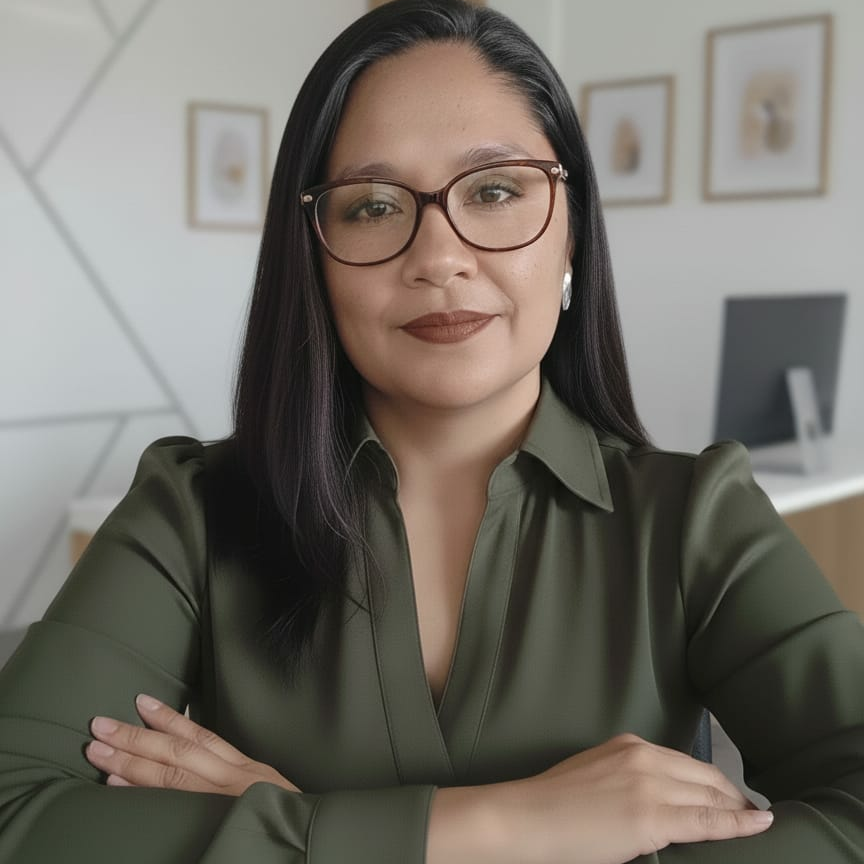 Vero Ponce
Periodista. Escribo sobre estrategia y uso consciente de la IA para mujeres que sostienen el mundo, para que puedan delegar la carga operativa y recuperar el mando de su tiempo. Autora de Vero Ponce IA.](https://veroponce.substack.com?utmsource=substack&utmcampaign=publicationembed&utmmedium=web)
Why This Matters
’s perspective is a vital reminder that technology must serve the human spirit, not the other way around.
- Digital Sovereignty vs. Agency: She clarifies that having the “right” to use tech is useless without the actual capacity and confidence to apply it to your specific life.
- Sumak Kawsay (Good Living): She connects AI use to the Andean philosophy of Sumak Kawsay, suggesting that AI’s greatest gift isn’t producing “more,” but giving women back their time and curiosity.
- Friction as a Diagnostic: Her work shows that the “friction” we feel when tech doesn’t fit us is actually evidence of a design flaw in the system, not a flaw in the user.
- The Habit of Thinking: Her final warning is her most important: we must never let the comfort of a quick answer take away our habit of thinking for ourselves
Thank you, , for this incredibly empowering and serene opening to our new interview series. For every woman in the Global South who has felt the crushing weight of being “left behind” by technology, her upcoming chapter in AI Everywhere is the definitive guide to reclaiming your time and your unique voice through purposeful digital agency.
reminds us that the “human signal” is not just about producing faster; it is discernment and the courage to stay unhurried and unafraid. Her final message is a call to sovereignty: don’t treat AI as an intimidating authority or a generic voice that replaces your own; treat it as a bridge that can return you to your own center and the Andean wisdom of Sumak Kawsay.
I personally highly recommend her “15-minute window” and her newsletter strategy as the ultimate leverage for anyone looking to navigate high-stakes life conversations and vertical power dynamics on their own terms.
And if you’re interested in more conversations like this, consider subscribing to She Writes AI. I’ll continue sharing insights from the voices shaping the future of AI, including contributors from new chapters in AI Everywhere where 31 women from across five continents explore how artificial intelligence is changing the world we live in, and how we can change it for the better.
References
For more insights on the book, see aiEverywhereBooks.com - our beautiful book series website created by (now updated with previews for book2):
Where To Buy, How To Read and Listen, Ways To Review
- Buy Volume 1 (now in ebook and print on Amazon, Gumroad, Lulu, Ingram Spark, and many reading platforms)
- Look for our upcoming abridged audiobook edition in July!
- Tips from our publisher on how to buy an Amazon ebook from a country that isn’t a ‘KDP marketplace’, and how to read the ebook without a Kindle device (free)
- Review links (we’re on Amazon, Goodreads, and Storygraph)
Ways To Support
To help cover book-related costs (ISBNs, proof copies, etc.) as well as other community services, we follow the Wikipedia model. We are now accepting donations via paid subscriptions and can also now accept one-time tips through Stripe (‘digital ink’).
All donation sizes are welcome and help keep these book authoring opportunities free for She Writes AI Community members worldwide! Patrons and Sponsors are acknowledged on our book site. Read more.
Thanks as always for your support in every form. We appreciate it all. Hearts, shares, restacks, and comments are awesome!