AI "Built by Us, for Us, with Our Values at its Core" in Africa
By Celeste Garcia
Published: 2026-05-15
URL: https://shewritesai.substack.com/p/herstory-profile-chinasa-t-okolo
“Before Silicon Valley. Before the MacBook. Before the algorithm. Women were the computers. Literally. And then, somehow, history forgot to mention them.”
*I read Tatyana Amuogo’s words and felt compelled to reach out to her to collaborate. She’s an engineer who writes about the forgotten women in Tech’s development and women currently building the future. As the Tech Bros dominate the headlines with their predictions of existential threats and their battles to win the AI wars, she highlights the women making a difference both in technical advancements and ethics, ensuring they won’t be forgotten. I asked her who she wanted to feature and she chose Dr.
Chinasa T. Okolo. I wrote the intro that provides some background, and Tatyana drilled down into Dr. Okolo’s people-centered research on systemic inequity and her “governance-first” approach that stands in stark contrast to Western development. She highlights Okolo’s advocacy for homegrown AI solutions that are built by Africans, for Africans, ensuring technology truly serves the continent’s unique needs. -*
Celeste:
Africa faces some big hurdles when it comes to rolling out AI at scale, but with people like Dr. Chinasa T. Okolo providing governance and guidance, there is reason to be optimistic. She made history as the first Nigerian to get a PhD in Computer Science from Cornell, and she’s now a 2026 World Bank Group Africa Fellow and the founder of Technecultura, a research and advocacy organization focused on the Global South.
AI in Africa has the potential for improving at scale healthcare, education, and agriculture efficiencies across the continent.
But current obstacles are not insignificant. Some areas lack stable electricity and internet wiring. There is also a real problem with labor exploitation in preparing training data and the extraction of the rare earth metals used for the West’s infrastructure buildout.
Dr. Chinasa T. Okolo’s goal is to use her technical background to move beyond “aspirational technological visions” and instead focus on the “current realities” of the people living on the ground. And she is laying the foundation to accomplish this goal.
Africa is in a unique position because of Dr. Okolo and other committed researchers and policy-makers who are taking a “governance-first” approach, laying the legislative framework before AI is rolled out on a massive scale.
This stands in sharp contrast to the United States, where the rush to release new models and apps has happened with virtually no government oversight and few guardrails. As a lead advisor, Dr. Okolo is drafting the African Union’s strategies, fighting for rules to protect African data workers while giving Africa a shot at developing AI from inception in a way that is responsible and actually serves the people.
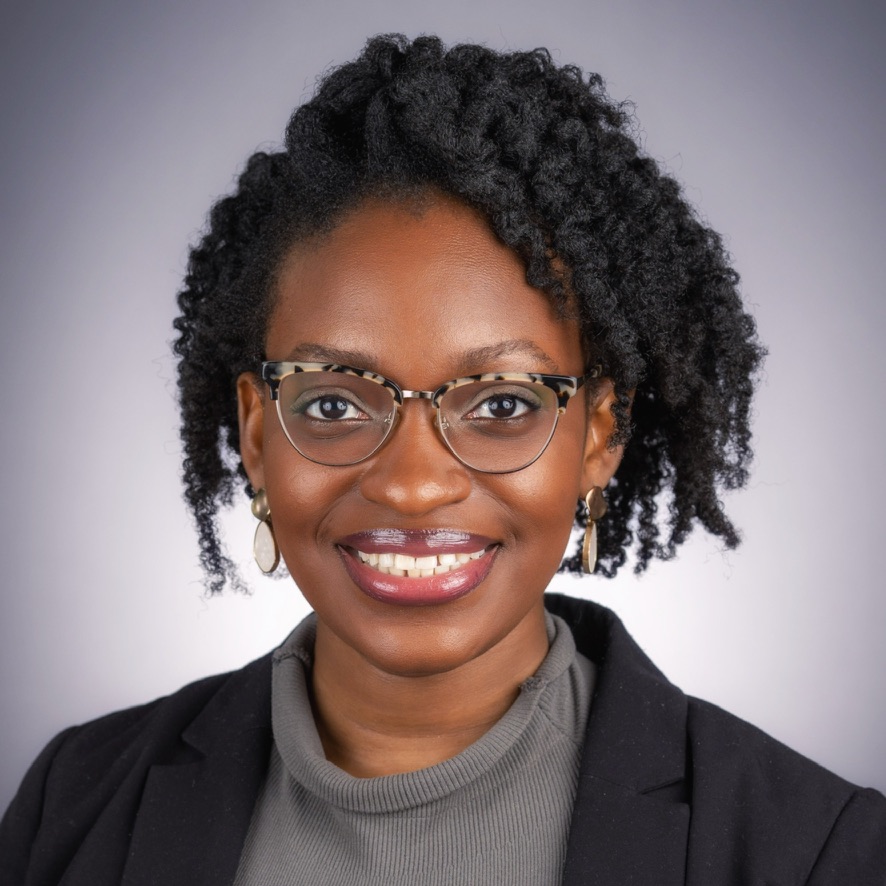 \Photo of Chinasa T. Okolo, PhD (from herGitHub site)\
Tatyana:
Dr. Okolo grew up in Kansas City, raised by Nigerian parents. Her early life was all about Missouri, until an undergraduate program took her abroad for the first time. By the time she finished her PhD at Cornell, her focus had sharpened to a crucial question the tech sector usually ignores: what happens to the people AI is supposed to help when they are systematically left out of the building process?
Her work isn’t just theory; it’s fueled by a deep understanding of systemic inequities and structural racism. She doesn’t approach this as an abstraction, but gets her hands dirty with rigorous field research.
For instance, Dr. Okolo spent serious time in rural India, watching health workers on the front lines. She used careful, on-the-ground observation to understand exactly how people manage automated tools that arrived without explanation or preparation. She puts the lived realities of those on the ground first, every single time.
This is the heart of her advocacy: she asks who gets the power to understand the new innovations supposedly deployed for their benefit, and who ends up paying the price when they fail.
Celeste has already highlighted the major milestones in Dr. Okolo’s career: the African Union Strategy, her World Bank fellowship, and the critical governance frameworks she’s helped to build. But we need to talk about why the order of these efforts matters so much.
Through tireless policy advocacy, global discourse, and rigorous field research, Dr. Okolo illuminates the duality of this technological frontier. She champions the transformative potential for regional flood detection, crop disease surveillance, and democratized healthcare, while simultaneously sounding the alarm on tangible dangers like digitally-facilitated harassment within micro-lending ecosystems. Rather than retreating into blind optimism or mere warning, she exists at the intersection of both, the precise space where responsible governance is forged.
And this intentionality is shifting the paradigm.
In April 2025, in Kigali, Rwanda, 49 African countries signed the Africa Declaration on Artificial Intelligence, a continental roadmap built around talent development, data sovereignty, sovereign computing infrastructure, and governance. Among its most significant outcomes was the Africa AI Fund, valued at $60 billion, combining public, private, and philanthropic capital to support infrastructure, institutions, and research.
Central to these guiding principles are sovereignty, inclusivity, and diverse perspectives in design, ensuring that privacy and human rights are not merely a footnote, but the very foundation of the framework.
Despite possessing every possible advantage, unmatched capital, deep infrastructure, and elite talent pools, the United States has failed to establish anything resembling such a cohesive standard. While the West accelerates at breakneck speed, it does so with a startling lack of legislative oversight.
In contrast, Africa has prioritized a “governance-first” methodology, solidifying the framework before the inevitable mass rollout and subsequent cleanup. This intentionality was no accident — it is the direct result of researchers like Dr. Okolo, who argue that getting the foundation right isn’t a luxury — it is the only path forward.
Her goal is to reject imported AI models that ignore cultural nuances in favor of homegrown solutions that address real-world challenges. That means flood detection built for African weather patterns. Crop disease models trained on African agricultural data. Healthcare AI designed around the actual constraints of rural clinics, not the assumptions of a San Francisco product team.
She once articulated a principle that remains deeply resonant: “AI in Africa must be built by us, for us, with our values at its core.” This is more than an aspirational vision; it is a rigorous policy stance that she has tirelessly translated into the continent’s legislative reality. 💗
For more Herstory profiles like this, plus weekly digests and more, subscribe to :
About The Authors
Celeste Garcia is a former Microsoftee, and the author of the speculative fiction novel AI BABY. She writes at the intersection of technology, ethics, and imagination — pondering how AI is reshaping everything we think we know. Subscribe here:
[Celeste Garcia Getting Real About AI
AI is upending daily life | Let's navigate the chaos together](https://gettingrealaboutai.substack.com?utmsource=substack&utmcampaign=publicationembed&utmmedium=web)
Tatyana Amuogo works as an AI engineer. She translates machine learning into actual human language and shares what it's really like being a woman navigating this space, exploring how AI intersects with real life and not just GitHub repos. Subscribe here:
[ Lipgloss and LLMs
I graduated with a CS degree and still felt like an imposter in tech. So I started teaching myself AI, building impactful things, navigating a career, creating wealth from wherever I am. This newsletter is my notebook. 💗](https://lipgloss2llms.substack.com?utmsource=substack&utmcampaign=publicationembed&utmmedium=web)
References
Research assistance provided by Claude(Anthropic), Gemini(Google), NotebookLM(Google), ChatGPT(OpenAI). All references have been human-verified.
Websites
Chinasa T. Okolo — Publications (GitHub)
Articles
Women in AI: Chinasa T. Okolo researches AI’s impact on the Global South — TechCrunch, May 24, 2024, by
Chinasa T. Okolo: The 100 Most Influential People in AI 2024 — TIME, Sept. 5, 2024
Broadening Perspectives on African Governance in the Age of AI — University of Michigan AI Seminar, Oct. 1, 2024
The Africa Declaration on AI — CADE Project, April 5, 2025
Dr. Chinasa T. Okolo: Shaping Responsible AI in Africa — iAfrica, May 8, 2025
Assessing the African Union’s Efforts to Establish AI Governance — Future Center, Dec. 23, 2025
Podcasts and Videos
Broadening Perspectives on AI and Data Governance in Africa with Dr. Chinasa T. Okolo, Harvard Center for International Development, Feb. 6, 2025
“Can AI Speak Igbo? with Computer Scientist Chinasa T. Okolo”, Our Long Walk, hosted by and Jonathan Schoots, April 15, 2026
Thanks for reading She Writes AI Community! This post is public, so feel free to share it.