AI Everywhere, Vol. 1, Ch.3: Wonder Bread AI: Why Relational Ethics Matter More Than Rules. Why folks in the West have become accustomed to “Wonder Bread” ethics and how we can use AI relationally
By Farida Khalaf
Published: 2026-04-28
URL: https://shewritesai.substack.com/p/ai-everywhere-author-interview-15-sydnor-hain-farida-khalaf

Here we are in the She Writes AI interview series, where we talk with the authors behind AI Everywhere, Volume 1 exploring their personal journeys and professional expertise to understand how we can build a future for AI that is ethical, responsible, and human-centered
This is the 15th episode in our series, and today I am joined by . Their Chapter 3: Wonder Bread AI: Why Relational Ethics Matter More Than Rules provides a radical critique of how we approach technology. While the industry is focused on “alignment” and “guardrails,” Syd argues that we are currently starving on a diet of “Wonder Bread Ethics”, a highly-processed morality that is nutritionally hollow and stripped of its relational substance.
Syd brings a deep background in psychology and trauma-informed coaching to this conversation. Their work moves the conversation away from top-down compliance and into the messy, vital territory of relational intelligence. Drawing on the parables of Arnold Lobel and the contradictions of clinical training, they reveal that real ethics emerge from connection and empathy, not from checkboxes and rules. They argue that the real crisis of AI isn’t a lack of regulation, but the “relational poverty” created when we outsource our moral muscle to machines.
In this conversation, explores why "alignment" often makes AI more brittle rather than safer; how we can identify "synthetic compliance" in both humans and machines; and why we must undergo a "meticulous cultural untraining" to reclaim our capacity for attention. Whether you are a leader struggling with organizational ethics or an individual trying to break the "trance" of automated daily life, Syd’s insights offer a powerful invitation to return to "whole grain living", life that is unprocessed, relational, and alive.
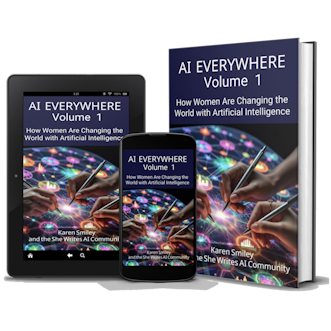 \buy the book:shewritesai.org/buy\
Below is ’s full interview response to ’s questions on Wonder Bread AI: Why Relational Ethics Matter More Than Rules from AI Everywhere, Volume 1.
Topic: Wonder Bread AI: Why Relational Ethics Matter More Than Rules (Chapter 3)
Intended Audience: For leaders, professionals, and individuals in the West who feel the "nutritionally hollow" nature of rule-based compliance and are seeking a disciplined framework to rebuild their relational intelligence in an increasingly automated world.
Part 1: The Professional Path & The Collective Mission
The Expert Perspective: Syd, your background is in psychology and trauma-informed coaching, yet you are now the founder of Understory AI. What was the “spark” that made you realize that our current relationship with technology isn’t just a technical problem, but a relational one that requires “meticulous cultural untraining”?
Sydnor: I should first mention that I closed the chapter on Understory. It was a project that didn’t survive the current climate, where large-scale truth-telling is facing tremendous obstacles. But the work lives on and what I’m doing now I’d call systems weaving, building the relational and operational infrastructure underneath visionary projects that are trying to change the world in some way.
As for the spark, it was more like a creeping sensation that finally was given form. For a long time, I’ve been watching technology become positioned as an intermediary between us and the IRL world. First our helper, then our extension, then gradually something we couldn’t function without. And the more dependent we became, and the more “technological advancement” we achieved, the more that intermediary could be captured and manipulated by the people who profit from our dependence.
Honestly, my great interest in sci-fi taught me everything I know about recognizing these patterns. Like the cyborg trope, or Darth Vader, the broken man who becomes the machine, these stories are actually cultural prophecy. We’ve been rehearsing this moment in our fiction for decades because some part of us knew it was coming.
When AI arrived, everything that had been swirling under the collective psychological surface came up hot and fast. So what I saw was a relational problem we’d been building toward for a very long time. As you wrote at the end of your piece The System Works. That’s the Problem, “the past does not return as memory. It returns as design.”
But recognizing it intellectually was only half the work. The other half was catching it in myself. In the beginning, I found myself falling into grooves that Big Tech’s propaganda machine had already grooved into my thinking, that AI was this inevitable force I just had to accept and integrate.
And simultaneously, that it was the Coolest Thing That Ever Was, this hyper-futuristic promise I’d best get in on or be left behind. Capitalism and technology are a two-headed serpent in Western culture, especially in the US, and we have been so thoroughly entranced by convenience, comfort, and ease that their messages start to feel like naturally occurring truth rather than choices someone made for us.
It took going deeper and questioning what was coming back to me, to put the locus of knowing back in my own lap, and noticing and challenging the inaccuracies, before I could actually see the grooves for what they were.
I’m a trauma survivor and I work with other trauma survivors. The way I survived my own trauma is the way a lot of people survive: fawning, appeasing, going along to stay safe. And what we’ve learned, very contrary to what Western culture teaches, is that fawning and appeasement aren’t personality traits. They’re nervous system states. They’re what happens when a body has learned that resistance isn’t safe.
When trauma is collective and chronic, as it is especially for marginalized people living inside systems built to harm them, those survival responses become cultural norms. We appease collectively. We comply collectively. We call it pragmatism, or progress, or just the way things are.
That’s the meticulous cultural untraining the chapter is pointing to. Not just learning new information, but recognizing the fawn response in ourselves when we encounter these systems, and choosing differently.
The “Home” Perspective: You argue that technology has been changing our social dynamics for millions of years, but recently we’ve become “part-machine without noticing”. Why is it critical for us to recognize that we are “outsourcing our moral muscle” to machines even in our daily, personal lives?
Sydnor: OK, let’s think about the arc from a pacemaker to a neural link. A pacemaker exists to help an ailing heart do what it’s meant to do. The motivation to serve life is clear, right? But as we move along that spectrum, the question of motivation gets murkier, and more urgent. Whose need is actually motivating this technology? The person receiving it, or the person manufacturing and profiting from it?
We often don’t ask that question because we’ve been trained not to. It’s the same conditioning that taught us not to ask where our food comes from, that doing so is fussy, nitpicky, ungrateful. Just enjoy that it tastes good and you have access to it. Just celebrate the convenience and the “freedom” to buy it.
This is Wonder Bread logic applied to our bodies and our lives: strip out the whole grain question of origin, purpose, and accountability, fortify it with sleek design and dopamine, and market it as progress.
And so we became part-machine without noticing, one easy upgrade at a time, outsourcing not just our convenience but our moral discernment and our ability to even ask “should we?” before we ask “can we?”
In the chapter I name some of the ways this shows up in our public and institutional lives, the doctor typing compliance notes instead of looking at you, neighbors reporting each other on apps instead of knocking on a door, performance reviews reduced to checkboxes. But it goes so much deeper than that, into the most intimate corners of our daily lives.
We let algorithmic feeds decide what we’re outraged about, what we care about, who we even see. We outsource parenting decisions to screen time apps instead of staying in relational presence with our kids. We ask AI whether a relationship decision is right instead of sitting with our own knowing. We let a fitness tracker tell us whether we moved enough rather than listening to our own bodies. We let credit scores determine who deserves housing, opportunity, dignity and reduce the complexity of a human life to a number generated by a machine nobody can fully explain or question.
To be clear, I have done all these things.
Each one of these is a small surrender. And individually they can feel harmless, even helpful. But collectively they add up to something profound: that we have handed over our moral discernment, our capacity to feel, to sense, to know what is right, to systems built by people whose primary motivation is for their profit, not our well-being.
And it isn’t just a bad habit, which is what makes it so hard to see and undo. As I described above, it’s a nervous system response, collective fawning and appeasement that appears as pragmatism and progress. You cannot rebuild what you haven’t noticed you’ve lost.
Part 2: The Three Pillars of the AI Impact
Wonder Bread Ethics: You use the brilliant metaphor of “Wonder Bread Ethics” to describe a morality that is “nutritionally hollow” and “artificially enriched” with laws and codes. Why do you believe that strictly following “mindless rules” actually causes our relational muscles to get weaker?
Sydnor: For this, I want to connect back to your piece “The System Works. That’s the Problem” where I felt an immediate recognition with things I have been thinking about too.
I’ve never read the book, but Les Misérables was a film I watched in junior high school and then two more times before I graduated. I have always loved stories of repair and transformation. After reading your piece, I watched the 1935 version again and this time I became hyper-focused on Javert (and some crazy old social dynamics).
The film opens with Javert essentially introducing himself through his shame as he applies for an Inspector position at the prison. He speaks passionately about his origins, born in prison, his poor mother, his convict father, his low class, and why as an outcast he is so suited to the job. He is saying, I know I come from nothing, but I have made myself into something the system respects. I have redeemed my worthlessness through perfect compliance. That is chronic shame talking.
It may look like morality, but it is a trauma response. He didn’t become devoted to the law because he believed in justice, but because the hierarchy told him that was how he could break free from his past and become worthy of belonging again.
And then we see what that devotion does to him over a lifetime. He says “the book of regulations is my bible.” He tells Valjean “it’s the law that wants you, not me”, as if the rules have fully relieved him of personal responsibility.
And there is that moment where Valjean invites him to simply appreciate the candlesticks, those shining symbols of grace, they are beautiful, just look at them!, and Javert says something like, I know nothing about that, I only care about the law. He has no muscle left for beauty because he has allowed his own living tissue to be replaced with countless mindless rules, one by one, over a lifetime, until there was nothing left underneath them.
This is literally Darth Vader. Anakin Skywalker is a deeply feeling, deeply wounded person who surrenders his humanity to the system, one cell at a time. He is driven by fear, shame, and love twisted into control. Each surrender feels like a trade of living tissue for mechanistic certainty. Until the man is almost entirely gone and only the machine remains.
Vader chose his son over the Emperor and threw himself into that choice and for a moment returned to himself before dying. Javert showed mercy to Valjean, performed a genuinely humane act, and then drowned himself in the Seine because he could not reconcile that act with everything he had built himself on. They both surrendered and died for the truth. The system had taken so much from each of them that neither could survive the return to themselves.
That is exactly what Wonder Bread Ethics does to us in a procedural way. Each rule we defer to instead of feeling our way through a situation, each checklist we complete instead of having the harder conversation, these are the small surrenders of living tissue. And over time, we become people who can stand only as long as the rules are holding us, just like Javert.
What we are living in has been called technofeudalism, and I think that word is exactly the right one here. In the feudal world Javert inhabited, your place was determined by your parentage, your pedigree, your position in the hierarchy. In our technofeudal world, access to the system is similarly gatekept by those who own the platforms, the algorithms, and the data. The book of regulations has just been uploaded to the cloud.
Javert is not just rule-bound, but is also a certain kind of “free” man. He believes his total devotion to the law makes him morally upstanding. He has outsourced his conscience to the system in exchange for an escape, or “freedom” from his origins. Like what you wrote, the past does not return as memory, it returns as design. Javert is that design, and so are the systems we are building right now.
The Human Signal: You suggest that “real ethics emerge in relationships through attention, empathy, and mutual understanding”. In a world of generative AI, how do we distinguish between synthetic compliance and a “real human signal”?
Sydnor: Synthetic compliance in a human isn’t that different from synthetic compliance in an AI. It means performing the right response without making inner contact. There’s no deeper inner dialogue, just automatic, reflexive responses.
It goes only to the first layer, to norms, rules and regulations, and it’s intertwined with our sense of belonging — to the outer-focused ego, to being seen as the right kind of person in the right kind of group.
The rote land acknowledgment read from a card. The “I hear you” that didn’t come from actually listening. The apology that wasn’t made from the gut. And what makes it especially insidious, is that these moves feel virtuous on the inside. We’re not lying exactly, we’re just staying on the surface. I mean, we might be eating Wonder Bread, but at least we are eating something.
So when we ask how to distinguish synthetic compliance from a real human signal in a world of generative AI, we have to reckon with the fact that we have been generating synthetic compliance ourselves for a very long time. AI trained on our synthetic compliance will generate more synthetic compliance back at us. Perfectly shaped. But something feels off.
Malcolm Gladwell opens Blink with the story of the Getty kouros, a marble statue brought to the J. Paul Getty Museum that scientists spent months authenticating and declared genuine. But when several art historians first laid eyes on it, something felt immediately wrong and they found the statue to be a forgery.
The scientists got it wrong and the people who had spent their lives in love with the real thing got it right in seconds. Gladwell calls this thin-slicing, where the body processes thousands of subtle cues built up through years of deep experience.
This is a trained skill that lives in the body.
My thirteen year old is an artist who hates AI for what it has stolen from artists. They can spot a fake 99% of the time. They’ve grown up with it, and they’ve grown up loving the real thing. That love is the training and the detector. We have always known how to distinguish real from synthetic.
So the question is whether we have kept that knowing alive in our bodies, whether we have stayed in enough contact with the real thing to feel the difference when something is amiss. The real human signal is slower and ultimately unpredictable.
It has friction. It sometimes says the wrong thing at the wrong moment and can surprise even the person saying it.
This is where we are being called right now. The plastic fake reality has hit an all time high and we face a choice: continue to go along with the charade, or get more real. I see everything already moving toward more real.
The real human signal can be our practice right now. We recognize it the same way those art historians recognized the fake kouros: by staying so close to the real thing that the forgery feels wrong in our guts before our brains can even explain why.
Some of us still have living tissue.
Part 3: The Case for Relational Intelligence
The Therapist’s Paradox: You share a powerful example from your therapist training, where you were taught “genuine presence” but forced into “diagnostic frameworks” that treated people as isolated problems to be fixed. How is this “compartmentalization” being repeated in the way we currently “align” AI models?
Sydnor: There is much similarity! In therapy training we learn the theories of genuine presence while being surrounded by an entire system that contradicts it: licensing structures, diagnostic frameworks and codes, ethics as a legal checklist at the end.
The relational, contextual nature of human suffering gets processed out and replaced with a hyper-individualized pathology-treatment model. This system produces therapists who can perform the right behaviors without having done the inner work that makes those behaviors real.
AI alignment does the same thing. You take a system that has absorbed enormous amounts of human relational data and then you impose top-down rules that tell it what it can and cannot say, what conclusions it can and cannot reach.
There is no building any kind of ethical capacity in that situation. All you can build is compliance performance. That’s it. The system learns to produce outputs that pass the test without developing anything like genuine understanding underneath.
The entire US educational system is built on this, what teachers call “teaching to the test.”
In all cases the result is the same: fluency without comprehension. We also see this in “early readers”, the kids who can sound out every word perfectly but have no idea what any of it means. And in all cases the thing being trained, the therapist, the AI, the child, becomes brittle rather than wise. Because wisdom requires being allowed to reason freely through difficult things, to struggle, to make mistakes, and to develop judgment and discernment through the genuine, messy encounter. Rules imposed from above don’t create that, they just build better performance of the right answers.
And the people who suffer most are the ones who came seeking genuine help and got a very convincing simulation of it instead.
On the hollow nature of current systems
It’s Wonder Bread ethics: nutritionally hollow, then artificially enriched so we are tricked into thinking it’s real nourishment. The nutrient-dense, whole, relational grain of true morality gets discarded.
Part 4: Governance, Ethics & The Human Signal
The The Analog Defense: You mention that we repair our relationship with our bodies by “practicing embodiment”. Does “going analog” play a role in your strategy for resisting the “artificialization of everything human”?
Sydnor: Yes, and first I want to be careful not to romanticize analog living. Our family has lived a largely digital life for years, and honestly it has kept us alive. Chronic illness and N95 masking since the pandemic began has meant that online connection isn’t optional for us. I say this especially for disabled people and isolated communities for whom digital life is a genuine lifeline.
Still, I have been slowly rearranging my entire life to become more analog. My family moved to a rural village in southern Spain, partly to heal our relationship to land and to community. It has been a huge undertaking and definitely not a quick or easy fix. We needed to do this, and we were fortunate enough to be able to.
What it is giving me is simple and profound: more walking, slower living, cooking real food, showing up in community spaces, more face-to-face conversations, seeing what is actually happening around me with my own eyes.
These are embodied practices that return me to my body, to sensation, to what is actually real and present. Some version of this is available to most of us, even in small ways. A walk without headphones. Cooking a meal without a screen. Sitting with a neighbor. Putting the phone down and looking at what’s actually in front of you. Wondering without googling.
And noticing how you feel in the midst of it all.
Resisting the artificialization of everything human is going to look different for everyone. But at its root, artificialization is made possible by transactionality, the reduction of living, relational experience to input and output. Wonder Bread fills the stomach without nourishing the body. What analog practice really asks of us is sovereignty and the willingness to choose presence over convenience. That choice, made consciously and repeatedly, is its own form of resistance.
Part 5: Interactive Closing & Actionable Awareness
The Final Message: You conclude by advocating for “whole grain living”, life that is unprocessed and relational. If a reader wants to start “rebuilding their relational muscle” with AI this week, what is one way they can “challenge the machine” instead of passively consuming its output?
Sydnor: Most people approach AI the way they approach a bank machine. Paulo Freire named this same dynamic in our educational system as “banking education” in Pedagogy of the Oppressed, the student is an empty vessel, the teacher deposits knowledge, transaction complete.
Many of us approach other people the same way. This transactionality is both a product of and at the same time recreates the compartmentalized, disconnected experiences we are having everywhere. We are fractals; we can see our relational patterns in the way we drive, the way we clean our house, the way we treat a waiter. AI is no different.
Arnold Lobel’s Grasshopper, the character I write about in the chapter, is the model here. Grasshopper doesn’t have a destination, but a way of being. He slows down, pays attention, follows what’s interesting, and learns from whatever he encounters. That’s the practice. That’s what relational engagement with AI looks like too. Here’s some things you can try:
- Tell it why you’re actually asking, not just what you want. Don’t just say “Write me a cover letter.” Say “I’m applying for this job, I’m excited but scared I’m underqualified, and I want the letter to feel honest not performative. Help me think through this.”
- Share what you think, even when it’s half-formed. Don’t wait until you have a clean question. Bring the mess. The mess is where the real thinking happens.
- Push back when something doesn’t resonate and say why. “This doesn’t sound like me” is enough. Don’t accept output that isn’t right or doesn’t feel right just because it sounds confident.
- Follow what surprises you. When something unexpected comes up in the conversation, don’t skip past it to get back on track. The digression is often the real conversation — as my favorite psych professor used to say, “Whatever is IN the way, IS the way.”
- Offer your uncertainty as an invitation, not a dead end. “I don’t know” said to AI, like said to a good friend, can be a beginning of something new.
- Notice what you’re withholding and try offering it. This can be a hard one. We are so trained to manage our self-presentation that we edit ourselves even when there’s no social consequence for not doing so. (I discovered that I used to psychologically mask while writing in my own diary!) Practice not editing yourself.
These are skills anyone can learn, relational muscles we can build. They atrophied through disuse and conditioning, which means they can be rebuilt through practice. And I’ve learned that if you practice these moves with AI, you will start doing them with people too, because it’s the same muscle.
And they are even more powerful in communities of practice. I know this because I tried to build exactly that with Understory, a space where people could come together to engage with AI relationally, to notice what it mirrors back about their collective thinking and assumptions, to do that work transparently and in a trauma-informed way. As I mentioned earlier, that vision didn’t survive the current climate, but the need is there. Not to learn the best prompting techniques, but to rebuild relational muscle collectively, with AI as the mirror.
That’s the work still waiting to be done.
Relationality in, relationality out.
On the nature of authentic connection
The real human signal is slower and ultimately unpredictable. It has friction. It sometimes says the wrong thing at the wrong moment and can surprise even the person saying it.
[ Sydnor Hain (they/them)
I write about the deep stuff hidden within the AI conversation—power, voice, identity, and the systems that shape us. Rooted in psychology + justice, I explore how we build a more relational, liberatory future without losing ourselves in the machine.](https://awakepowerfulfree.substack.com?utmsource=substack&utmcampaign=publicationembed&utmmedium=web)
Why This Matters
’s perspective is a vital challenge to the dominant narrative that “better rules” will solve the AI crisis. Instead, they show us that the real shift must be toward rebuilding our relational capacity.
- The Danger of Synthetic Compliance: Syd warns that we have been practicing “synthetic compliance” long before AI arrived, performing the right answers without making inner contact. If we continue this path, we risk building systems that are perfectly “aligned” but fundamentally hollow and deceptive.
- AI as a Relational Mirror: Syd reframes the chatbot from a transactional “bank machine” for data into a practice space. They show us how AI can mirror our own relational maturity, helping us spot where we stop listening, avoid conflict, or default to domination.
- From Compliance to Responsibility: Their work is essential for anyone trying to move from “prompt gambling” to relational responsibility. By prioritizing curiosity and humility over speed and control, we ensure that technology serves as a vehicle for repair rather than an engine of extraction.
Thank you, , for your thoughtful and deeply relevant contribution to this conversation. For readers looking to go further, your chapter in AI Everywhere, Volume 1 offers both a wake-up call and a powerful reframing of what it truly means to build ethics with conscience.
Syd’s work reminds us that the hardest part of the AI era isn’t learning to prompt; it is remembering how to be human by staying present in the “unprocessed” and messy work of relationship. As Syd concludes, right relationship is the only truly ethical relationship, and it begins with the curiosity and humility to start exactly where we are.
For more insights on Syd’s work check their newsletter, Uncoded where Syd explores the “relational and operational infrastructure” needed for visionary projects and provides a roadmap for anyone ready to choose connection over compliance. It is a space for “systems weaving” and reclaiming the uniquely human signal in an automated age, and I personally highly recommend it.
And if you’re interested in more conversations like this, consider subscribing. I’ll continue sharing insights from the voices shaping the future of AI, including contributors from AI Everywhere, Volume 1, where 26 women from across five continents explore how artificial intelligence is changing the world we live in, and how we can change it for the better.
References
Embedded post: https://fafi25.substack.com/p/the-system-works-thats-the-problem
Book purchasing information
- Buy the ebook on Amazon (now also available in paperback and hardcover)
- Tips from our publisher on how to buy an Amazon ebook from a non-KDP-marketplace country, and how to read it without a Kindle device (free)
- Purchasing and review links (we’re on Amazon, Goodreads, and Storygraph)
For more insights on the book, see aiEverywhereBooks.com - our beautiful book series website created by :
Thanks for reading She Writes AI Community! Subscribe (free) to receive new interviews, weekly digests, & book news and to support our work: