Agentic AI isn't replacing individuals. It's replacing entire teams. Here's what that means for you.
By Shamim Rajani
Published: 2026-06-01
URL: https://shamimrajani.substack.com/p/the-ai-shift-nobodys-talking-about
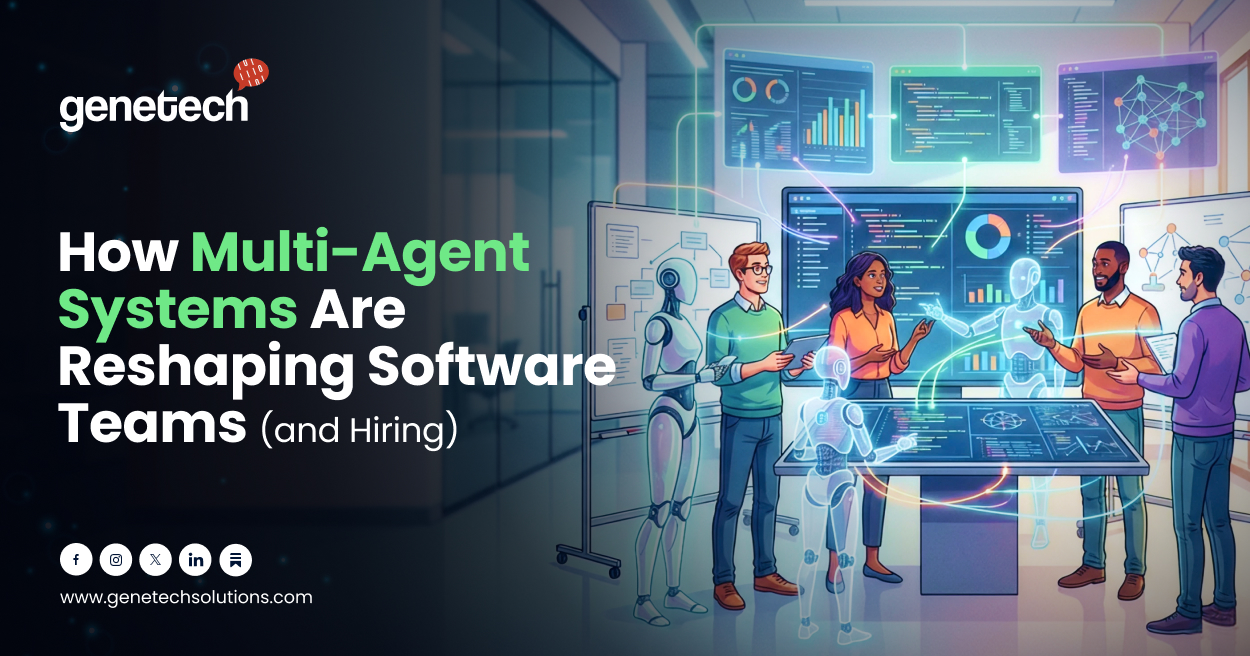
The introduction of Multi-Agent systems (also known as Agentic Systems) in AI, becoming a part of active use in the workforce, has definitely reshaped the traditional team dynamic, especially in the IT sector and software teams, to a degree.
Whether that is in the shape of changes to the team dynamic, or rather a difference in hiring preferences from recruiters in regards to the soft skills they are looking for. With requirements like the ability to code in certain languages becoming more of a base requirement and executive and management abilities rising to the forefront.
The appearance of Agentic AI as a serious tool on the field has even led to the resurgence of the fear around a loss of job opportunities in general, even more so than the fear caused by generative AI around the issue.
But why is it that Agentic AI is causing even more bustle around such issues than Generative AI did? Are these simply flames fanned by the initial fear that circled around the use of AI? Or is there a real reason to consider the changes Agentic AI will bring?
A Brief Refresher on Agentic AI
To tackle that question we believe it’s necessary to, first, define how Agentic AI is different to Generative AI. If you would like a more in-depth explanation of Agentic AI, you can find our guide to AAI here, otherwise it really does come down to one big reason:
Where Generative AI may be one, Agentic AI is many.
The core issue with Generative AI coming into daily use is that it was only ever limited to simple tasks. Creating an LLM based on a generative-model does indeed give it the ability to utilize a skill set with particular proficiency, but then asking it to employ multiple skills to complete a more complex project or processes has its own issues.
Primarily it requires far more processing power, and having its abilities stretched in so many ways will also inevitably lead to a higher number of “hallucinations” and issues. This is where Agentic AI shines.
“Agentic” AI, as you probably could have guessed, is an AI architecture-model that actively utilizes multiple AI Agents at once to get its work done. The idea is similar to the “Mixture of Experts” (MoE) model used by LLMs like DeepSeek, but rather than trying to mimic a singular Agent with different facets of expertise like parts of a brain, Agentic-AI models act more like a team of people.
Consider this, with DeepSeek’s MoE model, whenever you ask it something, or ask it to do something, a switch turns somewhere in the back-end, from say “English-Expert” to “Mathematical-Expert” and the answer it returns is formulated accordingly. Yet it can still only use one “expert” at a time, and is thus still limited to more simplistic tasks.
Agentic AI architecture is built to handle more in-depth and complex projects, utilizing Agents like an experienced team of professionals, having separate agents to handle coding, design, writing, and even administration and more! A great example of this kind of Agentic AI architecture can be found in CrewAI.
This is partly the reason many of the fears buzzing around the use of AI, in terms of them taking “human jobs”, have resurfaced and become stronger than ever. Now, rather than Generative AI replacing designers, or content writers, or coders individually, there is a growing worry that AAI is setting the stage for whole teams to be replaced altogether. But the truth of the matter is a little more complex than that.
What Effect are Agentic and Gen AI Having on The Hiring Market in IT?
Overall, AAI and GAI are having the same broad effect on the hiring market, by changing the kinds of skill recruiters are looking for and valuing others. The dynamic of what a “valuable employee” is has changed;
What Kinds of Skills Have Risen To The Top?
The federal reserve Bank of New York released its latest labour market analysis on May 5th this year based on data from 2024, and the findings were surprising to anyone who’s been keeping an eye on the labour market in the last decade. Computer Science graduates were found to have hit an unemployment rate of 7.0% while humanitarian fields have begun to rise to the top, being beaten out by those with degrees in Philosophy or Art History.
This paradigm shift in employment reflects a more subtextual truth about the way software teams are evolving. As AI picks up the ability to do the technical work, companies are now on the lookout for employees with backgrounds suited to management, critical thinking, and the ability to navigate complex issues themselves rather than those who are stronger as part of a bigger team.
All this isn’t to say though that technical skills no longer have any value though. Rather it is the purpose of keeping technical skills onboard, as well as the type of tech-based skills that have evolved.
Contradicting recent rumors, learning to code is not becoming a less valuable skill, rather it’s more valuable than ever. While AAI Architecture does offer companies to have an AI developer, especially with LLMs like Claude getting better every day, better does not mean flawless. Like any other LLM, these agents can still have hallucinations and output faulty or incorrect code, and so it takes the eye of an experienced developer to verify and sort it out after the fact. Much like it would be useless to utilize a machine that writes articles in German without being able to read German yourself and check the work, development-centered AI models are still quite useless without a human developer on hand.
While the first two pieces of this change revolve around employees who have the ability to manage Agentic AI Architecture, the third lies in manipulating it altogether. Prospective employees with a history and training in building and changing AI architecture also rise to the top of the hiring pool.
Much like a company can’t maintain its technology very well without an IT team, modern software teams utilizing AAI won’t be able to maintain theirs without a member trained in doing so.
Which Skillsets Have Fallen?
Just as some skills have risen to the top where they were undervalued before, other skillsets have, in turn, sunk in priority for recruiters. Having an arsenal of “basic soft skills” simply doesn’t cut it in the job market in the era of AAI and GAI.
Those coming to the table and presenting a proficiency of basic industry tools like excel or photoshop will be considered secondary to those who have trained their hands and minds to work faster with AI-enabled software. These are employees that can turn what used to be a day of work into a few hours with a simple prompt, and often also have the aforementioned “basic soft skills” to boot so they can always edit and polish their work.
Designers, writers, and developers who also have little to no experience using AI-enabled software like v0 (by Vercel), Claude Code, or Microsoft Autogen end up sinking under these new considerations, especially with AAI now taking up space for certain roles within companies.
Even if that isn’t the case at the company you’re applying to though, many GAI tools can cut production times down for such roles by nearly half. A lack of experience with any AI tools in the current day just leads to a weaker professional resume altogether
All-in-all it seems roles are being forced to move from “execution” to “orchestration”, and if your professional resume reflects that “doing the job” is more in your wheelhouse than “getting the job done”, you end up with a weaker portfolio overall.
Finally, a factor of quickly weakening skillsets is whether those skills themselves have adapted to the changing industry. Skills like security. The world of digital security has been changing rapidly, especially with new, AI-powered, threats across the board, and many businesses are beginning to feel like any human-response is simply too slow. The answer to this issue?
AI-Powered security.
Upgrading to AI-powered digital security software has now become an urgent step for many businesses to take, and our cybersecurity and AI teams are on call to help you do so. As human-based security measures lack the speed and efficiency to stop intrusions and issues before they cause real damage, the urgency to upgrade only grows more frantic.
The ability to secure sites and databases is quickly being replaced by the ability to set-up AI-based security solutions for companies and tweak them for the best possible coverage. The more traditional, technical skills surrounding security administration and scanning are quickly becoming automated and easier to do, and the skills to employ those technologies and tactics on their own are quickly losing value as a result.
All of these are just brief examples of how demand has changed in the recruitment market, how dynamics and structures have changed in software teams, and why Agentic AI is specifically responsible for this.
We can see that there definitely is some truth to the fear around AAI causing the number of available jobs to fall, but that is only in favor of jobs with majorly the same skillset, alongside an AI proficiency, which is ultimately, neither hard nor expensive to get.
Conclusion
The rise of Agentic AI is not simply another step in the evolution of workplace technology. It represents a shift in how software teams are structured, how work is assigned, and what companies expect from the people they hire. While fears of AI replacing entire teams have grown alongside the development of multi-agent systems, the reality is that businesses still need skilled professionals to guide, manage, verify, and improve these tools.
What is changing is the definition of value within a software team. Technical expertise remains essential, but it is increasingly being paired with skills such as critical thinking, decision-making, leadership, and the ability to coordinate both human and AI resources effectively. Employees who can oversee complex workflows, evaluate AI-generated outputs, and adapt to new technologies are becoming some of the most sought-after professionals in the industry.
Rather than eliminating opportunities altogether, Agentic AI is reshaping them. The professionals who succeed in this new environment will be those who embrace AI as a tool, develop the skills needed to work alongside it, and position themselves as orchestrators of increasingly intelligent systems.
As such we’ve been adapting too, bringing Agentic AI structures into the fold, creating solutions based around them, and training team members to be able to handle such architecture, understand it, and work alongside it. We see that we have to since ultimately, as software development continues to evolve, the future is unlikely to belong to AI alone, but to the teams and individuals who learn how to direct it effectively.
If you want to know more about Agentic AI, like the projects we’ve developed around it, how it works, or what use you could have for AAI solutions, feel free to reach out to us, and step into the future of IT architecture with our help.
Shamim Rajani COO @ Genetech Solutions | 20+ years in tech | Sharing insights on AI, tech, business, and empowerment.
Let’s connect on LinkedIn, Medium, and Twitter!

Started with one email and one client. Two decades later, I’m still building, still learning, and still cheering on women who want to lead. Every Friday, I share what I’ve learned—so you can skip the mistakes and keep the wisdom.