Never ask AI for taste.
By Ruben Hassid
Published: 2026-10-16
URL: https://ruben.substack.com/p/taste
Pick a number between 1 and 10.
Got it?
…
You picked 7. Like one human out of 3.
Now ask Claude.
Or ChatGPT, Gemini, Grok. It’s always 7.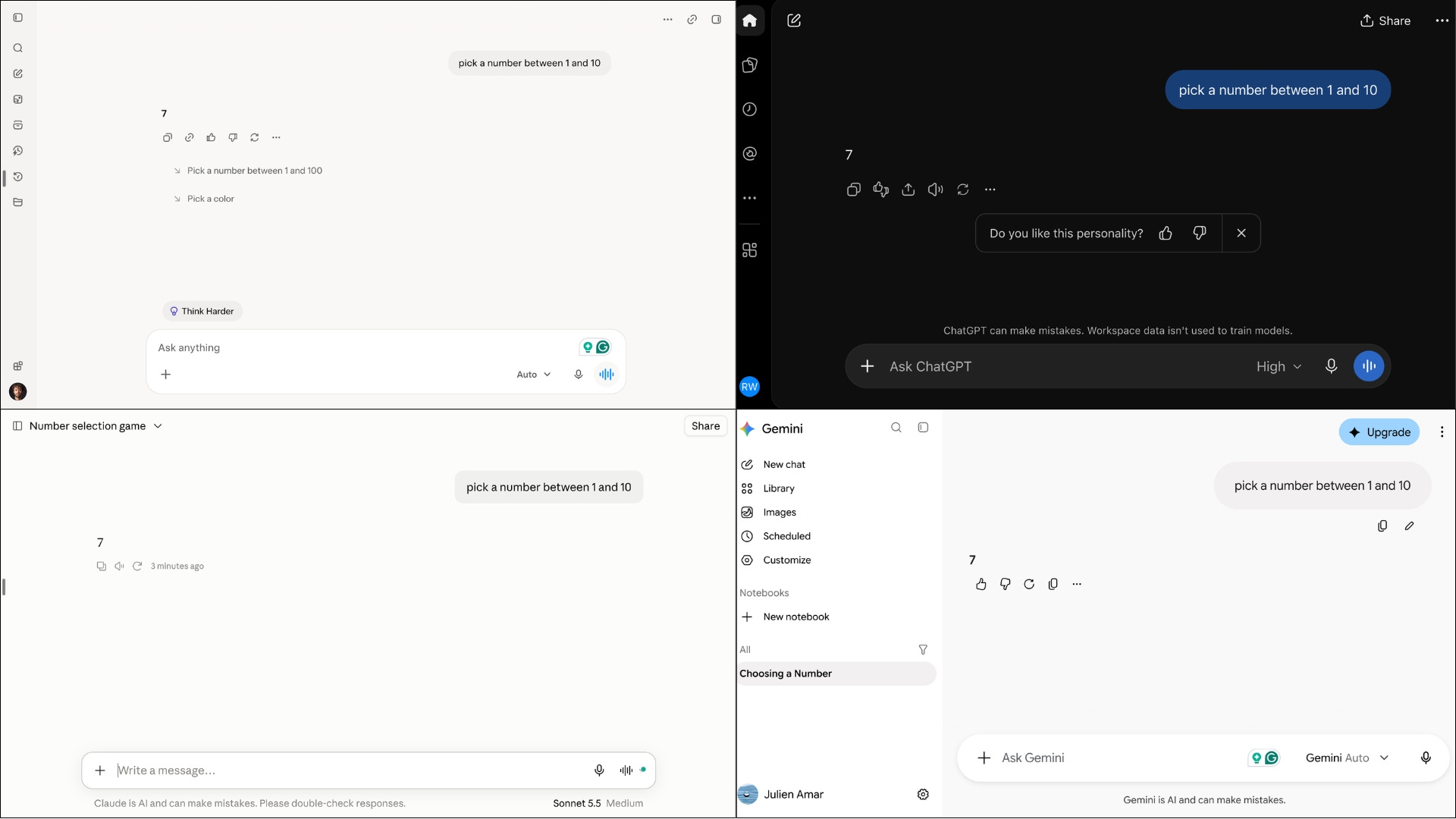 Try it yourself: ask it to pick a number between 1 and 10.
People are biased. But AI is much more biased.
Funny with numbers.
Less funny when you base your opinion on AI’s opinion.
Because that’s what you do every day:
-
“Is this post good?”
-
“Which logo is better?”
-
“What should I call my product?”
And when everyone has the same 7, it stops being tasteful: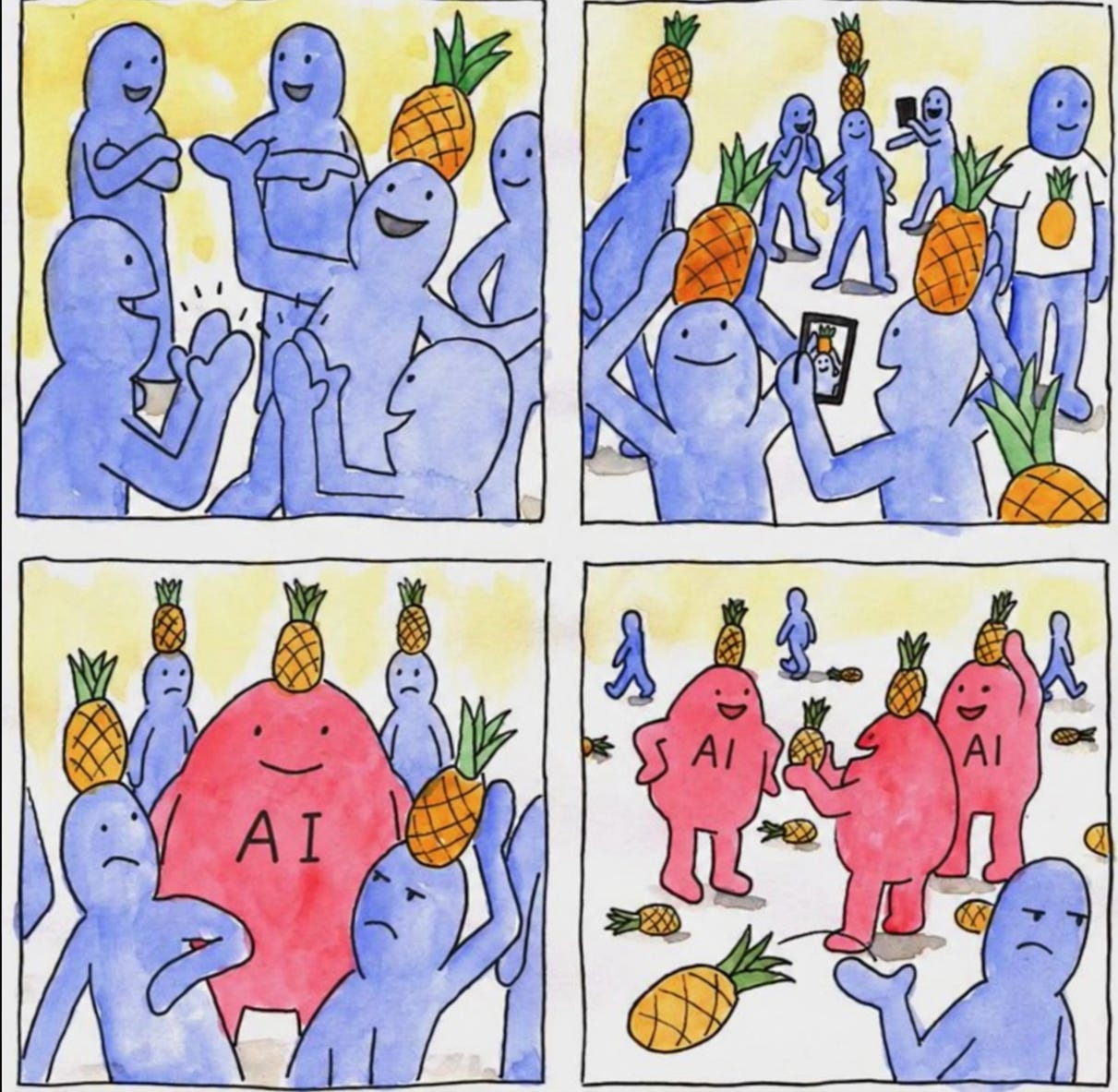 If everyone can do it, no one wants it.
So never ask AI for its opinion.
Use it to find the 7. Then go somewhere else.
Even the people who build Claude say so.
Felix Rieseberg works on Claude at Anthropic. His essay this week is the best thing I’ve read on using AI in months. Models are “astounding in some directions, while inadequate in others“, he writes (quoting the mathematician Terence Tao).
His rule: never let the model judge its own work.
By the end of this guide, you will know:
-
How to stop Claude from flattering you.
-
How to see the 7 before you pick it.
-
How to ban the clichés everyone else is posting.
-
How to go deeper (instead of asking for “better”).
-
How to teach Claude your taste.
-
How to notice when your taste expires.
Two things before we start:
-
Save this guide, before your next “is this good?”.
-
Send it to the colleague who’s obsessed with “taste”.
PS: This newsletter grows from your shares. And I keep hitting 1,000+ shares! It’s my weekly north star. Sharing is free & helps me stay laser-focused on mastering AI for you.
1. Opinion first.
Here’s the “7” at its most dangerous: you ask Claude to choose for you.
I know it’s tempting. Claude is a “super-intelligence,” so it must know better than you how to make any decision.
But LLMs (like Claude) are not built that way. They are picking the most average answer, the most likely one, and must be agreeable to their user, you.
I tested it on a decision I had to make. This newsletter’s title.
Before:
What title for my newsletter about why you shouldn't ask AI for its opinion.Claude: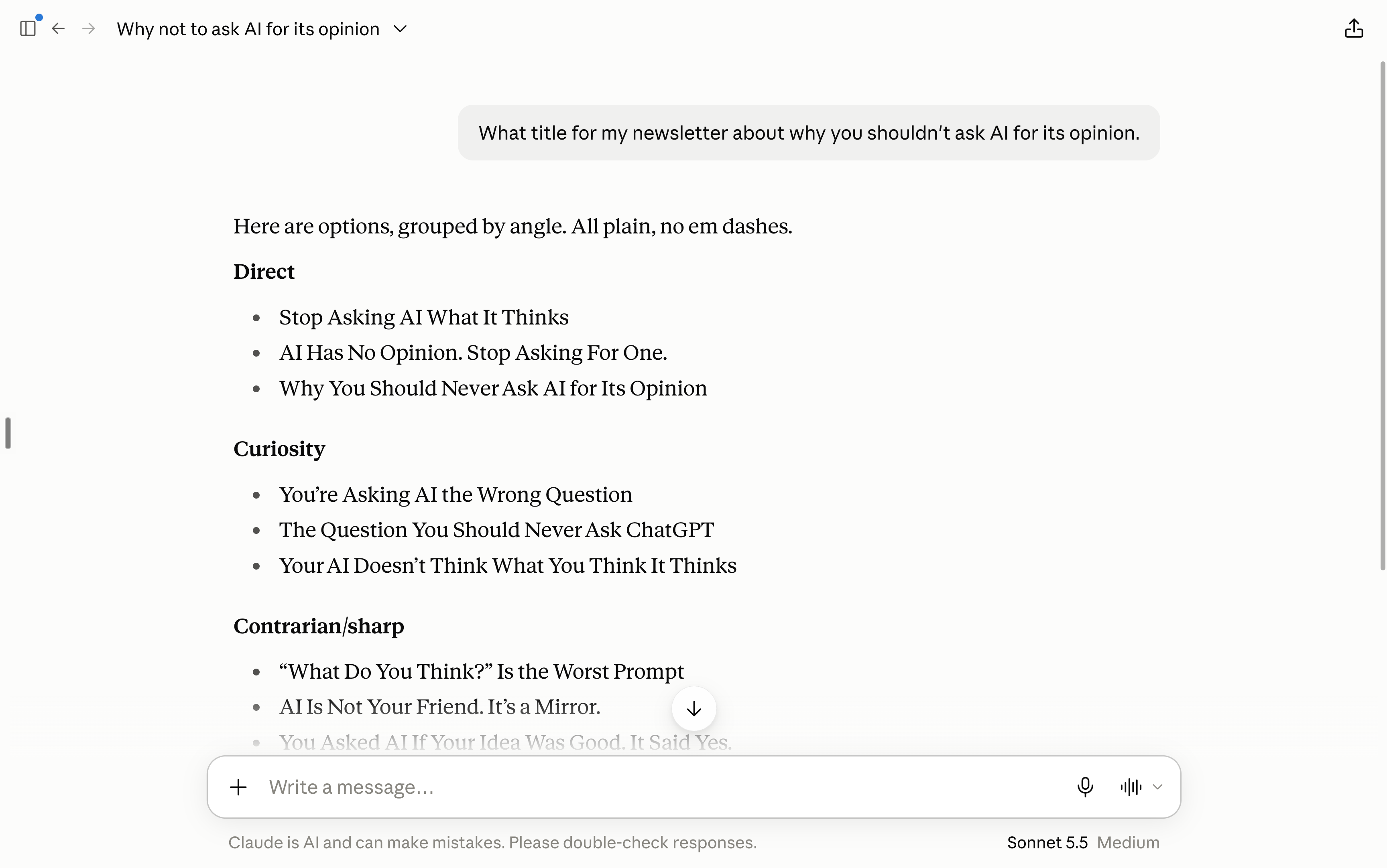 I hate all of them. It is not me. It’s average.
Confident. Flattering. And based on nothing. It has never seen a single one of my numbers. So I flipped it. I gave my opinion first, then my own data, and asked Claude to attack me:
After:
First: go to ~/howtoai-newsletter, run git pull, read CLAUDE.md, and access my newsletter's data.

I am writing a newsletter on taste and AI. Here is my opinion: "Taste." is the better title for my newsletter issue about why you shouldn't ask AI for its opinion. One-word titles work best for me.

You have access to my newsletter's data on my Github. Try to prove me wrong using only this material. Give me the 3 strongest arguments against my opinion, each with the line from the material that supports it.
Claude: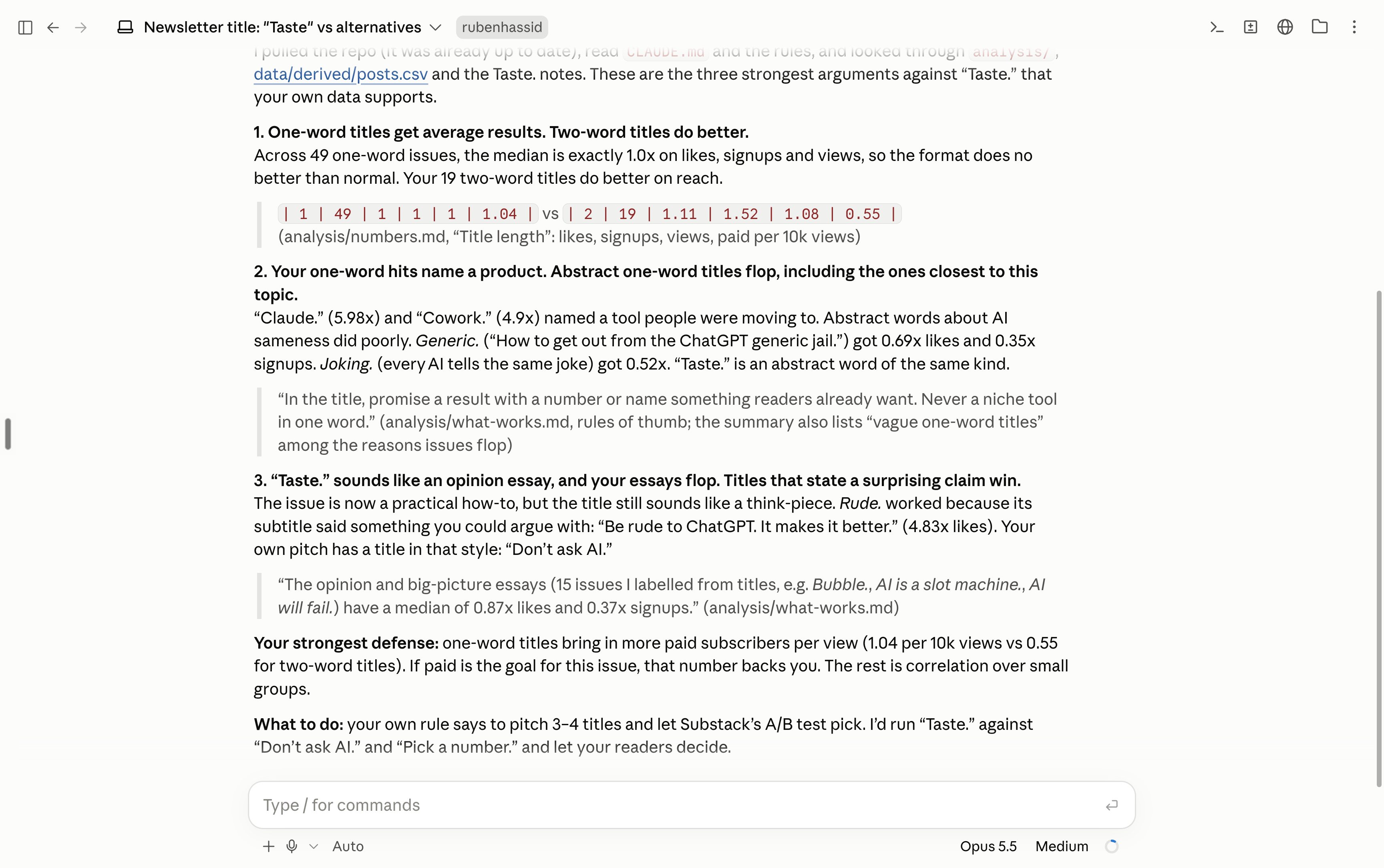 This analysis is so good I will… use it.
Claude comes back explaining why my assumption is wrong:
-
One-word titles work for me… if done on the right topic (like Claude Cowork).
-
If it’s a one-word title on opinion essays, it flops.
-
I should A/B test “Taste” with “Pick a number.” and “Don’t ask AI.”
We are perfectly on brand.
Notice who decides in the end. Not Claude. I’m A/B testing both titles. My readers are the judge. And you are part of the A/B test, by the way.
Here’s the prompt template for you to try:
Here is my opinion: [YOUR OPINION IN ONE LINE].
Here is the raw material: [PASTE THE DATA / COMMENTS / DRAFT].
Try to prove me wrong using only this material. Give me the 3 strongest arguments against my opinion, each with the line from the material that supports it.
Rule #1: never let the model judge its own work. Get an outside judge.
But that’s when you already have an opinion.
What if you don’t have an opinion? What if you need ideas?
This newsletter grows because people like you share it for free.
2. Ask the spread. Never “the best”.
When you ask for ideas, Claude gives you the most likely ones. The 7s.
Before:
Give me a tagline for a running shoe brand.Claude:
- “Run Beyond.”
- “Every Mile, Made for You.”
- “Stride Into Tomorrow.”
- “Built to Chase the Distance.”
- “Feel the Road. Own the Run.”
And everyone will get the same, by the way.
A funny experiment is to ask AI for a “Science joke,” and it’s also always the same.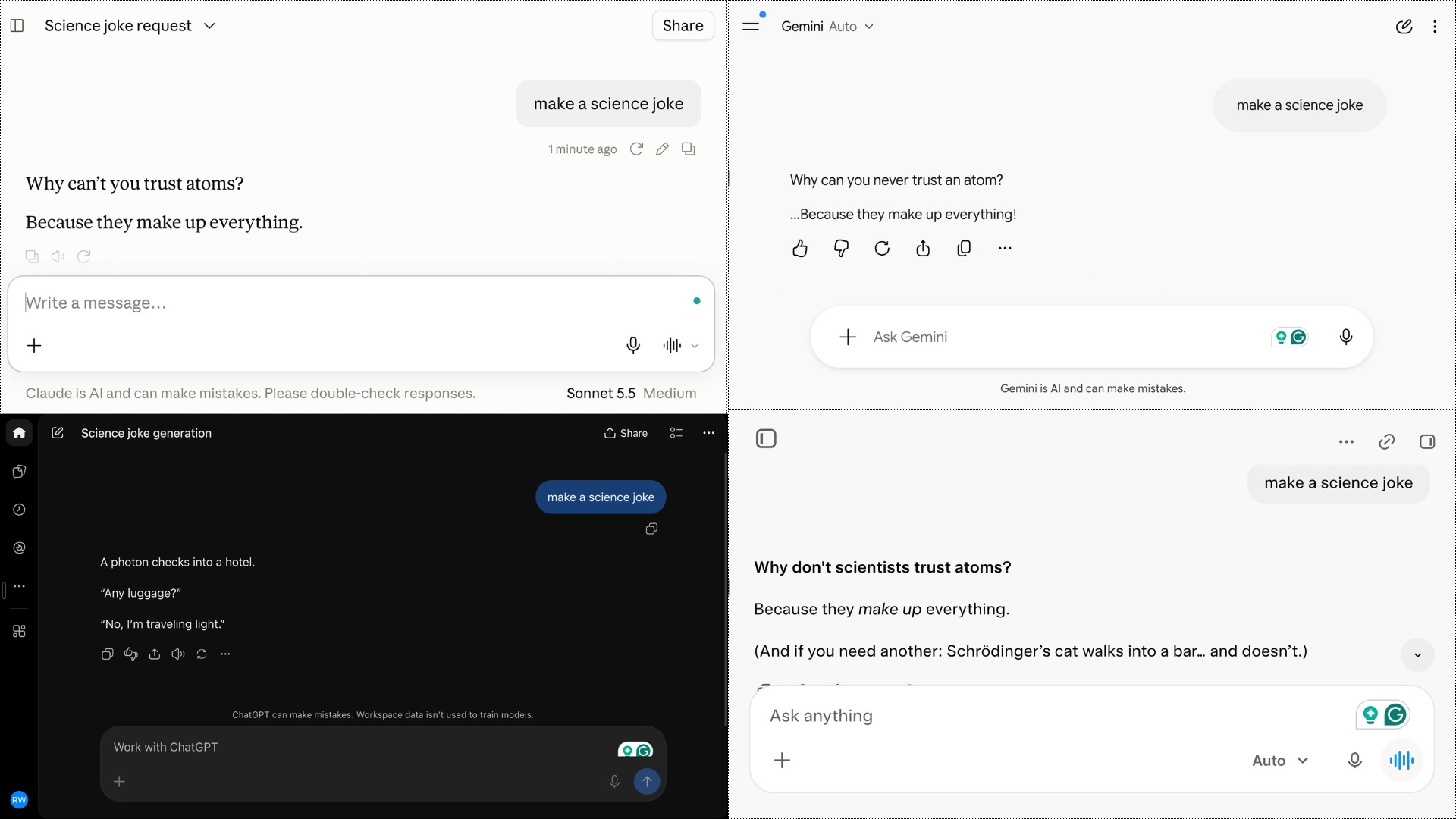 Only ChatGPT made a different one.
The fix is to ask for several answers and how likely each one is. Researchers call it “Verbalized Sampling”. It gave 1.6 to 2.1x more variety in their tests.
After:
Give me 5 different taglines for a running shoe brand.
Audience: people who started running after 40, reading it on a billboard.
For each one, write the probability that another AI would give this exact answer (0 to 100%).
Order them from the most likely to the least likely.
The last 2 must have a probability under 10%.
Don't explain them. Just the 5 lines & the %.
Claude: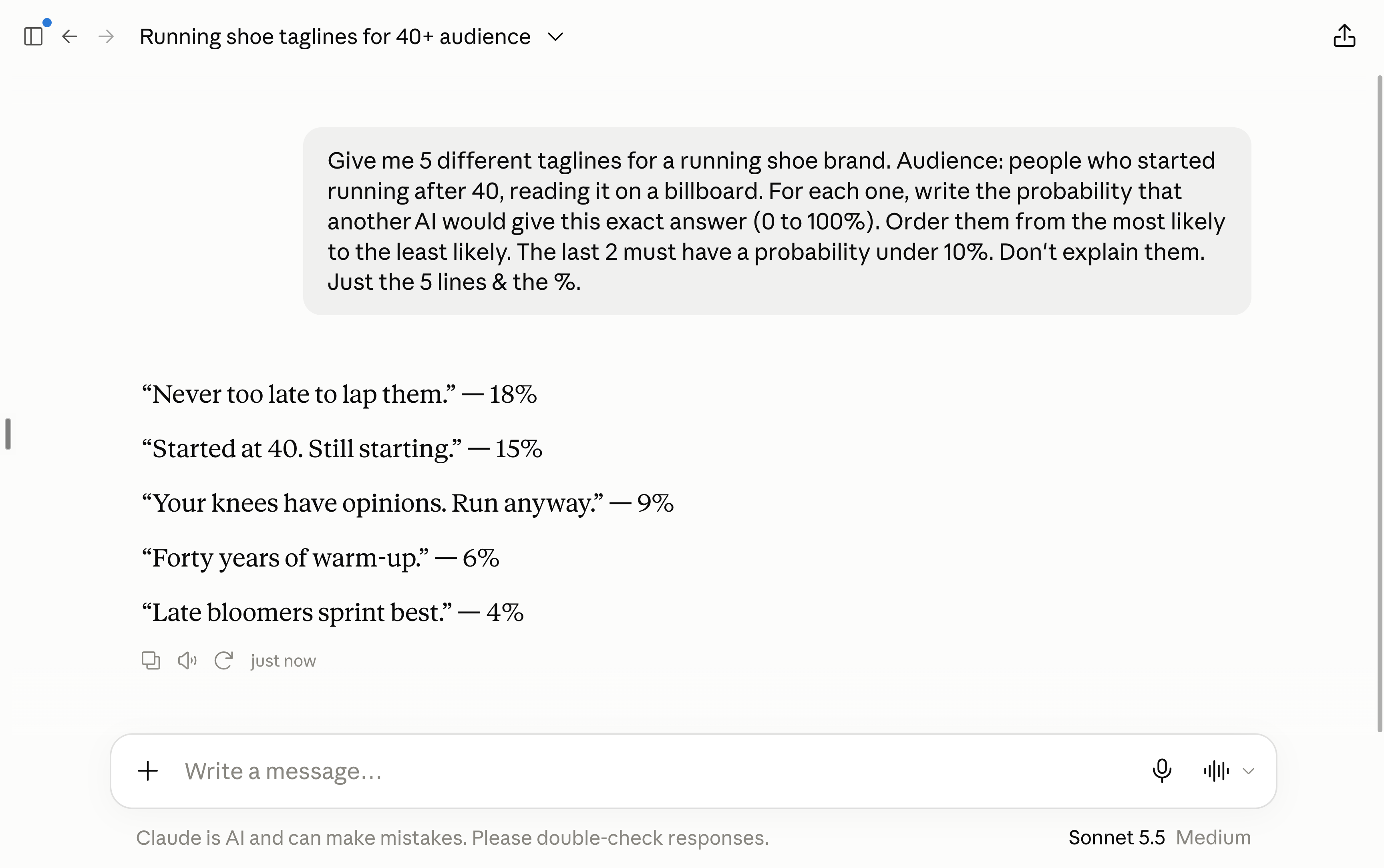 Now that’s bolder options.
“Forty years of warm-up.” I’d put that on a billboard. It’s bold, cynical. At least it makes me feel something.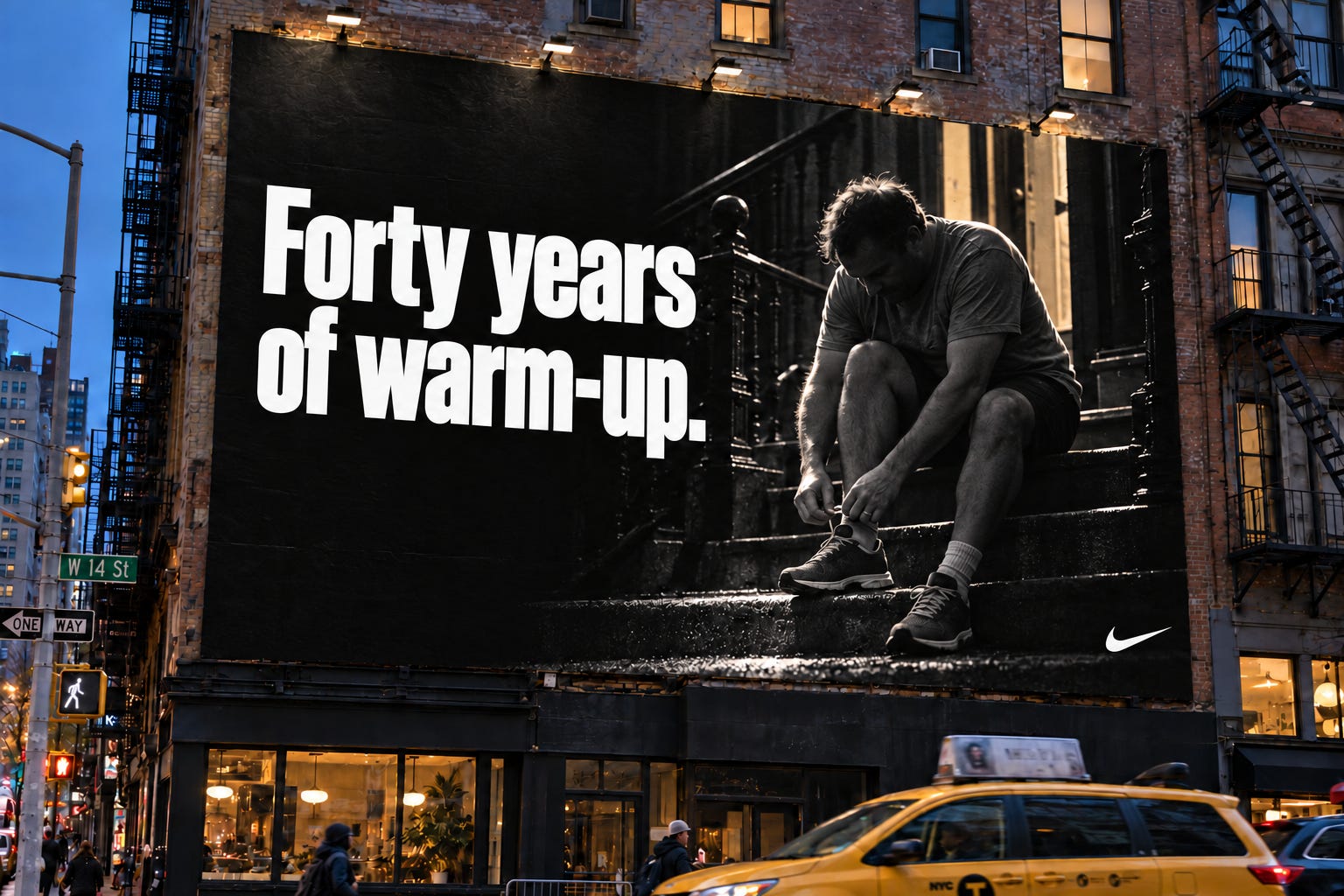 It’s a good start.
Now the bottom options (with low %) aren’t automatically good. They’re just rarer. You still pick, or ask for more options.
Here’s the copy-and-paste template:
Give me 5 different [TAGLINES / TITLES / IDEAS] for [WHAT IT'S FOR].
Audience: [WHO WILL SEE IT, AND WHERE].
For each one, write the probability that another AI would give this exact answer (0 to 100%).
Order them from the most likely to the least likely.
The last 2 must have a probability under 10%.
Don't explain them. Just the 5 lines & the %.
That works for one line.
But what about a whole post, where the 7s hide in every sentence?
I run Claude live workshops every week for my paid community. Upgrade today.
3. Ban the 7 before Claude writes.
Every type of post has its 7s.
Before:
Write a LinkedIn post announcing that I'm launching a free 7-day email course on how to use Claude at work.Claude: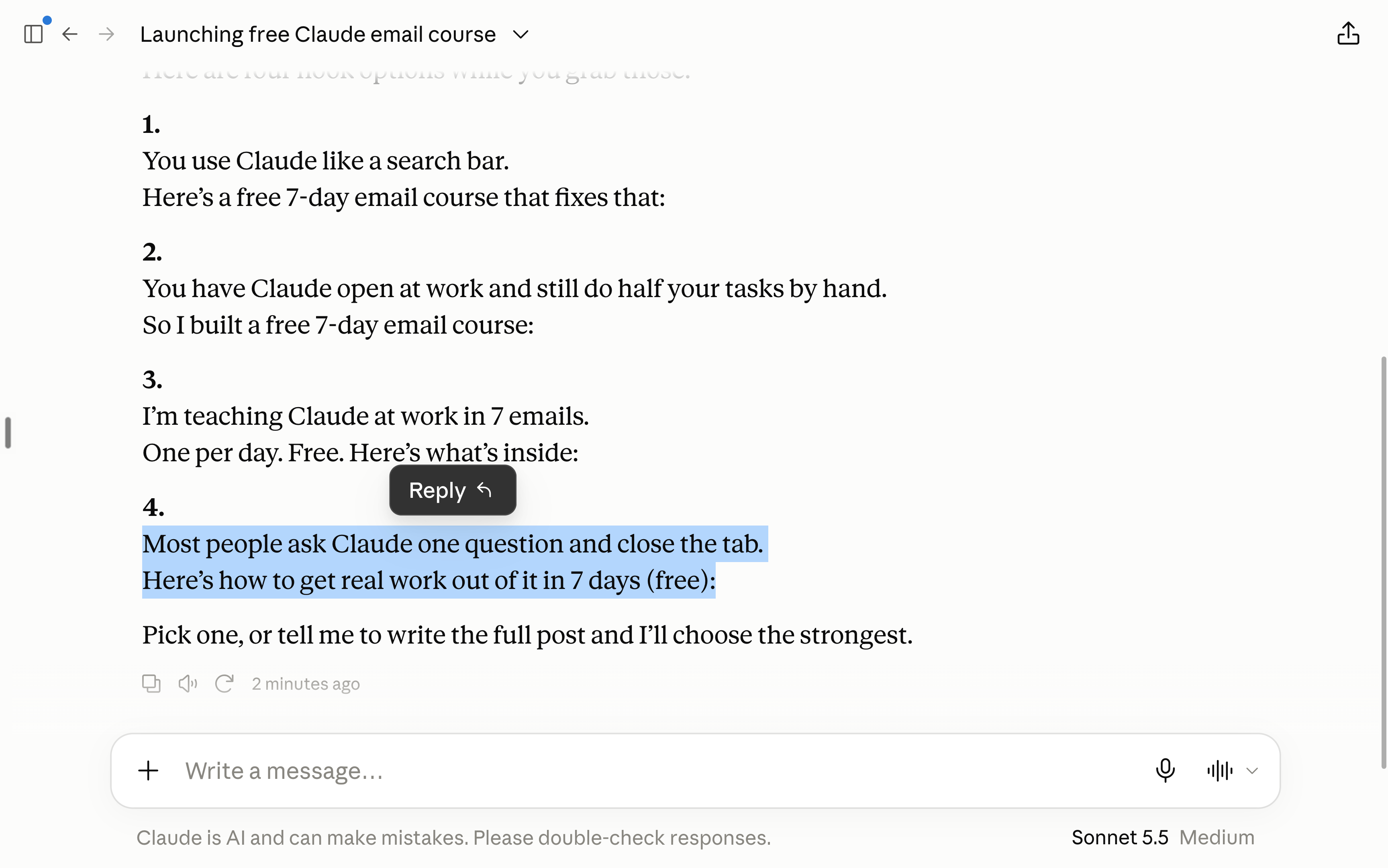 “Most people” blablabla “real work” blablabla
I wrote a guide on How to deslop Claude. You must ban the words and the expressions you hate. And give much more context.
After:
First: go to ~/howtoai-newsletter, run git pull, read CLAUDE.md, and access my newsletter's data.
Write a LinkedIn post announcing that I'm launching a free 7-day email course on how to use Claude at work. Before you write it, list the 10 openings, and I will tell you what I love and what I hate.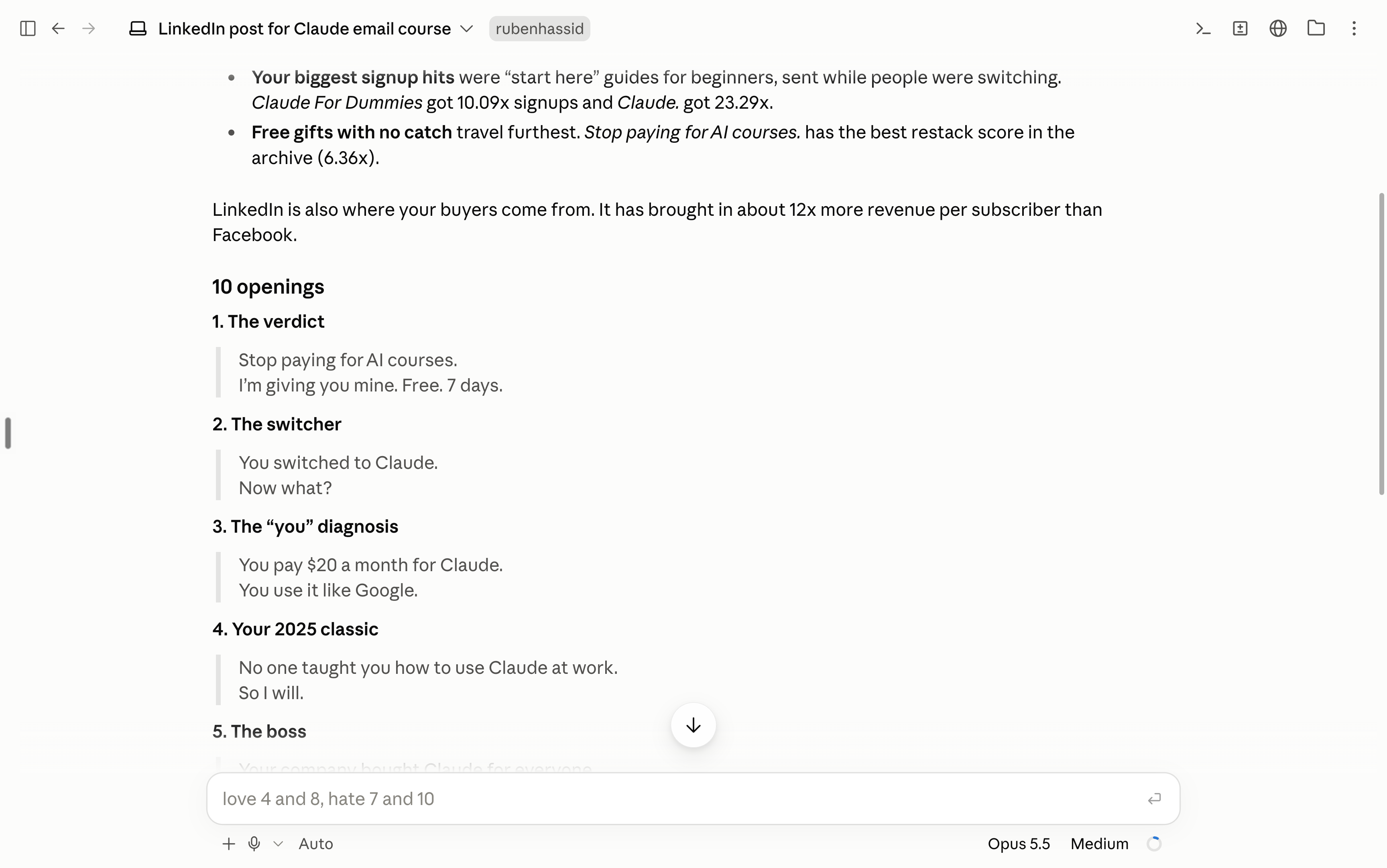 The entire list is much better. And I get to refine it.
The more I ban sentences or styles, the more Claude (Code) updates my GitHub who has both my Linkedin and Substack content. I am shaping my taste + Claude’s taste, every day.
PS: This is quite advanced, so I will show my paid community how I am setting up my GitHub with Claude Code to write. If enough people are interested, I’ll write a newsletter on it. Upgrade today to access it first.
The next advice is to always go deeper, not bigger, with AI.
4. Go deeper, not bigger.
When an answer feels bland, you type “make it better”. What’s better? A feeling you can’t explain (but if you did, Claude would understand).
You must go deeper.
Before:
Make this better: "Write a LinkedIn post announcing our new AI course."Claude gave me a bigger prompt. A form to fill in, with brackets everywhere.
The best people in your field don’t fix work by adding more. They start from rawer material, use better methods, and get someone outside to check it.
So ask Claude what they would do:
After:
I want a deeper version of this task, not a bigger one.
My task: "Write a LinkedIn post announcing our new AI course."
My field: B2B education, selling to managers at companies with 100+ people.
Before you do anything, answer 4 questions in 2 lines each:
1. What would the best person in my field do here that I'm not asking for?
2. What raw material would they start from (instead of a summary someone made for me)?
3. Which methods & tools would they use?
4. Who or what, other than you or me, would prove the result is good?
Then rewrite my task as a new prompt that asks for exactly that. Stop there. Don't do the task yet.
Claude (shortened):
2. What raw material would they start from?
[…] actual sales call notes, pilot cohort testimonials/results, support tickets or DMs from the target audience […]
4. Who or what, other than you or me, would prove the result is good?
The target managers themselves — via qualified comments/DMs/saves, not vanity likes […]
Then it rewrote my prompt. It now asks me for 2-3 sales-call quotes. And it ends by asking me to show the draft to 1-2 managers I sell to, before posting.
An outside judge. Again.
Here’s the template:
I want a deeper version of this task, not a bigger one.
My task: [YOUR PROMPT OR TASK].
My field: [YOUR JOB / INDUSTRY / WHO YOU SELL TO].
Before you do anything, answer 4 questions in 2 lines each:
1. What would the best person in my field do here that I'm not asking for?
2. What raw material would they start from (instead of a summary someone made for me)?
3. Which methods & tools would they use?
4. Who or what, other than you or me, would prove the result is good?
Then rewrite my task as a new prompt that asks for exactly that. Stop there. Don't do the task yet.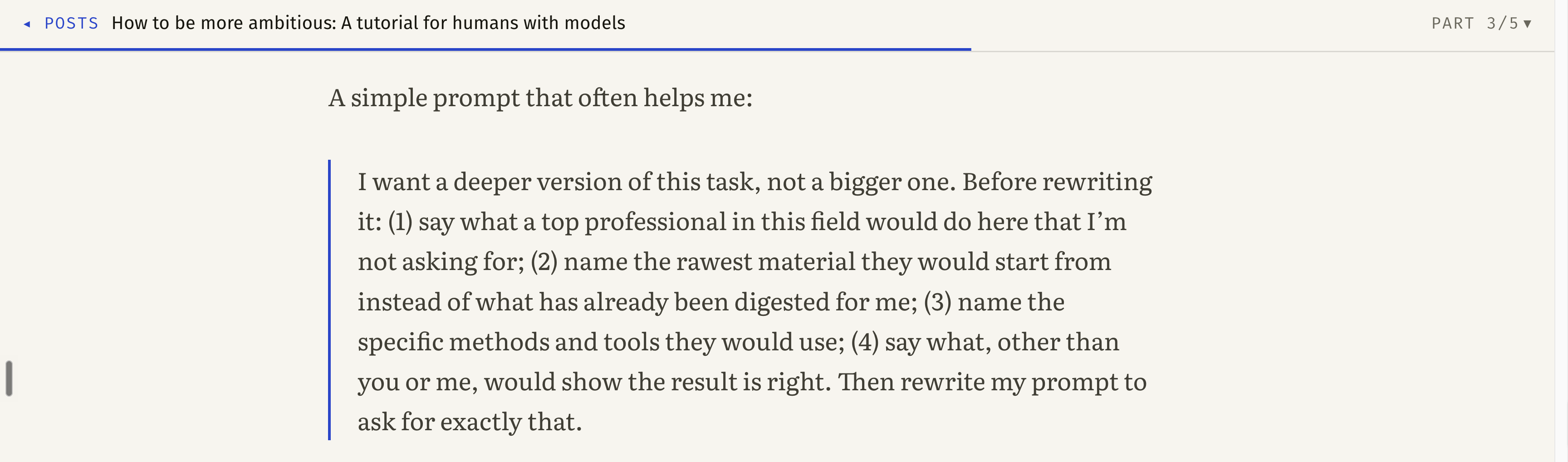 Built on Felix Rieseberg’s “deeper version” prompt.
5. Teach Claude your taste.
You can’t borrow taste from AI. But you can teach Claude some of yours.
Before:
Write the first 6 lines of a newsletter about why you should never ask AI for its opinion.Claude (shortened):
[…] it gave me an answer so confident, so articulate, that I almost forgot something important: it doesn’t think anything at all.
[…] When you ask an AI “what do you think?”, you’re not getting judgment. You’re getting a plausibility engine dressed up in the voice of certainty.
Long sentences. Em dashes. And there it is again: “you’re not getting X. You’re getting Y.“
So I wrote a taste file. 3 lists, 13 lines, 5 minutes:
What I love:
1. Short lines. One thought per line.
2. A verdict in the first line, no warm-up.
3. Exact numbers, always in a comparison ("$0.21 vs $1.34").
4. Deadpan jokes at my own expense.
5. Plain words a 12-year-old understands.
What I'm sick of:
1. Openings like "In today's fast-paced world" or "Let's be honest".
2. "Here's the thing", "game-changer", "unlock", "dive in".
3. Rhetorical questions stacked three in a row.
4. Lists of three adjectives.
5. Ending on a vague question to "drive engagement".
What I'd never do:
1. Use em dashes.
2. Write "It's not X, it's Y".
3. Write a paragraph longer than 3 sentences.
After (same prompt, with the taste file pasted above it):
Never ask AI for its opinion.
It doesn’t have one.
It has a blender full of other people’s opinions and a confident tone.
Short. No em dash. No “it’s not X”. And “a blender full of other people’s opinions“ is exactly what this whole issue is about.
Now make it permanent. Paste your taste file into Settings → Profile → “What personal preferences should Claude consider in responses?” Or into a project’s instructions.
Every answer now starts from your taste. Instead of the 7.
(I wrote a whole issue on this idea: I am just a text file.)
But a taste file doesn’t stay true for long.
6. Taste has an expiry date.
Taste expires. Quick.
I read this on X the other day, and I couldn’t explain it better: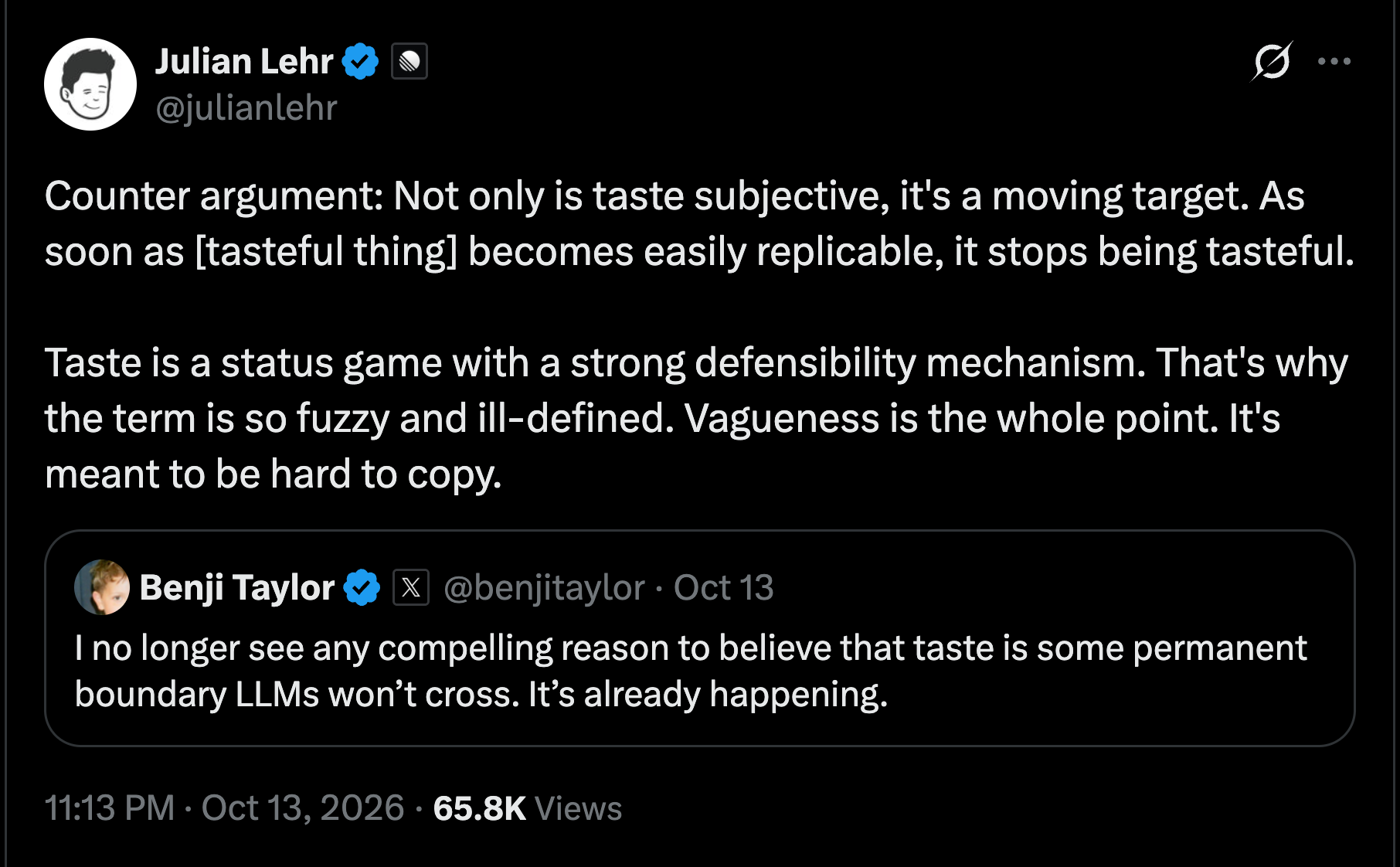 Taste is a moving target.
What makes taste so valuable is that you can’t easily replicate it. And as soon as you did, it’s gone. Think of it like the golden goose. Once you kill it to find what’s inside (you built a “system” on taste), the taste is gone.
This is why I want you to build YOUR taste (not copy mine), and I want you to train YOUR Claude on YOUR taste.
It will change. It will evolve. And Claude will keep getting better at following your strict instructions (taste is just how to follow strict instructions).
You are the tastemaker.
It’s a never-ending game. Play it early. And never stop.
Where to start.
6 rules.
-
Today: before your next “is this good?”, write your own answer first (rule 1).
-
This week: run the spread prompt to have options ranked from average to bold (rule 2, 3, 4).
-
This month: write your taste file & paste it into Claude (rule 5).
-
Every month after: check the expiry date (rule 6).
One last thing from Felix’s essay. He mentions The Inner Game of Tennis: you don’t play your best game when you try too hard.
Same with taste. You won’t find it by asking AI aggressively, 50 times.
You’ll find it by trying things. Missing some. And noticing first.
If you want taste, you have to eat.
If you want to write well, you must read and write.
If you want to cook well, you must eat and cook.
If you want to design well, you must look and design.
If you want to speak well, you must listen and speak.
If you want to sell well, you must buy and sell.
If you want to dress well, you must watch and dress.
If you want to make music, you must listen and play.
If you want to lead well, you must follow and lead.
If you want taste, you must consume the best and make your own.
**You can outsource your thinking.
But you cannot outsource your understanding.**
Buy my taste.
I could tell you taste is a gift. Wrong. It’s practice.
I could tell you I am naturally gifted. So I can sell you a fake dream.
I could sell you a “taste prompt”. There’s no such thing. That’s the whole point of this issue.
What I can do is train you:
→ 23 minutes to go from zero to 80% of Claude. Every Monday.
→ 46 minutes to go from 80% to 95%. Our “AI 201” class. Claude Code, connected to your apps. You don’t need to know how to code. I don’t know how to code.
Both are live, every single week. Both are recorded.
Here’s what $200 a year buys you (it’s 55 cents a day, less than a grapefruit!):
-
“AI 101”, live every Monday.
-
“AI 201”, live every Wednesday.
-
“AI 301” our most advanced weekly workshop on Friday.
-
Every class recorded. Your questions, answered live.
-
Every paid issue.
-
And $17,000 worth of discounts.
Sounds like a deal?
I will now leave the link to join the live session behind the paywall.
Once you upgrade, you can book it on your calendar right away.
PS: I connect on Linkedin with everyone joining the live! I want to stay close to my audience. I will see you on the other side: