A VERY eventful test ride
By Rowland Manthorpe
Published: 2026-09-06
URL: https://rowlandmanthorpe.substack.com/p/when-driverless-cars-go-wrong
For the first time ever, it is possible to hail an autonomous taxi in the UK. You can open the Uber app in London and if you’re in the right place at the right time you might be offered a driverless car powered by British AI startup Wayve.1
I say driverless – in fact, there is a driver at the wheel. The Transport for London licensing scheme which is partly responsible for governing these systems requires Uber and Wayve to have a safety driver at all times, their hands hovering just beneath the wheel. The ride even starts with the driver reading a script to explain that they’ll be there to keep you safe, like a kind of human cookie notice.
I know this, because I took on Wednesday I took a test ride in a Wayve.
As you can see from this video, it was VERY eventful.
The day afterwards, feeling slightly less frazzled, I went on the This is Why podcast to talk about the incident and discuss where this technology is heading. Some interesting questions on jobs, safety and driverless cars in general, including: “What’s the point?” Here’s my answer
And this is the whole podcast:
Finally, to complete the adventure, I went to Wayve and Uber’s launch party, held in the home of the Royal Horticultural Society in Westminster. Some people on social media were cross about my video because they felt I was expecting too much of a car which was never intended to drive autonomously, which would be fair if the companies were announcing a modest increase in the level of driver automation as part of an ongoing trial. As you can probably tell from the scale of the launch that’s not really what was going on here. Uber’s announcement didn’t mention the safety driver at all. “Autonomous rides… off we go,” it declared. 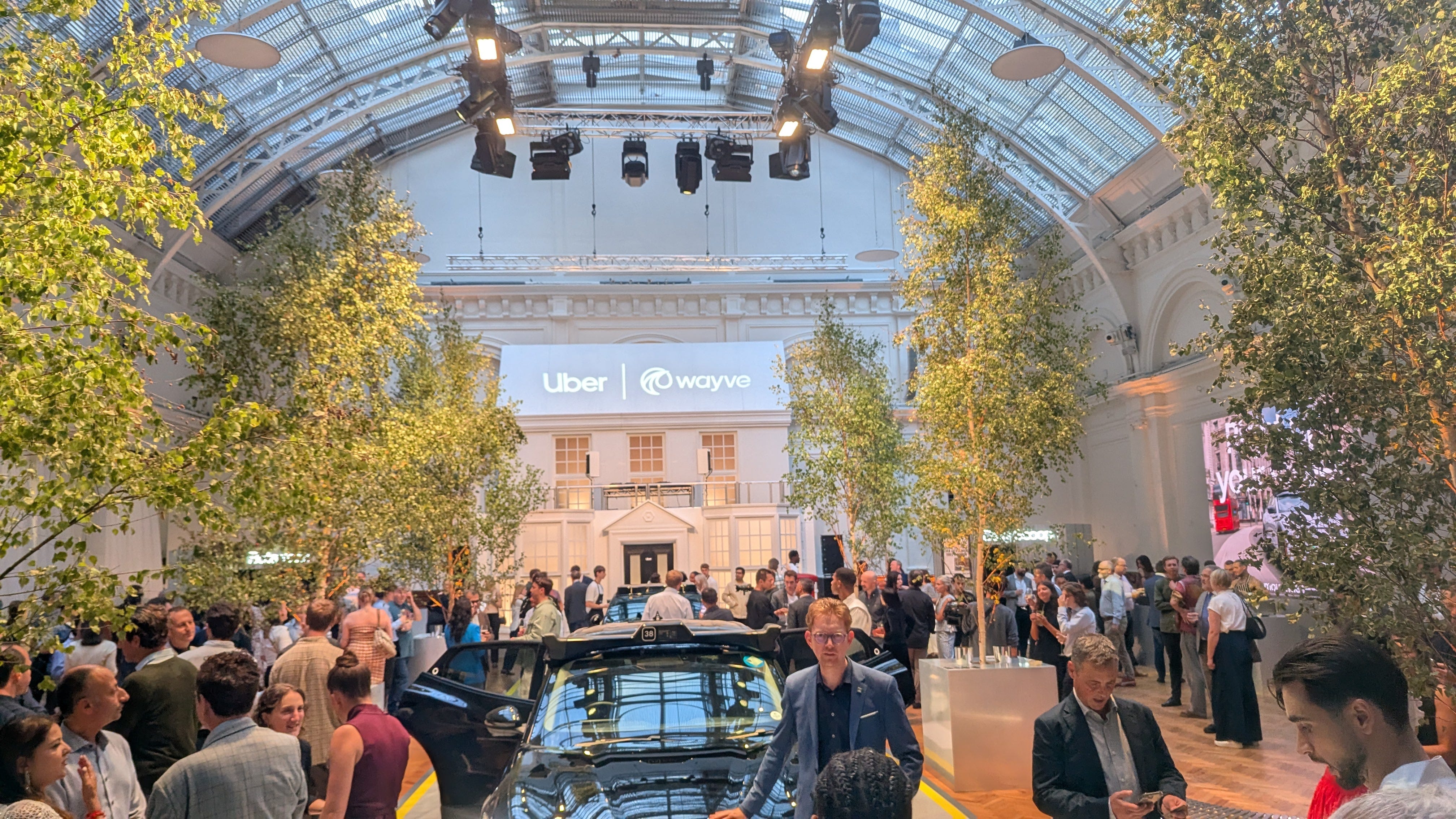 You can’t see it here but there were topless men in aprons serving oysters
Given the fact that pretty much every journalist who took a test ride saw at least one safety driver intervention, I’m not sure that’s a promise they can deliver.
I fully expect to see entirely autonomous cars on London’s roads in the near future, but I am now less convinced they will arrive as fast and be as widespread as I thought.
Now the children have (nearly) gone back to school I will be posting more regularly. Add your email in here to see the results
The ghost in the machine
Something else which came up when I released the piece was: why did you focus on the Wayve not the black cab?
It’s a good question. After all, camera operator Josh Marshall and I saw two near-misses: one from our Wayve and the other from a human driving a black cab. The cabbie tried to dive into a tiny gap in front of a bus, which failed to stop in time and kissed the side of the taxi. This was a more serious incident than the one involving the Wayve, so why didn’t I focus on it instead?
I could say that it was because I was sent to cover robotaxis, not regular taxis, but that wouldn’t really be true – I was reflecting my honest experience of the event, and the Wayve mistake loomed much larger than the human one. Partly that’s perspective: incidents you’re involved in always seem bigger than ones you simply observe. But the larger reason, I think, is that the black cab driver’s mistake was legible. I understood it and saw it coming. The Wayve’s mistake was illegible – a machine error, not a human one, and therefore more shocking.
This is a larger issue. When you look at accidents involving self-driving cars, they rarely come from human-style crashes: autonomous vehicles have superhuman perception and are trained to slam on the brakes at the first sign of danger, something they can do at machine speed. Instead, they tend to involve misunderstandings where the machine acts in a way that’s confusing to human drivers. As the authors of Understanding AI concluded when they went through Waymo’s crash reports: “Waymo’s biggest mistakes happened when it stopped in the wrong place.” Humans do that too, of course, but they do it in a human way, and that’s surprisingly important.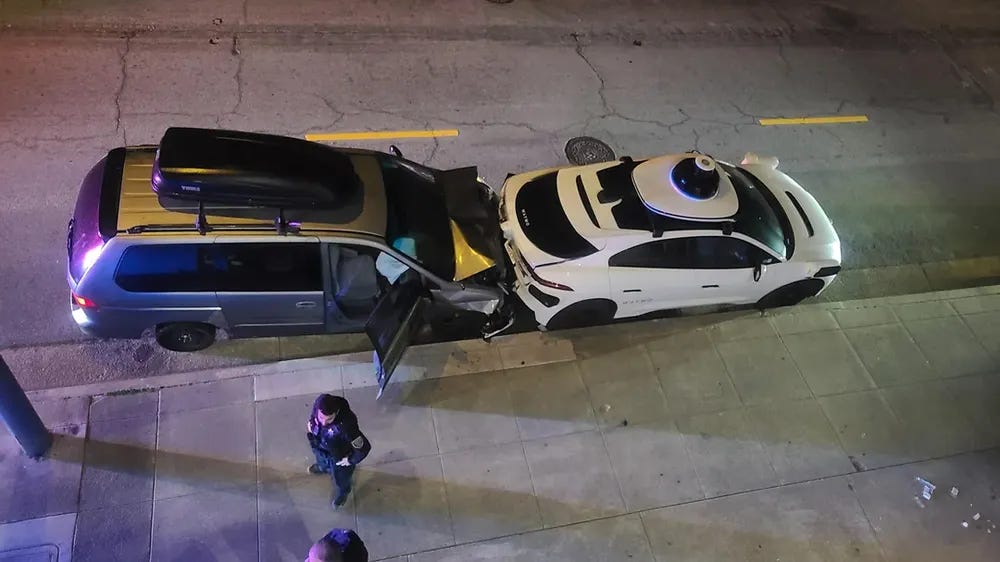 This accident happened in February when a Waymo stopped in a “no stopping” zone in San Francisco. Credit: Understanding AI / John Berry
The behaviour of driverless cars may well produce safer roads on aggregate (indeed, the data from Waymo in America would suggest it already does). But even if the results are clear, the roads might not feel safer, because the mistakes that do happen are weird, and weird can feel more dangerous than something that is unsafe but familiar.
There will only be 15 autonomous cars in operation so the chances of that happening are pretty low, but you never know