...in which the Rickipedian breaks deeply felt personal principle.
By Rick Perlstein
Published: 2026-09-07
URL: https://rickperlstein.substack.com/p/white-jazz
Something really miraculous happened a month ago. I’ll describe it plain, as my heart dictates it, and banish my internal editor, mostly. Which means: long. (Perlstein fans take that as it comes, I suspect. They know his secret, which is that, if punctuation and sentence lengths and paragraph lengths section length and chapter lengths are jussssssttt right, nothing is ever really “long.”)
Now, to the point.
One of the greatest geniuses in the history of jazz, I submit, is a piano player named Lyle Mays. Who, however, only recorded with his own bands maybe a half-dozen or a dozen times before he died too soon at age 66 in 2020, depending on how one counts. Partly because he seems a rather egoless guy. Partly because (see part the first) of shadows cast by his equally brilliant, but also also celestially charismatic and resolutely evangelical, musical partner, Pat Metheny, whom I also revere, but not as much, as I heard a lot of other people saying on social media after he died, as Lyle Mays. No one has ever played piano just the way he does, with his own exquisitely unique drive, gesture, orchestral density, and…beauty.
Also, partly because—fascinatingly—after he and Metheny amicably parted ways in the 1990s, and the wages for being a jazz musician, in the sense of an honest day’s pay for an honest day’s work, came to seem to him so unfair as to represent an affront to his dignity, he quietly stopped performing publicly, pursuing other passions instead: architecture (he designed his sister's house); chess; billiards, and computer programming of some sort that he was also a world-class expert in and by which he chose to earn…an honest day’s pay for an honest day’s work.
And so, yes, I'm fascinated by Lyle. Also simultaneously so passionate about him as an artist that I once made a longish detour when driving to visit relatives in Michigan's Upper Peninsula through his hometown, to absorb something of the world that shaped him; and, also to ask around. Which is how I learned from a fella at the gas station who sat next to him in the trumpet section in high school (was he one of the many locals with a Trump flag, that day in 2016? can’t say) that all Lyle Mays talked about or seemed to think about is music. 
That's another fascination of Lyle Mays, that he grew up in a rural Midwestern town—a subject for which regular readers know I harbor both an anthropological fascination and heartfelt affection. Wauaaukee, Wisconsin, pop. 596; or about 610 when Mays was born, in Marinette County, which is in Wisconsin’s “North Woods.” Where Christians hunt for muskie and pike. (Except, curiously, my grandpa, even if, um, quite possibly, he was doing a lot more than fishing up there, which I might write about here someday if I can fix my courage to the sticking points), and where Jews go to camp (mayhaps I’ll write about that, too in the context of how otherwise compassionate, decent people become genocide deniers and perhaps even supporters: see fear, Ibid). I am fascinated by how, from that foundation, he managed to ascend to the most exalted possible musical realms, my ears’ opinions; and how that accomplishment is both supremely weird, and weirdly not weird.
Because: art finds a way. It even, often, institutionalizes a way.
The first step, for Lyle Mays, was public school music education in grade school, then upwards to what are sometimes called "stage bands" and sometimes "jazz bands": a ritualized, bureaucratized musical world until itself, comprising its own standard repertoire (all hail the Almighty Sam Nestico!), an intricate matrix of county-wide, statewide, and region-wide competitions (gold medals, silver medals, bronze medals, by category)—and also , in its way,, ineluctably, a great deal of Whiteness. Which I’ll capitalize, if just this once. Because, if there ever was an actual affirmative cultural content to “whiteness”that didn’t actually signify “not a member of a degraded caste”, a concept of “white genius” that didn’t make you sound like one of Stephen Miller’s favorite accounts on X, it inheres in the style of jazz invented by “white” Americans from rural backgrounds in the 1970s and into the ‘80s.
It also inheres, simultaneously, in the transcendently great jazz made by “white” Scandanavians and recorded on the ECM label by a producer named Manfred Eicher. Who also, as it happened, recorded much of the great jazz that came from rural Americans: from the Ozarks, from the North Woods, from the Southwest, from Appalachia; who were transcendently great jazz musicians not despite their rural American backgrounds but because of them. Let’s name, in addition to Mays and Metheny, “white jazz” (if you will) luminaries like Oregon, Ralph Towner, Steve Swallow, Paul Motian, Charlie Haden, even sometimes Keith Jarrett, Sheila Jordan, and (a pianist you probably haven’t heard of) Bill Carruthers, plays bebop as if Charles Ives invented it, and who deserves an essay’s worth of riffs on his own.)
All these practitioners of white jazzz (I’ll go there) bear both a recognizably “white” aesthetic, and are, simultaneously, the radically open-heartedness that is a prerequisite for any great practitioner of jazz, a genre simultaneously inconceivable without African polyrhythms and mastery of the system of European circle-of-fifths harmony. (Charlie Parker’s matchless mastery same held Igor Stravinsky in awe when he heard him improvise live; Bird repaid Stravinsky the kindness by quoting the main theme from “The Rite of Spring.” Their “white” innovations include the introduction of fewer polyrhythms, often backed by “straight-eights” on bass and drums: a literally more square kind of beat. But this cohort also include, both the Europeans and rural Americans, the highest density of practitioners able to integrate Ornette Coleman’s style of simultaneous free improvisation into their compositions and group improvisations. This is exemplified by one of my favorite moments on Fresh Air, which has been lifeblood for me creatively since I started listening when she went national in 1987 when I was a junior in high school driving to jazz piano lessons, precisely for the way host Terry Gross gets people, especially jazz musicians, to articulate how they developed and practice their craft. She was interviewing Charlie Haden, who described the time he took his new girlfriend, later his wife, for the first tie, to hear him play Coleman’s music with the collective first gathered by Don Cherry of of Coleman veterans known as Old and New Dreams. The future Mrs. Haden enthused to drummer Ed Blackwell of his and Charlie Haden’s ability to improve together as one without a common key signature or meter to ground them, “It’s like you’re married!” Blackwell replied, “Motherfucker, we are married!”
(Which is the only the second best story of how Midwesternern jazz musicians shaped their lived experience into musical innovation, the first best being the time the Funk Brothers, the in-house studio band Barry Gordy recruited for Motown from Detroit's thriving jazz scene, got one of their signature grooves that helped bring down the walls of racial segregation itself by imitating the signature bump of their favorite stripper from the dive down the street. Which is equal in greatness, as musical lore, as how another of the greatest white jazz musicals of all time, Sheil Jordan who however worked most of her twenties and thirties as a secretary to pay rheumatologist rent, grew up in deepest rural Appalachia, then as a teenager moved to be with her mother in Detroit, where she fell in love with, and became the first singer to master, bebop, explaining that it came naturally to her because she grew up a "microtonal mountain singer." Whose microtonal style also, however, Midwestern jazz writer Neil Tesser has pointed out, bears resemblance to Native American chants, and may have something to do with the fact that she grew up part-Cherokee, actually a direct descendent of Queen Alaquippa of the Seneca nation. But I shouldn't digress.)
AIt is not incidental that all the white musicians I’m talking about share with Coleman, as a foundation of what makes their style unique, a harmonic palate featuring many more major triads than in any jazz before Coleman came along; and a also a shared melodic vocabulary drawing from demotic rural American folk culture. For Ornett, that may have something to do with the fact that the then-not-quite-metropolian Fort Worth, Texas, and got his start playing in carnie bands around the rural Southwest. For Pat Metheny et al, it had to do with coming of age alongside rock and roll.
So, that’s what white jazz shares with very not-white Ornette Coleman. What are some other things they share with each other?
A marked pastoralism (”Beyond the Missouri Sky (Short Stories)” is the name of a duet album between Haden and Metheny dedicated to their common home state, where Haden grew up in a family band for one of those “barn dance” radio programs were the birthplace, in the 1920s, of the hodgepodge that came to be known as “country music.”). Also, and especially, true artists’ ears for making music out of their own lived cultural experience. Which describes one of my favorite stories that gets at Mays’ art: the one about how he came up his signature flute-y synthesizer sound that he designed for the Oberheim 4-Voice (being also a Midwestern-style Radio Shack habituating tech dude). The synth patch became a trademark of the Pat Metheny Group sound; listen to it from the album “As Falls Wichita, As Wichita Falls,” the one with with a harvested farm field stretching endless unto the horizon). He came up with it this way: like a lot of us in grade school (in the Midwest? everywhere?) we played plastic “song flutes” in music class to learn the basics of reading and performing music. The sound he programmed was an attempt to evoke his haunting memory of what a couple dozen of his fellow fifth graders in Wausaukee sounded like when they wheezed through something like “Mary Had a Little Lamb” together.
The next station of the white-jazz cross, for many like Mays, after that highly institutionalized high school stage band world, was one of the university jazz programs that began coming up in the 1970s. The original was Lyle Mays’s alma mater, the institution that began in 1890 as Texas Normal College and Teacher’s Training Institute and became by Mays’ time North Texas State University and now, as the way of the marketing world, goes by Universe of North Texas. Mays was the pianist for their top-tier “1:00 Lab Band,” which is actually famous, putting out a record every year the aspires to be the showcase for the best big band composing and arranging. The most famous one, "Lab ‘75,” was entirely composed and arranged by the kid from Wisconsin.
His brother-in-arms Metheny had a role to play in the further evolution of this world, thought does not come out of it. He learned jazz, after falling in love with jazz after truly hearing it for the first time when his trumpet-playing brother brother home Miles Davis’s Four and More (incidentally one of the most harmonically complex,live recordings in jazz history, which under certain interpretations might be termed the most accomplished in European terms, live performances in jazz history, with no Methenesque major triads anywhere) by traveling to nearby Kansas City from Lee’s Summit, Missouri (which had a bank called Farmer’s Trust, after which Metheny named his most brilliant, beautiful, and major-triad-heavy compositions, white jazz I’d personally class with David’s Pieta or Picasso’s Guernica, or Rodin’s The Thinker. Note that in this video Metheny wears one of his trademark black-and-white striped shirts. He explains that he liked wearing the same outfit every night as a kind of work uniform, because that was how he thought of his calling: doing honorable work, with highest attention to craft. He has said that he aspires to greatness of craft in just the way a refrigerator repairman might, should, does practice a greatness of craft. Someone you might call one of the OGs of white jazz, and no question the greatest of its practitioners of all time, Bill Evans, said something similar. He was asked if jazz musicians should study classical music. He agreed that that should, then added: “They also should study, like coal mining.” His point being: human excellence is achievable in any medium, with radical openness to everything truly human as a prerequisite for greatness in any art, craft, be what may. Which was a digression; I was talking bout how Metheny, after hearing Miles, started doing nothing but learning to play jazz guitar, having previously been a Beatles freak, which in fact he still is, then spent his evenings driving to Kansas City, like I said, sitting in with grits-and-gravy soul organ trios in the Black neighborhood, where there was never a sheet of music to be seen, and Metheny was wrung through the wring of an old-school jazz apprenticeship where they would play every standard and not-so standard in any key without warning, and make the kid learn by following along, hanging on by the skin of his teeth. Then, he went to study at the pioneering jazz program at the University of Miami (we’ll skip the part where he meets Jaco Pastorious and makes pioneering white jazz on ECM with him), but he was already too good, so he quit and took a job offer to teach, while still a teenager, another pioneering jazz college, Berkeley, in Boston. In an interview (he’s remarkably eloquent about his own musical thinking in interviews), he once noted, “I don’t know if I’m the last of the old guts or the first of the new guys”: the old guys being the ones who learned on the bandstand, the new being the ones who learned in schools.
Anyway, while at Berklee, he and several others descended upon the Boston the jazz scene and created new ways, harmonically and rhythmically, to improvise collectively. Which, to my mind, is the definition of every true advance in jazz as an art form. A major influence on this that clique, which included, besides Methena, of Carla Bley and Steve Swallow preeminently, was another pioneering white jazz musician, one of the greatest practitioner of white jazz-qua-white jazz of all (Bill Evans doesn’t quite count), Indiana’s Gary Burton, who became the dean at Berklee. He is from Indiana, and got his start in Nashville as a vibraphone player on country records, which his own first truly mature solo album reflects, which he followed up with what is often considered the first jazz-rock record, but only after serving an apprenticeship himself with Stan Getz (who has some white jazz tendencies himself, notably his sweet tone, of which John Coltrane said every sax player would sound like if they could).
Anyway, hanging out and playing together, this crowd created their own set of new standards, many of them by Steve Swallow and Carla Bley, Steve Swallow’s late wife. (Here they are on an album with Gary Burton’s name on it, but with all the tunes composed by Bley.) She married Swallow (uthor of the greatest white jazz standard, “Falling Grace”) after divorcing a pioneering pianist named Paul Bley, heard here with Bley fellow white jazz OG Chet Baker of Oklahoma. Many of those compositions were included in a samizdat collection of lead sheets of jazz standards, both the kind of people played at wedding and bar mitzvah gigs, and the kind that got called at jam sessions, pulled together by and for Berklee students, though many originally suspected it was the creation of Pat Metheny because so many of his and his friends tunes were in it. No; that was just the documentation in print of a jazz scene, then kind which to follow over time is the truest is most profound mode of jazz listenership.
Anyway, concerning those college jazz programs: through them, art found a way, And if were taking you down rabbit holes, which I most definitely have (had?) no intention of doing, I would introduce you to another entire, profoundly respected school of white funk whose most celebrated practitioners come, the one, Snarky Puppy, come from North Texas (here’s the apogee of their art, featuring Cory Henry, a gospel-jazz legend, whose solo, as you can see from the video with a real-time transcription running along the bottom has 616,000 views, is frequently studied ), and the other, Vulfpeck (so beloved they were able to produce their own Madison Square Garden sell-out show, DIY-style, with an audience surely including half the professional musicians of all genre descriptions in New York. They’re from the University of Michigan. I call it “white funk” because it it is white, and it is funk. And also it is—any funk musician will tell you—some of the funkiest funk than from anyone presently funking. Nothing, for some white funk context, who the funkiest funkateer who ever funked, Prince, described funk as “the opposite of magic. Funk is about rules.”
He hardly had to make explict the obvious paradox, that funk is also the dirtiest music; even as rule-boundedness is the racist world’s literal description of what is so spesh about white people: that they the cleanest people. Art finds a way. Listen to how funking clean Joe Dart is on bass.
But, I’m not going to take you down that rabbit hole, no siren. It is time, at long last to get to The Miracle. (Damn, do I like to type….)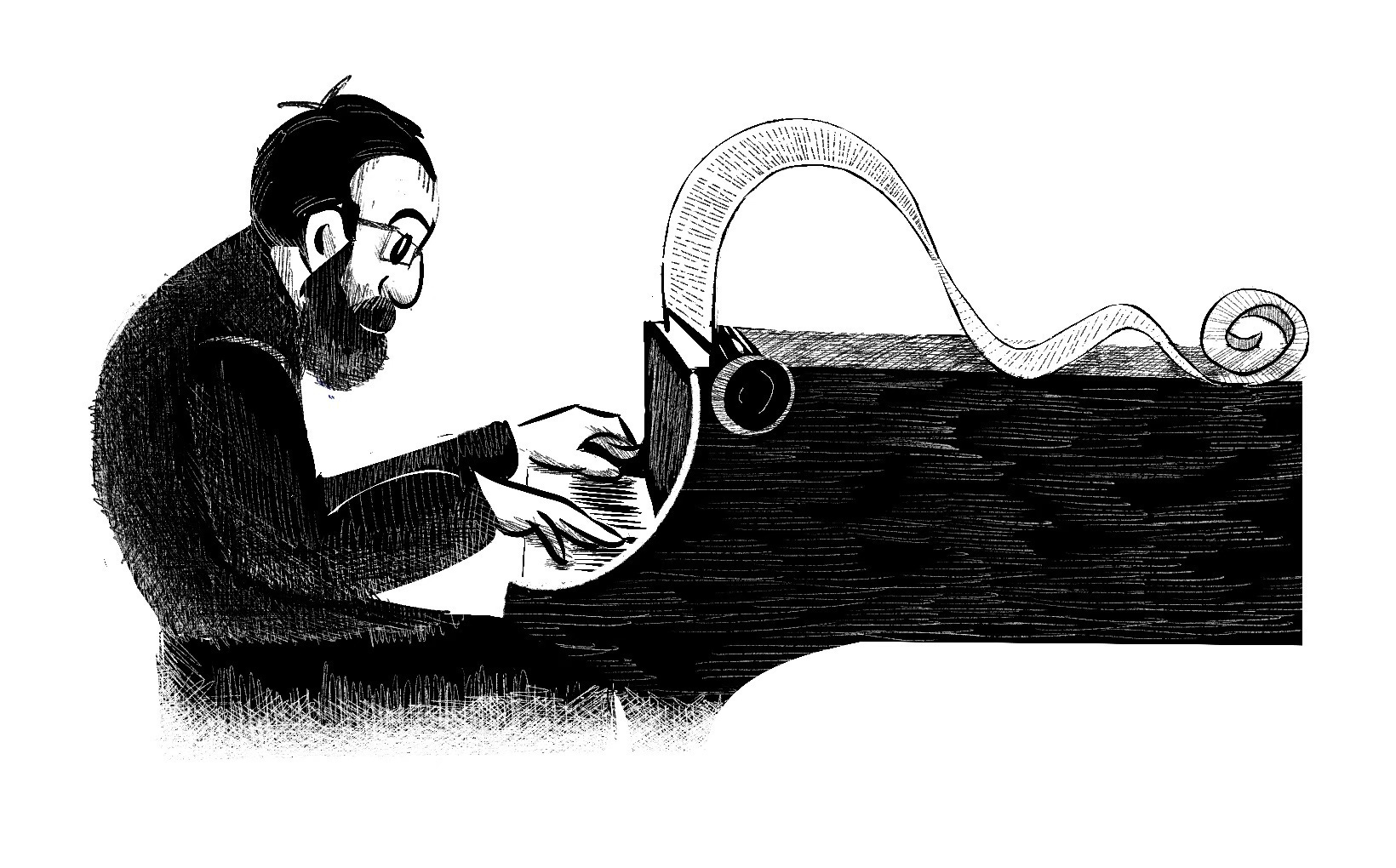
I’m about to beg you to listen to something, It just dropped on YouTube a month ago. I don’t know how long it has been avaible in IRL. But I’ve never heard it before. It is a bootleg of Lyle Mays playing at a club in Atlanta in 1981. In my current judgement, it may be one of the greatest jazz sides I have ever heard in my life.
A few interesting details to listen for: a trace of that whole story I told above about the Boston scene in the 1970s, living on in an unbelievably creative quotation of the Carla Bley heavily major-triadic composition “Syndrome” (heard here with Gary Burton, Steve Swallow, and Makoto Ozone. (Japanese Jazz, as opposed to merely jazz that happens to be performed by Japanese people, also being a thing, under the musical influence of another of the greatest white jazz masters, Chick Corea: huge in Japan!). Listen, too, to, for a really fascinating homage to McCoy Tyner and John Coltrane and “A Love Supreme,” too, a thing most pianists borrow in what has become an almost cliche way, but he manages to do up fresh.
But before you listen, a heartfelt apology. I have long pledged I would never write about music, because I would much rather music about music. I certainly don’t much like reading writing about music. And now, look what I’ve done. I’m ‘begging to you to listen to this (but not this, another set from the same gig, because much of it is unlistenable, because they didn’t have the sound right yet. It’s hard for art to find a way. But, having thus writ what you read, you can’t listen to it, without, that is, listening as sluiced through my infernal yacking about it, which is not really the way to listen at all.
Seriously, I believe 98% of music writing, in this here age of teh Internet, should consist of a link and three words: listen to this. So.
Listen to this.