A pumpkin is food. A broom cleans floors. Candy is candy—until culture teaches us to see something else.
By QuestionClass
Published: 2026-10-31
URL: https://questionclass.substack.com/p/how-do-ordinary-objects-take-on-new
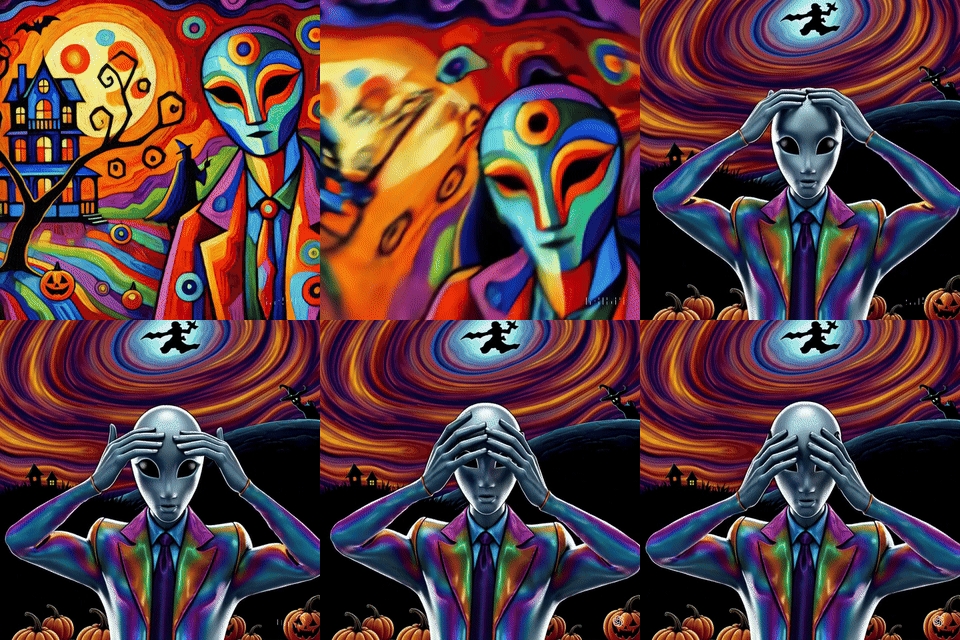
A pumpkin does not naturally mean Halloween.
A broom does not naturally suggest witches.
A piece of candy does not inherently belong to October 31.
All three objects existed before those associations became familiar. Their physical properties did not suddenly change when people began using them in rituals, stories, decorations, or celebrations.
The objects haven’t changed. Their meanings have.
That is one of the stranger things about culture. We constantly encounter ordinary things that carry meanings far beyond what they physically are.
A pumpkin became more than food
Pumpkins were cultivated in North America long before they became Halloween decorations.
The association developed through an older tradition involving carved root vegetables, stories about wandering spirits, and the legend of Stingy Jack. Irish immigrants brought related traditions to the United States, where pumpkins provided a much larger and easier surface for carving.
By the nineteenth century, carved pumpkins had become part of American Halloween practice.
The transformation did not happen because the pumpkin itself changed.
It happened because people began repeatedly placing the pumpkin inside the same cultural context.
Carve a face.
Place a light inside.
Display it at Halloween.
Repeat the ritual across generations.
Eventually, the association becomes so familiar that explanation disappears.
A glowing jack-o’-lantern now communicates Halloween almost instantly, even to someone who has never heard the story that helped produce the tradition.
That suggests something important about symbols:
Their meaning can survive the story that created them.
A broom learned to fly
A broom is about as ordinary as an object can be.
It is a household tool built for cleaning.
Yet place a broom beneath a pointed hat and it suddenly evokes witchcraft.
The association developed through medieval and early modern European representations of witches riding ordinary household implements. One surviving fifteenth-century illustration shows women riding a broom and a staff.
The familiarity of those objects mattered.
The imagined supernatural threat was not represented through some distant magical technology. It appeared through objects people already knew from ordinary life.
Over centuries, the association was repeated through paintings, stories, folklore, costumes, cartoons, and entertainment.
Eventually, the frightening image changed.
The broomstick witch became less a symbol of supernatural danger and more a familiar Halloween convention.
The broom still cleans the floor.
But context activates another meaning.
Lean it against the wall of a kitchen and nobody thinks twice.
Put it beside a black pointed hat in October and nearly everyone understands the reference.
Candy became part of a social exchange
Candy offers a slightly different example.
Chocolate tastes the same on October 31 as it does on November 1.
What changes is the surrounding ritual.
A child wears a costume, walks to a neighbor’s house, knocks on the door, says “trick or treat,” and receives candy.
The candy now participates in something larger than eating.
It becomes a token in a repeated neighborhood exchange.
Early American trick-or-treaters received many kinds of treats, including homemade food, fruit, nuts, coins, and other small gifts. During the twentieth century, candy manufacturers increasingly promoted packaged sweets for Halloween, and individually wrapped products fit the expanding practice particularly well.
Repetition did the rest.
Today, Halloween candy does not merely satisfy a desire for something sweet.
It signals participation.
The porch light, costume, knock on the door, greeting, and candy all work together as parts of the ritual.
Remove the context and the object returns to being ordinary.
Symbols depend on interpretation
The philosopher Charles Sanders Peirce developed a theory of signs that helps explain what is happening.
For Peirce, a sign represents something to someone through interpretation.
That means meaning is not located solely inside the physical object.
A pumpkin has measurable properties: shape, mass, color, texture, nutritional value.
“Halloween” is not one of those physical properties.
That association exists because people have learned to interpret the pumpkin within a particular cultural system.
The same principle applies everywhere.
A red traffic light means stop.
A wedding ring can represent commitment.
A national flag represents something far beyond fabric.
The physical object participates in meaning because people recognize what it stands for.
Culture teaches us how to read things.
Context decides which meaning appears
Objects can carry several meanings simultaneously.
Consider the broom again.
In one setting, it means cleaning.
In another, witchcraft.
A wedding ring can be jewelry, a personal memory, a family heirloom, or a public signal of marriage.
A sports jersey can simply be clothing to one person and represent belonging, memory, rivalry, and identity to another.
Meaning therefore depends partly on the relationship between the object and the observer.
Culture supplies shared meanings.
Personal experience adds private ones.
A jack-o’-lantern may remind millions of people of Halloween while reminding one particular person of carving pumpkins with a grandparent.
The public symbol and the private memory can coexist inside the same object.
Repetition turns association into recognition
Symbols become powerful partly because they stop requiring explanation.
Nobody needs a paragraph beside a jack-o’-lantern explaining that it is associated with Halloween.
The association has been repeated enough times that recognition becomes automatic.
This is how traditions preserve meaning.
Each repetition teaches the association again.
Every carved pumpkin reinforces the connection between pumpkins and Halloween. Every witch costume reinforces the broomstick image. Every trick-or-treat exchange reinforces the connection between candy and the holiday.
Eventually, people can inherit the symbol without inheriting the explanation.
They know what it means without knowing why.
Meaning can change again
Symbols are not permanent.
The broomstick witch illustrates this well.
An image once tied to fear and accusations of witchcraft eventually became material for children’s stories, decorations, costumes, and humor.
The object remained recognizable.
The emotional meaning shifted.
This happens constantly in culture.
Brands change associations. Gestures acquire new meanings. Clothing moves between social classes or subcultures. Songs become attached to events their creators never anticipated.
Meaning is preserved through repetition, but repetition can also transform it.
Culture does not merely inherit symbols.
It edits them.
Can meaning be created deliberately?
Businesses, governments, sports teams, artists, schools, and families all try.
A company creates a logo and wants it to represent trust.
A university establishes a ceremony and hopes it becomes meaningful.
A sports team adopts a mascot.
A family keeps an inexpensive ornament because it is connected to a specific memory.
The object can be introduced deliberately.
The meaning is harder to command.
A company cannot simply declare that its logo means trust.
People need experiences that make the association believable.
A family object becomes meaningful because it repeatedly participates in meaningful moments.
The symbol gains weight through what happens around it.
That is why meaning is partly designed and partly earned.
Halloween makes the mechanism unusually visible
Halloween is filled with objects whose practical purposes have been temporarily overwritten.
A pumpkin becomes a face.
A broom becomes transportation.
Candy becomes a social token.
On November 1, the transformation begins reversing.
The broom returns to the closet.
The candy becomes leftover food.
The pumpkin starts to decay.
But the cultural associations remain ready to return the following year.
The physical objects never stopped being ordinary.
We simply learned to see something else in them.
🧬 QuestionStrings to Practice: Finding Meaning in Everyday Objects
Choose an ordinary object and ask:
What was this object originally created or used for?
↓
What additional meanings have people attached to it?
↓
What story, tradition, or repeated experience created those associations?
↓
Which meanings are widely shared, and which are personal to me?
↓
How might another culture or generation interpret it differently?
↓
What would need to happen for its meaning to change again?
The exercise reveals something larger than the object.
It shows how people turn things into symbols.