Why smarter predictions can reduce the unknown without making the future certain.
By QuestionClass
Published: 2026-10-23
URL: https://questionclass.substack.com/p/will-ai-eliminate-uncertainty
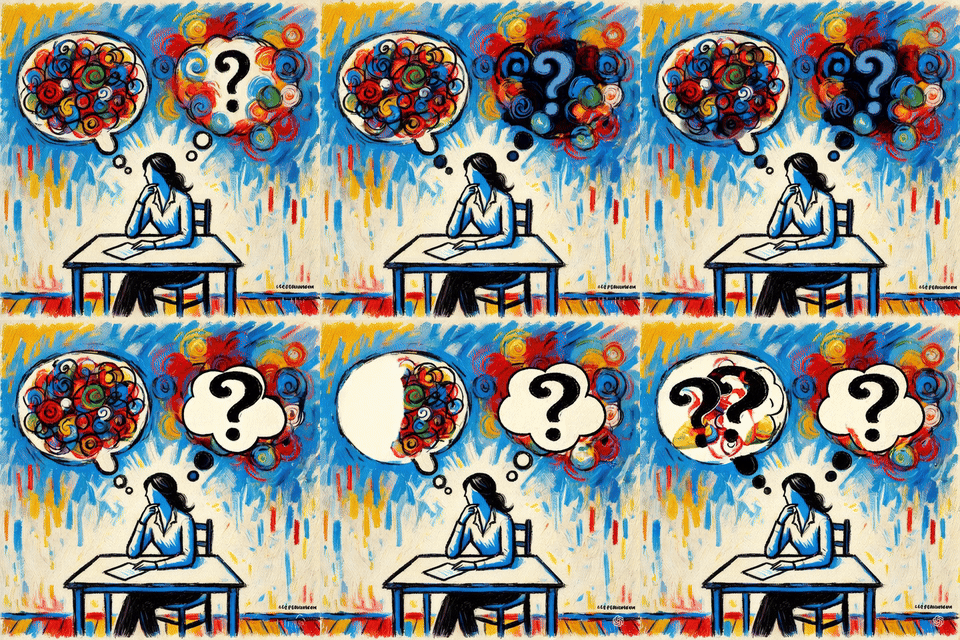
Imagine planning an outdoor wedding six months from now. You want one answer: will it rain?
A sufficiently capable AI could examine historical weather, atmospheric conditions, ocean temperatures, regional patterns, and thousands of variables you would never think to check. It might give you a much better estimate than you could produce yourself.
But it still cannot promise sunshine.
That distinction matters because uncertainty is not one problem waiting for a powerful enough computer to solve it. Some uncertainty comes from information we do not yet have. Some remains even when we understand the probabilities remarkably well. And some changes because people react to the prediction itself.
AI can make the future easier to navigate without turning it into something already known.
Some uncertainty can be reduced
One useful distinction is between epistemic and aleatoric uncertainty.
Epistemic uncertainty comes from incomplete knowledge. You lack measurements, data, or a good enough model. Better sensors, larger datasets, more accurate observations, and improved reasoning can reduce it.
Weather provides an example. Atmospheric conditions are extraordinarily complicated, but improved observations and models have steadily increased forecasting capability. AI can contribute by recognizing relationships in enormous quantities of data that would be difficult to model manually.
This is where more intelligence can make a dramatic difference.
The uncertainty exists partly because we do not yet know enough.
Some uncertainty remains probabilistic
Aleatoric uncertainty is different. It describes variability that remains inside a probabilistic model even when its parameters are known.
Radioactive decay provides a cleaner example than a coin toss. Scientists can describe the probability that a radioactive atom will decay during a given interval and can predict the behavior of enormous collections of atoms extremely well.
Our best physical theories do not give us a definite decay time for one particular atom.
AI might estimate probabilities with extraordinary precision. That is not the same as converting every probabilistic outcome into a guaranteed one.
This creates an important practical distinction.
If uncertainty comes from missing information, gather better information.
If uncertainty remains probabilistic, the problem becomes deciding how to act under uncertainty.
AI is already improving forecasts
Weather forecasting shows how large the gains can become.
In 2023, Google DeepMind introduced GraphCast, a machine-learning weather model capable of generating global ten-day forecasts. In research published in Science, GraphCast outperformed the European Centre for Medium-Range Weather Forecasts’ High Resolution Forecast system on approximately 90% of 1,380 evaluated forecasting targets.
That figure needs to be interpreted carefully.
It does not mean GraphCast “got the weather right 90% of the time.” It means the system performed better than the comparison model on most of the specific variables and forecast lead times researchers evaluated.
Still, the result demonstrates something important: AI can improve our estimates about complicated systems without making those systems perfectly predictable.
The same principle applies elsewhere.
A medical model can estimate who is more likely to develop a disease without knowing exactly what will happen to one individual. A retailer can improve inventory forecasting without knowing precisely what every customer will buy.
Better probabilities can still be enormously valuable.
Sometimes a good prediction makes itself look wrong
Prediction becomes stranger when people respond to it.
Suppose an AI traffic system forecasts severe congestion for Friday morning.
City officials change signal timing. Navigation systems divert drivers. Employers allow flexible arrival times. Commuters leave earlier or choose different routes.
Friday arrives.
The predicted traffic jam never happens.
Was the model wrong?
Not necessarily.
The forecast may have accurately described what would happen if nobody changed behavior. Once the prediction became public, however, it became another cause inside the system.
The future being observed is no longer the future that was originally predicted.
This creates a counterfactual problem.
Predictions can become interventions
The same pattern occurs in other areas.
An AI predicts a shortage, so manufacturers increase production.
A model forecasts declining sales, so management changes prices and advertising.
An epidemiological warning predicts rapid disease transmission, so people adopt preventive measures.
In every case, the prediction can help create an outcome different from the one forecast.
That makes evaluating prediction systems surprisingly difficult.
A forecast that says “this will happen” and causes us to stop it can be more valuable than a forecast that appears perfectly accurate because nobody responds.
Sometimes the most valuable prediction is one that inspires us to change the future it describes.
Would superintelligence solve the problem?
Now imagine an AI far more capable than anything that exists today.
It can ingest vastly more information, discover relationships no human can detect, build better models, and calculate probabilities with extraordinary precision.
Would uncertainty finally disappear?
Not necessarily.
Greater intelligence does not guarantee complete information. Measurements have finite precision, and many systems change continuously. In chaotic systems, extremely small differences in starting conditions can eventually produce large differences in outcomes.
Computation creates another constraint. Better algorithms and greater resources can push prediction much further, but increased sophistication does not logically imply exact prediction of every complicated system.
And physics introduces an additional question. Quantum mechanics currently describes certain outcomes probabilistically. Different interpretations disagree about what that probability ultimately means, but simply adding computing power does not establish that every individual outcome becomes predictable.
A superintelligent AI could therefore be an astonishing forecaster without becoming an oracle.
The real question is how much certainty the decision requires
Suppose a company is deciding whether to launch a new product.
Its AI predicts a 70% chance of reaching the sales target.
Should the company launch?
The probability alone cannot answer.
A large company with substantial reserves may happily accept the 30% chance of failure. A smaller company that could go bankrupt if the product fails may reject exactly the same opportunity.
Or the smaller company might choose another option: run a limited pilot, learn from the results, and delay the irreversible commitment.
The forecast is identical.
The decision is different because the consequences are different.
That reveals the deeper purpose of prediction.
We do not need perfect knowledge of the future. We need enough knowledge to choose intelligently among the actions available now.
Uncertainty is partly a decision problem
A rough forecast can be sufficient for a reversible, low-cost choice.
A high-stakes decision may require independent evidence, additional testing, larger safety margins, or contingency plans.
Instead of asking, “Can AI make this certain?” ask:
“How certain do we need to be before choosing?”
That question changes the objective.
The goal is no longer infinite prediction accuracy. It is obtaining enough information to distinguish among available actions and understanding the consequences when the prediction is wrong.
This is where AI may become most valuable.
Not by erasing uncertainty.
By helping us see its shape.
🧬 QuestionStrings to Practice: Deciding Without Certainty
Use this sequence when an AI forecast or any other prediction affects an important decision.
What exactly are we uncertain about?
↓
Which parts could better information reduce?
↓
What uncertainty would remain even with better information?
↓
What happens if the prediction is wrong?
↓
How reversible is the decision?
↓
What action makes sense given what we know?
The goal is to separate uncertainty worth reducing from uncertainty that has to be managed.
AI will almost certainly make many parts of life more predictable. We will detect some risks sooner, estimate probabilities more accurately, and make choices using information that previous generations could not have obtained.
But prediction does not decide how much risk is acceptable.
It does not tell us which outcomes matter most.
And sometimes its greatest success will be changing what happens next.
AI can reduce the uncertainty surrounding our choices. It cannot eliminate the responsibility of making them.