Last year, our estimate was 2035–2037. In 2026, something unusual happened: the forecast moved earlier.
By QuestionClass
Published: 2026-10-13
URL: https://questionclass.substack.com/p/when-will-construction-begin-on-the-1b2
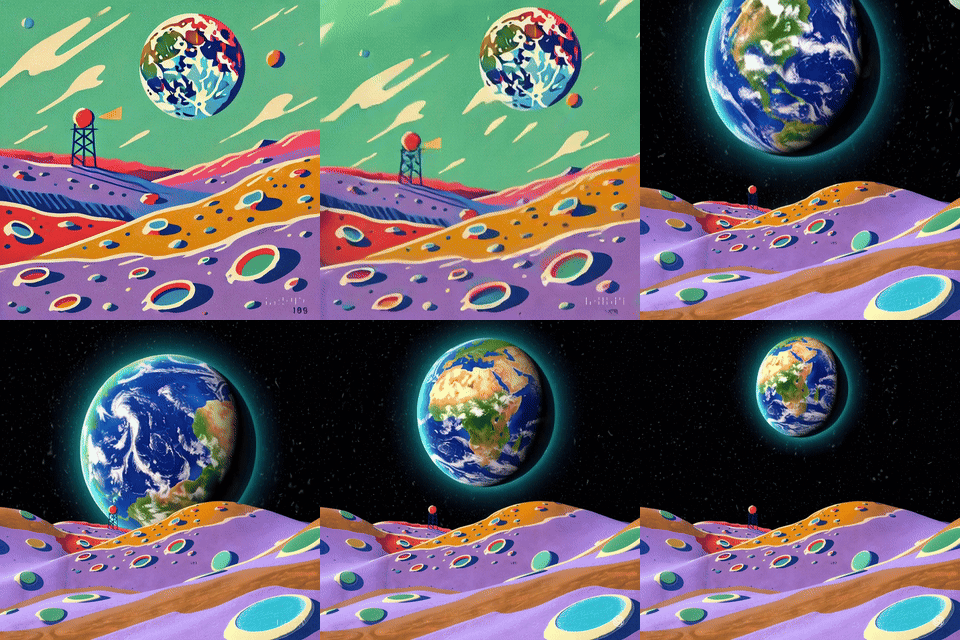
Last year, we asked when construction would begin on the Moon’s first permanent shelter and put our baseline forecast at 2035–2037.
We also noticed an annoying pattern.
Every time humanity seemed to get closer to a permanent Moon base, the expected date moved farther away.
So, one year later: did it slip again?
No. Our 2026 baseline moves earlier, to 2032–2035.
That is our estimate for construction and assembly of the first lunar habitat intended to become a permanent human residence.
The infrastructure should arrive earlier. NASA now describes 2029–2032 as a period for deploying power, communications, transportation and logistics. Beginning in 2032, the agency plans to bring habitats and those supporting systems together into a permanent lunar outpost.
That distinction is the key to this year’s update.
First, What Counts as “Construction”?
We are not counting the next rover, antenna or short-duration crewed landing.
For this series, construction begins when a habitat intended as a permanent residence starts coming together with the systems needed to support and expand it.
That sounds straightforward until the pieces start arriving separately.
Imagine watching a new town appear from orbit.
First comes electricity. Then communications. Transportation and supplies follow. Eventually, a building appears where people can live.
At what moment did the town begin?
There is no perfect boundary.
We draw it at habitation: when infrastructure stops serving a succession of temporary expeditions and begins supporting a residence intended to remain.
That gives us a consistent standard to test each year.
So What Actually Changed?
Not the difficulty.
Building a permanent settlement on the Moon remains an extraordinary engineering problem.
What changed is that NASA’s plan became much more specific.
NASA now divides Moon Base development into three phases.
Through 2029: robotic exploration, technology demonstrations and preparation.
2029–2032: “Build and Expand,” including power, cargo transportation, communications, logistics and other infrastructure required for longer stays.
2032 onward: “Live and Work on the Moon,” when NASA says it intends to begin assembling a permanent lunar outpost.
That is a much clearer progression than we had a year ago.
The mission sequence changed too.
NASA now targets Artemis III for 2027 as a low-Earth-orbit demonstration involving Orion and commercial lunar lander test vehicles. Artemis IV is targeted for early 2028 as the first Artemis crewed lunar surface landing.
Then comes the part that matters most for this question: accumulation.
In June 2026, NASA selected Astrobotic, Firefly Aerospace and Intuitive Machines for four additional commercial lunar missions targeted for late 2028. NASA has also selected Blue Origin to deliver two lunar terrain vehicles in 2028.
A lander arrives.
Then a rover.
Communications improve. Power becomes available. Cargo capacity expands.
Eventually those pieces stop looking like equipment scattered across the Moon and start looking like a place.
That transition is what we are trying to catch.
Starship Is Still Important. It Just Isn’t the Whole Story Anymore.
In 2025, we identified SpaceX’s Starship as the major wild card.
That made sense. If the landing system or orbital refueling architecture failed, much of NASA’s lunar timetable could move with it.
Starship still matters enormously.
But it is no longer a useful stand-in for the entire lunar settlement project.
NASA’s current architecture separates cargo delivery, transportation, mobility, communications, power and habitation into different systems that can develop on different schedules.
So the better question is no longer simply:
Did Starship work?
It is:
Are the pieces of a permanent lunar settlement actually starting to accumulate?
If the answer becomes yes, construction has entered a different phase even before anyone moves into the permanent shelter.
China Is Aiming at the Same Window
China’s schedule points toward roughly the same period.
The China National Space Administration says Chang’e-8 is scheduled for launch around 2029. The mission is intended to conduct scientific work and experiments using lunar resources near the south pole, helping prepare for the International Lunar Research Station.
China plans a basic version of that station by 2035, followed by a larger system in the 2040s.
So the competition is surprisingly concentrated.
NASA plans to begin assembling a permanent outpost from 2032 onward.
China is targeting a basic lunar research station by 2035.
Both schedules can slip.
But both now point toward the first half of the 2030s as the period when temporary lunar operations could turn into something more permanent.
The Moon Itself May Become Part of the Construction Supply Chain
There is another reason the timetable matters.
Permanent settlement gets much easier if every kilogram of shelter does not have to travel from Earth.
NASA is developing technologies for lunar power generation, oxygen extraction and production of materials on the Moon for construction and operations.
Chang’e-8 is also intended to test in-situ resource utilization.
The first permanent habitat will likely depend heavily on materials brought from Earth.
Later settlements may not.
That is a deeper threshold than simply putting people on the Moon.
Once some of the material required to keep people there comes from the Moon itself, the settlement becomes less like a campsite supplied from home and more like a place capable of sustaining its own expansion.
Our 2026 Forecast
Here is where we stood last year:
Optimistic: 2033–2034
Baseline: 2035–2037
Pessimistic: 2038–2042
Skeptic: 2045+ or never
Here is the 2026 update:
Optimistic: 2030–2031
Infrastructure deployment moves quickly enough that early habitation during NASA’s buildout phase becomes the beginning of an enduring shelter.
Baseline: 2032–2035
NASA enters its permanent-outpost phase and begins assembling habitats with the power, transportation, communications and logistics necessary to keep them operating. China’s 2035 target points toward the same general window.
Pessimistic: 2036–2040
Landing systems, cargo capacity, budgets, power, habitation or other dependencies push construction beyond current U.S. and Chinese schedules.
Skeptic: 2041+ or never
Humans keep visiting the Moon and building increasingly sophisticated infrastructure without turning it into a genuinely enduring settlement.
Our baseline has moved earlier by roughly three years.
Not because the engineering became easy.
Because the transition from visiting the Moon to trying to live there has become easier to see.
What Should We Watch Before Next Year’s Check-In?
Not another rendering of a lunar village.
Not another announcement that humanity intends to live on the Moon someday.
Watch what actually gets delivered.
Which vehicles reach the surface?
Which systems work?
What remains there after the mission ends?
And does each delivery make the next one more useful?
Those questions will tell us more than another target date.
Last year, we ended by asking:
When will we stop planning and start building?
A year later, the answer has separated into two parts.
The infrastructure comes first.
The permanent shelter probably begins between 2032 and 2035.
That is the date we will come back and test.
📚 Bookmarked for You
A City on Mars by Kelly and Zach Weinersmith: A rigorous and frequently funny examination of how much harder permanent extraterrestrial settlement is than simply getting humans to another world.
Moon Rush by Leonard David: A useful look at the scientific, commercial and geopolitical competition surrounding humanity’s return to the Moon.
🧬 QuestionStrings to Practice: When Does a Settlement Begin?
What is the first thing we leave on the Moon because we expect to need it again? → What has to be added before people can depend on it? → When does temporary infrastructure become permanent infrastructure? → At what point have we stopped visiting the Moon and started living there?
Explore another Question-a-Day at QuestionClass.