Open source Palantir for AI agents. Add auditability, traceability, and decision intelligence to any LLM stack. Self‑hosted, MIT licensed.
By Meng Li
Published: 2026-08-30
URL: https://pythonlibraries.substack.com/p/12k-star-agent-auditors-palantir
AI Agents can no longer be used as black boxes. Especially in finance, healthcare, and law, “why it did this” matters more than “what it did.”
Vector search can tell you “what is similar,” but it cannot answer “how these things relate, why it turned out this way, or how this decision was reached.”
Put simply, most AI Agents today share the same weakness: they have no habit of keeping records. Every decision is like an employee with no badge and no work report—the job gets done, and no trace is left behind.
That is the context in which an open-source project called Semantica took off on GitHub. In early August, it hit #1 on GitHub Trending overall. It now has 11.2k+ stars and 1,200+ forks.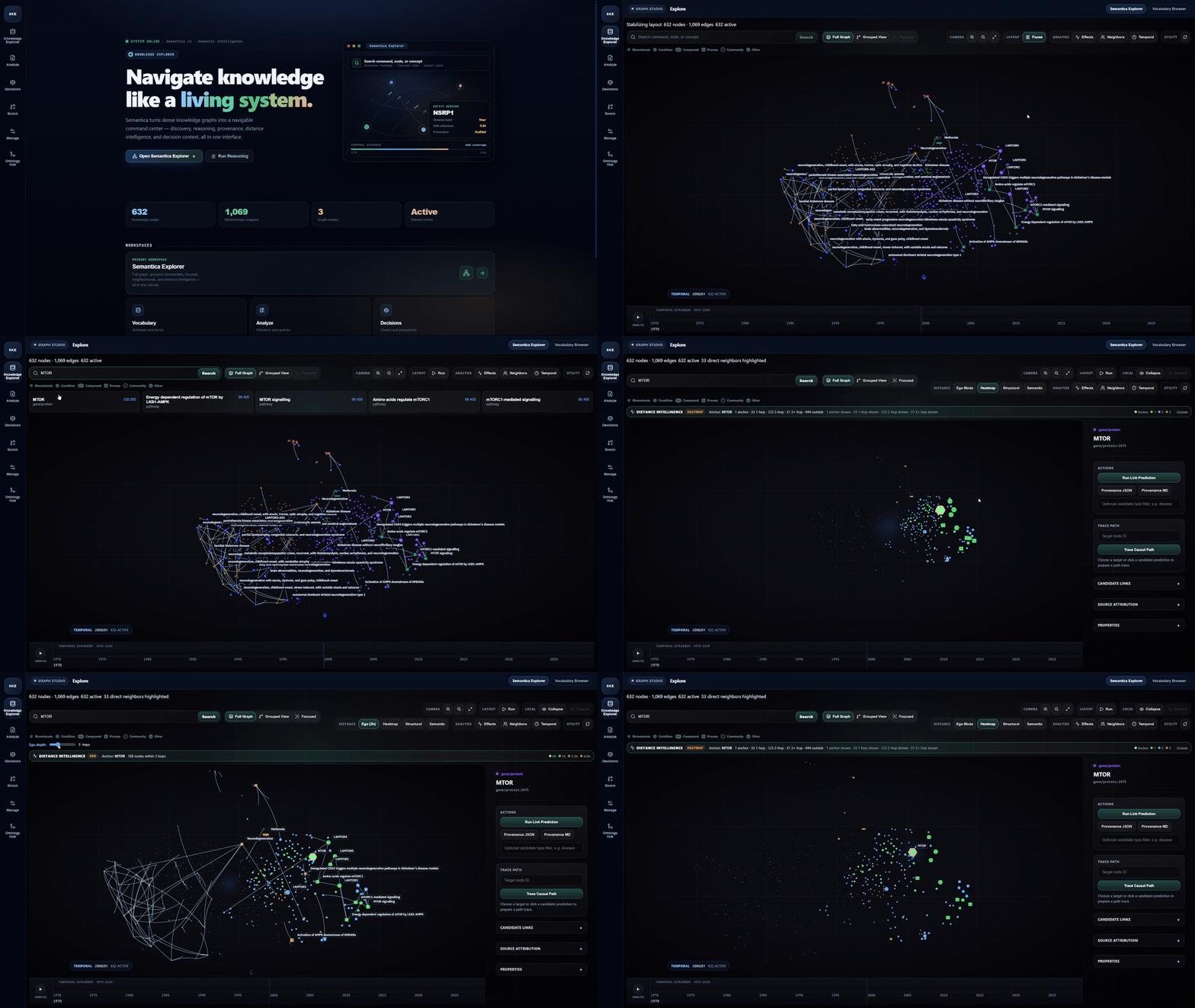
The project’s own tagline is blunt: The Open Source Palantir for AI Agents—an open-source Palantir, built for AI Agents.
What is Palantir? It is the company that has made a fortune on data platforms. Its core strength is turning scattered data into a knowledge graph so decisions are traceable, auditable, and explainable.
But Palantir is closed-source SaaS. It is extremely expensive, and enterprise data has to be uploaded to its cloud—unacceptable for many highly regulated industries.
Semantica fills that gap: open source, self-hosted, MIT license, zero vendor lock-in. It puts a “graph infrastructure” layer under your AI Agents.