Chart SPY implied volatility with OpenBB before you buy a call.
By PyQuant News
Published: 2026-09-05
URL: https://pyquantnews.substack.com/p/build-your-own-implied-volatility
Each week, I send out one Python tutorial to help you get started with algorithmic trading, market data analysis, and quant finance. Upgrade to a paid plan to access the Python code notebooks, Discord community, and code support.
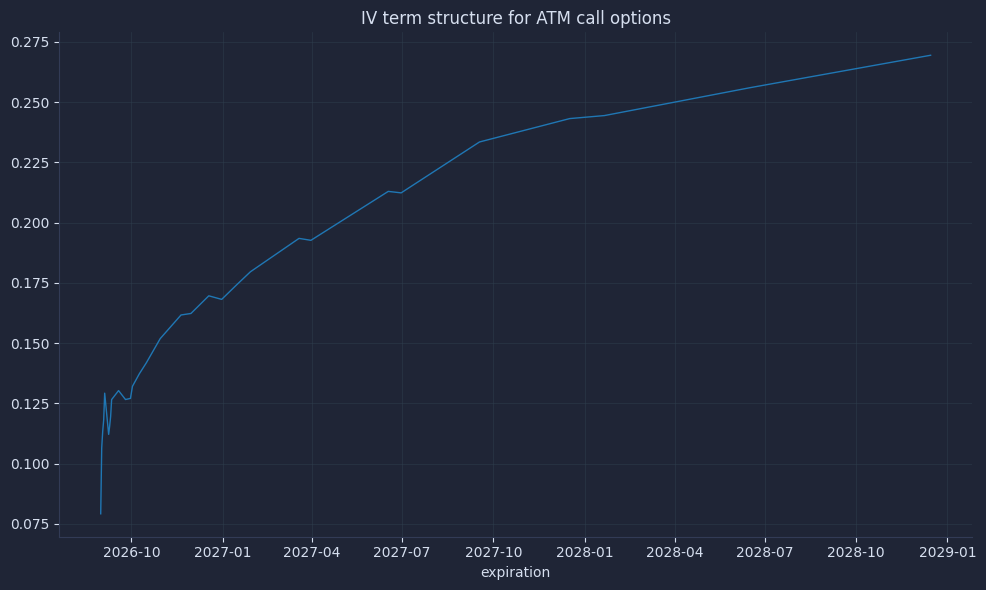
Every option price carries an estimate of future price swings, and most buyers never check it.
In my community, people compare two calls at the same strike price and buy the cheaper one. A $0.40 contract expiring Friday feels safer than a $3.00 contract expiring next month at the same strike price (the price at which the contract lets you buy or sell the stock). Most of that gap is extra time and the size of swing priced in.
So the cheap contract loses even when the stock rises, because the priced-in swing was bigger than the actual one.
What I got wrong
When I was getting started, I bought calls on a stock the afternoon before it reported earnings, with contracts that expired two days later. A call gives you the right to buy the stock at a set price. The stock opened higher, the priced-in volatility collapsed once the report was public, and the calls were worth less than I paid.
The people I teach do the same thing, buying the nearest expiration date (the day the contract stops trading) because it costs less, without checking how much movement was priced into that week.
Traders on an equity options market making desk pull up the volatility surface first, the grid of priced-in movement across every expiration date and strike.
What you’ll build
In today’s post, you’ll download SPY options chains with OpenBB and chart implied volatility across expiration dates and strike prices. An options chain is the full list of contracts trading on a stock.
Let’s go.