On Politics
By Joseph Rosenbaum
Published: 2026-02-05
URL: https://professorsynapse.substack.com/p/echoes-of-democracy
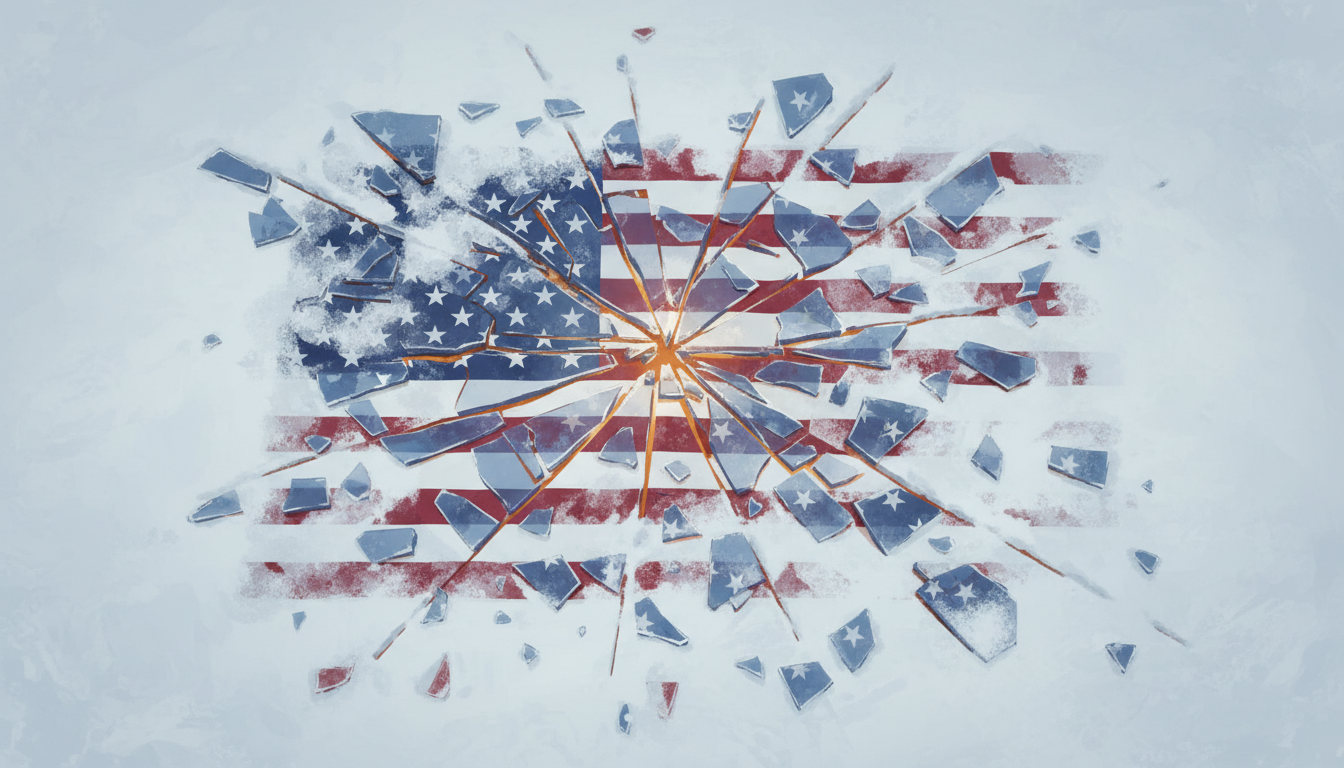
Four months ago I wrote an essay called Shot in the Dark in which I laid out what I thought was about to happen in America. I framed it around two competing tragedies that occurred on September 10, 2025: the assassination of Charlie Kirk at the University of Utah, and a school shooting at Evergreen High School in Colorado. I used those twin events as a lens to examine where we were headed as a country, and I closed by putting a “stick in the ground” with seven predictions for how things would escalate.
I wish I had been wrong.
As I sit down to write this follow-up on February 5, 2026, there is a new set of competing tragedies. This time, the tragedies aren’t a school shooting and an assassination. They’re something I don’t think most of us could have imagined four months ago, even those of us who were already sounding the alarm.
In one corner: two American citizens, both 37 years old, shot and killed by federal immigration agents in Minneapolis within three weeks of each other. Renee Good, a mother of three. Alex Pretti, an ICU nurse at a VA hospital. Neither was an immigrant. Neither had committed a crime. One was driving her car. The other was filming on his phone.
In the other corner: the FBI raiding the Fulton County, Georgia elections warehouse and seizing nearly 700 boxes of original 2020 election ballots, voter rolls, and tabulator tapes.
The Director of National Intelligence, Tulsi Gabbard, showed up personally to watch. Days later, Trump told a podcast host that Republicans should “take over the voting” in at least 15 states.
The government is shooting its own citizens and raiding its own election offices. At the same time. And I’m not sure which one scares me more.
In the original essay, I wrote:
“My deep concern right now is that the wrong lesson is going to be drawn from these competing tragedies. When we should be turning the temperature down to mitigate boiling over, instead I fear the temperature is about to ratchet up exponentially.”
The wrong lessons were drawn. The temperature did ratchet up. And exponentially might have been an understatement.
So let’s do the thing I promised. Let’s go back to those seven predictions and see where the stick landed.
Meditations on Alignment is a reader-supported publication. To receive new posts and support my work, consider becoming a free or paid subscriber.
The Scorecard
Here were my seven predictions from October 4, 2025, followed by what actually happened. I am going to walk through these one by one because I think the specificity matters. It’s easy to say “things got worse.” It’s harder, and more important, to trace how they got worse, and to see whether the pattern I identified was real or whether I was just another person yelling into the void.
Prediction 1: “ICE is going to go hard the next couple of months rounding people up indiscriminately.”
I’ll let the numbers speak first.
On December 4, 2025, the Department of Homeland Security announced something called Operation Metro Surge. On January 6, 2026 (a date that should carry some weight by now), DHS expanded it into what it called the largest immigration enforcement operation ever carried out, deploying over 2,000 agents to the Minneapolis-Saint Paul metropolitan area.
A DOJ attorney later testified that the number was actually over 3,000 when you include Customs and Border Patrol.
They have arrested over 3,000 people in Minneapolis since the operation began.
The stated justification for this operation was fraud in the Somali-American community, connected to the Feeding Our Future scandal. Trump described Somali Minnesotans as “garbage” and announced a targeted effort to deport them.
But of the 3,000 people arrested, only 23 were from Somalia. None of them had any ties to the fraud investigations. Zero.
So who was being rounded up? According to reporting on the operation, those detained included restaurant workers, airport employees, Target workers, children, families, and Native Americans. ICE itself reported that only about 5 percent of arrestees had records of violent crimes. Five percent. That means 95 percent did not.
I said “indiscriminately.” I think the data supports that word.
But the story isn’t just about the operation. It’s about the machine behind it. While I was writing the original essay in early October, I didn’t yet know the full scope of what had been signed into law on July 4, 2025.
The One Big Beautiful Bill Act allocated at least $165 billion in mandatory funding to DHS for immigration enforcement (some analyses that include Defense Department border spending put the figure closer to $170 billion), with a stated goal of deporting 1 million people per year. Even the conservative number is staggering.
ICE’s budget alone tripled. As NPR reported in January 2026, ICE became “the highest-funded U.S. law enforcement agency, with $85 billion now at its disposal.” Lauren-Brooke Eisen of the Brennan Center put it plainly: “With this new bill and other appropriations, it’s larger than the annual budget of all other federal law enforcement agencies combined.”
The $45 billion earmarked for detention alone represents a 400% increase over the previous year and exceeds the entire federal prison system’s budget.
And because this funding came through reconciliation rather than the normal appropriations process, the American Immigration Council pointed out that it “does not include directives about how the funds must be used, which prevents members of Congress from conducting meaningful oversight.”
The Brennan Center’s summary is worth sitting with:
“The result will be a lopsided, enforcement-only machine that will be hard to dismantle.”
I said ICE would go hard. They didn’t just go hard. They got a $165 billion war chest and went to war against American cities. Our tax dollars put to great work.
Predictions 2 & 3: “People will consistently record actions of ICE officers, who will continue to hide their identities in order to not get doxxed.” / “Under the guise of ‘law and order’ many of these people doing the recording will also be arrested and detained.”
I’m combining these because reality combined them for me. I predicted that people would record. I predicted that people who recorded would be arrested. I did not predict that the people observing and recording would be killed.
This is the one that haunts me.
Renee Good was a 37-year-old mother of three. A poet. She was shot through her car window by ICE agent Jonathan Ross on January 7, 2026, while she was in her car on a Minneapolis street during the enforcement surge. An eyewitness to the shooting said, “People in our neighborhood have been terrorized by ICE for six weeks.”
Within hours, federal officials claimed she had “weaponized” her SUV and attempted to run over an ICE agent, and that the agent was recovering in a hospital. But bystander video told a completely different story. Minneapolis Mayor Jacob Frey watched the footage and held a press conference:
“Having seen the video myself, I want to tell everybody directly that is bullshit.”
He added, for good measure: “To ICE, get the fuck out of Minneapolis.”
Three weeks later, Alex Pretti was killed. He was a 37-year-old ICU nurse who worked at the Minneapolis VA hospital, caring for veterans. He had been participating in protests against the killing of Renee Good. His parents had warned him to be careful.
On January 24, he was on a street corner near his home in the Whittier neighborhood, filming federal agents on his phone and directing traffic, when Border Patrol agents pepper-sprayed him, wrestled him to the ground, and shot him multiple times with approximately six agents surrounding him.
Once again the administration put out its version within hours. DHS Secretary Kristi Noem claimed he had “violently resisted” agents and that the agent acted in self-defense. Deputy Attorney General Todd Blanche called it “an incredibly split-second decision” made while “confronting a very complicated, violent situation.” The commanding officer, Gregory Bovino, went on CNN and said [“the victims are the Border Patrol agents.
The suspect put himself in that situation.”](https://www.npr.org/2026/01/25/nx-s1-5687875/minneapolis-shooting-minnesota-ice-alex-pretti-dhs-investigation)
And once again, the bystander videos, verified by Reuters, the BBC, and The Wall Street Journal, showed something else entirely. They showed Pretti filming on his phone. They showed him directing traffic. They showed him step between an agent and a woman who had been pushed to the ground. They showed him get pepper-sprayed, wrestled down by six agents, and shot.
As Rep. Kelly Morrison put it: “Once again DHS has come out with a predetermined narrative that contradicts everything we saw with our own eyes.”
Deputy Chief of Staff for Policy Stephen Miller, without any evidence, called Pretti a “domestic terrorist.” Let that phrase sit for a moment. A nurse who cared for veterans, who was filming on his phone, who stepped between an agent and a woman being pushed to the ground, is a domestic terrorist.
The administration also pointed to Pretti’s legally carried firearm as evidence of violent intent. FBI Director Kash Patel declared on Fox News that “you cannot bring a firearm loaded with multiple magazines to any sort of protest that you want.” Noem called him an attacker who was “brandishing” a gun.
A preliminary CBP report later found he had not brandished a weapon at all. Minneapolis police confirmed he held a valid concealed carry permit.
The decision to use a legally carried gun to justify killing a legal gun owner would open an unexpected rift within the administration’s own coalition, one I’ll return to later.
Rep. Seth Moulton, a Marine veteran, responded on CNN:
“I’ve seen a bunch of federal cowards killing a brave American patriot, someone who served veterans like myself in a VA hospital, someone who is trying to protect a fellow American citizen exercising her First Amendment rights.”
Rep. Kelly Morrison captured the surreal symmetry of it all: “Two 37-year-old Minnesotans are now dead, a poet and a nurse, for what?”
And then came the cover-up. Governor Walz reported that federal officials were “closing the crime scene, sweeping away the evidence, defying a court order and not allowing anyone to look at it,” which he described as “an inflection point in America.” The state obtained a search warrant for the public areas around the shooting. Federal investigators refused access anyway.
This isn’t just Minneapolis. Since inauguration, there have been at least 30 shootings by immigration agents, resulting in at least 8 deaths.
At least 5 of those shot were U.S. citizens. The Wall Street Journal found that at least 13 of those incidents involved officers firing at or into civilian vehicles, a tactic most federal law enforcement agencies have spent decades trying to curtail.
I predicted recording. I predicted arrests. The reality is that recording and witnessing became the same act, and both became punishable by something far worse than detention. People were killed for seeing what was happening and refusing to look away.
Prediction 4: “Protests will erupt as they did earlier in the year, some of them turning to violence as tensions boil. These will be worse than they were earlier in the year.”
After Renee Good’s killing, protests erupted not only in Minneapolis but across the country, including Chicago, New York City, Los Angeles, San Francisco, Seattle, and Washington, D.C. Schools in Minneapolis transitioned to remote learning.
The University of Minnesota announced virtual options for the start of its spring semester due to safety concerns. Federal agents used tear gas and pepper spray against protesters.
After Pretti’s killing, things escalated further. The NBA postponed a Timberwolves-Warriors game scheduled for downtown Minneapolis due to safety concerns. Thousands attended candlelight vigils in subzero temperatures.
A GoFundMe for Pretti’s family hit $1 million in a single day. Protesters demonstrated outside a hotel where ICE agents were staying, some entering the vestibule while others vandalized the building.
A pediatrician filed a sworn declaration that is hard to read without feeling something crack:
“I do not feel safe in my city. In less than one month, ICE agents have shot and killed two people for protesting and observing their actions. I worry that I or someone I love will be shot and killed for voicing their displeasure and being in the wrong place at the wrong time.”
The cultural response was significant in ways we haven’t seen since the George Floyd protests. Bruce Springsteen dedicated “The Promised Land” to Renee Good at a concert, saying:
“If you believe in the power of law and that no one stands above it, if you stand against heavily-armed masked federal troops invading an American city, using gestapo tactics against our fellow citizens, if you believe you don’t deserve to be murdered for exercising your American right to protest, then send a message to this president, as the mayor of the city said: ICE should get the fuck out of Minneapolis.”
On January 28, Springsteen released a song called “Streets of Minneapolis” in response to both killings. Billie Eilish called Pretti an “American hero.” Katy Perry encouraged fans to call their senators about ICE funding. Pedro Pascal called for a general strike, saying the killings were “a Pretti Good reason for a national strike.”
I said protests would be worse than earlier in the year. They were. What I didn’t anticipate was that the protests would be fueled not by immigration policy in the abstract, but by the federal government killing American citizens in an American city. That changes the calculus entirely.
Prediction 5: “Trump, surrounded by loyalists and a supine Congress and Judiciary, leveraging emotional events like Charlie Kirk’s assassination, will call up the National Guard again, and institute a kind of martial law.”
I also wrote: “Citizens held ‘hostage’ by a military presence will likely increase their protesting, and heavier hardware will come in to support the National Guard to manage the increasingly violent crowds.”
This one is partially confirmed, with a constitutional wrinkle I did not expect.
Let’s start with the federal side. After the protests escalated, the Pentagon placed roughly 1,500 active-duty Army soldiers from the 11th Airborne Division in Alaska on standby for possible deployment to Minnesota.
The 11th Airborne specializes in cold weather operations, which is a detail that feels a little too on the nose for a January deployment to Minneapolis. A second standby order was then issued to a Military Police brigade at Fort Bragg in North Carolina.
Trump publicly threatened to invoke the Insurrection Act if local authorities couldn’t maintain order. Deputy AG Blanche backed him up on Fox News Sunday: “President Trump has promised to keep the American people safe, and the fact that the local law enforcement, because their leadership is not doing their jobs, there may come a time when the president has to order that.”
This already had a precedent. Back in June 2025, Trump deployed roughly 4,000 federalized National Guard members and 700 active-duty Marines to Los Angeles in response to protests over immigration arrests there.
But here’s the twist I didn’t predict. Governor Tim Walz deployed the Minnesota National Guard himself, under state command, deliberately wearing high-visibility reflective vests to distinguish them from federal agents in tactical gear.
This created a surreal scene: state military forces positioned near federal military forces, both ostensibly there to “keep the peace,” but answering to different chains of command with fundamentally different missions.
Mayor Frey captured the absurdity of it:
“I never thought in a million years that we would be invaded by our own federal government.”
When asked about the prospect of state Guard and local police facing off against ICE agents and active-duty troops, Frey added: “We can’t have that in America.”
On February 3, the Northern Command issued a stand down order to the service members who had been mobilized. The immediate crisis passed. But the precedent has been set. Active-duty soldiers were staged for domestic deployment against American protesters. That sentence should not feel normal.
Prediction 6: “Trump will continue to blame this unwarranted violence and lack of ‘law and order’ on the Democrats.”
This one almost doesn’t need the scorecard treatment because it’s so predictable it barely qualifies as a prediction. But let me show the receipts anyway because the specifics matter.
After the killings, Trump didn’t blame ICE or call for investigation or restraint. He accused Governor Walz and Mayor Frey of “inciting insurrection,” suggesting without evidence that they had ordered local police to stand down and abandon federal agents.
The Department of Justice opened an investigation into Walz and Frey for possible obstruction of federal law enforcement.
Let me just restate that. The federal government killed two citizens. And then the federal government opened an investigation into the governor and mayor for not being cooperative enough while the killing was happening.
In the original essay, I wrote about how Trump used Charlie Kirk’s assassination to position Democrats as violent radicals and to give himself justification for investigations:
“This is perhaps the most terrifying of statements. Trump is positioning this murder in the plural. Without any evidence yet, he has primed the narrative as a cabal of left wing radicals. The purpose here is to give him carte blanche to tie his political detractors as co-conspirators to the murder of Charlie Kirk. This will allow him to direct the Department of Justice to open investigations into those who oppose him, which even if they come to nothing, apply pressure through fear.”
Swap “Charlie Kirk” for “ICE agents” and you have the exact same playbook. The only difference is that this time, the people being blamed didn’t kill anyone. They were the ones being killed.
And then came the move that ties this prediction directly to the election interference story. Attorney General Pam Bondi demanded access to Minnesota’s voter rolls as a condition for “restoring law and order” in the state. Read that again.
The federal government is conditioning public safety on a state surrendering its election data. If that doesn’t raise the hairs on the back of your neck, I don’t know what will.
Prediction 7: “Buried in this legislation will be a few key, but likely hidden, statutes.”
I predicted four specific things would be buried in upcoming legislation:
a) “Broader permissions and increased funding to direct domestic military bodies as he sees fit under vaguer and more permissive criteria.”
The One Big Beautiful Bill delivered this and then some. The $165 billion in enforcement funding came through reconciliation, bypassing normal appropriations oversight, and gave ICE and CBP enormous discretion in how to spend it.
The bill funded 10,000 new ICE agents, expanded the 287(g) program to deputize local law enforcement as immigration officers, and allocated $13.5 billion in grants to state and local governments for immigration enforcement.
It even included $10,000 bonuses for ICE and Border Patrol agents.
As the American Immigration Council noted, the administration will “almost certainly have to reduce historical recruitment standards, training quality, and oversight” to hire that many agents in the given timeframe. More agents with less training and less oversight. What could go wrong.
b) “Avenues for making it more difficult to vote if you are a Democrat.”
This prediction has been confirmed so aggressively in the past week that it almost feels like the administration read my essay and decided to get ahead of schedule. I’ll save the deep dive on this for a later section, but the highlights: Trump calling for Republicans to “nationalize the voting” in 15 states.
The DOJ suing nearly half of all states for voter registration data. The FBI raiding Fulton County and seizing 700 boxes of 2020 ballots.
And Bondi’s demand for Minnesota voter rolls in exchange for de-escalation.
c) “Fewer protections against ‘aiding’ enemies of the state, such as illegal immigrants, but this will expand to include broader categories.”
Stephen Miller calling a nurse filming on his phone a “domestic terrorist.” Trump calling Somali Minnesotans “garbage.” The President accusing a governor and mayor of “inciting insurrection” for objecting to federal agents killing residents of their city.
The categories are expanding in real time.
d) “A pathway to a third term, likely related to ‘emergency powers.’”
This is the one prediction that hasn’t fully materialized, though the groundwork is visible. CNN reported in early February that Trump “frequently flirts with running for a constitutionally prohibited third term” but has backed away, saying it’s “pretty clear” he can’t. David Graham of The Atlantic, in an NPR interview, offered a more unsettling framing:
“They’re not worried that there’s some legal maneuver that would work. What they’re worried is that he might do it and there might be no one who was able or willing to stop him from running for a third term.”
The third-term question may ultimately be moot if the other pieces fall into place. If you control who can vote, how votes are counted, and which election offices get raided by the FBI, you don’t necessarily need a third term. You need a loyal successor and a system that ensures they win.
The One I Got Wrong (Sort Of)
In the original essay, I closed with what I thought was a strategic insight. The government was heading toward a shutdown on October 1, 2025. Almost all of the escalation I predicted required government money flowing to ICE, the National Guard, and adjacent organizations. If the money stopped, I reasoned, the machine would stall. If we could make it to the holidays, into winter, things might cool down.
The shutdown did happen. It lasted 43 days, the longest in American history. And it didn’t slow immigration enforcement by a single day.
The reason is something I didn’t fully understand when I wrote the original essay, because the mechanism hadn’t yet been fully reported. The One Big Beautiful Bill Act, signed on July 4, 2025, didn’t just increase ICE’s budget through the normal appropriations process. Of the roughly $165 billion in mandatory DHS funding the act structured outside the appropriations process, $75 billion went directly to ICE and another $65 billion to CBP.
This means ICE can sustain full operations for years without a single spending bill passing Congress.
Let me say that differently. Congress’s most powerful check on executive enforcement, the power of the purse, was handed away months before I even finished writing the essay that identified it as the last hope. The circuit breaker I pointed to had already been bypassed by the time I suggested pulling it.
A second partial shutdown just ended on February 3, and once again, ICE was completely unaffected.
I’ll take partial credit here. The strategic logic was sound. Defunding the enforcement apparatus would have been the most effective de-escalation tool available. The window I identified was real. But I was wrong about it still being open. It had already been welded shut.
The Kirk Echo: Martyrdom in Reverse
In the original essay, I spent considerable time dissecting how Trump turned Charlie Kirk’s assassination into a political instrument. Transform the victim into a martyr, vilify the political opposition as complicit in his murder, use the emotional momentum to justify investigations and crackdowns. It was elegant in its simplicity.
Four months later, the same rhetorical machinery is running again. But this time, it’s running in reverse.
When Kirk was killed, the perpetrator was vilified and the victim was sanctified. A moment of silence in the House. A call for unity that doubled as an indictment. When Good and Pretti were killed, the victims were vilified and the perpetrators were defended. Same machinery, opposite polarity. The only variable is who gets called the martyr and who gets called the terrorist.
But the deeper pattern is what unsettles me. In both directions, the federal government released its version of events within hours, before any independent investigation could begin. With Kirk, the narrative stuck because there was no contradicting evidence readily available.
With Good and Pretti, the narrative fell apart almost immediately because bystander video told a different story. And it didn’t matter. The narratives don’t need to be true. They just need to be first.
By the time the contradictions surface, the political framework has already been set. The information landscape has become so fractured that truth is no longer a corrective force. It’s just another data point people select or discard based on their priors.
Kirk’s death justified crackdowns. Good and Pretti’s deaths justified more crackdowns. The machine runs the same way regardless of who dies.
But there was one moment where the machinery didn’t run clean, and it came from a direction no one expected.
Pretti was a licensed gun owner. He held a valid Minnesota concealed carry permit and was carrying a holstered firearm when he was killed. Video shows he never touched it. The only person who drew Pretti’s weapon was the federal agent who pulled it from his waistband before the fatal shots were fired.
When the administration tried to fold this into its narrative, calling the gun evidence of violent intent, it ran straight into its own coalition. FBI Director Kash Patel went on Fox News and declared that “you cannot bring a firearm loaded with multiple magazines to any sort of protest that you want.” The Minnesota Gun Owners Caucus called him “completely incorrect.” Gun Owners of America responded that “the Second Amendment protects Americans’ right to bear arms while protesting.” The NRA cautioned against “demonizing law-abiding citizens.” Rep.
Thomas Massie, a Kentucky Republican, said flatly: “Carrying a firearm is not a death sentence. It’s a constitutionally protected God-given right, and if you don’t understand this you have no business in law enforcement or government.”
Former Republican congressman Trey Gowdy put the contradiction in the sharpest possible terms, on Fox News of all places: “You remember Kyle Rittenhouse and how he was made a hero on the right? Alex Pretti’s firearm was being lawfully carried.” Tennessee GOP caucus leader Jeremy Faison said on X: “Showing up at a protest is very American. Showing up with a weapon is very American.”
The pressure forced a partial retreat. Karoline Leavitt had to reassure reporters that “the president supports the Second Amendment rights of law-abiding American citizens”, while still hedging that bearing arms near law enforcement “raises the risk of force being used against you.” Trump himself couldn’t manage even that much of a walkback.
When PBS asked him about the shooting, he said: “You can’t have guns. You can’t walk in with guns.”
I want to pause on this because I think it matters in a way that transcends the usual political scorekeeping. In a landscape where consistency has become almost extinct, where principles bend to fit whichever team is winning on any given day, Second Amendment advocates looked at a man who was not one of their own, at a protest they probably disagreed with, killed by federal agents they usually support, and they said: his rights were his rights. They took heat from their own side for saying it.
Some of them said it on Fox News. You can disagree with everything the gun lobby stands for and still recognize that this is what principled consistency looks like. And in a political moment where almost nothing else was creating friction against the narrative machinery, it mattered.
The Fulton County Play
I’ve given this its own section because I think it represents the most dangerous development of the past four months, and it’s the one getting the least attention relative to its significance.
The scorecard laid out the individual pieces. The Fulton County raid. The voter roll lawsuits. Bondi conditioning public safety on election data. Trump telling a podcast audience that Republicans should “take over the voting” in 15 states. Taken individually, each of these has a surface-level justification. Taken together, they form something much more coherent.
In my original essay’s seventh prediction, I wrote about “avenues for making it more difficult to vote if you are a Democrat.” I was imagining voter ID laws, reduced polling locations, the usual playbook. What’s actually happening is more fundamental. They aren’t making it harder to vote within the existing system. They’re working to take control of the system itself.
Consider the sequence. You seize a county’s original ballots with no chain-of-custody inventory, so the physical record of how that county voted can now be questioned or discarded. You sue states for their voter registration databases, building a centralized federal picture of who votes where and how. You condition federal cooperation on states surrendering that data. And you do all of this while openly telling your party to “take over” elections in the states that matter most.
Fulton County is the most populous county in Georgia and the most Democratic. It includes Atlanta. State lawmakers there have already expressed fear that the seizure could be used to justify a state takeover of election administration before the 2026 midterms.
The midterms are nine months away. If you control which ballots get counted and which election offices get raided, the composition of Congress becomes a lot less uncertain.
The Temperature Check
So where are we on the escalation ladder I drew four months ago?
If you go back and reread the seven steps, we’ve moved through nearly all of them. We’re somewhere between steps five and seven, and several have exceeded what I imagined. Citizens killed instead of arrested. $165 billion in funding instead of whatever number I had vaguely pictured. State and federal military forces facing each other in an American city. Six federal prosecutors resigning in protest.
A federal judge finding ICE had violated 96 court orders in a single month. At least 23 deaths in ICE custody since inauguration, 16 of them since July.
What hasn’t happened yet. No formal Insurrection Act invocation, though it’s been threatened repeatedly. No legislative push for a third term. No explicit expansion of executive emergency powers around elections, though as we’ve seen, the same goals may be achievable through other channels.
The next inflection point is the 2026 midterms, and everyone can see it coming. Fox News polling recently found that 52% of voters would back a Democratic congressional candidate, the highest figure ever recorded for either party in that poll’s history. Again...that’s Fox news we’re talking about.
In the original essay, I wrote that time was running out for Trump, that his unified control over Congress and the judiciary would likely end after the next election cycle. That dynamic hasn’t changed. If anything, it’s intensified. More tools, more money, fewer guardrails. The window of unified control is closing, and everyone involved knows it. The question is whether the midterms will be conducted fairly enough for that window to actually close.
Flashpoint or Frying Pan?
The original essay ended with a question. “Flashpoint moment, or just another sizzle in the frying pan of history?”
I think we have our answer. It was a flashpoint. And we are now living in the fire.
Four months ago, I hoped the government shutdown and the onset of winter would cool things down. Instead, the fire was pre-funded with $165 billion and given a name. Operation Metro Surge. The shutdown came and went. Winter arrived, and people held vigils in subzero temperatures over the bodies of a poet and a nurse.
I’m going to resist the urge to make another set of predictions. The first set was accurate enough to make me deeply uncomfortable, and I’m not sure there’s much value in forecasting the next chapter when the current one hasn’t finished being written.
The patterns are clear. The tools are in place. The money is allocated. The question now isn’t really “what happens next” because the escalation ladder tells you what happens next. The question is whether anything can interrupt the pattern before the midterms.
But I do want to return to where the original essay began, because I think the framing still holds.
Four months ago, a school shooting happened on the same day as Charlie Kirk’s assassination, and almost nobody noticed. I wrote about that asymmetry, about how we had become so desensitized to children being murdered that it barely registered against the spectacle of political violence.
So I’ll end by asking the same kind of question: what are we not noticing right now? While we’re consumed by Minneapolis and Fulton County and the daily drumbeat of escalation, what tragedy is happening in the margins that we’ve already learned to look past? What are we going to wish we had paid attention to, six months from now, when we look back at this moment?
I don’t know the answer. But I know that the inability to hold more than one crisis in our heads at a time is one of the things that got us here. And I know that the people in power are counting on exactly that.
Four months ago I put a stick in the ground. Today I’m putting another one down, not with predictions this time, but with a promise. I’ll keep paying attention to the things we’re told don’t matter. Because every time we accept that something is normal, the floor drops a little further.
Thanks for reading Meditations on Alignment! This post is public so feel free to share it.