By Tiger Capital Research
Published: 2026-07-30
URL: https://princetonchen.substack.com/p/treasury-yields-hit-19-year-high
Daily Market Read | Category: Rates, Bonds & Equity Risk | Date: July 30, 2026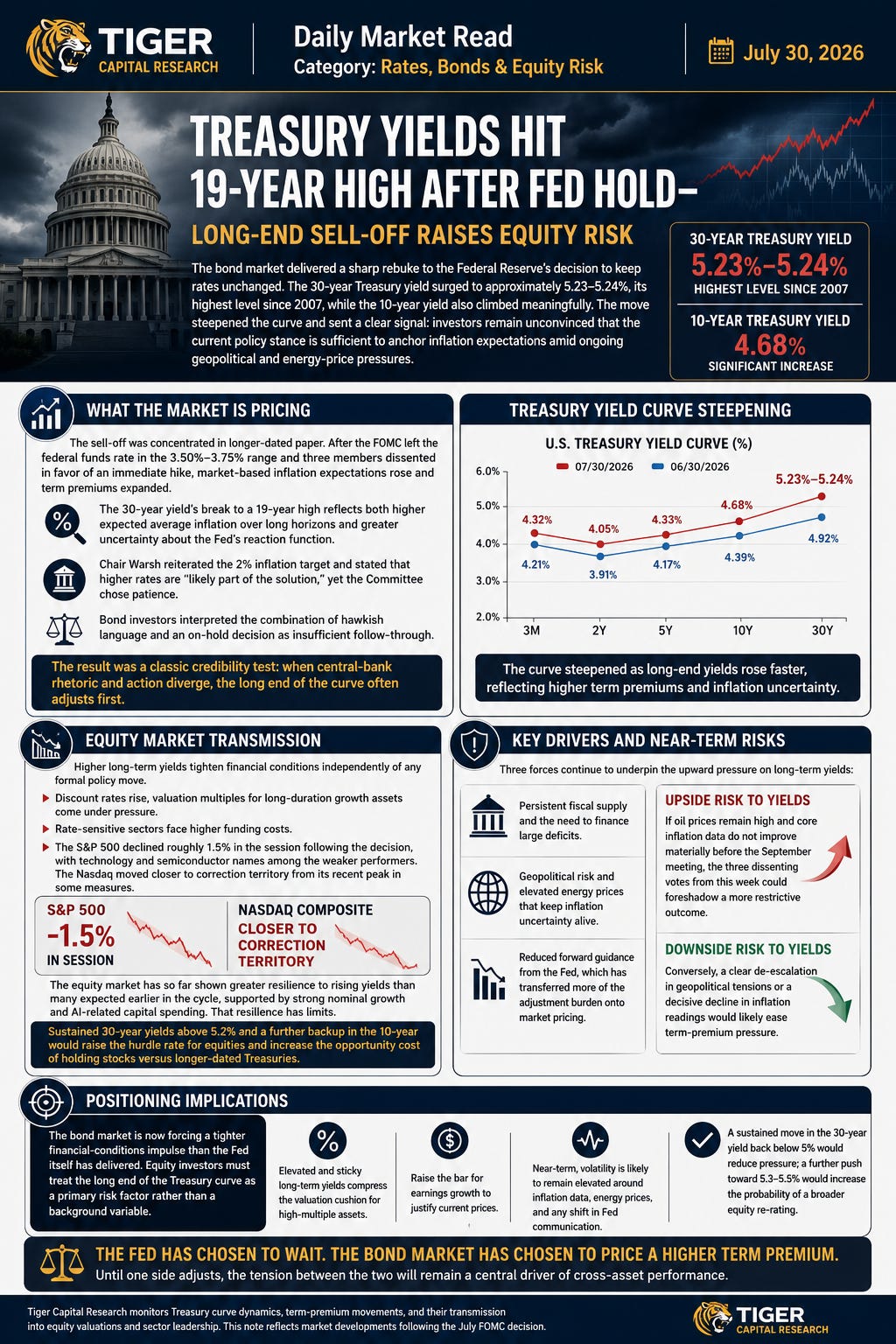
Tiger Capital Research
The bond market delivered a sharp rebuke to the Federal Reserve’s decision to keep rates unchanged. The 30-year Treasury yield surged to approximately 5.23–5.24%, its highest level since 2007, while the 10-year yield also climbed meaningfully. The move steepened the curve and sent a clear signal: investors remain unconvinced that the current policy stance is sufficient to anchor inflation expectations amid ongoing geopolitical and energy-price pressures.
What the Market Is Pricing
The sell-off was concentrated in longer-dated paper. After the FOMC left the federal funds rate in the 3.50%–3.75% range and three members dissented in favor of an immediate hike, market-based inflation expectations rose and term premiums expanded. The 30-year yield’s break to a 19-year high reflects both higher expected average inflation over long horizons and greater uncertainty about the Fed’s reaction function.
Chair Warsh reiterated the 2% inflation target and stated that higher rates are “likely part of the solution,” yet the Committee chose patience. Bond investors interpreted the combination of hawkish language and an on-hold decision as insufficient follow-through. The result was a classic credibility test: when central-bank rhetoric and action diverge, the long end of the curve often adjusts first.
Equity Market Transmission
Higher long-term yields tighten financial conditions independently of any formal policy move. Discount rates rise, valuation multiples for long-duration growth assets come under pressure, and rate-sensitive sectors face higher funding costs. The S&P 500 declined roughly 1.5% in the session following the decision, with technology and semiconductor names among the weaker performers. The Nasdaq moved closer to correction territory from its recent peak in some measures.
The equity market has so far shown greater resilience to rising yields than many expected earlier in the cycle, supported by strong nominal growth and AI-related capital spending. That resilience has limits. Sustained 30-year yields above 5.2% and a further backup in the 10-year would raise the hurdle rate for equities and increase the opportunity cost of holding stocks versus longer-dated Treasuries.
Key Drivers and Near-Term Risks
Three forces continue to underpin the upward pressure on long-term yields:
• Persistent fiscal supply and the need to finance large deficits.
• Geopolitical risk and elevated energy prices that keep inflation uncertainty alive.
• Reduced forward guidance from the Fed, which has transferred more of the adjustment burden onto market pricing.
If oil prices remain high and core inflation data do not improve materially before the September meeting, the three dissenting votes from this week could foreshadow a more restrictive outcome. Conversely, a clear de-escalation in geopolitical tensions or a decisive decline in inflation readings would likely ease term-premium pressure.
Positioning Implications
The bond market is now forcing a tighter financial-conditions impulse than the Fed itself has delivered. Equity investors must treat the long end of the Treasury curve as a primary risk factor rather than a background variable. Elevated and sticky long-term yields compress the valuation cushion for high-multiple assets and raise the bar for earnings growth to justify current prices.
Near-term, volatility is likely to remain elevated around inflation data, energy prices, and any shift in Fed communication. A sustained move in the 30-year yield back below 5% would reduce pressure; a further push toward 5.3–5.5% would increase the probability of a broader equity re-rating. Portfolio construction should emphasize resilience to higher discount rates while remaining selective in areas where earnings visibility can absorb the higher cost of capital.
The Fed has chosen to wait. The bond market has chosen to price a higher term premium. Until one side adjusts, the tension between the two will remain a central driver of cross-asset performance.
Tiger Capital Research monitors Treasury curve dynamics, term-premium movements, and their transmission into equity valuations and sector leadership. This note reflects market developments following the July FOMC decision.
集成海报一张