In this edition of the Weekender: a swingers’ cruise, what literacy does to the brain, and Hockney’s beef with Rothko
By Substack
Published: 2026-04-18
URL: https://post.substack.com/p/you-wouldnt-ask-a-fish-how-to-catch
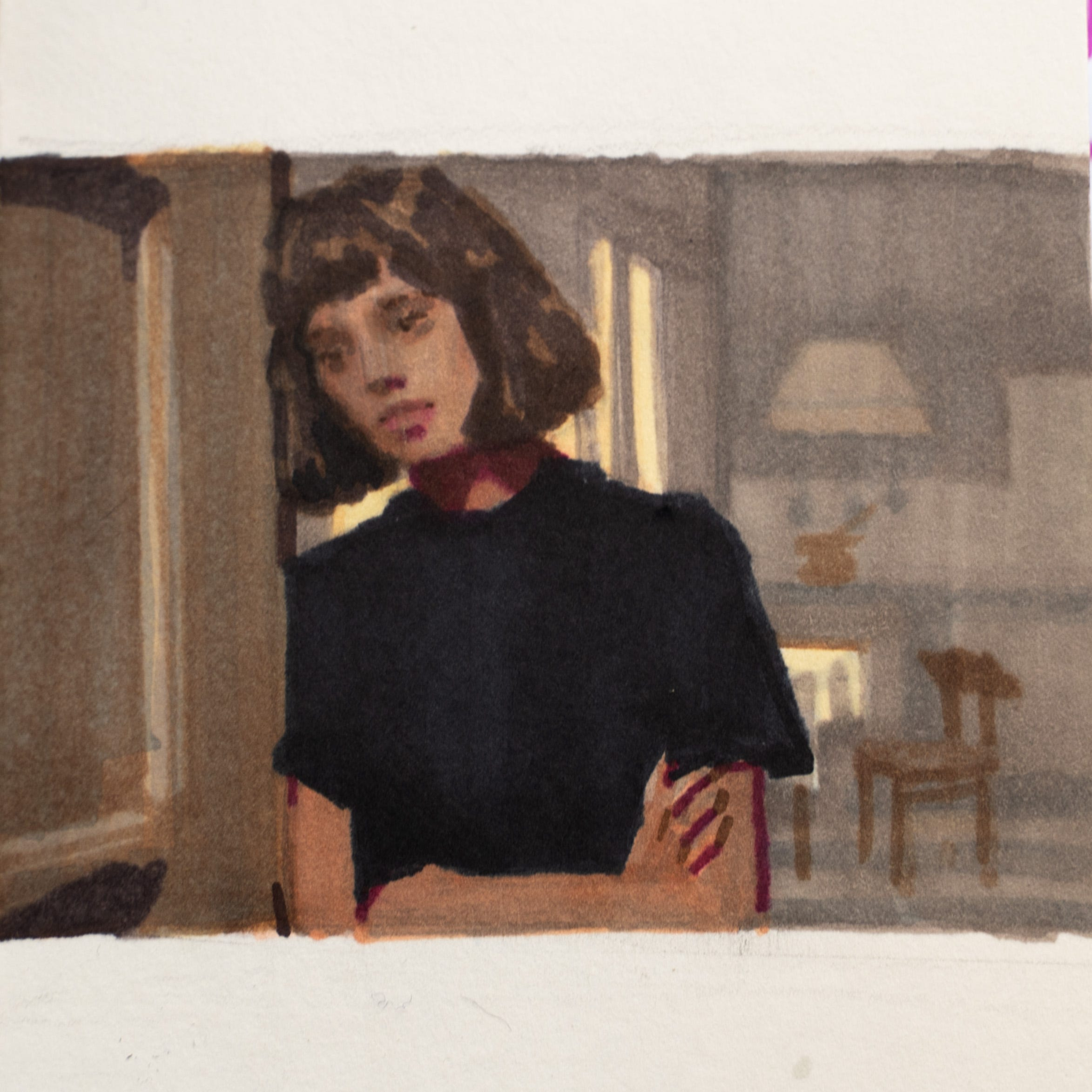 \Art byPaulina Kwietniewska\
This week, we’re sailing on a “Chuck E. Cheese for sex,” advising the lovelorn, contemplating literacy, and admiring a parenthesis.

JOURNALISM
Cruising
Camille Sojit Pejcha reports back from a swingers’ cruise in this NSFW, David Foster Wallace–by-way-of-Playboy piece.
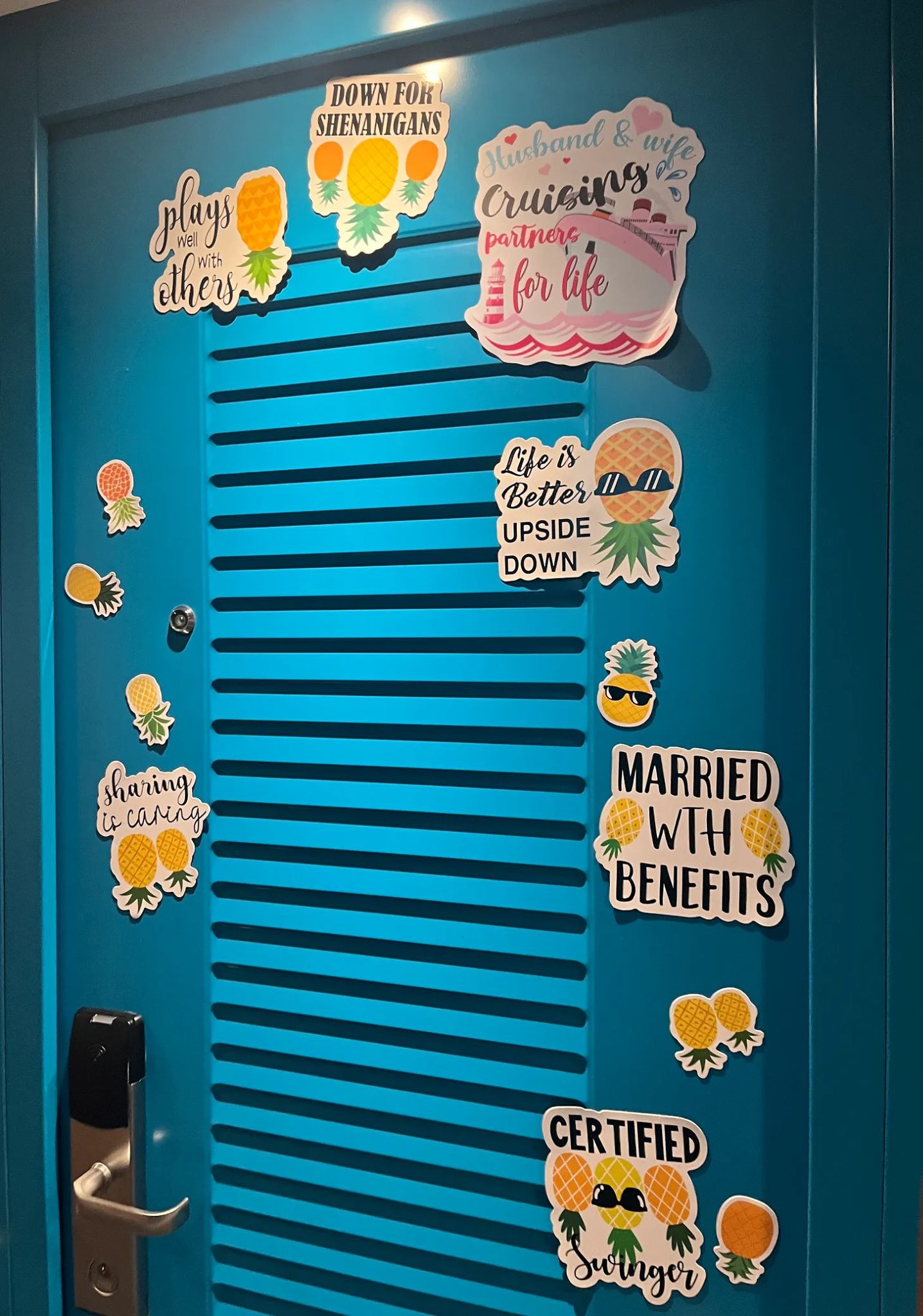
A Supposedly Sexy Thing I’ll Never Do Again
— in
For months, my phone has been pitching me adults-only vacations, probably because it overhears me talking about reporting on sex parties and then about needing a vacation from reporting on sex parties. I’d been clicking away from these ads, mildly bemused, until one day, in late October, I woke up to a text from Playboy: Did I want to go on a swingers’ cruise called Temptation, and would these dates work? I’ve never said yes to anything so fast.
Billed as “a playground for grown-ups,” Temptation offers a city on the water: a fully chartered 13-story cruise ship where guests can enjoy everything from air-conditioned casinos and breakfast buffets to fuck machines. The goal? Create an all-inclusive fantasy for American adults, spiriting them away from their worries and toward international waters, where they’ll be free to indulge in a level of hedonistic pleasure-seeking absent in everyday life. One friend of mine—who I learn is a swinger only when I tell him about this story—aptly describes such experiences as a “Chuck E. Cheese for sex.” Mario Cruz, Temptation’s programming director, prefers “spring break for adults.”
Over his six years overseeing Temptation’s cruises, Cruz has played host to NFL players, lawyers, the presidents of major universities, and, if the rumors are to be believed, more than a few celebrities. “In their private time, they’re just humans,” he explains. “Everyone has a private life; they fantasize about these things. We just give them a space to turn that fantasy into reality.”
Before embarkation day, I’d expected being one of the only solo women on board would grant me the status of a minor celebrity. “People are going to be lining up to make you their unicorn,” my friends assured, predicting a profusion of threesome proposals. But at the Port of Miami, where I wait patiently in line to board the Norwegian Jewel, this is not the case. Instead, I spend the first hour and a half of my journey inching my luggage forward, surrounded by muscle-bound men with religious tattoos, Miami housewives with fake lashes and perfectly plumped lips, and tanned blondes lugging beach totes adorned with cheesy phrases like “Sea You Later.” Everyone is so grumpy that, for a minute, I even question if I’m in the right line.
I needn’t have worried. “When they’re waiting to board, they’re still in the outside world,” Cruz later tells me, describing the peculiar transformation that happens when people cross the ship’s threshold. The sea, I realize, is a liminal space, where the boundaries and norms of everyday life no longer apply. This is a metaphor, but also literally true: When at sea, the pool deck and balconies are clothing-optional, but everyone has to button up when the boat docks.
Now that we’re on board, everyone seems 10 times more outgoing, happy, and naked than they were before. And by the time I make my way to the Sapphire pool deck, I get the sense that I’m late to the party—one populated by 500 couples slathered in sunscreen and buoyed by the Black Eyed Peas blasting through the speakers. I haven’t been on a ship since a fifth-grade field trip, and the Norwegian Jewel, with its 16 restaurants and numerous swimming pools, is more than I was bargaining for.
Temptation charters the whole ship, hiring not only the Norwegian’s team but a group of sexologists, entertainers, and DJs to offer on-site activities ranging from workshops on anal pleasure to massage for sciatica.
In the coming days, there will be pamper parties and acupuncture, beer pong and belly dancing classes, body shots and sensual fitness sessions, and, in one case, a meet and greet that devolves into couples miming various sex positions. I will be lent prescription anti-nausea patches by not one but two different DJs, gifted peach-flavored lube, and offered a loofah with an elderly couple’s phone number Sharpie’d onto it—which, I later learn, is a common mode of communication for swingers in Florida’s retirement community.
But I don’t know any of this yet, and my first night on the ship, which also happens to be the eve of my 31st birthday, passes in a blur. By 7 p.m., I’m eating oxtail stew at a restaurant at the aft of the ship as Moe, a Floridian DJ who works for Temptation, explains the nuances of pickup artistry. “Think about it: You wouldn’t ask a fish how to catch a fish,” he says. “You ask a fisherman.” He pauses. “You’re the fish.”

PORTRAITURE
ADVICE
Lena Dunham, agony aunt
It should come as no surprise that Lena Dunham is uniquely well-suited to counseling heartbroken 17-year-olds.

Dunhamisms Issue #1
— in
Hi Lena! I feel a little silly putting this into the public void and you totally do not have to answer however since I am only 17 and therefore cannot DM anyone on substack and I feel the need to expand on what I submitted from your Instagram story, the public void it must be! My big query is about love - why do things we think are romantic turn out not to be? For context, I (a gay 17 year old boy) had a big crush on someone in my friendship group and was 1000% sure he liked me back based on his actions, words, etc. Anyway long story short I ended up asking this guy out and he said... no! I was upset, a little angry, but mostly confused. And while this is great material for my upcoming pop-rock debut album, I am left wondering how do you make sense of situations where something feels real and mutual and it turns out not to be? - and how do you trust yourself after that? p.s. ily and am SO excited for my signed copy of Famesick to arrive!
Signed, Giles
Giles! You had me at “I’m 17 and therefore cannot DM anyone on Substack.”
Firstly, I’m so sorry that your crush didn’t “go your way” as they say in Hollywood when we lose out on a job. It was really brave and noble of you to make your intentions clear, and to accept a “no” is also brave and noble. It hurts and yes, you’re allowed to be disappointed, mad even. But adulthood will involve many kinds of no’s, many shades and shadows and flavors of disappointment, and they’re not a bad thing to learn about early, to process and integrate and move past.
Because your life will also involve many “yeses.” You will be accepted to schools, jobs, parties and you will even fall in love. And when you do, you will know—really beyond a shadow of a doubt—how it’s different than these earlier experiences of nebulous romantic connection. I’m sure this guy you liked WAS sending you lots of green light go signals. I’m sure he was flirty and playful and really enjoyed your company, because you’re clearly very witty and I for one cannot wait for your pop rock debut (might I suggest the stage name “gileless”? Tell people the lack of capitalization is a choice. My choice). Why he was giving you all these vibes and then not actually down to date is mostly and usually not about you. Being seventeen is a hormonal torture chamber and all you do is get in your own way. I once liked a boy a LOT and we kissed during a free period and less than an hour later I stormed up to him and said “we can NEVER do that again” (we did, three years later and then five years after that, because what goes around really does come around—and he got his vengeance by asking me for taxi fare about seven minutes after I’d performed a fairly vulnerable sexual act for the first time). But why did I tell him to get lost, when I’d actually felt a frisson of something rare and pleasurable when he put his peach fuzz mustache on my previously untouched neck? Because the feelings were new, and therefore terrifying, and it felt like falling down a void. It felt like loss of control. It felt like changing in real time, and I wasn’t ready.
But you are going to encounter many people who are ready—some you will meet with all the force of two magnets snapping together in a science demo. Some you will confuse and maybe even hurt, just like this boy confused and hurt you. You may leave them heartbroken and never even know it. And some will last for an hour at a party and give you a pep in your step for the next month. You sound like a curious, engaged person, and curious and engaged people draw experiences, dynamics, dare I say energy, toward them. Pump this song if you need a reminder.
You asked how you trust yourself after this false start and the answer is that in love, it’s all we’ve got. I remember the first time I kissed my husband—we’d been holding hands for a charged thirty minutes—he took a moment to really kiss me back. And for that moment, some old dread shot through me like bad drugs: “he’s repulsed, he’s horrified, I read it all wrong.” But he’s just sort of a lizard boy, and he moves with reptilian calm, and after a beat he was there, right with me, letting me know we were feeling the same thing.
And very soon, you and someone else will feel the same thing. It will probably be the wildest and most intoxicating thing you’ve ever experienced, and it will also have moments of conflict and confusion. Listen. Be open. And also trust yourself if you feel you’re not being treated like the precious little faberge egg you—and all of us—are. As long as you stay connected to that essential instinct we all have, but so often beat out of ourselves, you’ll know when to stay, you’ll know when to go, you’ll know when to lean in for the kiss.
A DAY IN THE LIFE
LITERACY
This is your brain on words
Sam Kriss on the unexpected ways reading reshapes the brain, and what a post-literate future might look like.
Reading is magic
— in
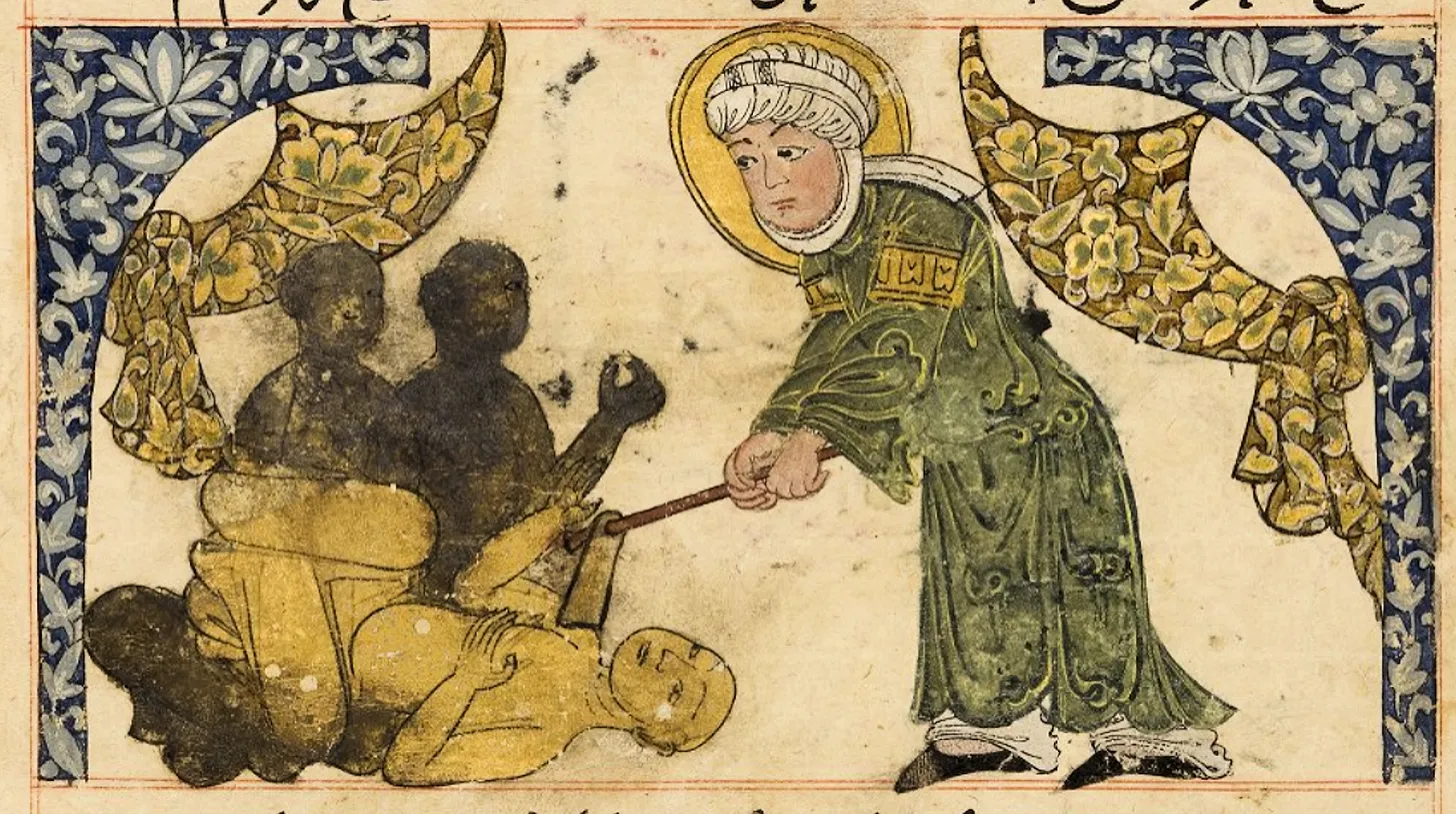
In 1931, the Soviet neuropsychologist Alexander Luria traveled to the foothills of the Alai Mountains, in the barren borderlands between Uzbekistan and Kirghizia, to find out how the locals thought. He was trying to prove the theory that ‘mental processes are social and historical in origin’: that not just the content of our thoughts, but the way we think, is determined by the kind of society we live in. The society he found in the Alais was very different to his own. In the dry hills, illiterate pastoralists kept cattle; in the isolated green valleys jeweling the hillsides, illiterate peasants grew cotton. For centuries, essentially no one here had been able to read or write. But that was changing. When Luria arrived, the Soviet government was busy forcing herders and peasants into new, regimented collective farms, where large numbers of rural people were being taught, for the first time, to read. He spent the next year among these people, bothering them with a series of annoying tests.
What Luria found was that just a few years of basic literacy education in an agricultural school had massive cognitive effects. In one of his early experiments, he showed people a group of geometrical figures. Complete and incomplete circles and triangles, squares and rectangles drawn with straight or dotted lines. He asked them to group the shapes together. Even if they didn’t have any training in geometry, nearly half of the peasants who’d learned to read sorted the shapes geometrically: squares with other squares, circles with other circles. Meanwhile, none of the illiterate subjects considered the shapes geometrically at all; they related them to objects.
One subject, Khamid, a 24-year-old woman from an isolated village, insisted that nothing could be grouped with an incomplete circle. ‘That should go by itself. That’s the Moon.’ When Luria tried to suggest that she group a square and a rectangle, she refused. ‘That’s a glass and that’s a drinking-bowl, they can’t be put together.’ Other subjects described the shapes as tents, bracelets, mountains, irrigation ditches, and stars.
When sorting objects, collective farm workers put a saw with a hammer, because they’re both tools, while peasants put a saw with a log. ‘The log has to be here too! If we’ll be left without firewood, we won’t be able to do anything.’ Luria tried presenting them with syllogisms. ‘In the Far North, all bears are white. Novaya Zemlya is in the Far North. What color are bears there?’ Every single person who had received any literacy education at all, even the ones Luria described as ‘barely literate,’ could easily answer. But people who hadn’t been exposed to the written word simply refused.
They consistently explained that since they’d never been to Novaya Zemlya, they couldn’t say what kind of bears they had there. One middle-aged villager called Rustam said that ‘If there was someone who had a great deal of experience and had been everywhere, he would do well to answer the question.’ Eventually, after repeated prodding, he said that while he’d never personally been to Siberia, ‘Tadzhibai-aka who died last year was there. He said that there were bears there, but he didn’t say what kind.’ Others, like thirty-seven-year-old Abdulrakhim, grew angry. ‘I’ve never seen one and hence I can’t say. That’s my last word. Those who saw can tell, and those who didn’t see can’t say anything!’
The most upsetting of Luria’s puzzles was a mathematical problem. He told his subjects that it took three hours to walk from their village to Vuadil, and six along the same road to Fergana: how long would it take to walk to Fergana from Vuadil? Again, every single one of the collective farm workers solved the problem, but the illiterate villagers knew very well that Fergana was actually closer than Vuadil, and refused to answer. Luria kept saying that it was just a scenario, but the villagers kept insisting that they couldn’t entertain a scenario that contradicted actual reality. ‘No!’ one exploded. ‘How can I solve a problem if it isn’t so?’
Luria took pains to point out that these people weren’t remotely stupid. They were perfectly capable of thinking rationally and deductively, and they could make ‘excellent judgments about facts of direct concern to them.’ But they lived in an incredibly conservative world, with its walls closed tight around direct sensory experience. Meanwhile, even a cursory exposure to writing produces an entirely different kind of thought. It lives in a spooky realm of ideal objects and useless categories, where you can talk confidently about invisible bears and measure distances even when they’re going the wrong way. But what we think of as politics seems to depend on this stuff, and revolutionary politics in particular. The lived experience of poverty or oppression isn’t enough; you need to be able to situate your own life in terms of something bigger, and imagine an entirely separate way of living that doesn’t currently exist. In 1919, launching the Soviet mass literacy program, Lenin had declared that ‘without literacy, there can be no politics. There can only be rumours, gossip, and prejudice.’ Any transformative politics is, in some sense, the art of solving a problem even when it isn’t so.

EPHEMERA
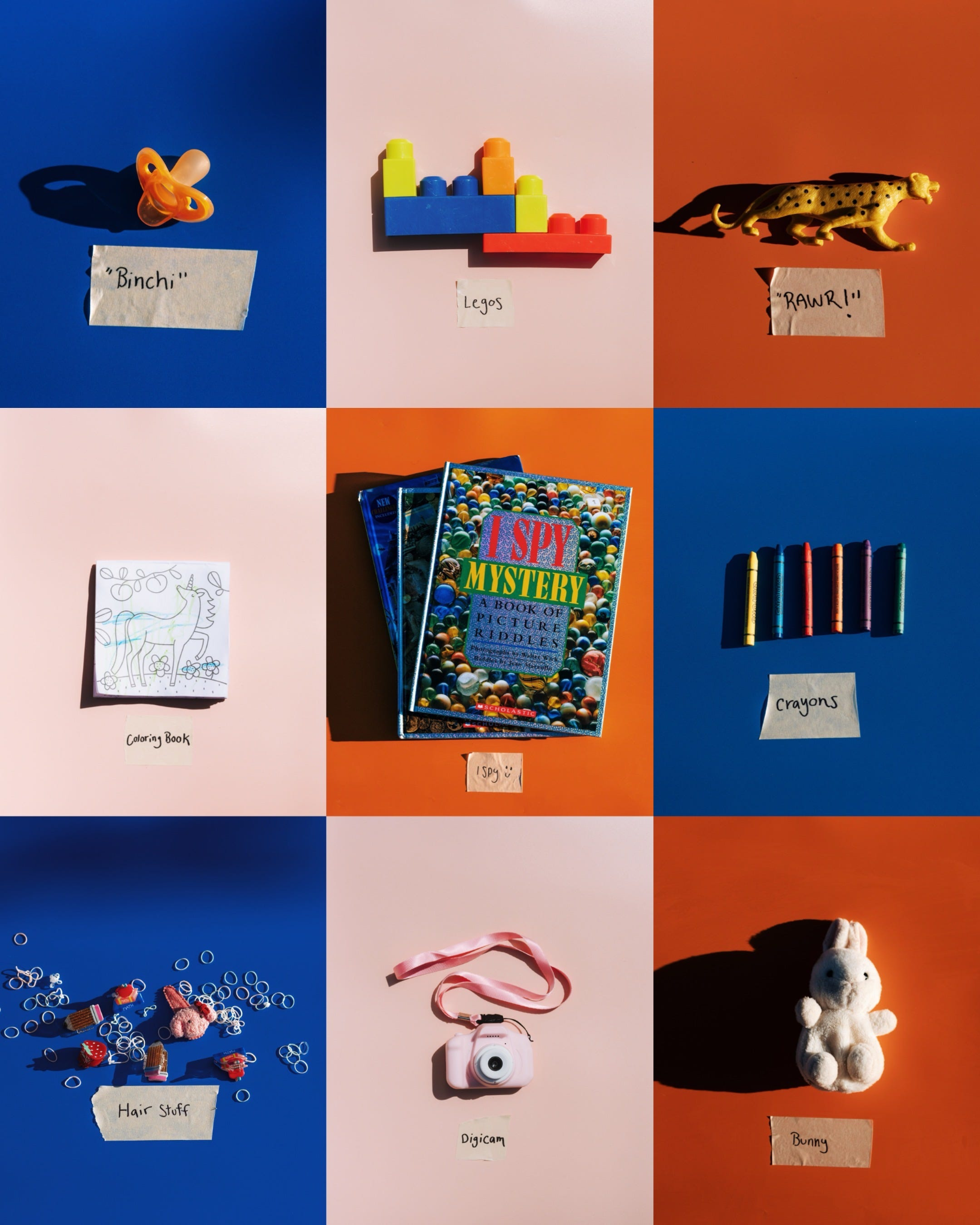 \“20 years from now, when she’s off living a life of her own, I want to remember all of this sticky, tiny, silly stuff exactly as it was.” Catalog of a 2-year-old’s things, byNatalie Carrasco\

ART
Hockney vs. Rothko
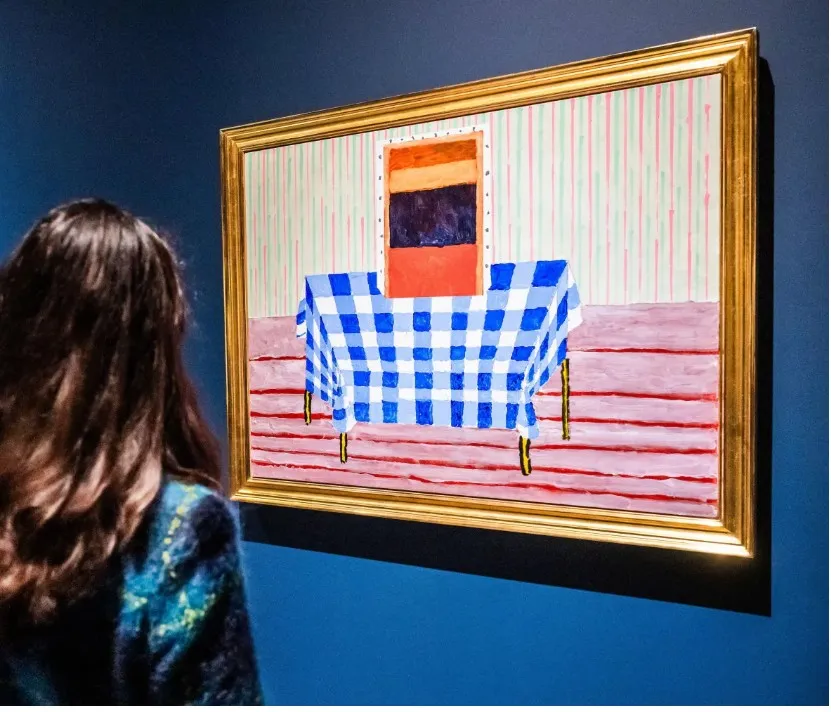
David Hockney, it turns out, is no fan of abstract paintings. In his new show, he includes a Rothko-esque canvas above a table: “‘I did that,’ explains Hockney, ‘because they made a book of Rothko’s paintings and when you see a whole book … Well, Francis Bacon said when he committed suicide, ‘I’m surprised it took so long.”’ Here, Carter Ratcliff considers the supposed meaninglessness of abstract art.
What’s David Hockney’s Beef with Abstraction, Anyway?
— in
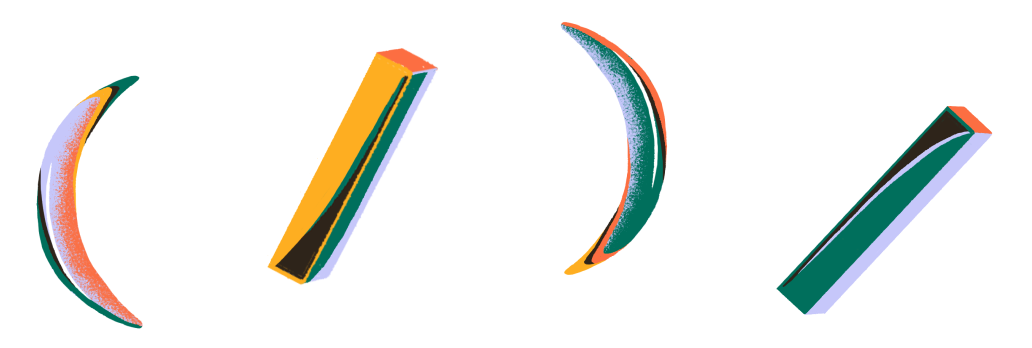
Whenever I puzzle at length about the meaning of abstraction I return to a moment when I was standing in a grade school cafeteria looking up at a blackboard. I was in kindergarten and still figuring out the function of things like parentheses. On the blackboard a left-hand parenthesis curved across its large surface. I could see how it framed a list of menu items. More than that, I saw how beautiful it was. This judgment was not the upshot of a detached formal analysis. I had sensed the grace and confidence of the gesture that produced the parenthesis. Its beauty brought to mind the idea of a graceful person—or our neighbor’s Irish Setter, whose inveterate leaping and twirling was wonderfully elegant. She didn’t just look beautiful. She had a beautiful, if frantic, way of being,
When we perceive creatures, objects, textures, spaces, and light we do not merely register facts. Our perceptions imbue the perceived thing with feelings, qualities, meanings. And this happens even when we can’t name what we are seeing or hearing or touching. Incapable of experiencing anything neutrally, we live in a world saturated with significance. So, if you let it happen, the interplay of form, color, and pictorial light in a maroon Rothko will draw you into a current of strong feelings and vast but elusive meanings. It may even persuade you that the human condition is timelessly tragic, especially if you have a personality as saturnine as Rothko’s. If not, the painting’s effect on you will be different. Only if you are dogmatically opposed to abstraction will you say that it has no effect and is therefore meaningless.
I don’t know why Hockney thinks abstraction is empty. I do know that the landscape paintings in his Serpentine North exhibition do not rely on subject matter for their value, as charming as his trees and hedgerows and half-timbered houses are. It is true that over the past century critics and curators have often favored abstraction over representation, a fact of art-world life that troubles Hockney. It’s also true that his paintings generate their deepest value from something they share with abstractions: the emotionally and intellectually lively relationships between their pictorial elements. For abstraction and representation are not utterly different from one another. They are different ways of realizing the same set of pictorial possibilities.
POETRY
 \Poem shared byTrey Hinkle\
Substackers featured in this edition
Art & Photography: , ,
Video & Audio:
Writing: , , , ,
Recently launched
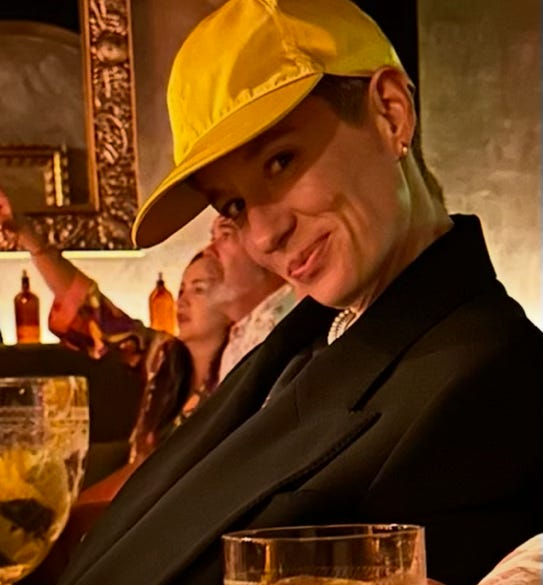
Soccer star has launched a Substack, where she’ll reflect on her retirement from professional sports and use the space “to write, to take photos, to fight for the people and communities I love. I want to show you how deeply I want to belong to this world alongside all of you.”
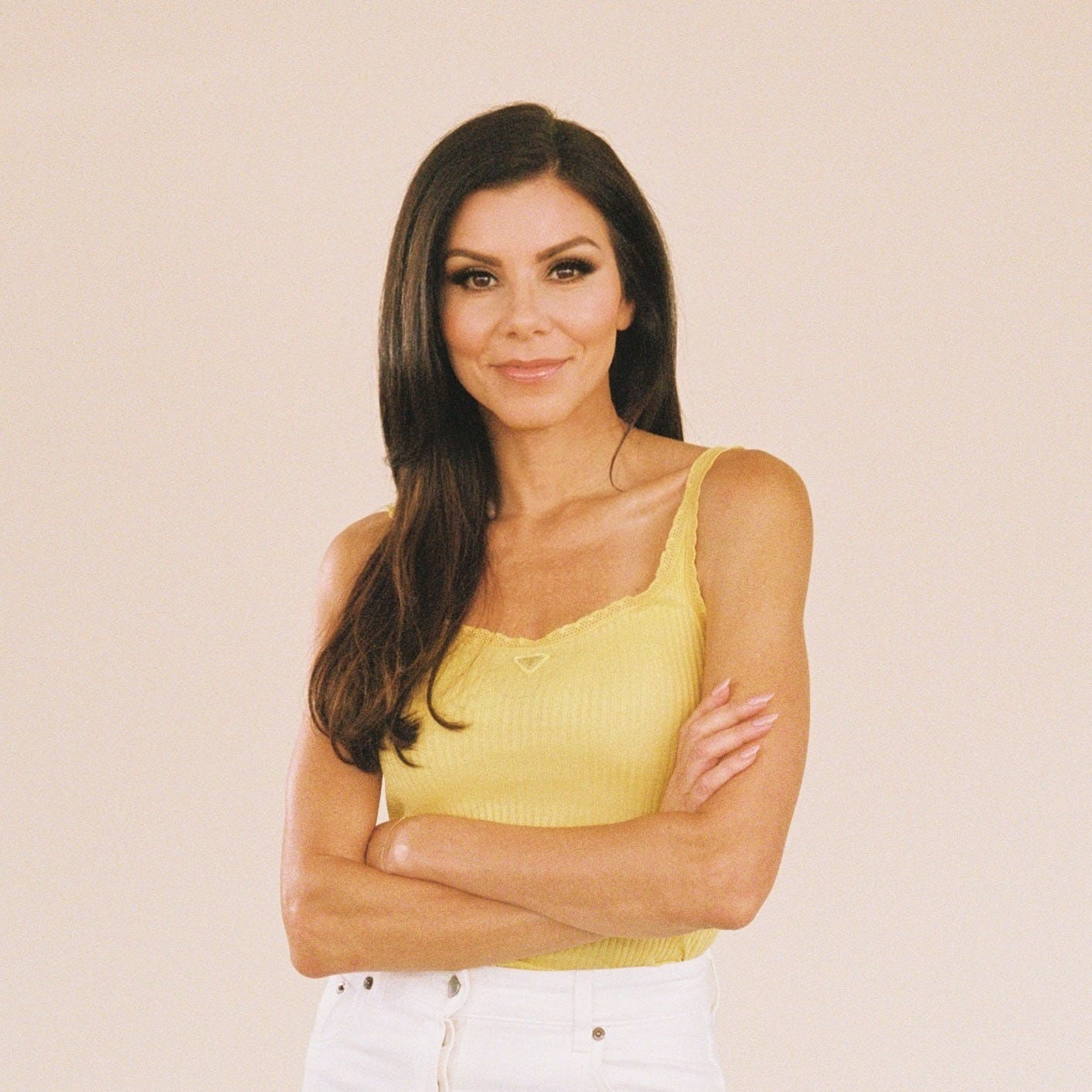
Real Housewife has started , where she’ll share “the endless beauty, wellness and health hacks you’ve come to love from Dr. and Mrs. Guinea Pig ;) The behind-the-scenes, and behind-the-screens on marriage, parenting, and navigating friendships old and new.”

Former New Statesman journalist has partnered with to launch , a new publication for progressive ideas and debate. There, they’ll be “addressing questions including how the centre left reinvents itself in an age of populism, how the UK escapes its post-2008 economic stagnation, how Britain rebuilds relations with the EU and how we harness AI for the common good.”

Inspired by the writers and creators featured in the Weekender? Starting your own Substack is just a few clicks away:

The Weekender is a weekly roundup of writing, ideas, art, audio, and video from the world of Substack. Posts are recommended by staff and readers, and curated and edited by Alex Posey out of Substack’s headquarters in San Francisco.