I am seeking your thoughts about resources that would be most helpful to parents.
By Peter Gray
Published: 2026-11-16
URL: https://petergray.substack.com/p/135-ideas-for-online-resources-to
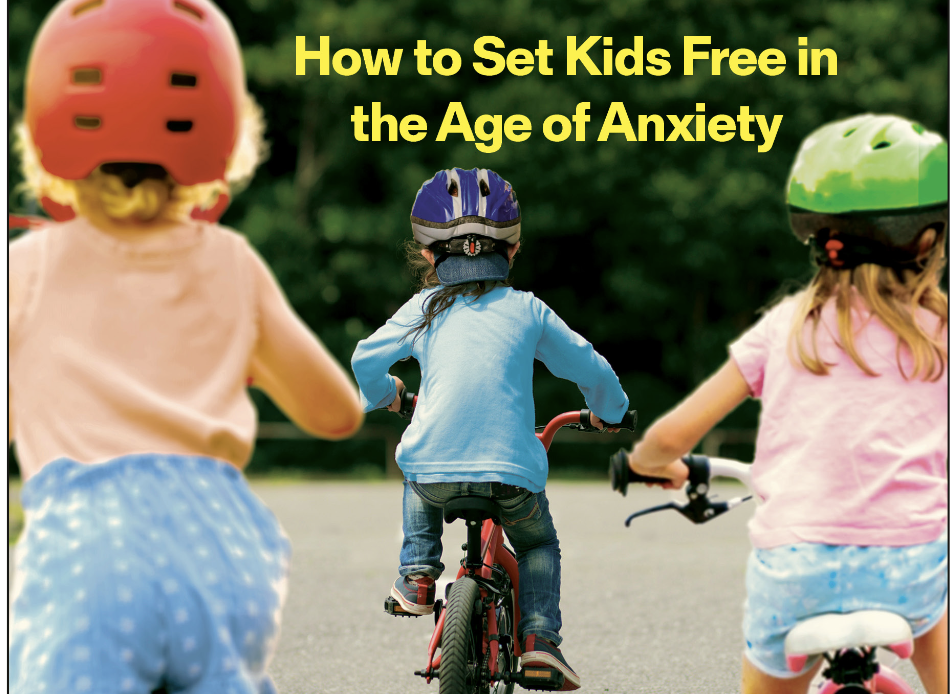
\Peddling Away from Adult Control and Toward Adulthood\
Dear friends,
In Letter #89, I described a set of parenting practices that, collectively, I labeled as “Trustful, Autonomy-Supportive Parenting.” This approach to parenting derives from n understanding that the primary task of childhood is to become ever less dependent on parents, ever more independent, eventuating in adulthood, and that a major task of parents is to enable children to become ever more independent. In the research literature, this approach is called just autonomy-supportive parenting, so I will use that shorter label here.
As I noted in Letter #89, much research indicates that autonomy-supportive parenting is good for the mental health of parents as well as children. By ceding ever more control of children’s lives to the children themselves and realizing that children benefit from that self-control, parents free themselves from the needless worry and the time-consuming tasks of trying to run their children’s lives for them. Children with such parents learn to take ever more control of their own lives and experience the joy and long-term psychological benefits of that. They progress more smoothly toward adulthood and are less likely to become anxious and depressed, especially in their teen years.
As I also noted in Letter #89, autonomy-supportive parents (a) enable ample free play and independent exploration for their children; (b) do not do for their children what the children can do for themseves; (c) expect children, from an early age, to be partners in family chores; and (d) to a reasonably degree, involve children in family decision-making and problem solving.
I am currently working with a team to develop an online set of resources for parents interested in supporting their children’s autonomy, which will be housed on the website of the National Institute for Play. The team includes Tony Christopher (Director of Science of Play at the National Institute for Play), Molly Moscatiello (founder of a remarkable community-building organization for families called The Balance Project), Jennifer Granger (a subscriber to this Substack with skills in building online communication platforms), and Christina Saunders (another subscriber to this substack who has long been involved in early childhood education and is a long-time promoter of children’s independent play).
My purpose in this post is to give you an idea of what we are planning and to solicit your thoughts about what would be most helpful to include in this site.
Autonomy-Support Resources We Envision
Among the resources we plan to include on the website are the following;
• An opening, welcoming page on the value of autonomy-supportive parenting. It would include an explanation of how childhood is preparation for adult independence and why children need increasing amounts of independent activity as the grow toward adulthood. It would also acknowledge the challenges, in today’s world, of enabling the degree independence children need for optimal development.
• Testimonials. These would be quotations from parents about positive changes they have seen in themselves and their children when they moved in some way toward more autonomy support, less restrictive control, for their children.
• A page labeled What Science Tells Us About the Value of Independent Activity, which would include a bulleted set of research findings, along with references to the reports, concerning the roles of children’s free play and other independent activity in children’s psychological as well as physical development.
• A downloadable list of suggested independent activities separate for ages 4-6; 7-9; 10-12; and 13-15. The list would include activities that children traditionally have been allowed and even encouraged to do within the age category indicated. The page would also acknowledge, however, that some children are more ready and eager for certain activities than others at any given age.
• A page labeled How to Enable More Independent Activity for Your Children, which would include a list, with descriptions, similar to that I provided in Letter #46.
• A Bibliography, which would include brief descriptions of relevant books and links to relevant (easily readable) articles and possibly video.
• A Parents’ Forum, which may be the most valuable part of what we would offer, described below.
The Parents’ Forum
We envision this as an online parents’ discussion group, where parents can share their questions, concerns, frustrations, and triumphs concerning their desires and attempts to enable more independent, self-directed activity for their children.
The Forum would be constructed in such a way that anyone can browse it and read what is there without registering, but registration (made as easy as possible, with no charge) would be required to post.
A moderator would sort the posts into broad topic categories, easily located, so people with new input can find the best place to post that input. For example, there might be a category of posts from parents concerned with how to enable truly free social play for their kids with other kids, in a world where it is hard to find other kids with whom to play. There might be another category concerned with how to enable free time for self-directed activities when school and other adult-directed activities are taking so much of children’s time and energy. And so on.
How You Can Help
My goal in this letter is to get your suggestions about what would be most helpful to include in the resources we are planning.
• Concerning the bibliography page, are there books or articles that you have found to be especially helpful in encouraging and enabling autonomy-supportive parenting?
• Concerning testimonials, have you yourself had a positive experience with autonomy-supportive parenting that you can describe, briefly, which might help open the eyes of newcomers, posted on the opening page of the website? That is, an experience in which enabling more independence for your child, or expecting more help from your child, made life better for your child and for you.
• Concerning the Parents’ Forum, have you had experiences with online discussion groups that would be helpful to us in designing the Forum? What brings people to such a group and what leads them to stay, benefit themselves, and help others? Do you know of a particularly successful online forum that might provide a model for us?
• Do you have thoughts about resources should be included for parents that I haven’t mentioned here?
Thank you for reading this, and thank you doubly if you share thoughts that may be helpful to us in creating this set of resources and a forum for parents.
With repect and best wishes,
Peter
Play Makes Us Human is a reader-supported publication. If you have been enjoying these letters, please consider becoming a paid subscriber, for just $5 a month or $50 a year. All funds I receive for paid subscriptions are used to support activities aimed at bringing more play and freedom to kids.