Football, like cigarettes, should come with a clear, big-letter warning.
By Peter Gray
Published: 2026-11-06
URL: https://petergray.substack.com/p/133-abusing-mens-bodies-and-minds
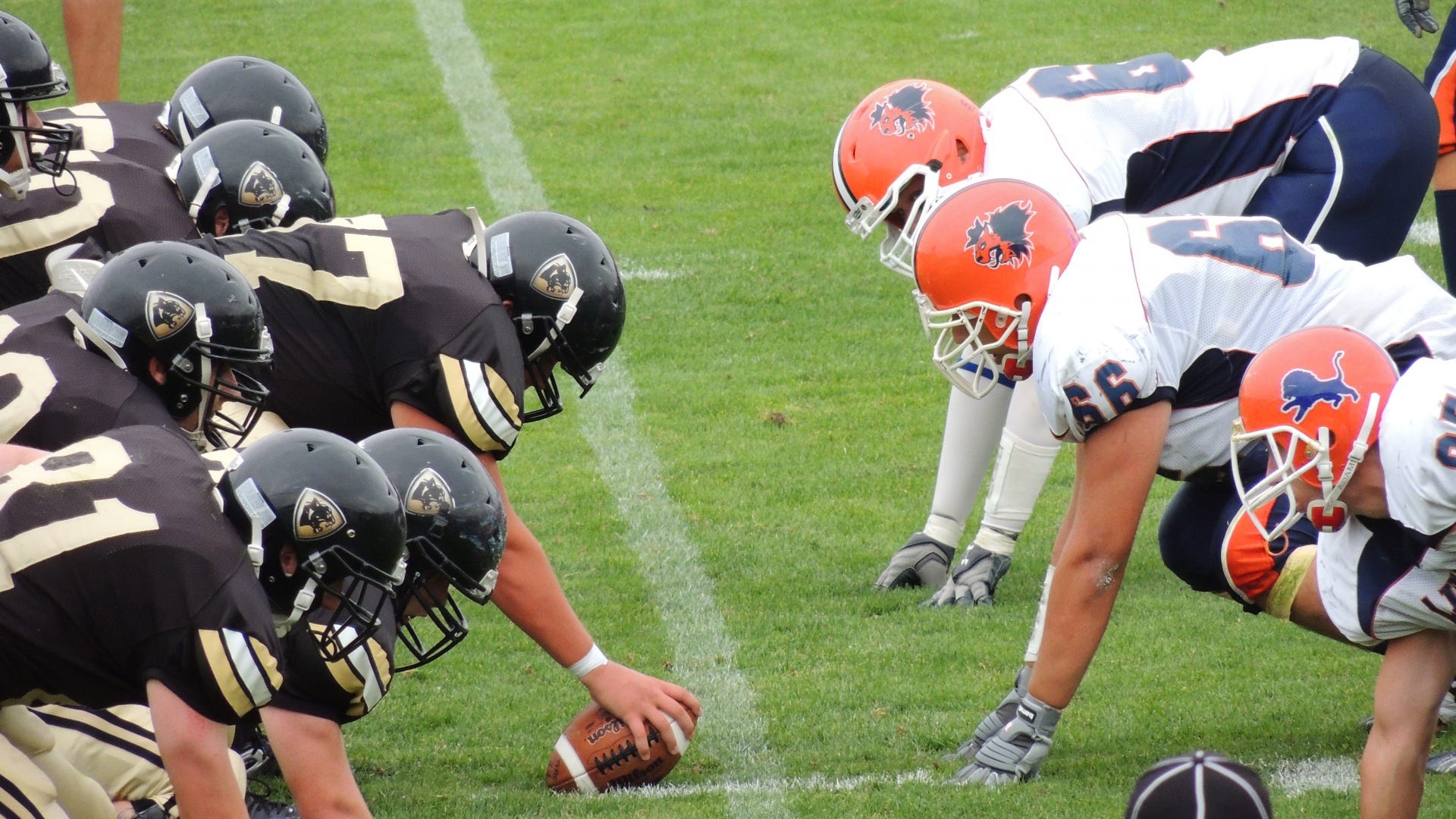 Public Domain
Dear friends,
OK, Peter, now you’ve done it. You’ve gotten away with letters knocking the halo off our coercive schooling system (e.g. here and here). You’ve gotten away with a letter describing religion as best understood as play (here). But now you are invading the sacred. Football, American football. Watching football is the great American pastime. Are you anti-American?
Every year in recent decades the Super Bowl is the most watched TV event of the year, and nearly all of the 20 most-watched TV events are also football games (here), We are a nation that loves violence, or at least that loves watching it. I’ve argued elsewhere that watching or engaging in pretend violence is not harmful, but football is real violence, not pretend.
The data are clear. Football, which by design involves repetitive blows to the head, causes brain injury. Research 00304-4/fulltext)has shown repeatedly that former NFL players are far more likely than others to suffer later in life from such brain disorders as Parkinson’s Disease, ALS (Amyotrophic lateral sclerosis), and, especially, CTE (chronic traumatic encephalopathy.
Chronic Traumatic Encephalopathy (CTE)
The most frequent and most fully studied brain effect of playing football is chronic traumatic encephalopathy (CTE), which leads to a set of symptoms that may appear years or even decades after retiring from the game (here). The symptoms vary from person to person but can include severe depression, irrational violence, dementia, and premature death, sometimes by suicide. Such damage derives not just from major crashes to the head but also from repeated smaller hits, which seem innocuous in their immediate observable effects These can be hits well below the level that results in noticeable concussions. CTE can occur in athletes in all sports that involve frequent blows to the head, but at least in modern times they are most common in football.
The long-term damaging effects of repeated blows to the head have been known to the sports world for nearly a century. As far back as 1932 a report at the annual NCAA conference acknowledged essentially everything noted in the previous paragraph (see here). What is new is detailed understanding of the anatomical brain changes that result from repeated hits to the head, which underlie the behavioral consequences (here). This understanding has brought new publicity to the harmful effects of football and at least some renewed public awareness of the harm, though not nearly enough awareness.
How frequent is CTE?
Unfortunately, the only definitive way to identify CTE is to examine the brain after the person has died, and this can only be done with brains that have been donated by the players and families for research. In one early study of donated brains, CTE was identified in 110 of the 111 (99% of) brains of former NFL football players that were examined. This does not mean that CTE exists in 99% of all former NFL football players, as there is no doubt bias in which brains get donated for study. Most donations come from those who suspect CTE because of the cognitive and behavioral symptoms shown before death. Other studies of donated brains have shown similarly high rates of CTE—close to 100%—in former football players.
Recently (October 2026), researchers associated with the Boston University School of Public Health, reported in the Journal of the American Medical Association (JAMA) on a huge study aimed at assessing the frequency of CTE in all former NFL players (defined as having played at least one NFL game) who died between January 2008 and December 2023, whether or not they had donated their brains for research. To do the study, they examined available death certificates for this entire set of 2,362 former NFL players, for reported evidence of neurodegenerative disease and dementia and compared those rates for those who had not donated a brain with those who had donated a brain and been definitively shown to have CTE. Using this evidence, and statistical means to correct for bias, they estimated that approximately 75% of all former NFL players had CTE by the time of their death. Again, this sample included all former NFL players, even those who had played just one game. Not surprisingly, rates of CTE were highest in those who had played the most games and in those who played positions where they were likely to get hit hardest and most often.
Although the risk of CTE increases as years of football increase, there appears to be no completely safe “dose” (here). Research has even revealed CTE in some who only played in youth or high school football, and some neurologists suspect that young brains may be even more susceptible to damage than more mature brains. Yet, even now, tens of thousands of children as young as 5 or 6 years old play adult-run tackle football (here). I know of no research examining the long-term consequences of football for little kids.
The case with football and CTE is like that, decades ago, with smoking and cancer. The billionaire franchise owners, and the universities enriching their coffers from it, put their heads in the sand or go through motions of “making the game safer” (analogous to putting filters on cigarettes), while doing whatever they can to obscure the science that proves the dangers and to resist any pressure to abolish or seriously change the game. Those who enjoy the product from the safety of their living room couches likewise put their heads in the sand, preferring not to see or believe the data.
What can and should we do about this abuse of boys and men, who seek the glory blind to the gory?
I won’t watch football and I try to encourage others not to watch it. If nobody watched it, it would go away. But that’s not going to happen anytime soon. People are going to keep watching football for years to come. But here’s a proposal that may have at least some chance of acceptance (suggested by Stephen Casper, as reported here).
Suppose a new law, or surgeon general proclamation, required that a prominent sign be placed in every football locker room in the country, with big letters, saying: WARNING: FOOTBALL HAS BEEN SHOWN TO CAUSE BRAIN DAMAGE LEADING TO SUCH SYMPTOMS AS SEVERE DEPRESSION, IRRATIONAL VIOLENCE, DEMENTIA, AND SUICIDE. It would be like the warnings on cigarette packs and cigarette ads.
We might also require that the warning be shown before and several times during every televised football game and require that anyone signing up to play the game sign a statement acknowledging that they have read and understand the warning. At least then we would know that those who choose to play football, and those who choose to support it by watching, would know what they are getting into.
What about children too young to understand and weigh the warning? They should be running around playing in their own joyful ways, as children are designed by nature to play, never lined up by coaches to crash into one another on command. That change would happen quickly if parents had to sign the warning.
Concluding Thought
I conclude, as I did in an earlier essay on this topic, with excerpts from the late George Carlin’s classic comparison of football with baseball (which used to be our national pastime):
“Baseball begins in the spring, the season of new life. Football begins in the fall, when everything is dying.”
“Baseball is played on a diamond, in a park. The baseball park! Football is played on a gridiron, in a stadium.”
“In football you wear a helmet. In baseball you wear a cap.”
“Football is concerned with downs—what down is it? Baseball is concerned with ups—who’s up?”
“In football you receive a penalty. In baseball you make an error.”
“In football the specialist comes in to kick. In baseball the specialist comes in to relieve somebody.”
“In football the object is for the quarterback, also known as the field general, to be on target with his aerial assault, riddling the defense by hitting his receivers with deadly accuracy in spite of the blitz, even if he has to use shotgun. With short bullet passes and long bombs, he marches his troops into enemy territory, balancing this aerial assault with a sustained ground attack that punches holes in the forward wall of the enemy’s defensive line. …. In baseball the object is to go home! And to be safe!—I hope I’ll be safe at home!”
To really appreciate this, with Carlin’s great delivery, click here.
---
And now, what do you think? This Substack is, in part, a forum for discussion. Your questions, thoughts, stories, and opinions, thoughtfully presented, are treated respectfully by me and other readers, regardless of the degree to which we agree or disagree.
With respect and best wishes,
Peter
*This is an updated version, with new data, of an essay I originally posted three years ago.
Play Makes Us Human is a reader-supported publication. To receive new posts and support my work, consider becoming a free or paid subscriber.
Thanks for reading Play Makes Us Human! This post is public so feel free to share it.