In this guest essay, Bernhard Warsitz describes the thinking, feeling, touring, and interviewing that led to his documentary film.
By Peter Gray
Published: 2026-06-18
URL: https://petergray.substack.com/p/118-a-teachers-passionate-search
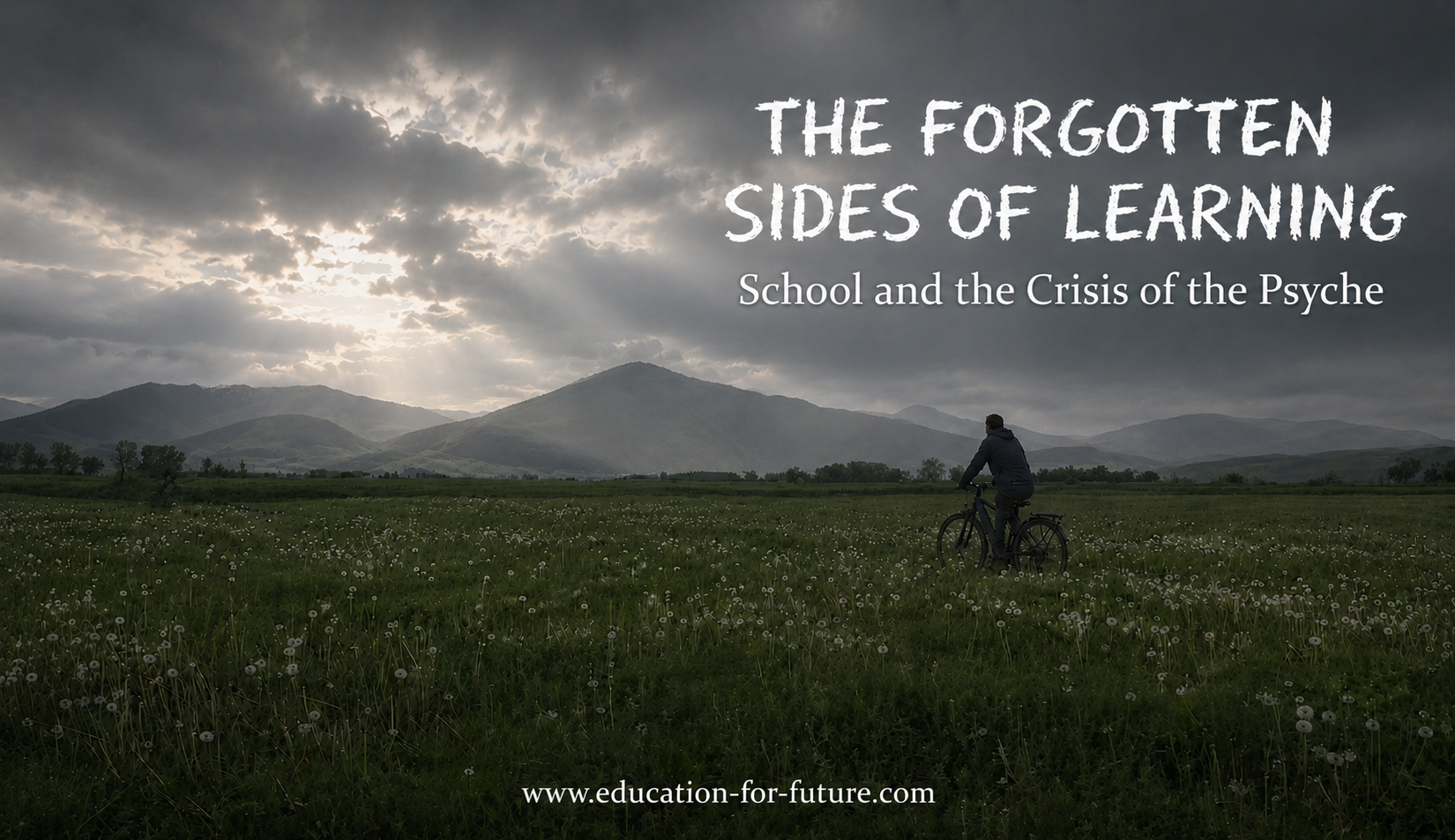
Dear friends,
I’m always interested in people who develop a passionate interest and leave their comfort zone to pursue it. One such person is Bernhard Warsitz, a secondary school teacher in Munich, Germany, who loved some of what was happening at the Montessori school where he was teaching and hated some of it. His love-hate feelings led him to take a sabbatical adventure, traveling partly by bicycle, to visit diverse parts of the world, interview people about issues related to education and human wellbeing, and create a documentary film The Forgotten Sides of Learning: School and the Crisis of the Psyche.
I invited him to write a guest essay about his adventure and, in that way, introduce his film to you.
Here goes:
Bernhard’s Story
The Forgotten Sides of Learning: A Journey from the Classroom into the Unknown
Hi everyone,
I’m Bernhard Warsitz. Since 2012, I’ve been teaching pedagogy and psychology to 11th through 13th graders at a Montessori high school in Munich, Germany. The story of my film begins there, inside the classroom and on our school trips to Albania, where we volunteered at care facilities for people with disabilities.
To be honest, I never wanted to be a teacher. I had dropped out of my traditional teacher-training program and earned a master’s degree in education instead, because the rigid, traditional school system had been a nightmare for me as a student. Yet somehow, at age 44, I ended up in the classroom. Fortunately, it was at a Montessori school, which promised a certain degree of freedom. And it was in some ways quite wonderful.
I used the curriculum merely as a springboard to reflect on authentic, real-world topics with my students. For example, in one classroom discussion a student shared a dream in which she was standing in a ditch by the side of the road, and her parents were reaching with their hands to pull her up. She explained that she didn’t want to let them help her—she wanted to take their hands, but at the same time, she didn’t. She felt torn and isolated.
The entire group of students were moved by this dream and its possible meaning. I could see clearly that young people’s intellectual engagement is not distinct from their emotions and personal experiences.
This view was reinforced by comments at a 5-year class reunion of former students, who had invited me to be with them. Many of them commented on how valuable the discussions of personal, sometimes emotion-provoking experiences had been.
The Turning Point: Despair Within the System
These meaningful connections, however, were only one side of my job. I also had to prepare my young friends for the state-administered Abitur (the rigorous German standardized graduation exams). This is where a story of growing despair began, which ultimately drove me to take a sabbatical and create a documentary film.
I knew every student deeply and cared about them. Yet, year after year, these exams came around, graded by external examiners in ways that seemed arbitrary and unfair. The worst part was that the human beings I had come to know and love suddenly no longer mattered. All that counted was a single, isolated performance on a test, a test that clearly failed to tap the richness of my students’ thoughts and understanding.
In my classroom, I had always tried to follow my students’ thoughts and understand them. In the world of standardized testing, that no longer existed. It was a world of absolute right and wrong. It was almost entirely about who was better at rote memorization and who worked harder to prepare for the test.
The system ignored my students’ individual talents. Every year, the state exam results in Bavaria for Pedagogy/Psychology are low. Who is blamed for that? Never the institutions organizing the curriculum and doing the testing, but always the students, who supposedly aren’t industrious enough.
There is zero accountability on the part of the state system. There is no attention to the issues that truly engage students both emotionally and intellectually.
After ten years of feeling powerless in meetings with external examiners—almost all of whom believed their own judgment was the only “correct” one—I couldn’t take it anymore. It became clear to me that I was working within a deeply autocratic school system. I was suffering under it as much as my students were. When the COVID-19 pandemic hit and the world came to a standstill, I finally had time to think: What can I do to scream out loud? To take a stand against this absurd testing world?
Stepping into the Unknown
The spark came from Albania, one of the poorest countries in Europe. Before the pandemic, I had taken my students there to complete internships in social care facilities. In Albania, being multi-disabled often means being excluded from society. The students got to know and care about these people. One student spent an entire afternoon holding the hand of a bedridden resident. For that woman, it was the highlight of her day.
After our shifts, we would sit together and process our experiences. Many students later described this trip as the highlight of their school career. For me, too, these were the most moving moments of my life as a teacher. We debated boundaries, closeness and distance, dignity, and appreciation.
The teenagers were flooded with intense impressions that overwhelmed them at first, but they grew through sharing their feelings and thoughts. These were incredibly humanizing experiences. We all grew closer to one another, and the students surpassed themselves.
These experiences were the opposite of the state system: no preordained goals, no standardized outcomes, but authentic experiences as a foundation for reflection. That was my goal.
In 2019, I was fortunate to have a student named Anton Geiselbrechtinger on the trip. For his independent 8th-grade Montessori thesis project, he had taught himself how to film and edit. He captured the essence of our journey in a 90-second film—no commentary, just raw images, perspectives, and music. That film touched my soul. I asked Anton if he wanted to make a full-length documentary with me. He said yes.
He, 35 years younger than me, became my film mentor and sharpest critic, my ‘critical friend’. He challenged my script ideas; beautifully shaped the composition of words, imagery, and music. His help in the filming and editing was invaluable.
There is so much to be gained from recognizing and fostering the passions of our students, which rarely have to do with the school-imposed curriculum.
I took a sabbatical and planned a journey to explore two major themes—the relation of schooling to societal authoritarianism and the relation of school to young people’s mental health. I had no script, no filmmaking background, no experience in the documentary world. But with Anton’s help and a burning desire do something meaningful, I pushed forward into the unknown. Sometimes traveling with Anton or another companion, but mostly alone, I hit the road.
On a Folding Bike Through Europe: Encounters That Changed Everything
I love trains, ferries, and my folding e-bike. My first major destination was Romania. To get there, I took a ferry across the Mediterranean from Italy to Albania and navigated from there to Romania using my folding bike and local trains.
As I left the port of Durrës, my navigation app guided me along a beautiful route far from the busy main roads. The landscape became increasingly rural, nature felt close enough to touch, and the scent of the Mediterranean coastal macchia filled the air.
In that moment, I felt the thing I love most: freedom. As I rode along that road, thinking freely, the question that had plagued me for years bubbled up: “Bernhard, what are you doing here?” But this time the thought was comfortable. I knew that this was exactly the right place for me to be, right now. I was immersed in uncertainty but knew I had the freedom to at least try to do something meaningful. I felt a deep sense of vitality.
This is my life.
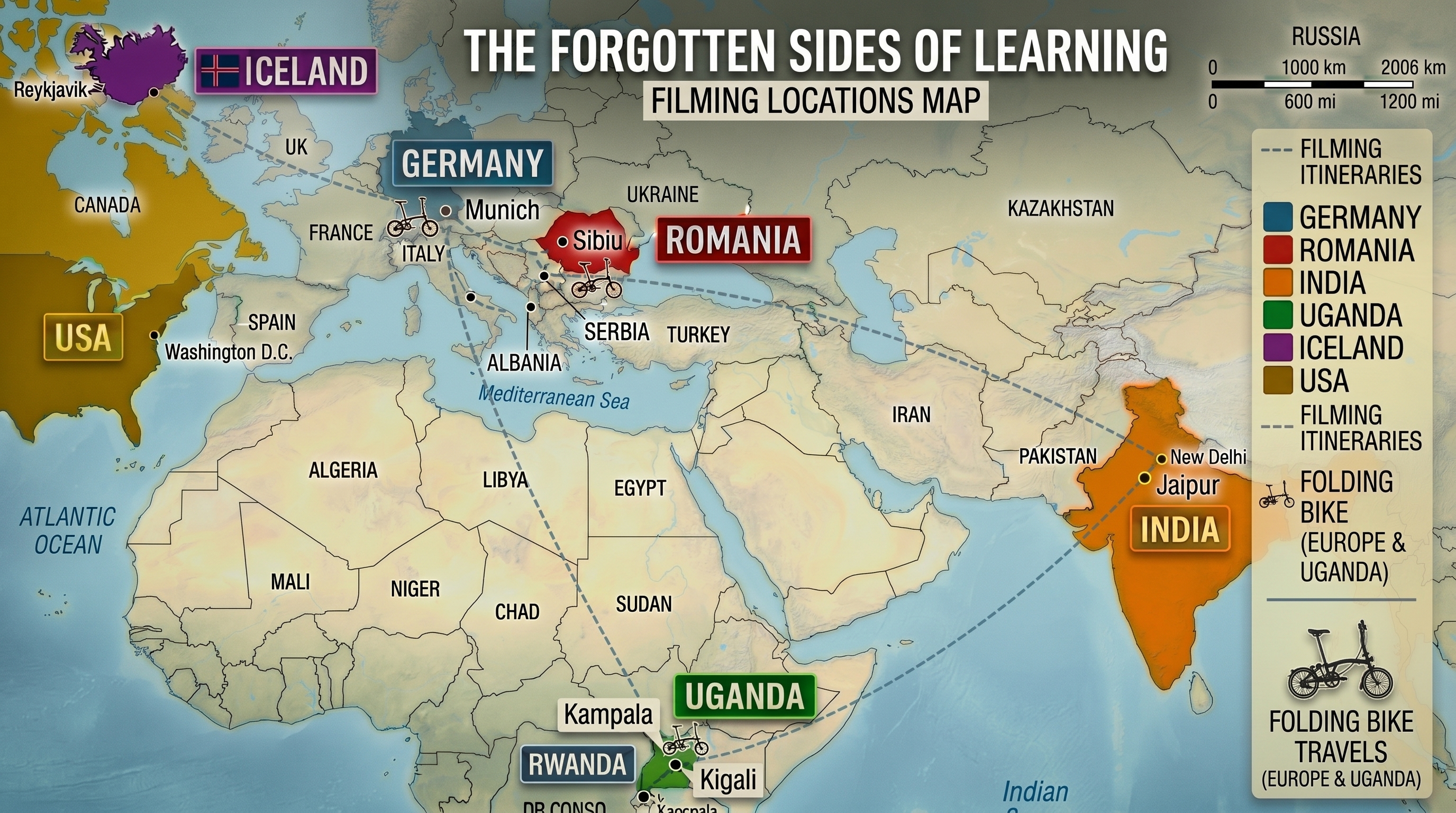
In Romania, I wanted to meet someone I had often introduced to my students during lessons on social work: Jenny Rasche. She is the mother of seven biological and eleven adopted children and runs an organization that helps children in dire need near Sibiu.
At age 19, Jenny had visited Romania for the first time. In the middle of a freezing night, she and her boyfriend picked up a hitchhiking young Sinti and Roma mother with a child who was insufficiently clothed for the weather.
That night, she ended up in a slum. On pure impulse, Jenny decided to help, and the help continued. Today, her organization has built 158 permanent houses and eliminated hunger for countless families, ensuring that—as she puts it—“a new generation can grow up learning to feel their own worth and embrace education.” In 2021, the EU honored her as a Woman of Action.
I wanted to understand what decades of poisonous pedagogy under the Ceaușescu autocracy - which produced some of the worst orphanages in human history - had done to the people. And I wanted to see how Jenny manages to interact with her employees, who grew up under that system of subjugation, in ways that help them rebuild their sense of agency and self-esteem. Jenny herself grew up in East Germany, making her a child of autocracy as well. This was my first film topic: authoritarianism.
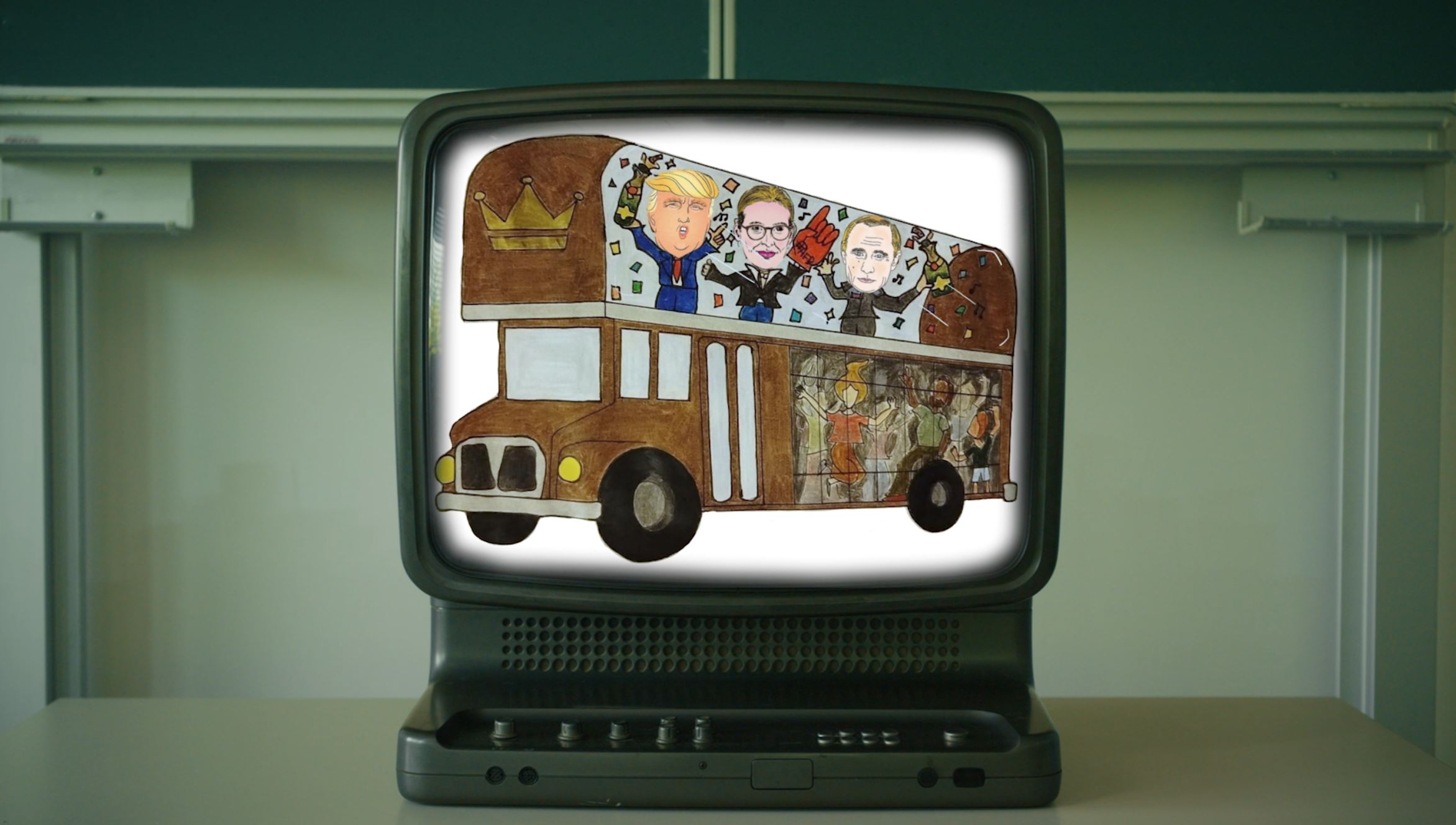 \The Growth of Authoritarianism\
Jenny generously permitted me to shadow and film her for three weeks. I have never met another human being with such energy. She works 12 to 16 hours a day to ensure that people can live in dignity and, what moved me deeply, die in dignity as well. While I was there, she rescued a completely neglected, severely disabled child from a state institution, Christoph, 15 years old, who weighed just 30 pounds (14 kilograms). His limbs were shockingly frail. Jenny had fought with the officials to get him.
She provided him with medical care and brought him into her own home, making him part of her family. For a long time, it was uncertain if he would survive. He did. Jenny explained to me that she prefers to take in the toughest “system-crashers”—the ones who have nowhere else to go. She believes that no child is a lost cause; they just need a safe harbor to heal and pull their life together.
Uncovering the Youth Mental Health Crisis: From Herbert Renz-Polster to Peter Gray
After my time with Jenny Rasche, with my growing concern about the harm of an authoritarian mindset and lack of emotional security for children, I made my way to the home of the German scholar and author of the 2009 bestseller Understanding Childen, Dr. Herbert Renz-Polster. In our interview, we spoke about the first system of governance a person experiences, the family. He described a study by the advocacy organization Save the Children, which ranked U.S. states based on where children experience the greatest emotional and physical abuse.
The study revealed that those states correlated perfectly with the states where Donald Trump received the most votes in the 2016 election.
According to Renz-Polster, the study illuminates an underlying psychological mechanism: Those who experience harshness, helplessness, and submission during childhood often crave authoritarian structures and strongman leaders later in life to compensate for their deep-seated insecurity.
The autocratic structure of modern schooling and upbringing worldwide may be part of what fuels the shift toward societal autocracy we are witnessing, especially among young people. I wanted to show this in the film.
As my journey continued, the second major theme took center stage, the dramatic decline in youth mental health. I had previously listened to Peter Gray give an online lecture in Germany. His insights on the fundamental importance of free play resonated deeply with me, and after reading his book Free to Learn, I knew I had to interview him. I deeply respect pedagogical thinkers like Herbert Renz-Polster, Peter Gray, Remo Largo, Janusz Korczak, and Maria Montessori who anchor their thinking on knowledge about our evolutionary roots.
Peter agreed to an online interview.
Our conversation became a game changer, altering my travel itinerary. Peter argued that the common narrative blaming smartphones and social media as the primary cause of a sharp rise in anxiety, depression, and suicide among adolescents is not supported by research. Instead, he pointed out that schools’ increasing reliance on standardization, high-stakes testing, and top-down state control of curricula has created severe, chronic psychological stress among students.
The Tragic Side of School Reform in India
Knowing that India had aggressively aligned its school system with this Western, hyper-competitive model over the last 15 years, I looked into the data there. The findings were horrifying. The increase in youth suicides from 2009 to 2021 was nearly 400%. I immediately decided to travel to Delhi and Jaipur, where I had excellent connections to local schools, as I had previously organized school exchange programs there.
What I found in India weighed heavily on my heart. In one of my many interviews, I met 16-year-old Samriddhi. She unhesitatingly and dramatically confirmed Peter’s theories: “Academic competition is killing many of the children here in India.” With courageous vulnerability, she shared how much she suffers under the system. She cannot celebrate her successes because an internal expectation immediately demands that she must do even better.
A profound sense of insecurity follows her everywhere. Even if 100 people agree with her, it takes just one critic to trigger an existential self-doubt. It is easy to see how a system that looks continuously for mistakes, and which sees achievement, by the superficial criteria the system establishes, as a measure of young people’s worth, creates deep-seated anxiety.
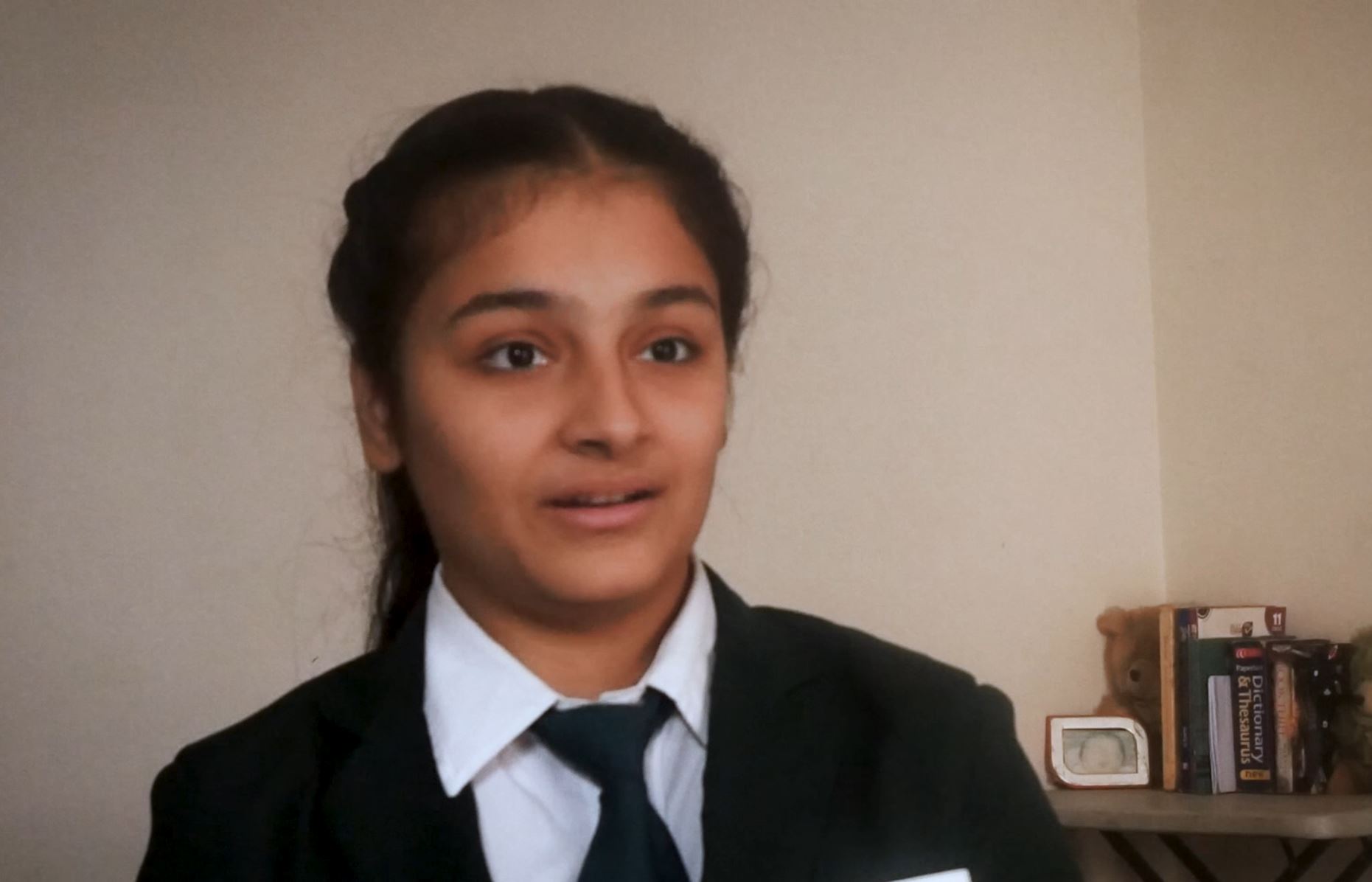 \16-year-old Samriddhi, who shared her school-induced anxiety\
An Indian teacher pointed out one of the core problems with the system. In schools, we ask almost exclusively closed-ended questions instead of asking open-ended ones that allow for individual thought and creation. Closed questions, which lend themselves to standardized testing, have fixed answers and promote memorization. Open questions lead to creativity, personal takeaways, and self-actualization. So simple, yet so profoundly true.
On top of the school pressure, the students in Delhi live under a permanent, toxic cloud of smog, surrounded by plastic waste. The weight of global crises, wars, and climate change rests heavily on this new generation, not just in India but also with my students back in Germany and everywhere. In contrast to the serious local and world problems to be solved, the problems put to students by standard curricula in schools are largely meaningless.
Learning as Discovery: Learning from a Former Student in Uganda
At the end of my journey, I traveled to Uganda to visit my former student, Alexandra Müller. At just 20 years old, she had already founded her own school there. I wanted to know what skills and competencies enabled her to bring such a massive project to fruition.
Her answer was revealing. First, she said, “It is so important to realize that you don’t hold definitive knowledge and that you don’t know better than the local community.” Talking to Alexandra, and weaving in Peter Gray’s insights, the circle closed for me: Most learning happens naturally when we stop trying to force it.
It happens implicitly—through daily life, self-directed exploration motivated by curiosity, and self-directed play. It can be abetted by internships and projects without rigid lesson plans or standardized benchmarks.
When we try to mold children according to our own agendas and force them into standardized molds, we crush their vitality and destroy their zest for discovery. At some level I always knew this, but my interviews with these insightful people made it clear.
What I Hope to Achieve with This Film
What, for me, is this documentary truly about? I have always identified with David in the David-Goliath story. I find it exciting to create something powerful from small resources.
Of course, I would feel good if the film broke even financially. But what is infinitely more important to me is that the film be seen in schools and be debated deeply among those who might influence how schools operate. I want to inspire many Davids to initiate their own journeys and help conquer the societal forces that are making people unhappy.
In Germany, I am organizing screenings where teachers, students, school administrators, and parents sit down after the film to engage in open dialogue. I would like to achieve this also in the English-speaking world, including the United States. I am looking for individuals who can help promote this documentary and organize events where we can reflect on the two parts of the film:
- Part I: Authoritarianism and School. The number of young people drifting into anti-democratic, extremist right-wing spaces is alarming. In Germany, that number spiked by 50% between 2021 and 2023; a third of all adolescents now hold views aligned with these mindsets. In the U.S. similar drifts are occurring.
My documentary suggests that the autocratic structure of our schools—where young people experience almost no agency and are treated as passive consumers at the bottom of a strict top-down hierarchy rather than as active thinkers and creators—fuels this trend. School must shift from a focus on ovedience to autocratic demands to a focus on active, creative participation in a democratic community that promotes self-efficacy and a sense of belonging. To achieve this, we need an educational revolution.
- Part II: Mental Health and School. Here, too, the data cry out against our current ways of schooling. Across Western school systems, a quarter of all adolescents now suffer from clinically diagnosed mental health disorders. Mental well-being must finally become more important than a high GPA or high scores on standardized tests. Instead of being a place of toxic pressure, school could be students’ strongest safety net. As Herbert Renz-Polster writes: Children do not become strong, curious, and creative by merely executing their teachers’ lesson plans. They must be allowed to follow their own learning agendas and shape them alongside other children.
I would be deeply grateful if educators and other concerned people in the United States and elsewhere would reach out to me about ways to bring this film and associated discussions to their local community. You can email me at [email protected].
Watch the English trailer here:
Stream the full film (for $6.99) here:
movie.education-for-future.com
Thank you for reading this.
Bernhard Warsitz.
Concluding Thoughts
Thank you, Bernhard!
Friends, I hope you will watch the brief trailer, consider watching the whole film, and think about possible ways the film might be used to advance public discussion about the need for a true revolution in how we do schooling. Bernard’s welcomes thoughts about how the film might be used, which you can email to him at [email protected]. He has also told me that he would be glad to respond to questions you may pose to him in the comments to this letter.
As the world moves ever more to extreme versions of Western style shooling, kids everywhere become increasingly anxious, depressed, and suicidal. It is time for a reckoning.
Thanks for reading Play Makes Us Human! This post is public so feel free to share it.
With respect and best wishes,
Peter
Play Makes Us Human is a reader-supported publication. To receive new posts and support my work, consider becoming a free or paid subscriber.