How we view school refusal depends on our beliefs about children and human rights.
By Peter Gray
Published: 2026-04-08
URL: https://petergray.substack.com/p/109-school-refusal-crime-psychopathology
Note: An audio version of this is available to paid subscribers. If you are not already a paid subscriber, please consider becoming one, for just $50 a year. I use all income from paid subscriptions to help support nonprofit causes aimed at increasing children’s freedom and opportunities for play. Paid subscribers receive audio versions of some of my letters and are invited to join me and other paid subscribers on a monthly Zoom meeting.
Dear friends,
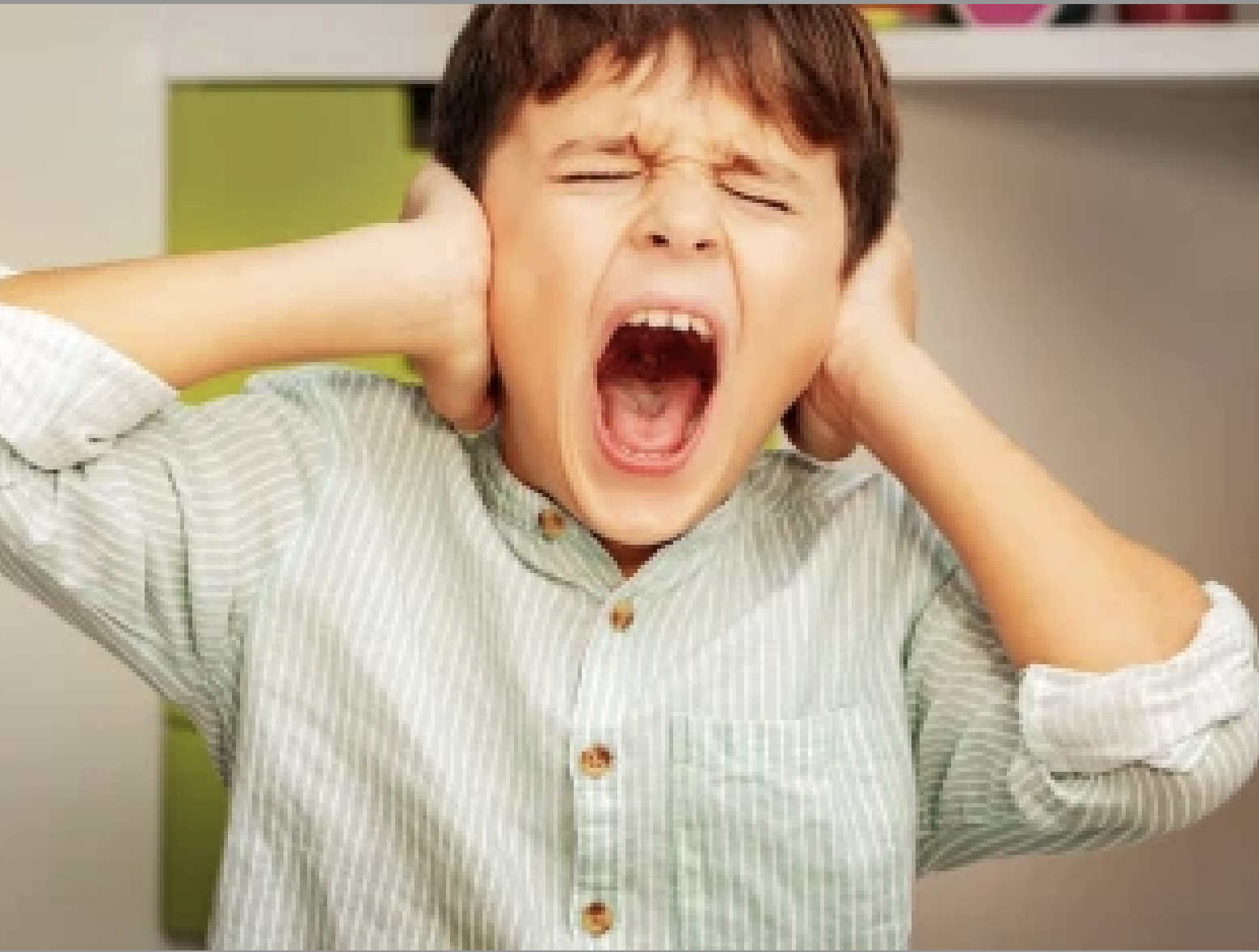
Every state and country where school is compulsory is faced with the problem commonly labeled school refusal. Everywhere, a significant number of kids strongly resist going to school and manage to skip school frequently.
From a legal perspective, refusal to attend school is a crime, and, if prolonged, it may be treated as a crime, even today. Psychologists, however (no surprise), are inclined to think of school refusal not as a crime to be punished, but as a psychological disorder that needs to be corrected through some form of therapy. Yet, as I read the psychological literature on treatment for school refusal, I can’t help but think of some of the treatments as punishment.
How Psychologists Describe and Attempt to Treat School Refusal
If you enter “school refusal” as a search term in any database that covers the academic journals in psychology, you will come up with countless articles devoted to the topic. If you read any set of them, you will find much redundancy.
Most begin with some sort of statement about how damaging it is for a child not to attend school, with statistics showing that school dropouts have all sorts of problems throughout life. The phrase “normal developmental pathway” is used to describe the school pathway, and not going to school then becomes abnormal, pathological. Then the typical article goes on to define “school refusal” (sometimes with capital letters) in some more or less objective way.
The primary symptom is that the child fails to attend school at least a certain number of days per month, with no excused absence, even though the parents are trying to get the child to attend. The definition also includes an emotional component—most commonly anxiety—related to the child’s refusal.
Most children who receive the “school refusal” label experience high levels of anxiety in school and when thinking about school (Tekin & Aydin, 2022; Snegaroff et al., 2025). Indeed, some researchers use the term “school phobia” as an alternative to “school refusal.”
Having defined school refusal, psychologists then go on to treat it as a diagnostic category. It is not, at least presently, an official mental disorder in the diagnostic manual of either the American Psychiatric Association or the World Health Organization, but it is routinely treated as if it were.
In the articles one regularly comes across such phrases as “patients who have school refusal,” as if school refusal were something like measles that one “has” or “doesn’t have.” It’s not an act but a disease. Perhaps I should start referring to my vegetarian wife as someone who “has meat refusal.”
Treatments for school refusal run the gamut of typical psychological and pharmacological therapies. The most common treatment is cognitive behavior therapy, which attempts to get the child to think differently about school and to desensitize the child to those aspects of school that provoke fear, but drugs to reduce anxiety are also commonly used (Elliott & Place, 2019; Fernandes et al, 2024).
Another approach involves family therapy, centered on the idea that this is a family problem (Snegaroff et al., 2025).
In a few cases, psychologists, with the parents’ permission, have resorted to inpatient therapy. For example, Ozger Oner and colleagues (2014) describe the case of an eight-year-old girl who refused to attend third grade because she was “afraid of the teachers, headmaster, and other children.” The treatment involved her incarceration in an inpatient facility where she received therapy and was dosed with increasing amounts of forced time in school, accompanied by a therapist. Only when she was willing to go to school on her own, after three weeks, was she allowed to go back to living with her parents.
Relation of School Refusal to Belief in a Just World
One research study, which I find especially interesting and telling, examined the relation between Belief in a Just World (BJW) and school refusal (Donat et al, 2018). The BJW construct is measured by a questionnaire getting at the degree to which a person feels that the world is fair and that people deserve what they get.
In much of the psychological literature this construct is understood as negative. It is described as the just-world fallacy and a cause of blaming the victim, which is the tendency to blame people who are poor, or discriminated against, or are suffering from a disease or some other malady, for their own condition. If the world is just, then it must be something that they did, or failed to do, that led them to this condition.
By thinking this way, people maintain their belief in a just world despite seeing what others of us interpret as injustice.
Some research—which is the springboard for Donat’s study—indicates that believing in a just world can be psychologically adaptive. People with this belief are less likely than the rest of us to get upset by injustice, because they don’t see it as injustice. Belief in a just world may even help them deal with their own hardships in life, because that belief may lead them to think that the pain they are suffering is ultimately for their own good.
(I can’t help interjecting here that high BJW may be good for the temporary psychological ease of the individual person, but not for society or the long-term welfare of individuals. If we all believed that the world is just, just as it is, we would still have slavery and \\\_ … fill in the blank.)
So, here’s what Donat and his colleagues found. Children who refuse school score lower on BJW than do those who don’t refuse school. This should not be surprising. If you believe that you are being treated unjustly in school, then you are not likely to believe that the world is just. Conversely, if you don’t believe that the world is just, you are less likely to believe that the seemingly bad things happening to you at school are for your own good. So, your beliefs about the injustice of the world and the injustice of school feed upon one another.
Donat’s takeaway from this research is that an underlying problem of children who refuse school is that they don’t believe in a just world. Donat, like almost everyone, begins with the assumption that school, though it entails some hardships, is good, even necessary, for children’s development. He goes from there to say that children who believe in a just world recognize that school is good for them and children who don’t hold that belief fail to recognize that school is good for them. So, if children were brought up in such a way as to believe the world is just, we wouldn’t have this problem of school refusal.
Wow! (He doesn’t mention that we would still have slavery.)
Does School Refusal Imply that Something is Wrong with the Child, or with School?
The great bulk of research on school refusal assumes that the problem lies in the child. The assumption is that school is good, natural and normal, so there must be something wrong with a child who resists it.
It is the child that needs fixing, not the school. This is the same reasoning that leads to the assumption that ADHD is a problem located in the child, not the school (see Letters #87 & 88).
While only a minority of children manifest anxiety about school to a level that leads them to refuse it, school is a source of considerable anxiety for most children. Indeed, in every study I have found in which children are asked about the causes of their anxiety, school is by far the most frequently cited cause (see Letter #51).
Research has shown consistently that schools can decrease the amount of anxiety they create by improving school climate, that is, the extent to which school personnel take students’ needs into account and make students feel at home, appreciated, and respected (see Letter #82). Not surprisingly, the few studies that have looked at factors outside of the child that correlate with school refusal have identified school climate as a major factor (Secer et al., 2025; Sorrentini et al., 2025).
Children who feel such strong anxiety about school that they refuse to attend are, largely, those who feel least free, least respected, least appreciated by their teachers and others at school.
Perhaps the first thing we should ask when a child refuses to go to school is not how can we correct the child but how can we correct the school. What can be done to make this child, and all children, feel more comfortable and respected at school, whoever they may be?
School Refusal as a Human Right
Those who are regular readers of my Substack and other writings know where I am going from here. Compulsory schooling truly is unjust. It is involuntary incarceration. It runs completely counter to the nature of childhood and to children’s real needs to play and explore freely.
And it is not necessary for normal development. That has been proven repeatedly by the thousands of families that have had the knowledge, resources, and legal opportunity to provide Self-Directed Education for their children (for some of the evidence, see Gray, 2013; Gray, 2023).
Many of the families that have chosen unschooling or a school designed for self-direction of their children chose that route precisely because their children were in one way or another refusing school (Gray & Riley, 2013). In fact, resources for Self-Directed Education can be provided with much less expense than standard public schooling and WAY less expense than incarceration in a juvenile detention center or a psych ward.
In a book entitled The Scarred Heart, published many years ago, Helen Smith described the case of a school-refusing 13-year old who was given the choice of returning to school or going into a juvenile detention center.
In Smith’s words, “She decided that the better alternative was to go into her bedroom and hang herself with a belt. … In times past, she could have just dropped out of school, but now kids like her are trapped by compulsory education.” What a shame that this girl was not given the option of home education or a school for Self-Directed Education, where every child can learn in their own way and bullying is almost unheard of (see here).
One clinical psychologist who came to a similar conclusion to mine is Naomi Fisher, who published an article in The Psychologist, the journal of the British Psychological Society, called School’s Out. Here’s how she began the article:
In my early career as a clinical psychologist, I worked with several young people who had stopped attending school. I understood this as anxiety-driven school refusal. I devised graded-exposure programmes, and wrote letters making it clear that in my view a successful outcome would be a return to school. It seemed the reasonable thing to do. One girl, Nina, didn’t want to go back. When I made my perspective clear, she and her family disengaged... they stopped coming. … As I continued to work with children in different contexts, I found myself feeling more uncomfortable with my focus. For some of them school was a positive place, and the problem was indeed anxiety. But for some, school was a painful experience, where they felt like they weren’t learning and weren’t able to be themselves. One boy showed his mum a picture of a caged animal and said ‘That’s how I feel at school’. I felt ill at ease with locating this problem in the child, and assuming that the school itself was fine. What alternative environments were possible? How might they impact the child psychologically?
From this beginning, Fisher went on to describe her discovery of Self-Directed Education. Subsequently, she authored a book entitled, Changing Our Minds: How Children Can Take Control of Their Own Learning. Currently she authors a Substack, which I recommend, titled Think Again.
We need more Naomi Fishers—clinicians who are willing to listen to children with open ears and willing to question a system that demands that every child must get educated (or go through the motions of getting educated) in the same, standard, forced way.
Further Thoughts
Maybe, at least to some degree, the school refusers are the courageous ones. Refusing school takes more than a recognition that the world is unjust and that you are being treated unjustly in school and that you experience anxiety at the thought of it.
It also takes courage, especially when the injustice that you see is viewed as normal and reasonable by everyone around you. Think, for example, about times and places when the decision as to whom a young woman would marry was made by her father. Refusal to follow the father’s orders was in some cases a crime and in others a psychological disorder. Women were sometimes put in mental hospitals because of it.
It takes courage to say, “Hell no, I won’t go,” when everyone else operates on the assumption that going is necessary and not going is crazy.
And now, what do you think? Do you know people who would have fit the “school refusal” diagnosis? What happened with them? This Substack is, in part, a forum for discussion. Your thoughts, including disagreements, are treated with respect by me and other readers.
Play Makes Us Human is a reader-supported publication. To receive new posts and support my work, consider becoming a free or paid subscriber.
### References
Donat, M., Gallschütz, C., & Dalbert, C. (2018). The relation between students’ justice experience and their school refusal behavior. Social Psychology of Education, 21, 447-475.
Elliott, J. G., & Place, M. (2019). Practitioner review: School refusal: developments in conceptualization and treatment since 2000. Journal of Child Psychology and Psychiatry, 60, 4-15.
Fernandes, C-S. F., et al (2024). Systematic review of interventions with some school involvement for school refusal in high-school age adolescents. Children & Schools, 46: 85-95.
Gray, P. (2013). Free to Learn: Why unleashing the instinct to play will make our children happier, more self-reliant, and better students for life. Basic Books.
Gray, P. (2023). Self-directed education—unschooling and democratic schooling. In G. Noblit (Ed.), Oxford research encyclopedia of education. New York: Oxford University Press.
Gray, P., & Riley, G. (2013). The challenges and benefits of unschooling according to 232 families who have chosen that route. Journal of Unschooling and Alternative Learning, 7, 1-27.
Ingul, J. M., Havi, T., & Heyne, D. (2019). Emerging school refusal: A school-based framework for identifying early signs and risk factors. Cognitive and behavioral practice, 26, 46-62.
Isil Tekin & Salami Aydin (2022). School refusal and anxiety among children and adolescents: A systematic scoping review. Child and Adolescent Development, 2022, 43-65.
Oner, O.,et al., (2014). The inpatient treatment process for severe school refusal, Klinik Psikofarmakoloji Bülteni—Bulletin of Clinical Psychopharmacology, 24, 176-179.
Secer, I., et al (2025). School refusal and its underlying mechanisms: A network perspective on individual and environmental determinants. School Mental Health, 17, 1283-1299.
Snegaroff, C., et al (2025). Does multifamily therapy help parents of adolescents with anxiety-based school refusal? A qualitative approach. PloS One, 20: e0334037.
Sorrentini, L., et al (2025). The mediation role of school alienation between perceptions of school atmosphere and school refusal in Italian students. Education Science, 15, 766.