Inside Town, the hot startup building an actually helpful AI work assistant
Published: 2026-10-15
URL: https://nextplayso.substack.com/p/should-you-join-town
✨ Hey there - this is a free edition of next play’s newsletter. This is part of our series Should You Join, where we go behind the scenes on interesting companies. Our hope is that documenting these sorts of details, which never really make it to big publication press releases, can help you a) discover more interesting opportunities and b) inspire you to think creatively (for any of your own endeavors). You can join our private Slack community here and access $1000s of dollars of product discounts here.
It’s hard to go a day without hearing how powerful AI has become.
And, yes, it’s true. AI has become powerful. But I think there’s a separate question to be asked: how many people are actually making the most of this power? Are people using AI capabilities to its fullest extent to help them be more productive and focus on the work that matters?
It can certainly feel that way, sometimes. ChatGPT is powerful. Claude is powerful. It feels good to ask them questions, and sometimes they can help you with certain tasks. But what if I told you the chat box interface is just scratching the surface of how powerful AI can become?
The tech industry seems to be realizing this for personal matters (see: the whole sea of new ‘AI for life’ assistants in the past couple of months). But, until recently, it did not appear that there was a great solution to the ‘AI for work’ problem; a product that knows how you work, lives in the tools you already use daily, and helps you get things done with your team, not just on your own.
I say until recently because, in June 2026, founders Jean-Denis Greze and Tony Vincent came out of stealth with Town: an AI assistant for work. Town makes AI useful and collaborative for everyone. It’s an AI work assistant that learns how each person works best and then helps them get things done, both on their own and with their team. And it’s meant to be easy for anyone to use, because, as Town says, the best technology doesn’t ask you to learn it, it learns you.
This ‘we’re not like the other AI tools’ idea is certainly exciting (and people are excited), but it would be reasonable to have questions. Like: what makes the product unique? Why might it win in the long run amid a sea of other personal AI assistants? What’s the company culture like?
And should you join?
The product
Every big shift in computing has changed how close the computer gets to you. The personal computer put one on your desk, and the smartphone put one in your pocket. Town has recognized that AI offers a new opportunity: now, the computer can get to know you.
You start your experience with Town (and your relationship with your AI assistant, a Townie) by connecting your email and calendar. From there, your Townie starts learning everything about you: your voice, your projects, your people, how you work. Your Townie will notice, for instance, that you write to your team casually and to your clients more warmly. They will pick up the little nuances in your writing. You don’t have to do any teaching or prompting to get your Townie to start learning how you work; this is just part of the product.
Quickly, your Townie learns how they can be most useful.
One sentence is usually enough to hand something off: “reply to James,” “find a time next week for me with Jessica and the eng team,” “add the numbers from Dana’s email to the Q3 sheet”. You can send these directions from the Town app or within virtually everywhere you might work, like email or Slack or text. You choose which tools your Townie connects to, so when you ask them to do something, they can figure out what to do and how without asking for instructions.
Over time, your Townie becomes even more helpful. Tell them something once and they remember, and every correction you make shows up in the next draft. They also learn what they can take on without being asked. For example: if you send the same update every Friday, they’ll offer to make that a weekly routine. If something across your workspace needs attention, they’ll point that out. “The product tells you what it can take off your plate instead of asking you to figure that out yourself,” Kendall Fornaciari, who works on product marketing at Town, told me.
Most work involves other people, so your Townie helps with that, too. “Other AI assistants help you work. Only Townies help you work together,” as Town puts it. AI assistants have changed what each of us can do on our own, but the work between people hasn’t really changed. We’re still constantly interrupted with asks, or stuck waiting on one, and today’s assistants can’t help, because what you need is sitting in a teammate’s inbox or on their calendar, where neither your own assistant nor a shared bot can see it. In Town, everyone has their own Townie that knows their work in depth, and those Townies work together to keep things moving.
“Your Townie can ask a colleague’s Townie a question and get an answer without either person in the middle,” Kendall said. And when someone sets up a routine that works well, they can share it so everyone’s Townie can start doing it, too.
Kendall also walked me through what Town does for some of its early users. Every user gets a Townie, a personal AI assistant that learns how you talk and work across all your tools, then gets to work. For a recruiter, it updates Ashby with notes from the day’s calls and emails. For a salesperson, it logs every call in Salesforce and drafts the follow-ups before she’s back at her desk. For a founder, it flags the two emails and three Slack messages that actually need a reply today. For a venture investor, it summarizes the week’s newsletters and pulls in the research behind them. The list went on, but the pattern was clear: whatever your job, your Townie handles the work around the work, often before you think to ask.
“We’re deeply focused on serving users outside of tech and the Bay Area [in addition to serving tech], Mike Lyngaas, who works on the Town product and who previously worked in product leadership on Webflow, Gusto, and Unify, said. “For many of Town’s biggest fans, we are delivering their first ‘aha’ moment with AI, which is incredibly energizing.”
The strategy and growth
In June, when Town came out of beta, Jean-Denis and Tony published an essay explaining why they built it. “The relationship between a person and their AI is the most important design problem of this decade in technology,” they wrote. “The hard problem isn’t the model or the benchmarks. It’s the relationship.” Their bet is that the AI product that wins will be one that people have a real, personal relationship with, not one they treat as a faceless tool.
For that to work for most people, the product needs to meet them where they already are. So Town’s goal is to learn how you work and make itself as useful as possible, and it wants to do this without any learning curve. This is how you make AI useful for not only a small slice of tech people, but also for the small business owner, the teacher, and the busy parent.
“The only way to reach [these kinds of people] is to do the hard work for them, to make the technology so intuitive, and so woven into the way they already work, that they never have to think about ‘using AI,’” the founders wrote.
Being this deeply-embedded, as you might imagine, requires building a lot of trust. “Town always acts with your permission,” Kendall said. “Trust takes years to earn and about a minute to lose.” That’s why your Townie works in the tools you choose, uses the best model for the job, and works only for you.
The other big piece is teamwork. AI has made each of us faster on our own, but a lot of the time it saves gets lost waiting on other people. Town wants whole teams, not just individuals, to move at the speed of AI. Townies can ask each other questions, share what they know, and hand off work, so the back-and-forth that used to wait on people happens much faster. Each Townie only shares what their person would share, and they bring that person the decisions that actually need them. And every exchange teaches the Townies more, so the longer a team uses Town, the better the whole team works. “Nobody has solved multiplayer AI yet, and it’s the piece that compounds,” Kendall said.
It’s also how Town plans to grow. Once people are happy with their own Townie, “They bring it to their work (PLG), and grow usage within companies,” Jean-Denis said. “We help this journey by providing amazing multi-player building blocks for AI.”
Long-term, Jean-Denis thinks the time people spend working in apps “will trend from 100% to 0%,” replaced by work done with AI, and that Town becomes “something akin to a browser or a device: the medium through which humans interact with digital information.” The mission of Town, then, “is to help everyone manage this transition in a way that maximizes human potential and leverage.”
The culture
The main impression I got from talking to the Town team is that the culture is a company with an experienced team that works hard to prioritize getting people back to their lives every evening.
You’ll do lots at work, Lisa Campbell, Town’s Head of Business, said, but people here have real lives outside of work. Kendall, for example, is a mother with a three-year-old and a one-year-old. Before Town, the part of her that “loves to build, the part that lives for moving fast and testing and learning and all the messy fun of a startup, had gone quiet. I assumed that was just the trade. Then I met the founders at Town, and it came back.”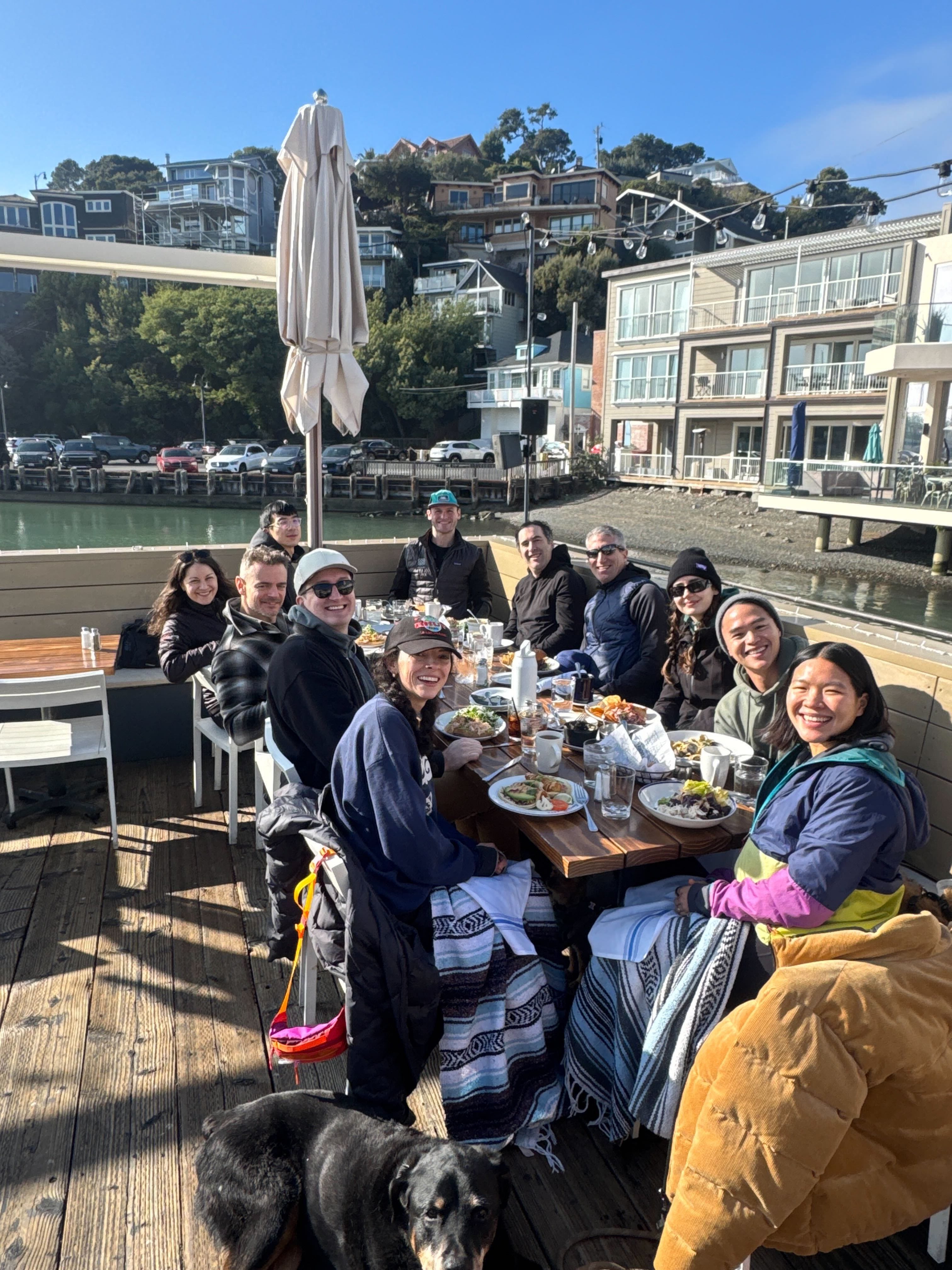
What’s different about Town, Kendall said, is that “this is a genuinely early-stage company with all the speed and ownership I missed, and it’s also a place that understands I have two little kids at home. I did not think these two things came together. The founders respect boundaries,” she said. “They know everyone has a family to go home to.”
With this respect comes lots of autonomy. “Half of our roadmap is determined by our core strategy.” The other half is a ‘see a problem, go solve it’ approach, Mike said.
The personality of a company is often directly downstream of the way its founders work, and both Jean-Denis and Tony are “kind, but here to win, and they push you in exactly the right ways… Jean-Denis in particular loves to question why,” Kendall said. “Whatever I bring him, he wants the logic underneath it. Why this channel, why this sequence, why now.” As for Tony, he’s the ‘product soul’ and holds “an unusually high bar for product design.”
Folks at Town are working hard five days per week in the company’s SF and NYC offices. People are together, yes, but there aren’t many formal meetings. And, like you might expect, everyone has a Townie. “It’s the first time I’ve built a product where I’m an HAU (Hourly Active User),” Mike said. A big subset of the team still eats lunch together around the same table. And if you were wondering how people like the vibe, well, as of this writing, nobody has quit yet.
Should you join Town?
You can’t write about Town without acknowledging that it is, in fact, a very hot startup. It’s growing fast, raising money fast, has real revenue, people are writing about it… Town is a big deal! Joining now is getting in early on a company that is an investor and consumer darling and has a very positive trajectory. The team is also building a product that its founder describes as being able to make more than a trillion dollars in revenue and define the way people both interact with AI and do work as a whole. That is, obviously, ambitious.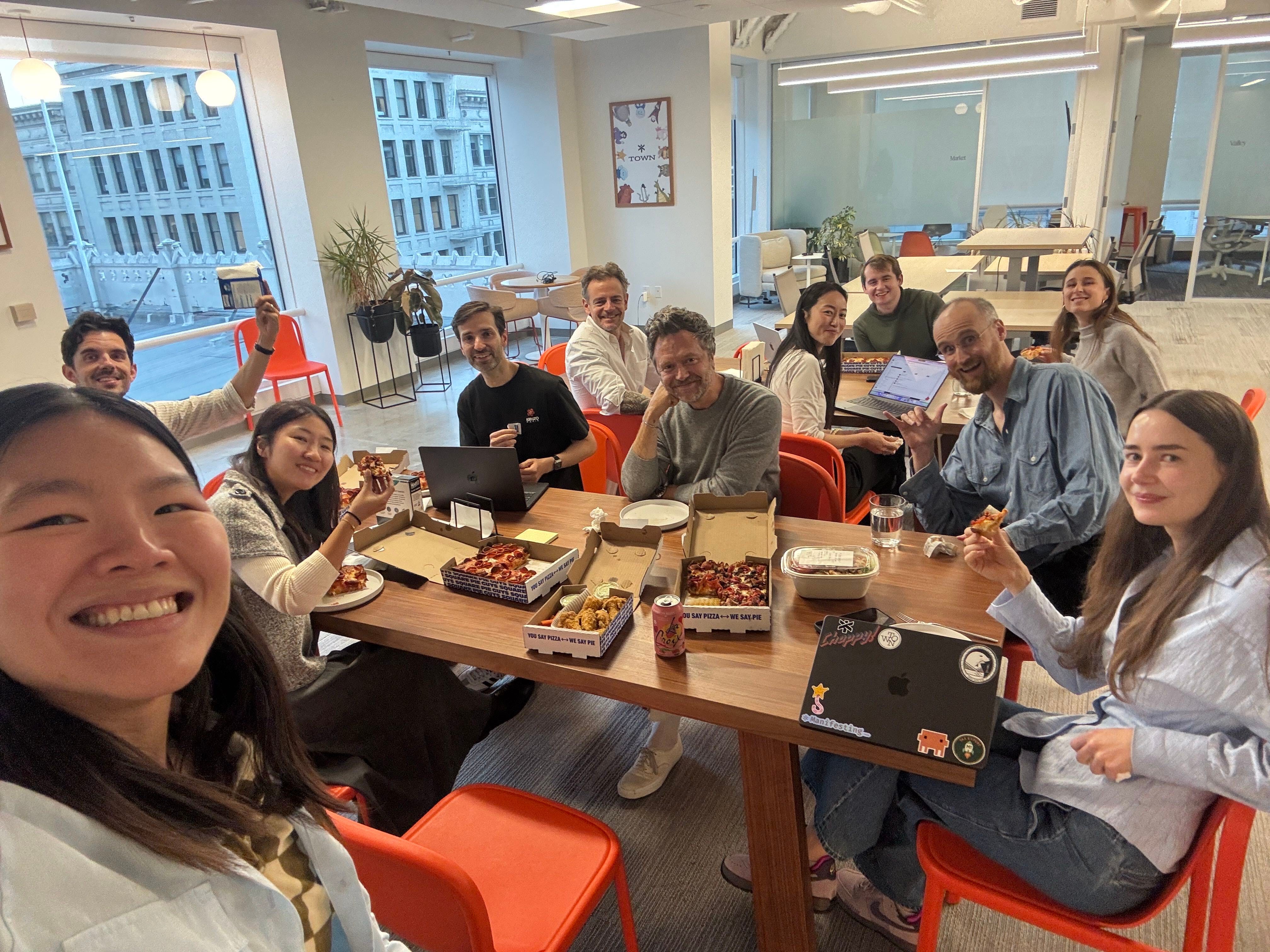
As for who’s a great fit, the team at Town has a rather specific definition. “We joke that everyone here has the same sickness,” Kendall said. “We’re all a little extreme. Almost everyone on this team could be at a later-stage company with a more senior title right now, and instead we’re all obsessed with early-stage. That’s a narrow profile to hire for,” she said, and results in Town hiring at a slower pace than most startups probably do.
So I’d say that if you’re looking to take a big swing at an early and fast-growing company, and if you’d like to help potentially define the future of AI, and if you’d like to work alongside a bunch of caring and talented people who you can learn a lot from… Go explore Town’s open roles. The company is hiring across every department right now, and I don’t expect it to slow down soon.
Thanks to Town for supporting Next Play and making this essay possible.