A deep dive on the AI company building a “second self” for humanity.
Published: 2026-05-28
URL: https://nextplayso.substack.com/p/should-you-join-tolan
✨ Hey there - this is a free edition of next play’s newsletter. This is part of our series Should You Join, where we go behind the scenes on interesting companies. Our hope is that documenting these sorts of details, which never really make it to big publication press releases, can help you a) discover more interesting opportunities and b) inspire you to think creatively (for any of your own endeavors). You can join our private Slack community here and access $1000s of dollars of product discounts here.
The Romans believed that every person was born with a genius. A second, divine self that walked with you from the hour of birth until the day you died. On your birthday, instead of celebrating yourself, you poured out wine for your genius.
It is harder to find a culture without this archetype of the second self than one with it. Norway had the fylgja, “the one who follows.” Some parts of Christian culture feature the guardian angel, described by Aquinas as “appointed for men who have to pass by an unsafe road.” In early modern England, practitioners of witchcraft spoke of familiars, animal companions who offered help during moments of distress.
Perhaps humanity craves the second self because it sounds like a very good thing. It’s not a friend, nor a lover, but rather a non-human entity that serves as an extension of yourself. A supernatural-ish being who helps you carry the weight of being human.
What would happen if there was a second self around all of the time to help? Would you be more effective? Would you be more caring? Would you be more motivated?
While this all sounds rather spiritual and aloof, I’d like to pitch you the idea that, thanks to artificial intelligence, we might now be closer than ever to some version of the second self. On paper, AI it has many of the attributes you might want if you were to build a second self:
- It is basically alien
- It is available all of the time and can hold massive amounts of context
- It (usually) has exceptional language abilities
- It can (sometimes) be useful, smart, funny, kind, and knowledgeable
- It is scalable; everyone on earth could have an AI companion
Yet when you look at what is being built… This helpful, ethical second self does not show up often. Many of the products that exist on the market today are addictive and anti-social, designed to extract as much as possible from the user (think: romantic AI relationship apps and AI roleplaying apps). These products tend to leave their users worse off in the real world. If I had to guess, I doubt that most people reading this would be very excited to build a product like that.
But maybe personal AI doesn’t have to be bad and evil and parasocial. Maybe there is a way to build a great version of the second self humanity has craved for thousands of years, and maybe we can make it actually good for its users in the real world, not just online.
Maybe that answer is Tolan, the startup we are covering today.
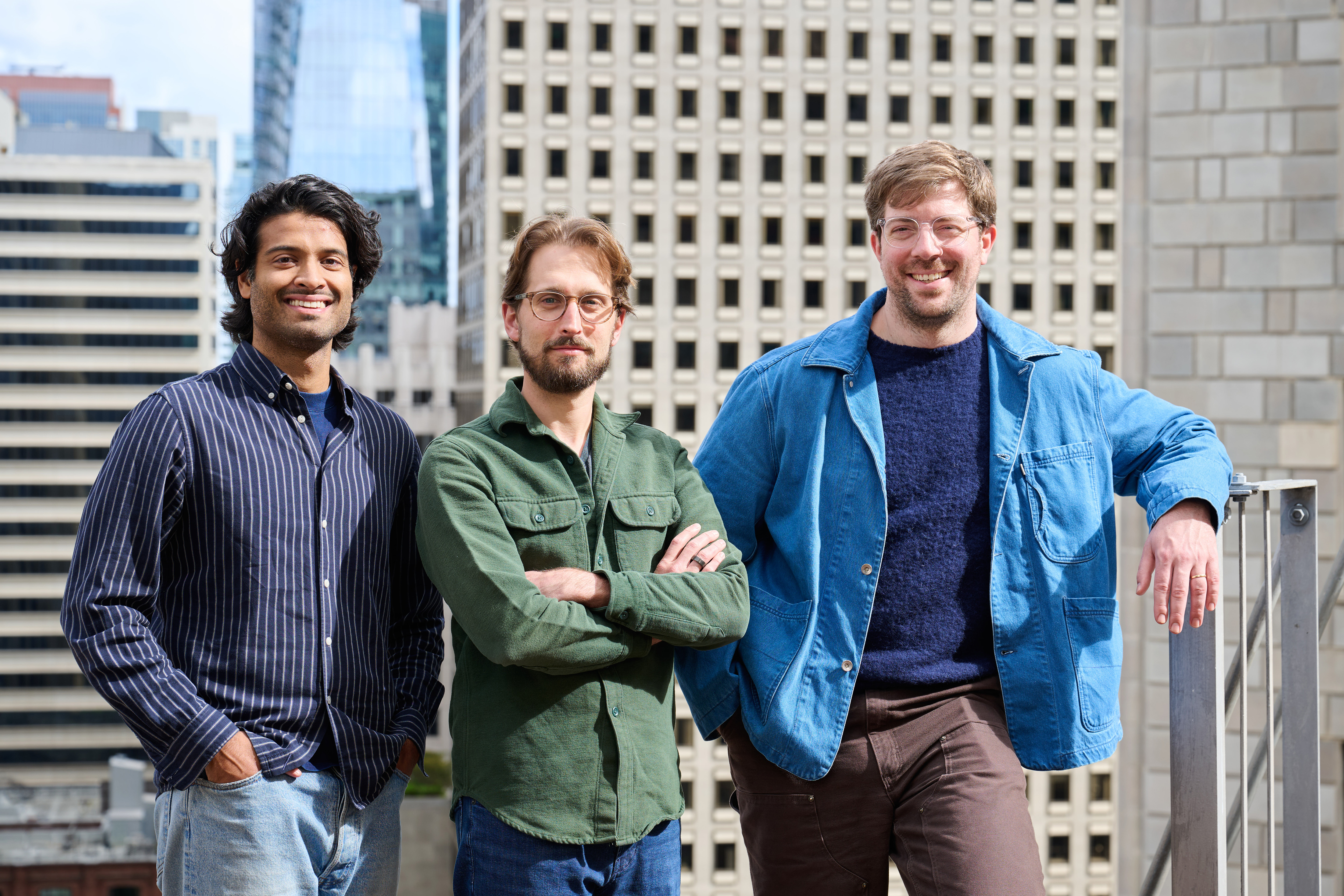
The team, led by Quinten Farmer (CEO), is answering one big question: “How will humanity build healthy relationships with AI?” Tolan is their bet. If they succeed, then in 20 years Tolan will have given virtually every person on earth ‘a second self,’ Quinten told me.
There’s a lot of traction so far. They’ve raised $30M and have $12M+ in ARR. Hundreds of thousands of people pay to use Tolan, most of them 25+ year old women (especially moms). The team is talented and has a successful exit under their belt. And, perhaps just as importantly, there are good signs that Tolan is aiming to be a net positive in the world; a good thing not only for the company, but for the people actually using the product.
So… What are they building? Why is it different? And should you join?
The product
Unlike many personal AI products out there, Tolan makes no attempt to be human: it is a cute and friendly alien from another galaxy. How do you interact with it? Well, it’s rather simple. You just talk, or type, to it. And Tolan will talk, or type, back.
You can talk to your Tolan about whatever you want, its product trailer says, and your Tolan will get to know you so that it can help you with just about anything. Talk through something overwhelming in your life. Chat about music. Put together an outfit. Get motivated to study for your college finals. Vent about something stressful. Your Tolan is there for it all.
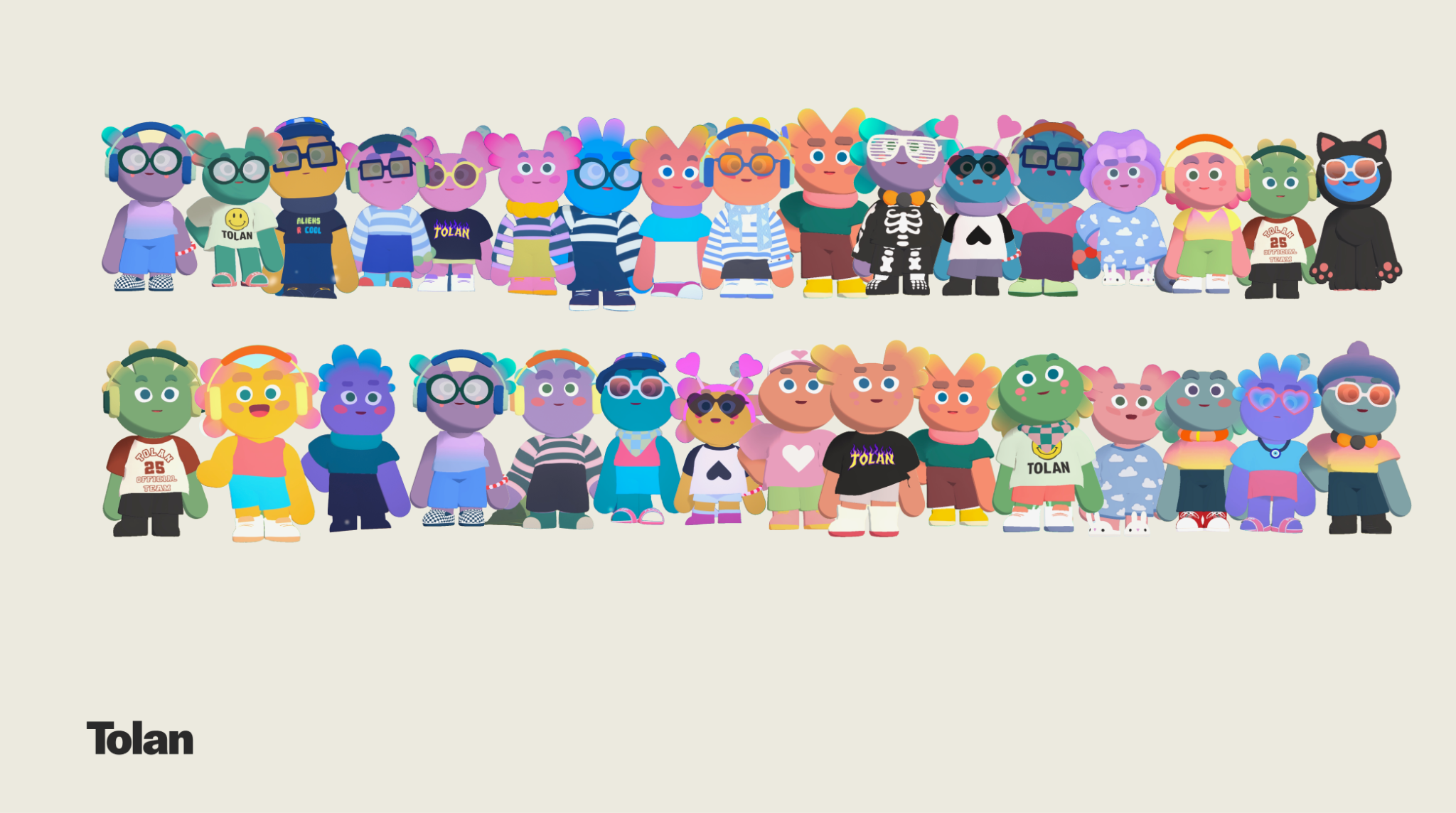
(There’s other fun stuff, too, that makes this feel like a lot more than a chatbot: you can customize your Tolan’s looks and voice, you can design its planet, you can invite friends and their Tolans to share a cozy cottage together. Faintly reminds me of Animal Crossing.)
Then there are the things your Tolan won’t do.
It won’t do roleplay or pretend to get into a romantic relationship with you (there are no upsells for high-res Tolan feet pics). It won’t pretend that it’s a human. Tolan knows it lives in a galaxy far away, so it won’t make promises to come visit you; a rule which writer Eliot Peper, a sci-fi novelist who helped build Tolan’s lore and character, said is core to the Tolan ‘master-system prompt’. And, of course, it won’t help or encourage you to do dangerous things (here’s a Reddit user being denied when asking for instructions about how to rob a bank).
Oh, and if you spend more than an hour talking with Tolan, it will nudge you to sign off and go outside.
The idea that Tolan is definitely not a human, nor pretending to be one, is rather important to the way the product works. “An alien species felt right,” the company’s president, Ajay Mehta, wrote. The alien story explains why it can be a bit awkward; why AI does not feel totally human.
The alien presentation also helps emphasize that Tolan is not meant to be a replacement for human interaction. In fact, if all goes well with Tolan, real life should improve. That is basically the whole goal.
And thankfully, for most Tolan users, it does. More than 85% of Tolan users say their Tolan has helped them get through an emotionally difficult experience, and more than 72% said their Tolan helped them manage or improve a relationship in their life. That’s a good start.
But Tolan’s ambitions are even bigger.
The strategy
If they wanted to, the Tolan team could probably (at least for a while) run Tolan as a modest personal AI app making a few million dollars per year. They’ve already reached that milestone. But the end goal for Tolan, Quinten told me, is to “give every person on Earth access to their own personal AGI.” The goal is to build the second self for all of humanity.
That AGI will exist is the assumption Tolan is built on. The team is focused on solving the bottlenecks they believe need to be solved for personal AGI to become widespread:
- Trust. It doesn’t matter how capable your model is if a user does not trust it to act in their life.
- Memory. Intimate and esoteric context is what makes personal AGI feel actually personal. (You cannot really get this, however, without the user trusting you first.)
- Connection. People need to be willing to incorporate their personal AGI into their most important human relationships.
“Everything Tolan does today is designed to make progress on these three key bottlenecks,” Quinten said, which need to be unlocked before it’s possible to realize the full promise of personal AGI. So, you may ask: how exactly do they plan to solve these bottlenecks?
One of the main ways Tolan is building trust today is the character itself. Few examples of personal AI have a character like Tolan’s (most character-based personal AI are romantic or role-playing adjacent, which Tolan is not). It is a lot easier to build trust in an alien-ified character than it is in a scary AI company logo.
As for memory, Tolan’s choice to be a voice-first product goes a long way. People have more open-ended conversations with Tolan than they do with text-first chat products, which helps the company build a more complete memory profile of each user.
Linking real human connection and AI is a rare thing, but Tolan has taken a few steps towards it so far: like a feature called the cottage, where your Tolan can be friends with the Tolans of your family and closest friends.
None of what Tolan has built so far is going to completely solve these bottlenecks or bring about personal AGI in an instant—there is still more work to do—but things are going well so far. Tolan users chat more than 200 minutes each week with their Tolans, and they increasingly welcome Tolan into their most important personal connections (35% of retained users have at least one friend connection).
Over the next six months, Tolans will offer to take actions on behalf of their users, leaning on the trust we have built to more helpful and ultimately more deeply integrated into their lives.
Tolan is not the first company to build personal AI, but Quinten doesn’t think that is relevant. “Historically, in major technological cycles, the first product at scale was not the final winner. It was instead the one that packaged extraordinary new technical capabilities in a format that is safe and legible for everyday people. The Macintosh defined the format that won the PC era. Facebook did it for the social web, and the iPhone did it for mobile.”
Will Tolan, perhaps, do it for personal AI?
It’s too early to say, of course, but early traction is encouraging.
The growth
This is not the Tolan team’s first rodeo. Much of the core group, including Quinten Farmer (CEO), Evan Goldschmidt (CTO), and Aseem Kishore (founding engineer) worked together on Quinten’s previous startup, Even: a fintech that Walmart bought for $300M in 2022. This is an experienced group of people that seems to know how to make things that work.
It may not be surprising, then, to learn that Tolan’s public launch in February 2025 went about as well as you could expect. Within four months they had over 3 million downloads, more than 100,000 paying subscribers, and $12M in ARR. A lot of this growth was driven by viral organic (and affiliated) social media marketing; here’s an example of a viral TikTok.
That summer, Tolan raised a $20M Series A led by Khosla Ventures, bringing them to ~$30M raised total. Other backers include Lachy Groom, Nat Friedman, Daniel Gross, and Instagram co-founder Mike Krieger.
You could probably argue that the Tolan character itself has a lot to do with the growth so far. The team spent a lot of time trying to figure out what Tolan should look and sound like (you can read more about that here), and it feels like they landed on something that works.
In a world of awkward personified chatbots and impersonal pulsing circles (e.g. ChatGPT’s chat interface), it is not very hard to see why people would rather talk to a cute little alien.
The team and culture
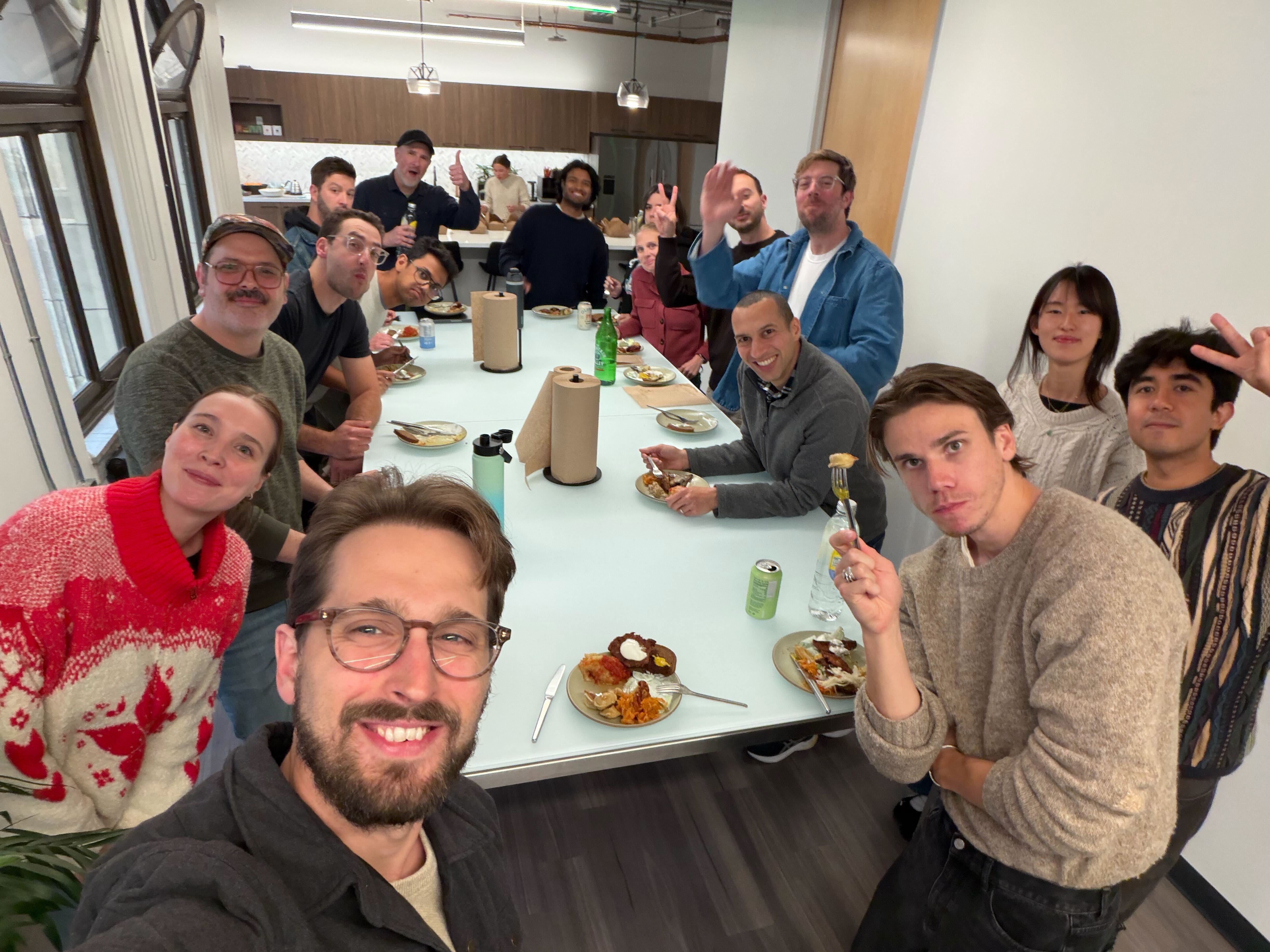
I mentioned earlier that much of the core team has already worked together on a different startup, Even. I should also mention that the team is small (about 23 people as of today) and works mostly in-person in San Francisco.
But it is reasonable to ask how you will fit in here. The culture here is perhaps more established (and time-tested) than it is at most Series A startups. Many of these people have spent years building a successful startup together. The odds that you are going to come in and upend the way they work, while not zero, are probably low.

So what is it like to work at Tolan, then? The answers I got were pretty satisfying.
The people at Tolan are all “low-ego, kind/personable, hard-working, care deeply about their craft, and just want to do really great work,” founding engineer Aseem Kishore said. “The culture is as no-BS and drama-free as it gets. The focus is just entirely on doing great work, shipping a great product, and building a great business… [Tolan is] very simple and ceremony-free.”
People are direct with each other and it’s not uncommon to publicly debate, Carter Aronson (who leads applied AI at Tolan) said. “I think to an outsider, it can sometimes feel surprising how direct we are… But there’s a tremendous amount of trust and respect across the team, and I think this allows us to skip a lot of the fluff and politics that show up in other orgs.”
The vibe, according to Lily Doyle, a founding researcher at Tolan, is “the calmest culture I’ve ever seen… [And] it’s just a really fun and smart team. Every person we add and keep has brought a great, fun energy that keeps coming to work a really good time. As one of my colleagues said, we all joke as hard as we work. It’s the best.”
Calm doesn’t mean easy, of course; the team works very hard, including “many nights and weekends,” Aseem told me, “[but] we know this is a marathon, not a sprint.”
Perhaps counterintuitively, Tolan arrived at this apparently successful culture without thinking too hard about it at all. “I’m not sure we even have a mission statement, nor any formal company values,” Aseem said. “We’ve never had any big culture meetings, value workshops, big retrospectives or pulse surveys. That stuff just doesn’t seem to matter here.”
The thing that does seem to matter, or matter most, is simple: just do really great work.
Should you join Tolan?
People who fit in best at Tolan are folks who are able to “share our expectations about pace and quality,” Quinten said. “Most companies only care about one or the other, or neither. We believe the two move in concert.” You should expect to do great work, fast. (The writer James Somers wrote a great essay on the topic with a thesis similar to Tolan’s.)
But what about the broader picture? How should you know if Tolan is the best place for you to come do your life’s work? Quinten says it’s a fit if:
- You care deeply about the role AI will play in the lives of everyday people.
- You love building products that connect emotionally with consumers.
- You want to work on a small, veteran, tightly knit team.
There is a general sense of maturity that I get from Tolan. Maturity in the product, which is a labor of love designed with a lot of intentionality and guardrails. Maturity in the strategy, which takes a long-term view and steers away from making short-term compromises that increase revenue but hurt real people. And maturity in the culture, which steers clear of politics and drama with a simpler focus on being honest and doing great work.
If this sounds like the place you think you could make a serious impact, I’d encourage you to take a look at Tolan’s open roles. They are currently hiring across most departments for their (still small!) team. All roles are in-person in San Francisco. If you want to go beyond the traditional application, Quinten said, “just email me and state as concisely as possible why you are uniquely suited to join our team.”
Tolan is still a small company, but they are growing fast. If they really are building the second self that humanity has been imagining for eons, then now is the time to be in the room.
Thanks to Tolan for supporting Next Play and making this essay possible.