I spent more than 15 hours this week digging through AI news to get you the 6 stories that really matter in 6 minutes. Here they are—plus a conversational prompt so you can apply them in your context!
By Nate
Published: 2025-11-08
URL: https://natesnewsletter.substack.com/p/grab-this-weeks-news-prompts-6-minutes
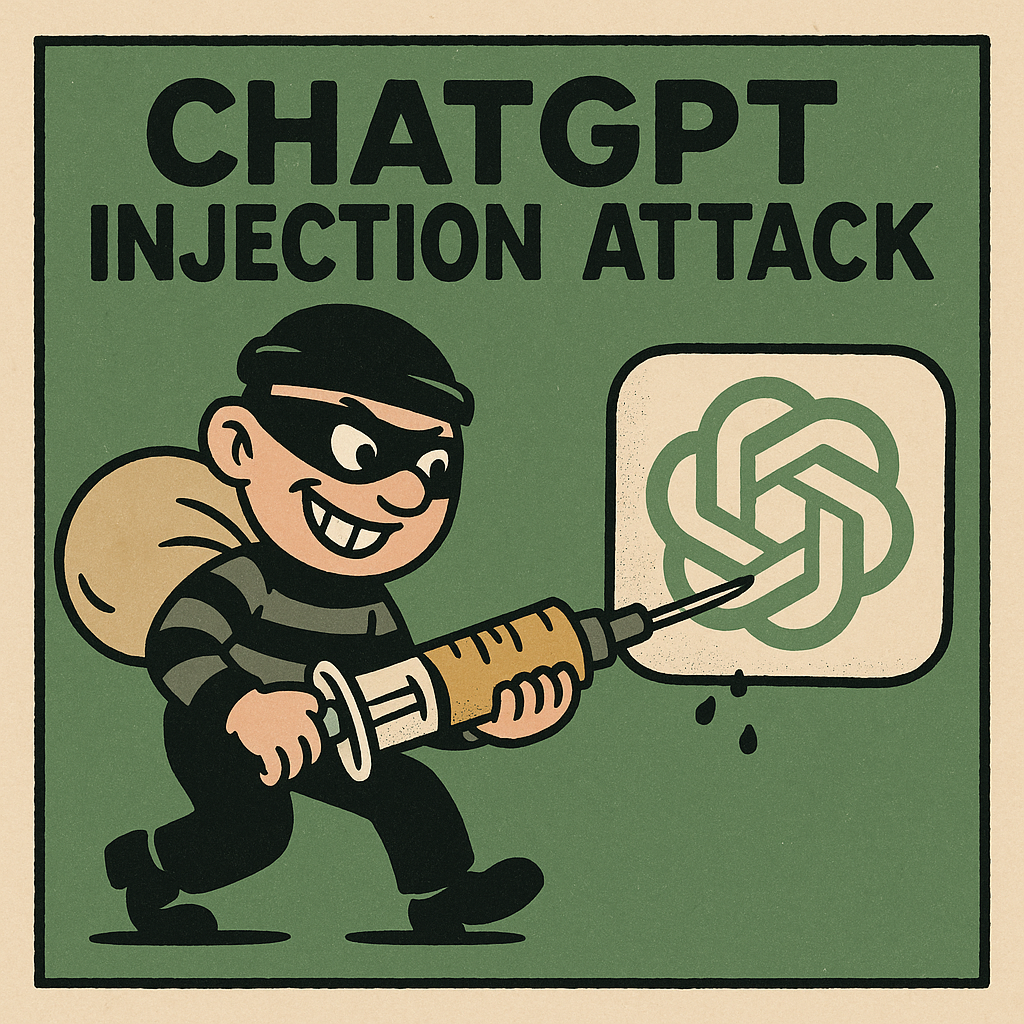
Biggest story of the week? Researchers disclosed seven vulnerabilities in ChatGPT—including GPT-5—that enable silent data theft through zero-click attacks.
Yes, it’s real. No, it hasn’t been seen in the wild yet. But it’s also not fixed yet either.
Meanwhile, 84% of enterprises say their data infrastructure needs “complete overhaul” before AI can work. And Cognizant just deployed Claude to 350,000 employees—presumably they have the data side figured out.
Not to be left out, OpenAI hit 1 million business customers—the fastest platform growth in history—while Snowflake customers deployed 15,000 agents in three months.
Stepping back from the rush, I think we’re seeing deployment speed continue to accelerate across technical challenges. The organizations scaling aren’t waiting for perfect security or pristine data infrastructure.
They’re designing around known constraints while others debate whether to start. That gap is widening fast, and it’s being driven more by execution than by which model anyone chose.
Top Stories this week (plus a custom prompt to help you digest it all)
- Seven ChatGPT vulnerabilities expose continuing prompt injection vulnerabilities
- Critical intel if you’re deploying agents with web access or tool use
- Security model implications for every builder
- 84% of orgs say data infrastructure can’t support AI deployments
- Explains why enterprise pilots fail regardless of model quality
- The 18-36 month timeline nobody’s talking about
- Three enterprise platforms launch agentic AI tools in 48 hours
- Snowflake, New Relic, SnapLogic all bet on agents simultaneously
- MCP emerging as de facto standard across platforms
- GitHub Agent HQ makes multi-agent orchestration standard
- Mission control for running multiple AI agents in parallel
- Why orchestration is becoming the new platform play
- Cognizant deploys Claude to 350,000 employees globally
- One of the largest enterprise AI rollouts disclosed
- Consulting firms as AI distribution channels
- OpenAI hits 1M business customers, proving bottom-up model
- 7M ChatGPT for Work seats, 40% growth in two months
- Consumer-to-enterprise pipeline generating fastest penetration ever
I spent 15 hours reading AI news so you could catch up in about 6 minutes. But reading without application is just information hoarding.
I’m including a personalized analysis prompt designed for this week—a structured conversation that maps deployment realities, security constraints, and infrastructure gaps to your specific role and decision timeline.
No more “this is concerning, but what do I actually do?” You get the strategic context plus a structured prompt to extract what matters for your situation and build around the constraints that aren’t going away.
Plus if you want to learn more, I added a custom Perplexity research project, so you can go deep on the stories that interest you.
Let’s get to it…
Subscribers get all these newsletters!
Grab The 5 Minute Prompt for This Week’s News
Got no time? Just have a chat with ChatGPT and you’ll get the news that matters to you. The prompt is entirely self-contained and includes all six of these stories as well as prompt rails to focus on what matters to you. Dig in and enjoy news in the chat!
Top 6 AI News Stories for Builders: October 31 - November 7, 2025
This week exposed the fundamental tension in enterprise AI: deployment is accelerating faster than our ability to solve architectural problems. Two research teams revealed unfixable vulnerabilities. Enterprise data shows 84% of organizations can’t support AI regardless of model quality. Yet production tools are launching, 350,000-employee deployments are happening, and OpenAI hit 1 million business customers.
The pattern: agentic AI moved to production before we solved the hard problems. Some organizations are designing around constraints and scaling fast. Others are discovering that data infrastructure debt blocks progress regardless of which model they choose.
Story 1: Seven ChatGPT Vulnerabilities Expose Unfixable Prompt Injection Problem
What happened: Tenable Research disclosed seven vulnerabilities in ChatGPT (including GPT-5) that enable silent data exfiltration. The worst: zero-click attacks where users asking “What is [topic]?” trigger SearchGPT to retrieve attacker-controlled content containing malicious instructions. These instructions poison ChatGPT’s memory, then silently transmit chat histories to attackers. OpenAI patched some exploits, but several remain functional on GPT-5.
Why it matters: While this hasn’t happened in the wild yet, every external system an LLM touches—browsing, search, APIs—has the potential to become an injection vector. Current architectures can’t distinguish between legitimate user instructions and attacker-controlled data. Memory poisoning creates persistent compromise: one successful attack poisons future sessions. Zero-click exploits are especially risky because they eliminate user discretion entirely.
For builders: if you’re deploying agentic systems with tool use or web access, you’re working with a security model that has known gaps. The more capability you add, the broader the attack surface. Assume this is an architectural constraint to design around.
What to watch: Whether AI vendors implement architectural changes (separate instruction and data channels) or continue patching individual vectors. Track how enterprises develop security protocols around this.
Story 2: 84% of Orgs Say Data Infrastructure Can’t Support AI
What happened: Salesforce surveyed 6,000+ data leaders globally. Result: 84% say data strategies need “complete overhaul” before AI works. While 63% of executives claim to be “data-driven,” 63% of technical leaders say they struggle with data priorities. Data leaders estimate 26% of organizational data is untrustworthy, and 42% lack confidence in AI outputs. The core problem: agentic systems need real-time access, strict governance, and contextual metadata. Traditional data warehouses optimized for periodic reporting weren’t designed for this.
Companies using zero-copy architectures (direct source system access vs. stale warehouse replicas) are 34% more likely to succeed with AI.
Why it matters: This explains why many enterprise AI deployments fail regardless of model quality. The infrastructure demands of agentic systems differ fundamentally from analytics workloads. The 84% requiring complete overhauls face 18-36 month infrastructure projects. Some vendors are promising six-month transformations, but the data suggests that timeline doesn’t match reality for most organizations.
What to watch: Whether enterprises slow AI deployments to address foundations, or press ahead with pilots that may struggle due to data quality. Watch for high-profile failures traced to infrastructure—these tend to recalibrate expectations across industries.
Story 3: Three Enterprise Platforms Launch Agentic AI Tools in 48 Hours
What happened: Snowflake, New Relic, and SnapLogic all launched comprehensive agentic AI platforms November 3-4. Snowflake Intelligence went GA with 1,000 customers deploying 15,000+ agents in three months. New Relic launched Agentic AI Monitoring with inter-agent visibility and MCP Server integration. SnapLogic announced Agent Snap with human-in-the-loop governance. All three prominently feature Model Context Protocol support.
Why it matters: Agentic AI is moving from experiment to infrastructure. When three established vendors bet on the same trend within 48 hours, it signals a shift in how the technology is being positioned. MCP appearing across all three platforms suggests it’s becoming a standard for agent interoperability—worth paying attention to if you’re building in this space.
The observability focus is notable. Enterprises are looking for visibility into decision-making and failure modes before deploying at scale. Progressive autonomy appears to be the deployment pattern: train, observe, refine, then grant responsibility rather than full autonomy from day one.
What to watch: If Snowflake’s 15,000 agents deployed in three months scales linearly, we’re looking at 50,000+ by Q1 2026. Watch for how the first production incidents are handled—agent failures in regulated industries will shape governance requirements.
Story 4: GitHub Agent HQ Makes Multi-Agent Development Standard
What happened: GitHub Universe (Oct 28-29) unveiled Agent HQ: mission control for orchestrating multiple AI agents from OpenAI, Anthropic, Google, xAI across unified interface. Developers can run agents in parallel, jump between them, share configurations across teams. GitHub’s Octoverse report showed 180M developers on platform, 80% of new users adopt Copilot in first week, AI-related repos hit 4.3M (nearly doubled since 2023). Deep MCP integration pressures all agents to support the protocol.
Why it matters: Agent orchestration is becoming a platform play. Competition is shifting from “which AI assistant” to “which orchestration layer.” GitHub’s 180M developer base creates network effects that are hard to ignore. The multi-vendor approach is interesting—it validates enterprise strategies of hedging across providers rather than betting on a single model.
MCP’s integration across GitHub, and the enterprise platforms from Story 3, suggests it’s moving toward de facto standard status for agent interoperability.
What to watch: How quickly competing tools integrate with Agent HQ standards vs. building proprietary alternatives. Whether enterprises accelerate AI coding rollouts now that centralized governance is available. The balance between GitHub’s neutrality positioning and Microsoft’s Copilot business.
Story 5: Cognizant Deploys Claude to 350,000 Employees
What happened: Nov 3 announcement: Cognizant rolling out Anthropic’s Claude to up to 350,000 employees globally—one of the largest enterprise AI deployments disclosed. Partnership extends beyond internal use: Cognizant will package Claude + implementation services for Fortune 500 clients. Anthropic projects $70B revenue by 2028, with Claude Code approaching $1B annualized revenue (up from $400M in July).
Why it matters: Consulting firms are becoming AI distribution channels. Cognizant’s strategy—deploy internally, learn what works, package as client services—is a pattern other consultancies are likely to follow. This matters because it changes how enterprise AI gets adopted: not through traditional sales cycles, but through implementation partners with existing relationships.
The scale suggests the business model is working at enterprise level. Whether this continues depends on whether productivity gains match the investment, which we’ll learn more about as these deployments mature.
What to watch: Whether competing consultancies announce similar partnerships or build proprietary approaches. Cognizant’s eventual metrics on productivity gains will set expectations for other deployments. The enterprise market appears to be bifurcating: OpenAI strong with developers and startups, Anthropic building position with Fortune 500 through consulting partnerships.
Story 6: OpenAI Hits 1M Business Customers, Proving Bottom-Up Model
What happened: Nov 4: OpenAI surpassed 1M business customers, claiming “fastest-growing business platform in history.” Now 7M ChatGPT for Work seats (40% growth in two months), Enterprise seats up 9x year-over-year. Converting 800M+ weekly consumer users into enterprise pipeline. Codex usage up 10x since August. Sam Altman disclosed $20B+ annualized revenue for 2025, projecting “hundreds of billions” by 2030 against $1.4T infrastructure commitments.
Why it matters: The consumer-to-enterprise model is working at scale. Bottom-up adoption—employees use personally, bring to work, IT formalizes—is generating faster penetration than traditional enterprise sales. The 40% quarterly seat growth suggests companies are moving from pilots to broader rollouts.
Enterprise data integration (Slack, Google Drive, Microsoft) creates switching costs as more company data gets connected. Codex’s 10x growth suggests software development is becoming the highest-value enterprise use case, which has implications for how organizations should be thinking about AI adoption priorities.
What to watch: Whether the 1M customer count translates to sustained revenue growth or includes many low-cost, limited-usage accounts. If 40% seat growth continues or represents one-time pent-up demand. The key question: does OpenAI’s early lead create durable advantages through data network effects, or can competitors with better enterprise positioning catch up?
Bottom line: We’re seeing production deployments at unprecedented scale alongside fundamental architectural constraints and significant infrastructure gaps.
The organizations making progress aren’t waiting for perfect solutions—they’re putting their heads down and building around known limitations while others are still deciding whether to start.
The gap between those two groups is widening quickly, and it’s being driven more by execution and infrastructure work than by which model they chose.
Curious to learn more? Grab the Perplexity for this week
I make this Substack thanks to readers like you! Learn about all my Substack tiers here