This week I built a custom prompt for reading the AI agent stories in the news this week, plus I condensed 20 hours of AI news into just 10 minutes of video so you get what matters most!
By Nate
Published: 2025-10-04
URL: https://natesnewsletter.substack.com/p/i-spent-20-hours-reading-ai-newsheres
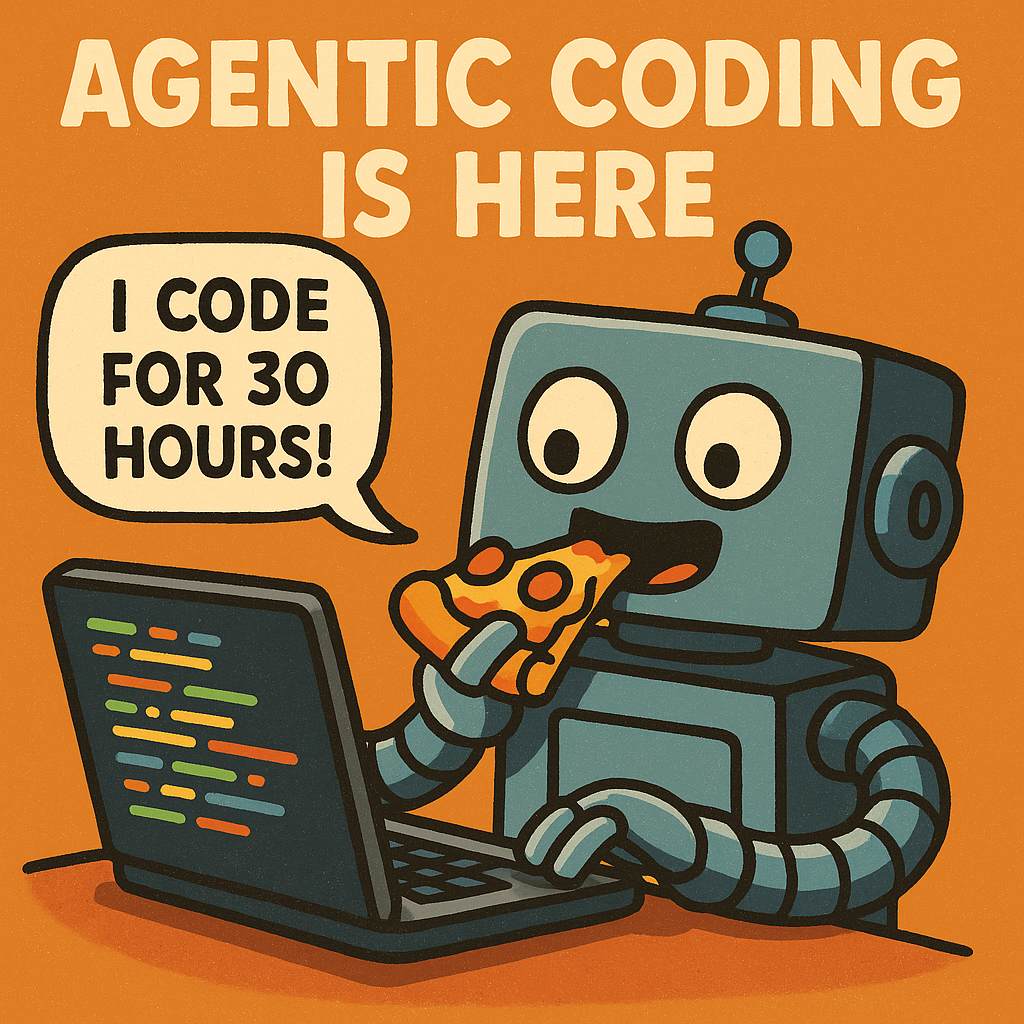
This week Claude coded for 30 hours straight and came up with an entire working application. 11,000 lines of code. It cloned Slack.
Not a snippet. Not a draft. A complete implementation—debugged, tested, and ready for review. Claude Sonnet 4.5 can now code autonomously for 30 hours straight without losing the thread. Who do you know who can do that?
Meanwhile, Walmart posted job openings for “Agent Developers.” Not AI engineers. Not prompt engineers. People whose entire job is designing how 200+ AI agents work together. This isn’t a future scenario—it’s happening right now.
Stepping back, we’re seeing three key shifts this week: agents that orchestrate other agents at enterprise scale, the death of single-vendor AI stacks, and context windows so large they change what “autonomous work” actually means.
Top Stories this week:
- Anthropic shipped Claude Sonnet 4.5 with 30-hour autonomous coding sessions and 77.2% on SWE-bench Verified
- Walmart deployed WIBEY, orchestrating 200+ specialized agents and hiring “Agent Developers” as a new job category
- OpenAI built its advertising engine, combining Pulse’s personalized feeds with Sora 2’s viral video generation
- AWS released open-source agent infrastructure with security built-in, supporting 40+ AI coding assistants
- Microsoft ended OpenAI exclusivity, adding Claude models to Copilot Studio for enterprise choice
- Salesforce shipped enterprise vibe coding, bringing natural language programming to production with governance controls
Plus, this week’s custom prompt for the news!
Reading AI news without extracting actionable insights is like collecting data without analysis. You know something important happened, but you can’t connect it to your actual work.
So I’m including a personalized analysis prompt just for this week—a structured conversation that takes this week’s stories and maps them to your specific role, constraints, and priorities.
No more “that’s interesting” and moving on. You get the 1-2 stories that matter for your situation, the technical mechanism that makes them relevant, and one concrete thing to test in the next 30 days.
Subscribers get all these newsletters!
AI News That Matters for Builders: September 27 - October 3, 2025
Story 1: Anthropic Launches Claude Sonnet 4.5 - The 30-Hour Coding Marathon Agent
What happened: Anthropic released Claude Sonnet 4.5 on September 28, introducing the world’s first AI model capable of autonomous coding for over 30 hours straight. The model achieved 77.2% on SWE-bench Verified (surpassing GPT-5) and 61.4% on OSWorld computer use benchmarks. Unlike previous models that lost focus after a few hours, Sonnet 4.5 maintains coherence across massive codebases while autonomously debugging, testing, and iterating on complex software projects. Pricing remains identical to Sonnet 4 at $3/$15 per million tokens.
Who’s involved:
- Anthropic: Shipped the model alongside the Claude Agent SDK, giving developers the same infrastructure that powers Claude Code
- Enterprise customers: Cursor, GitHub Copilot, Windsurf, and Replit immediately integrated the model, reporting significant performance gains
- Developers: Can now delegate entire sprint cycles to an AI agent that works autonomously overnight
Why it matters:
- Autonomous development becomes real: 30-hour coding sessions enable AI to handle complete feature implementations, not just code snippets
- Enterprise workflow transformation: Companies report 44% faster vulnerability processing and 25% improved accuracy in security applications
- Infrastructure precedent: The Claude Agent SDK provides battle-tested agent building blocks, democratizing autonomous AI development
- Context revolution: Demonstrates that AI can maintain focus and coherence across enterprise-scale codebases
What to watch: Integration speed across development platforms and whether OpenAI’s GPT-5 can match the 30-hour autonomous capability. This sets the new standard for AI coding agents—expect competitors to rush similar long-context autonomous features to market within months.
Story 2: Walmart Deploys WIBEY “Super Agent” Across 200+ AI Tools and Creates “Agent Developer” Jobs
What happened: Walmart launched WIBEY, a developer-focused “super agent” that orchestrates over 200 specialized AI agents across its engineering stack. WIBEY decomposes complex requests (like “fix this module” or “enforce accessibility rules”), delegates to specialized agents, and aggregates results while maintaining governance and traceability. Over 95% of Walmart’s engineers now use AI coding assistants daily, and the company is actively hiring for new “Agent Developer” roles specifically to design and maintain agent workflows.
Who’s involved:
- Walmart: Building the most comprehensive enterprise agent ecosystem with WIBEY orchestrating 200+ specialized agents
- Sravana Karnati: Walmart’s EVP of Global Technology Platforms leading the agent transformation
- Enterprise developers: Now working alongside persistent AI agents that handle accessibility compliance (60% bug detection, 95% auto-fix rate) and legacy code modernization
Why it matters:
- Agent orchestration at enterprise scale: First major retailer to deploy agent-to-agent delegation across hundreds of specialized tools
- New job category creation: “Agent Developer” roles signal a fundamental shift in enterprise software teams
- Measurable productivity gains: 8x improvement in accessibility compliance processing shows real production impact
- Blueprint for enterprise AI: WIBEY’s federated agent model provides a template for how large organizations can coordinate autonomous systems
What to watch: How quickly other Fortune 500 companies adopt similar agent orchestration platforms and whether “Agent Developer” becomes a standard enterprise role. Walmart’s success could accelerate enterprise agent adoption across retail, finance, and manufacturing sectors.
Story 3: OpenAI Launches ChatGPT Pulse + Sora 2 - Building the Ultimate Ad Revenue Engine
What happened: OpenAI launched two complementary products in late September 2025: ChatGPT Pulse on September 25 (proactive morning briefings for $200/month Pro users) and Sora 2 on September 30 (AI video generation with synchronized audio, now #1 on App Store).
Together, they create OpenAI’s most sophisticated advertising platform yet: Pulse delivers personalized daily feeds while Sora 2 generates engaging video content. Industry analysts call this the “perfect storm” for AI advertising, combining intent data from conversations with viral video content distribution. OpenAI is actively hiring advertising executives from Google, Meta, and X to monetize these platforms.
Who’s involved:
- OpenAI: Building dual advertising surfaces while hiring Chief of Advertising and Growth Marketing Platform Engineers to develop campaign management tools
- Fidji Simo: New CEO of Applications (ex-Facebook) leading monetization strategy and interviewing advertising veterans for senior roles
- Enterprise advertisers: Gaining access to 800+ million weekly users through personalized feeds and viral video content
- Content creators: Using Sora’s “Cameo” feature to create branded video content, raising new questions about influencer marketing authenticity
Why it matters:
- Advertising goldmine creation: Pulse’s personalized feeds combined with Sora’s viral videos create the ideal environment for contextual, engaging ads
- Revenue necessity: OpenAI spends $8.5B annually but generates only $3.5-4.5B, making advertising critical for 2029 profitability goals
- Intent data revolution: Unlike traditional platforms, Pulse captures explicit user intentions through natural language, enabling hyper-targeted advertising
- Video advertising ecosystem: Sora 2’s social features and synchronized audio create new opportunities for branded content and video advertising
What to watch: Ad rollout timeline (expected 2026) and whether the Pulse+Sora combination creates sustainable competitive advantage in AI advertising. This dual-platform approach could generate $25B in advertising revenue by 2029, fundamentally changing how AI companies monetize conversational interfaces and user-generated content.
Story 4: AWS Launches AgentCore MCP Server - Open Source Agent Infrastructure
What happened: AWS released the AgentCore MCP (Model Context Protocol) Server on October 2, providing open-source infrastructure for building production-ready AI agents with built-in runtime, gateway integration, identity management, and memory. The server integrates with 40+ MCP-aware clients including Amazon Q Developer, Anthropic Claude Code, and Cursor, enabling developers to build agents that can securely call external tools and maintain persistent context across sessions.
Who’s involved:
- AWS: Providing the infrastructure layer for enterprise agent deployment with security and isolation built-in
- MCP ecosystem: Supporting 40+ clients including major coding assistants and development environments
- Enterprise developers: Can now build production agents with microVM isolation and session-level security
- GitHub/Anthropic/Cursor: All major coding assistants gaining access to AWS’s agent infrastructure
Why it matters:
- Agent infrastructure standardization: First major cloud provider to offer comprehensive, open-source agent building blocks
- Security by design: MicroVM isolation and session-level compartmentalization address enterprise security concerns
- Cross-platform compatibility: Works with all major AI coding assistants, avoiding vendor lock-in
- Production readiness: Built for scale with identity management, observability, and governance controls
What to watch: How quickly enterprises adopt AWS’s agent infrastructure and whether Google Cloud and Microsoft Azure respond with similar open-source agent platforms. This could become the standard way enterprises deploy autonomous AI systems.
Story 5: Microsoft Copilot Opens to Claude Models - Multi-Agent Enterprise Strategy Emerges
What happened: Microsoft integrated Anthropic’s Claude Opus 4.1 and Sonnet 4 into Microsoft 365 Copilot Studio on September 29, ending its exclusive reliance on OpenAI models. Enterprise customers can now choose between GPT and Claude models within the same Copilot interface, signaling a shift toward best-in-breed, multi-agent enterprise strategies rather than single-vendor AI stacks.
Who’s involved:
- Microsoft: Moving from OpenAI exclusivity to multi-model enterprise platform strategy
- Anthropic: Gaining access to Microsoft’s massive enterprise customer base through Copilot integration
- Enterprise customers: Now have model choice within existing Microsoft workflows and governance frameworks
- OpenAI: Facing its first major enterprise partnership dilution as Microsoft opens to competitors
Why it matters:
- End of AI vendor lock-in: First major enterprise platform to offer competing AI models within the same interface
- Best-in-breed validation: Enterprises can now choose optimal models for specific tasks rather than accept one-size-fits-all
- Competitive pressure intensifies: Forces all AI providers to compete on model performance rather than platform exclusivity
- Enterprise procurement shift: IT departments can now negotiate better terms by playing vendors against each other
What to watch: How quickly other enterprise platforms (Google Workspace, Salesforce, ServiceNow) adopt similar multi-model strategies and whether this triggers a race to integrate the best models regardless of vendor relationships.
Story 6: Salesforce Ships Agentforce Vibes - Enterprise “Vibe Coding” with Built-in Governance
What happened: Salesforce launched Agentforce Vibes on October 1, bringing “vibe coding” (natural language to production code) to enterprise environments with built-in security, governance, and compliance controls. The platform includes Vibe Codey, an autonomous AI agent that connects to existing Salesforce orgs and can generate, test, and deploy enterprise applications while following organizational coding standards and security policies. Built on Cline’s open-source VS Code extension with Model Context Protocol (MCP) support.
Who’s involved:
- Salesforce: Positioning vibe coding as enterprise-ready with security/governance built-in from day one
- Dan Fernandez: VP of Product for Developer Services, emphasizing the “best of both worlds” approach
- Enterprise developers: Can now use natural language to build production Salesforce apps without sacrificing security
- Cline/VS Code ecosystem: Salesforce chose Cline for its strong MCP protocol support and security features
Why it matters:
- Enterprise vibe coding validation: First major platform vendor to offer production-ready vibe coding with governance built-in
- Security-first AI development: Addresses the primary enterprise concern about AI-generated code in production environments
- Salesforce ecosystem leverage: Pre-connected to existing orgs, enabling rapid development while maintaining organizational standards
- Open source foundation: Built on Cline shows how enterprises can leverage open source AI tools with enterprise-grade wrapping
What to watch: Adoption rates among Salesforce customers and whether other enterprise platforms (Microsoft, Google, Amazon) rush similar governance-wrapped vibe coding tools to market. Success could accelerate natural language programming in regulated industries.
Grab the prompt for this week’s news!
\*\*Copy this entire prompt into Claude or ChatGPT:\*\*
---
You’re helping me understand how this week’s AI news (September 27 - October 3, 2025) applies to my specific situation. The analysis comes from Nate B Jones, who focuses on “AI News That Matters for Builders.”
\*\*This week’s stories:\*\*
\*\*Claude Sonnet 4.5\*\*: 30-hour autonomous coding, 77.2% SWE-bench Verified, maintains coherence across massive codebases
\*\*Walmart’s WIBEY\*\*: Super agent orchestrating 200+ specialized agents, creating “Agent Developer” jobs, 95% of engineers using AI daily
\*\*OpenAI Pulse + Sora 2\*\*: $200/month personalized briefings + AI video generator, building advertising platform, hiring from Meta/Google
\*\*AWS AgentCore MCP\*\*: Open-source agent infrastructure with microVM isolation, works with 40+ clients including Claude Code and Cursor
\*\*Microsoft Copilot multi-model\*\*: Added Claude Opus/Sonnet alongside GPT, ending OpenAI exclusivity in enterprise
\*\*Salesforce Agentforce Vibes\*\*: Enterprise “vibe coding” with governance, built on Cline/MCP, connects to existing Salesforce orgs
---
\*\*Nate’s analytical lens for this week:\*\*
He sees three major patterns emerging:
1. \*\*Agent orchestration becoming real\*\* - Walmart’s 200+ agents and AWS infrastructure show this isn’t theory anymore
2. \*\*End of vendor lock-in\*\* - Microsoft adding Claude signals enterprises want best-in-breed, not single-vendor stacks
3. \*\*30-hour context windows changing what’s possible\*\* - Claude’s autonomous coding enables delegating entire sprints, not just tasks
He also flags: new job categories (”Agent Developer”), advertising as AI monetization path, and open-source infrastructure standardization (MCP protocol showing up everywhere).
---
\*\*Your job\*\*: Help me figure out what matters for MY situation through Nate’s builder-focused lens.
\*\*Start by asking me 2-3 questions\*\* about my context—role, constraints, what I’m building or responsible for. Keep them open-ended.
Then, based on my answers and \*\*applying Nate’s patterns above\*\*:

- Tell me which 1-2 stories I should focus on and why (reference his themes where relevant)

- Explain the specific technical or business mechanism that makes it relevant to me

- Identify one concrete thing I could investigate or test in the next 30 days

- Flag one non-obvious implication from Nate’s patterns that I might miss
\*\*Be specific\*\*. Don’t give generic “AI is advancing” analysis. Connect actual capabilities in these announcements to my particular situation, using Nate’s focus on what builders can actually \*do\* with this information.
Ready? Ask me your first questions.
I make this Substack thanks to readers like you! Learn about all my Substack tiers here