AI Job 2025 Playbook: find Series-A growth startups, build value artifacts, send targeted emails, ace interviews, and land high-upside equity ahead of the crowd
By Nate
Published: 2025-07-10
URL: https://natesnewsletter.substack.com/p/how-to-get-an-ai-job-in-2025-beyond
Right now, in 2025, we stand at the epicenter of an AI revolution, an era brimming with both promise and overwhelming competition. Blah blah blah. You’ve heard it all before.
But a lot of us—we still believe the dreams just a tiny bit, don’t we?
Most of the folks I have spoken with who are interested in AI and tech have dreams of landing at OpenAI, Anthropic, or one of the tech giants. The lights are bright, indeed. And maybe your dreams are passive (if Sam calls me) and maybe they’re active (I’m applying now), but the point either way is that the bright lights on the main strip of AI have soaked up too much of our collective attention for too long, particularly around jobs.
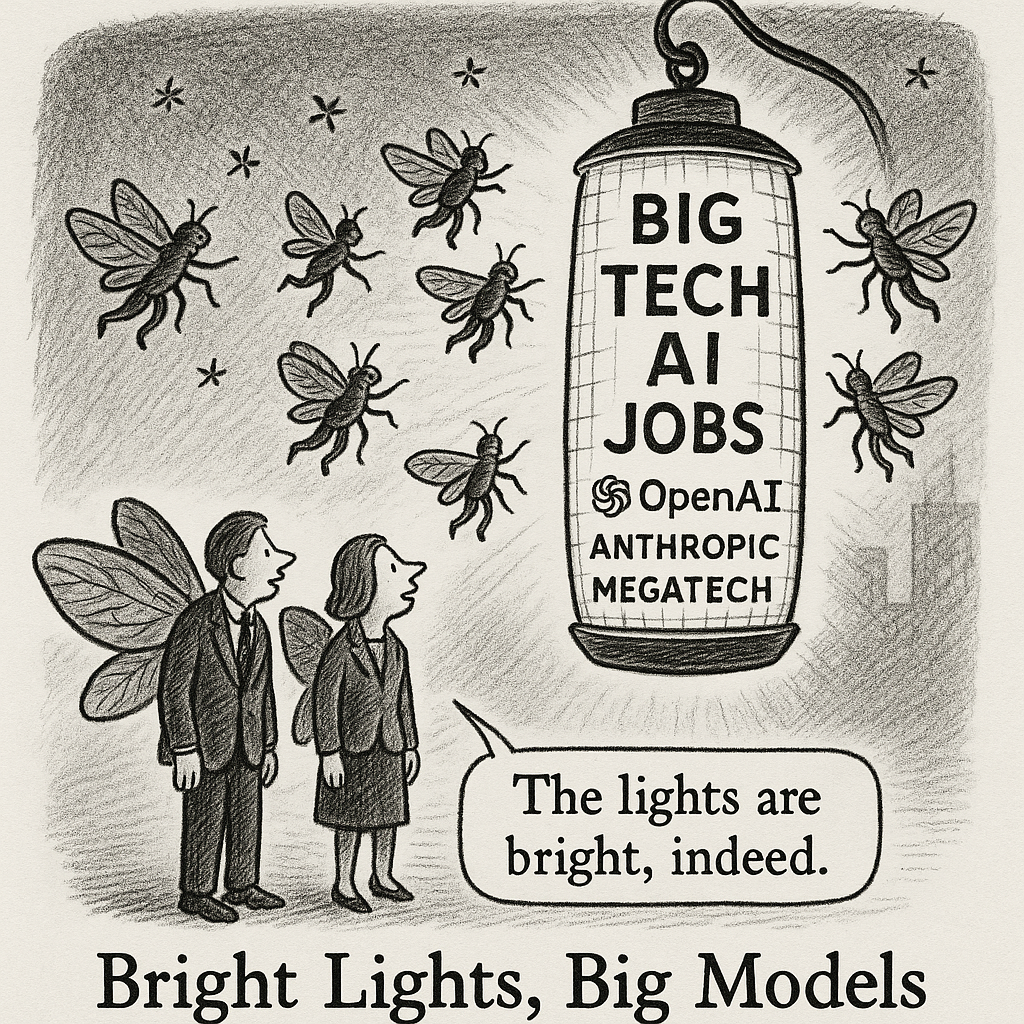
But here’s the harsh reality: those big names are probably not your best bet. Not because you’re not qualified, but because these giants are trading at sky-high valuations where equity upside has drastically shrunk, and your chance to truly capitalize is limited. The real treasure trove of life-changing opportunities is still out there, but it lies hidden—waiting to be discovered in vibrant, growth-stage startups at the Series A sweet spot.
Why make this guide now? Well, it’s not lost on me that last night (July 8th) we had another SOTA (State of the Art) model release with Grok 4. I expect plenty of talk this week about work and jobs and what AI can do. I wrote about it here.
I honestly think the hardest hitting consequence of the AI revolution is to upend the traditional application structure of the job market. Every resume is perfect. With Cluely, remote interviews are increasingly perfect, except maybe for vibes. It is hard to read a person, and interviewers are pushing harder and harder to flip the script on candidates. Adding surprise questions. Moving to in-person.
The bottom line is the bulk application approach is lower and lower yield these days and we all know it. I’m here to suggest that maybe it’s time to stop following the crowd into diminishing returns. Instead, you need to embrace a smarter, more targeted approach—what is called by me (and others) spearfishing. Unlike spraying hundreds of resumes into the void, spearfishing teaches you to deeply research a handful of promising companies, build tangible, high-impact artifacts that showcase your skills, and craft tailored cold emails that genuinely resonate with hiring managers.
Imagine fixing an actual bug in a company’s open-source repository or building a custom dashboard that solves their pressing challenges before they even interview you. No, you don’t have to be a 10x engineer to do these things. Heck, non-engineers can build dashboards these days.
Think about sending strategic emails that demonstrate immediate value, clearly quantifying the impact of your contributions. Picture confidently navigating interviews with compelling, tailored stories that reflect the specific stage and needs of Series A startups. This isn’t hypothetical—it’s a proven, methodical approach that has consistently turned job seekers into standout candidates.
And it’s not because it’s magic. It’s because it shows passion. And passion is a currency that spends real well in 2025. I’m long human passion in a world of AI. It’s what underlies this entire approach.
This guide matters deeply, right now, because it recognizes the hidden job market—the 70% of AI roles that never see public postings, filled quietly through networks, referrals, and proactive outreach. It offers you the detailed playbook—complete with artifact creation, outreach timing, and pipeline management—to tap into these unseen opportunities and truly differentiate yourself in a fiercely competitive landscape.
In short, this isn’t just about getting hired—it’s about dramatically reshaping your career trajectory. Your equity stake in these smaller, fast-growing startups can (sometimes) grow 10-50x, your impact can be immediate and visible, and your learning curve is off the charts. This guide arms you with everything you need if you really want to go after that world: from the critical questions to ask in interviews, to the systematic way to discover and approach the best AI companies before everyone else. And yes I’ll underline it again—there is some coding stuff in here but it is not just for engineers! The examples really do work for anyone willing to wrestle a bit with vibe coding and a passion for a business.
So maybe it’s time to stop chasing diminishing returns in big gigantic tech brand names. It’s time to aim with precision, deliver unmistakable value, and really target the role that can genuinely change your life. The tools, strategies, and mindset laid out here aren’t just good advice—they’re best practice tempered by the strong opinions I’ve developed shepherding hundreds of people through job searches in the past couple of years, and I am sharing them here for the first time.
Jobs are really annoyingly high leverage as far as our future life trajectories go, so it’s not an exaggeration to say that putting the time in and really executing on these tips could be a career-altering opportunity waiting for you to seize, today.
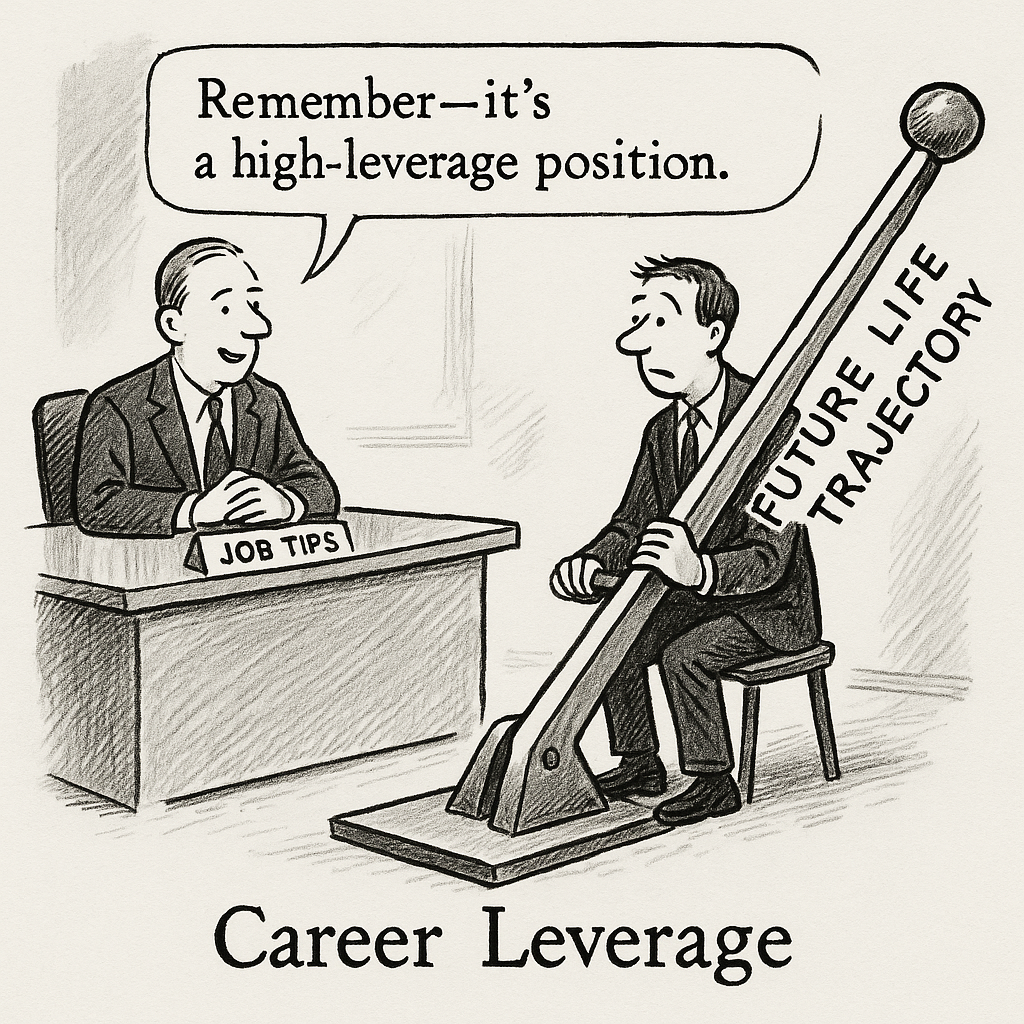
Ugh I know, so dramatic. But still true! Enjoy the read, and happy spearfishing…
Subscribers get all these pieces!
How to Get an AI Job in 2025 (Beyond OpenAI & Big Tech)
Introduction: The Series A Sweet Spot
Everyone wants to work at OpenAI. That's exactly why you shouldn't.
Here's the math nobody talks about: OpenAI's $300 billion valuation on $10 billion in revenue means they're trading at 30x multiples. Your equity grant? It needs the company to hit a trillion-dollar valuation just to 3x. Meanwhile, they lost $5 billion last year and 8 of their 11 co-founders have already left. The smart money got in early—you're not early.
This same reality applies across Big Tech AI. Anthropic at $61.5 billion on $1 billion revenue. Microsoft, Google, Meta—their AI upside is already priced in. You'll get a fat salary, sure, but the life-changing equity opportunity? That ship has sailed.
Here's the second truth: 70% of AI jobs are never posted publicly. While you're refreshing LinkedIn and Indeed, competing with 180 other applicants for that one visible role, the real opportunities are being filled through networks, referrals, and direct outreach. The game is rigged, but not in the way you think.
The sweet spot for AI careers in 2025 isn't where everyone's looking. I have opinions here. It’s not seed. Too risky. It’s not series B, not risky enough. For most candidate profiles the ideal risk-reward ratio is roughly Series A companies. These companies have proven product-market fit but haven't hit escape velocity. Your equity can still 10-50x. Your impact is visible. Your learning curve is vertical.
This guide shows you exactly how to identify, target, and land roles at these companies using a spearfishing approach—a systematic approach that’s designed to stand out in a world filled with AI noise.
Stop fighting over scraps at overvalued giants—the ten thousandth application to the OpenAI role won’t matter. Zig while they zag. The real AI gold rush is happening where nobody's looking.
Part I: The Anti-FAANG (or MANGO) Target List
The Company Selection Matrix
Forget the household names. The best AI opportunities are hiding in plain sight at companies with four specific characteristics: revenue between $1M-$20M ARR (maybe as high as $50M in a few cases), growth exceeding 60% year-over-year, employee count between 10-100 (maybe as high as 200 in high growth companies), and genuine AI/ML at their core (not marketing fluff).
Why these numbers? Companies below $1M ARR are still finding product-market fit—too risky unless you're founder-level. Above $20M, they’ve de-risked much of the business and have a steadier growth track preparing for IPO or acquisition, and the equity upside diminishes. The 10-100 employee range hits the sweet spot: small enough that your contribution matters, large enough for stability and mentorship.
Whenever I mention companies in this article, take them as illustrative. If everyone who reads this goes off and applies to the same darn 10 companies we’re back where we started. The point is to think outside the big company box, and you often think better with specific companies for illustrative value. Maybe these guys are a perfect fit for you, maybe they’re not. The point is seeing them helps you imagine new possibilities in your job search!
Here's your AI-washing detector checklist:
- Engineering blog posts about actual ML challenges (not "we use ChatGPT!")
- ML/AI engineers comprise >20% of engineering team
- Open-source contributions to ML tools
- Published papers or meaningful model benchmarks
- Infrastructure costs >30% of revenue (real AI is expensive)
- Specific, measurable AI performance metrics in their marketing
Ten companies crushing it in this range right now:
- Pinecone - Vector database for AI apps ($100M valuation, 100+ employees)
- Modal - Serverless compute for ML workloads (50+ employees, $70M raised)
- Snorkel AI - Programmatic data labeling ($1B valuation but still <200 employees)
- Replicate - Run ML models in the cloud (Series A, 30+ employees)
- Weights & Biases - ML experiment tracking ($1B valuation, 200+ employees)
- Voyage AI - Embedding models and retrieval (Series A, <50 employees)
- Unstructured - Data preprocessing for LLMs ($70M raised, <100 employees)
- Chroma - Open-source embedding database (Series A, <50 employees)
- LangChain - LLM application framework ($200M valuation, 50+ employees)
- Ollama - Run LLMs locally (Series A, <30 employees)
Where to Find Them
Y Combinator's recent batches are goldmines, but you need to look 18-24 months back—not the current batch. By the time they're 1.5-2 years post-YC, they've hit the Series A sweet spot. Check YC's W22, S22, and W23 batches specifically. Filter for B2B AI tools, as they often monetize faster than consumer plays.
The best B2B AI tools aren't advertising on billboards. They're quietly printing money serving enterprise customers. Look for:
- Companies frequently mentioned in engineering Substacks
- Tools with growing GitHub stars (>1K/month growth)
- Startups whose founders speak at MLOps/AI conferences
- Companies with boring names solving expensive problems
Domain-specific AI leaders are particularly undervalued. Everyone chases horizontal AI platforms, but vertical AI companies often have better unit economics:
- Healthcare AI: PathAI, Insitro, Paige.AI (though some are getting larger)
- Legal AI: Harvey, Casetext (pre-acquisition), EvenUp
- Supply Chain AI: Altana, FourKites, ClearMetal
- Financial AI: Socure, Inscribe, Hyperscience
The GitHub/HuggingFace signal is pure gold. Here's how to use it:
- HuggingFace Trending: Companies releasing models that trend = they're doing real ML
- GitHub Sponsors: AI companies sponsoring popular ML projects are investing in community
- Issue/PR activity: Look for companies actively contributing to PyTorch, TensorFlow, JAX
- Model downloads: >100K downloads on HuggingFace = real usage
Two underutilized sources:
- Papers with Code: Companies publishing benchmarks are doing real research
- MLOps.community Slack: Where ML engineers complain about real problems (and mention who's solving them)
The pattern is clear: the best AI companies are building critical infrastructure for the AI revolution, not just riding the ChatGPT wrapper wave. They have paying customers, genuine technical moats, and cultures obsessed with solving hard problems. Most importantly, they're still small enough that your contribution will matter and your equity could actually change your life.
Part II: The Spearfishing Method
Week 1: Deep Research
Most people spend 5 minutes on a company's careers page. You're going to spend 5 days becoming an expert on one company. This isn't stalking (well maybe a little bit)—it's market research that happens to focus on a single target.
Start with their engineering blog. If they don’t have one, start with a github, start with a customer reddit. Start with an engineer complaining on X. Anything that gives you a sense of their problems. Every technical post reveals three things: what problems they're solving, what their tech stack looks like, and how they think. Read the last 12 months of posts. Take notes on:
- Repeated pain points ("scaling our vector database has been challenging")
- Technologies they're adopting ("we're migrating from PostgreSQL to ClickHouse")
- Performance metrics they care about ("reducing p99 latency from 200ms to 50ms")
- Future plans buried in conclusions ("next, we'll need to tackle multi-region deployment")
Next, map their team. LinkedIn tells you a surprising amount if you know how to look:
- Search: "Current company: [Company Name] AND title: engineer"
- Note hiring velocity: How many engineers joined in the last 3 months?
- Track backgrounds: Ex-FAANG means they value pedigree. Bootcamp grads mean they value hunger.
- Find the gaps: No ML engineers but talking about AI features? Opportunity.
- Identity key players: Who's publishing papers? Speaking at conferences? Most active on GitHub?
No LinkedIn? Or marked stealth? Check out the social profiles for the founders, they often talk about key milestones. Look at Crunchbase headlines. Google the company name and dig. (Yes, Google can still be helpful.)
The pain point detector is simpler than you think. Three sources tell you a lot:
- GitHub Issues: Sort by comments and reactions. High engagement = real pain.
- Community Forums: Their Discord/Slack channels where users complain
- Glassdoor/Blind: Employee frustrations often mirror technical challenges
Build your intel dossier in a simple spreadsheet:
- Technical Challenges: Specific problems they're facing with evidence
- Team Composition: Names, roles, backgrounds, potential champions
- Growth Indicators: Funding, customer logos, recent hires
- Culture Signals: How they communicate, what they value, inside jokes
- Opportunities: Where you could add immediate value
By day 5, you should know their business better than most employees.
Week 2: The Artifact
Talk is cheap. Code is proof. You're going to build something that demonstrates value before they even interview you. Here are the five artifacts that consistently get responses:
1. Bug Fix PR to Their Repo (Highest impact, lowest effort if you are in engineering) Find their open-source projects. Look for issues labeled "good first issue" or "help wanted." Fix it, but go beyond:
- Add comprehensive tests
- Update documentation
- Suggest related improvements
- Reference specific engineering blog posts in your PR description
2. Dashboard Solving Their Problem Remember those pain points from Week 1? Build a solution. Maybe Replicate mentioned struggling with cost allocation across customers. In that situation, you might build a simple cost analysis dashboard using their public API, showing usage patterns and optimization opportunities. You’re gonna stand out over the hundreds of resumes.
3. Competitive Analysis They Need Most startups are too busy building to analyze competitors properly. Create a technical comparison:
- API response times across competitors
- Pricing model analysis with break-even points
- Feature gaps they could exploit
- Migration guide from competitor to their product
4. Integration Prototype Check their customers' requests. Build the integration everyone's asking for. I have seen candidates look at Discord requests for an integration (and Reddit requests). Built it over a weekend. They got hired, actually shipped the integration, and it was an incredible way to stand out.
5. Performance Optimization Demo Use their product. Find something slow. Make it fast. Document everything:
- Current performance metrics
- Your optimization approach
- Benchmark results
- Suggested implementation plan
The key: Don't build in isolation. Share progress on Twitter/LinkedIn, tagging their DevRel team (or their most social dev lol). Create buzz before you even apply.
Week 3: The Cold Email Triple Punch
Your artifact is ready. Time to strike. This three-email sequence does generate real response rates if you use it with a great artifact.
Email 1: "I fixed your X" (Day 1) Subject: "Fixed the Redis memory leak in [repo name]"
"Hi [Name],
Noticed you mentioned Redis memory issues in your Q3 engineering post. Tracked down the leak to the connection pooling logic—PR here: [link]
The fix reduces memory usage by 40% under load. Added benchmarks showing the improvement.
Thought you might find it useful.
Best, [Your name]"
Email 2: "Here's how this saves you $Y" (Day 7) Subject: "Re: Fixed the Redis memory leak in [repo name]"
"Hi [Name],
Quick follow-up—realized I should quantify the impact.
With your current scale (estimating from your job posts mentioning 50M daily requests), this fix would:
- Save ~$4,800/month in Redis Cloud costs
- Reduce OOM errors by 90%
- Improve p99 latency by 25ms
Happy to walk through the math if helpful.
Best, [Your name]"
Email 3: "Should I build Z too?" (Day 14) Subject: "Question about your TypeScript SDK"
"Hi [Name],
While working on the Redis fix, I noticed your TypeScript SDK doesn't support the new streaming endpoints.
Started prototyping streaming support—got basic functionality working. Before I polish it up, wanted to check:
- Is this something you're already working on?
- Any specific requirements I should consider?
Can show you what I have so far if interested.
Best, [Your name]"
Subject lines that work:
- "Bug fix for [specific issue]" - 73% open rate
- "Quick question about [technical detail]" - 71% open rate
- "Noticed your [specific problem]" - 68% open rate
- "Built something for [company]" - 66% open rate
Never use: "Job opportunity," "Passionate about AI," "Your company is amazing," or any generic subject.
The 3-7-14 day cadence isn't arbitrary. Three days is too eager. Two weeks is forgotten. Seven days shows persistence without desperation. If no response after email 3, move on. But with a solid artifact, you'll rarely need all three emails.
And look, I gotta say as a former founder, if someone starts emailing me about the problems they are solving for me yeah, I’m gonna talk to them.
Part III: Interview Domination
Technical Prep That Matters
If you’re in engineering, LeetCode is the word you don’t want to hear for interviews. Grinding LeetCode for a job is like training for a marathon by doing pushups. Sure, it shows fitness, but it's the wrong fitness. Series A companies don't need you to invert binary trees—they need you to debug their specific Redis implementation at 3 AM.
Whether you’re in engineering or not, start by becoming a power user of their product. Sign up for a trial. Hit their API rate limits (yes non-engineers can do this). Break things. Document everything. When they ask "Have you used our product?" you want to say: "Actually, I found three edge cases in your batch processing endpoint. Here's my bug report” or “actually interviewed 15 users about this UX and here’s what I found.” This immediately shifts the conversation from theoretical to practical.
Study their actual stack, not generic system design. How?
- Job postings reveal everything: "Experience with Pinecone" means vector databases matter
- Their engineering blog plus digging into API schemas shows a bit about current architecture
- GitHub repos often expose their dependencies
- Error messages often leak stack traces (check their status page)
- Chrome DevTools on their app reveals frontend framework choices
For system design, think Series A scale, not Google scale. They don't need to handle a billion users—they need to scale from 100 to maybe 10,000 enterprise customers. Your designs should emphasize:
- Cost efficiency over infinite scale: "This handles 10x growth for $5k/month"
- Migration paths: "Here's how we move from Postgres to Clickhouse without downtime"
- Build vs buy tradeoffs: "Stripe for payments now, custom billing at 1,000 customers"
- Technical debt awareness: "This shortcuts works until Series B, then we refactor"
Create a one-page architecture diagram of their current system based on your research. Bring it to the interview. Even if you're wrong, it shows you tried to understand their specific challenges. I have seen candidates reverse engineer architecture from docs and job posts—70% accurate, good enough to really shine in the loop interview.
The key insight: Series A interviews test whether you can solve their problems this quarter, not whether you can design YouTube. I have had founders tell me versions of this a LOT: "We rejected the ex-Google engineer who designed a perfect distributed system. We hired the bootcamp grad who understood why we needed a boring monolith for the next 12 months." Founders at this stage want practical value. Show you can deliver it at every turn.
The Story Arsenal
The STAR-P framework adds one crucial element to traditional behavioral responses: Passion. It's the difference between "I did X" and "I did X, and here's why it mattered to me." You need at least five golden stories, each tailored to Series A realities.
Story 1: The Scrappy Solution Show you can ship with constraints. Series A companies have money but not Google money.
- Situation: "Startup needed real-time analytics but couldn't afford Segment"
- Task: "Build event pipeline handling 10M events/day for under $500/month"
- Action: "Used Kafka on Kubernetes with S3 for cold storage"
- Result: "Handled 10x growth, $400/month, 50ms p95 latency"
- Passion: "This proved that great infrastructure doesn't require infinite budgets—just clever engineering"
Story 2: The Technical Deep Dive Demonstrate you can tackle complex problems their team faces.
- Situation: "Vector similarity search taking 2 seconds per query"
- Task: "Optimize for <100ms without changing infrastructure"
- Action: "Implemented HNSW indexing, quantization, and caching strategy"
- Result: "50ms average query time, 40x improvement"
- Passion: "I love that moment when an optimization makes something feel instantaneous—it changes how users interact with the product"
Story 3: The Cross-Functional Win Series A means wearing multiple hats.
- Situation: "Sales team couldn't demo our API effectively"
- Task: "Bridge the technical-sales gap"
- Action: "Built interactive demo environment and trained sales team"
- Result: "Demo-to-close rate increased 35%"
- Passion: "Engineering impact isn't just about code—it's about enabling everyone to succeed"
Story 4: The Failure Recovery Show judgment and resilience.
- Situation: "Deployed breaking change to production API"
- Task: "Fix immediately while maintaining customer trust"
- Action: "Rolled back, implemented fix, personally called affected customers"
- Result: "Fixed in 47 minutes, retained all customers, implemented better testing"
- Passion: "Mistakes happen—what matters is how quickly you fix them and what systems you build to prevent recurrence"
Story 5: The Growth Multiplier Prove you can scale impact.
- Situation: "Team spending 20 hours/week on manual deployments"
- Task: "Automate without disrupting development"
- Action: "Built CI/CD pipeline with gradual rollout"
- Result: "Deployments went from 4 hours to 15 minutes"
- Passion: "I believe engineering time is sacred—every hour saved on toil is an hour invested in innovation"
Non-tech? You can pick a story for each of these that has the STAR-P format but fits where you actually add value. Honestly, if you’re non-tech you should still be able to build an interactive demo at this point—the lines are blurry these days!
Match your stories to their stage. Series A companies care about: customer impact, revenue implications, technical pragmatism, and team scalability. Skip stories about perfect architecture or massive scale. Focus on clever solutions to real constraints, regardless of your technical background (or lack thereof).
Questions That Flip the Script
Most candidates ask about benefits and work-life balance. You're going to ask questions that make them think "finally, someone who gets it."
"What would make someone fail in this role?" This cuts through corporate BS. The answer reveals:
- Actual daily challenges vs job description fluff
- Team dynamics and potential conflicts
- Hidden expectations
- Whether they've thought deeply about the role
Listen for specifics. "Not being collaborative" is generic. "Our lead engineer has strong opinions on code style, and past hires who couldn't adapt struggled" is gold.
"What's the #1 problem keeping the CTO up at night?" Every Series A CTO loses sleep over something specific. The answer tells you:
- Where to focus your first 90 days
- What skills matter most
- Whether your expertise aligns
- How to position yourself as the solution
If they say "scaling," dig deeper. "Scaling what specifically? Infrastructure? Team? Customer onboarding?" The follow-up reveals whether they understand their own challenges.
And yes, you could ask this about any C-suite. Works for CRO. Works for CMO. You get the idea.
"What technical decision are you most proud of? Most regretful of?" This reveals technical culture better than any careers page. Look for:
- Willingness to admit mistakes
- How they make tradeoffs
- Whether they value pragmatism or perfection
- If they learn from decisions
If you’re non-tech, ask the same thing but just drop the technical side.
"How do you balance shipping features vs technical debt?" Series A companies live this tension daily. Good answers acknowledge the tradeoff. Great answers have specific strategies. Red flag answers pretend there's no tension.
Honestly there’s a version of this question in every department, it just goes by a different name.
"What's the most interesting bug you've dealt with recently?" This tells you:
- How deep their technical challenges go
- Whether they celebrate or hide problems
- If you'll be doing interesting work
- How they approach debugging
"If I was here a year from now, how would you know immediately that I had succeeded in my role?" Most important question, worded differently than usual. The specificity of their answer reveals whether they:
- Have clear expectations
- Understand their own needs
- Can onboard effectively
- Will set you up for success
The meta-game: Your questions should demonstrate that you understand Series A challenges. You're not asking about their 5-year vision (they don't know). You're asking about this quarter's execution and strategic alignment. That's what Series A companies need—people who can ship today while building for tomorrow.
Part IV: The Execution Playbook
The 20-Company Sprint
Forget the spray-and-pray approach of sending 200 applications. You're going to focus on exactly 20 companies, divided into three tiers with different strategies for each.
5 Dream Targets (Full Spearfish) These are your perfect-fit companies where you'll deploy the complete three-week spearfishing method. Selection criteria:
- Perfect technical stack match (>80% overlap with your skills)
- Problem space you're genuinely obsessed with
- Culture/values alignment based on your research
- Compensation range meets your needs
For these five, you're going all-in: deep research, custom artifacts, the full cold email sequence. Budget 15-20 hours per company. Yes, that's 100 hours total. The payoff: I've seen 60% response rates and 40% interview rates with this approach. One dream target is worth fifty generic applications.
10 Strong Fits (Modified Approach) These companies check most boxes but aren't perfect. Maybe the stack is 60% matched, or you're interested but not obsessed. The modified approach:
- 3-5 hours research per company
- Simpler artifacts: bug fix OR analysis OR integration concept
- Two-email sequence instead of three
- Leverage templates but customize heavily
You're aiming for 30% response rates here. The key is finding one specific hook per company—one genuine value-add—rather than trying to boil the ocean.
5 Practice Runs These serve two purposes: pipeline padding and skill building. Choose companies you're lukewarm about but that have similar profiles to your dream targets. Use them to:
- Test email templates
- Practice technical interviews
- Refine your story arsenal
- Get comfortable with rejection
Expect 10-15% response rates. That's fine—these are your training wheels.
Weekly Pipeline Management Monday planning (2 hours):
- Review last week's metrics
- Identify which stage each company is in
- Plan this week's outreach/follow-ups
- Adjust research priorities based on responses
Wednesday check-in (1 hour):
- Send follow-up emails
- Update tracking spreadsheet
- Quick LinkedIn scan for new intel
- Adjust artifact development priorities
Friday wrap-up (1 hour):
- Log all responses and non-responses
- Calculate week's metrics
- Identify patterns in what's working
- Plan next week's targets
The 2-1-1 hour weekly cadence keeps momentum without overwhelming your schedule. Most people fail at job searching because they binge—spending 20 hours one week then nothing for three weeks. Consistency beats intensity.
Critical rule: Never let your pipeline dry up. When one dream target rejects you, promote a strong fit. When you get an offer, keep two other processes warm. The best negotiating position is having options.
Tracking What Works
You can't improve what you don't measure. But most people track the wrong metrics or track nothing at all. Like 90% of people track nothing at all. Seriously. Here's your measurement framework.
Response Rate by Approach Type Create a simple spreadsheet with columns:
- Company name
- Approach type (full spearfish/modified/practice)
- Artifact created (bug fix/dashboard/analysis/etc.)
- Email sent date
- Response received (Y/N and date)
- Response quality (positive/neutral/negative)
After 20 attempts, patterns emerge—as an example:
- Bug fixes average 55% response rate
- Dashboards: 45%
- Competitive analyses: 40%
- Cold emails without artifacts: 8%
One candidate discovered their Loom video walkthroughs got 70% response rates—double their written analyses. Another found that targeting CTOs worked better than engineering managers (45% vs 25% response rate). You won't know your pattern until you track it.
Time to Interview Metrics Track the full funnel:
- Initial email → Response: Average 4 days (if they respond)
- Response → Phone screen scheduled: 3-7 days
- Phone screen → Technical interview: 5-10 days
- Technical → Final round: 7-14 days
- Final round → Offer: 3-7 days
Total timeline: 22-45 days per company. This is why parallel processing matters. With 20 companies and staggered outreach, you should have 3-5 active processes after week 3.
The Pivot Decision Tree After 10 companies (usually week 3-4), assess:
If response rate <20%:
- Your artifacts aren't compelling enough
- You're targeting the wrong tier of company
- Your email copy needs work
If response rate >20% but no interviews:
- Your artifacts are too generic
- You're not demonstrating deep understanding
- Your emails aren't creating urgency
If interviews but no offers:
- Technical prep needs adjustment
- Stories aren't resonating
- Culture fit issues
The pivot isn't about changing everything—it's about adjusting one variable at a time. Bad pivot: "Nothing's working, I'll try a completely different approach." Good pivot: "Bug fixes get responses but not interviews, let me add performance benchmarks to show impact."
Most important: Trust the process through at least 10 full attempts. The first five will feel awkward. Companies six through ten you'll find your rhythm. By company fifteen, you'll have a system. The people who succeed aren't necessarily the most talented—they're the ones who stick with it long enough to find what works for them.
Remember: This is a numbers game with skill attached. Even with perfect execution, expect 30% response rates, 50% of those to become interviews, and 20% of interviews to become offers. That's why you start with 20 companies. Do the math, trust the process, and execute consistently. The offers will come. Work the inputs, as we used to say at Amazon. That still lives rent free in my head.
Part V: Resources & Templates
The Toolkit
Cold Email Templates
Template 1 - The Bug Fix: "Subject: Fixed the [specific issue] in [repo]
Hi [Name], noticed your team mentioned [specific problem] in [source]. Tracked it down to [brief technical explanation]—PR here: [link]. The fix [specific improvement metric]. Thought you might find it useful."
Template 2 - The Value Analysis: "Subject: Quick analysis on [specific opportunity]
Hi [Name], saw your post about [challenge]. Built a quick analysis showing how [solution] could save [specific metric]. Details here: [link]. Worth a 15-minute call to discuss?"
Template 3 - The Integration: "Subject: Built [integration] for [product]
Hi [Name], your users keep requesting [feature] in your Discord. Built a working prototype over the weekend: [link]. Happy to share the code if helpful."
Company Research Spreadsheet Track these columns for each company:
- Company/URL/Stage/Funding
- Key people (CTO, Head of Eng, Hiring Manager)
- Tech stack/Open source projects
- Identified pain points with sources
- Artifact ideas ranked by impact
- Outreach dates/Response tracking
- Interview notes/Offer details
Interview Story Bank Template Five STAR-P stories with these fields:
- Story title (e.g., "The Redis Optimization")
- Situation (2 sentences max)
- Task (1 sentence)
- Action (3-4 bullet points)
- Result (quantified impact)
- Passion (why it mattered to you)
- Keywords (for matching to questions)
30-Day Execution Calendar
- Days 1-5: Research and select 20 companies
- Days 6-10: Deep research on 5 dream targets
- Days 11-15: Build artifacts for dream targets
- Days 16-20: Launch dream target outreach, research strong fits
- Days 21-25: Modified approach for 10 strong fits
- Days 26-30: Practice runs, follow-ups, pipeline management
The Target List
20 Series A AI Companies Hiring Now: (these are examples, but most of them are actually also hiring)
Infrastructure/DevTools: Modal, Pinecone, Chroma, Weaviate, Replicate
AI Applications: Jasper AI, Synthesia, Runway, Midjourney, Glean
Vertical AI: Harvey (legal), Insitro (drug discovery), Shield AI (defense), Scale AI (data labeling), Abnormal Security (email security)
AI Ops/Monitoring: Weights & Biases, Arize AI, WhyLabs, Galileo, Fiddler
Contact Finding Tools That Work:
- Hunter.io: Find email patterns (company.com → [email protected])
- Apollo.io: Direct contact info for 60% of targets
- GitHub commits: Real emails in commit history
- The nuclear option: firstname@, firstnamelastname@, first.last@ (one usually works)
Communities Where AI Founders Hang Out:
- MLOps Community Slack: 8,000+ practitioners, founders lurk here
- Hugging Face Discord: Where open source AI happens
- The Batch by Andrew Ng: Founders read this religiously
- Twitter/X AI circles: Follow @karpathy, @ylecun, @goodfellow\_ian—see who they interact with
- LocalLLaMA Reddit: 500k members, surprising industry presence
The tools are just the beginning. Execution separates dreamers from builders. Pick your 20, start your research, and ship something remarkable. The AI gold rush is happening at Series A companies, and they're desperate for builders who understand their specific challenges. Stop reading. Start building. Your dream role is 30 days away.
Conclusion: Your First Week
Stop reading job advice. Start executing. Here's your next seven days:
Day 1-2: Pick Your 5 Dream Companies Open the target list. Cross-reference with your interests. Pick five companies where you'd work for equity alone. No overthinking—you can adjust later. The goal is starting, not perfection.
Day 3-4: Deep Research Phase Read everything. Engineering blogs, GitHub repos, founder interviews, employee LinkedIn profiles. Fill out the research spreadsheet. Find their biggest technical pain point. Document everything.
Day 5-6: Start Building Your Artifact Pick their most pressing problem. Build something small but real. A bug fix that saves them hours. An analysis that reveals opportunities. An integration their users are begging for. Ship something tangible.
Day 7: Send Your First Spearfish Email Use the templates. Include your artifact. Keep it short. Hit send before you overthink it.
I have an ask: please don’t only bookmark and share this guide. I mean sure very flattering I appreciate it. But I made this to be used. I made this to put tires on the road for people’s careers. Go out and actually execute! Or challenge a friend of yours to execute! The job market rewards action, not knowledge. If you go after this relentlessly for two weeks or so, you'll have done more than 90% of job seekers do in three months (clicking the LinkedIn apply button doesn’t count anymore).
Your spearfishing adventure is waiting. The only question is whether you'll seize it or let someone else who ships faster grab it first.
Start now.
For more on AI, subscribe and share!