What is it that we're good at? Why? How does that relate to what LLMs are good at, and getting better at?
By Nate
Published: 2025-05-27
URL: https://natesnewsletter.substack.com/p/the-irreducible-human-six-things
If you’ve been following my Substack for any length of time, you’ll be familiar with the concept of Polyani’s Paradox—the idea that work is more than we can speak. And if we can’t speak or describe what we actually do for work, then we won’t be able to tokenize it easily, and that puts it outside the baseball field for LLMs to automate away.
That is not a super popular position, I’ll admit. I think even Bill Gates disagrees with me at this point, lol. But I’ll stick to it—I see remarkable gains in intelligence from models, but I do not see the kinds of breakthroughs needed to really enable LLM intelligence gains to translate into these six vital corners of the human experience.
Yes, I’m naming them! In past posts I’ve just talked about Polyani’s Paradox as a concept that protects human knowledge jobs, but I do like specifics. I think they make thinking more useful. And it is possible to get specific here.
Why post this now? Well, first now is as good a time as any. I’m sure there will be more LLM announcements this week. Last week was AI super week, and everyone from Google to Anthropic to OpenAI to Nvidia made headlines for new AI tech (and don’t forget Microsoft). It was overwhelming. Even to me.
So why not step back and think about the larger picture? We’ll get back to our regular programming tomorrow with a cool post on a daily and weekly dashboard you can build with Opus 4—full prompts and everything! But for this Tuesday, let’s take a second and reflect on the interesting differences between this alien intelligence and ourselves…here are six things we’re very very good at that have tremendous economic value that LLMs are just not getting better at.
Subscribers get all these pieces!
The Irreducible Human: Six Things We Still Do That Machines Can't
Field notes from the bleeding edge of human-machine collaboration
Here's the thing nobody tells you about working with frontier models: the vertigo isn't from their intelligence per se. It's from watching the sheer pace of gains in intelligence in very narrow lanes. It is an alien intelligence.
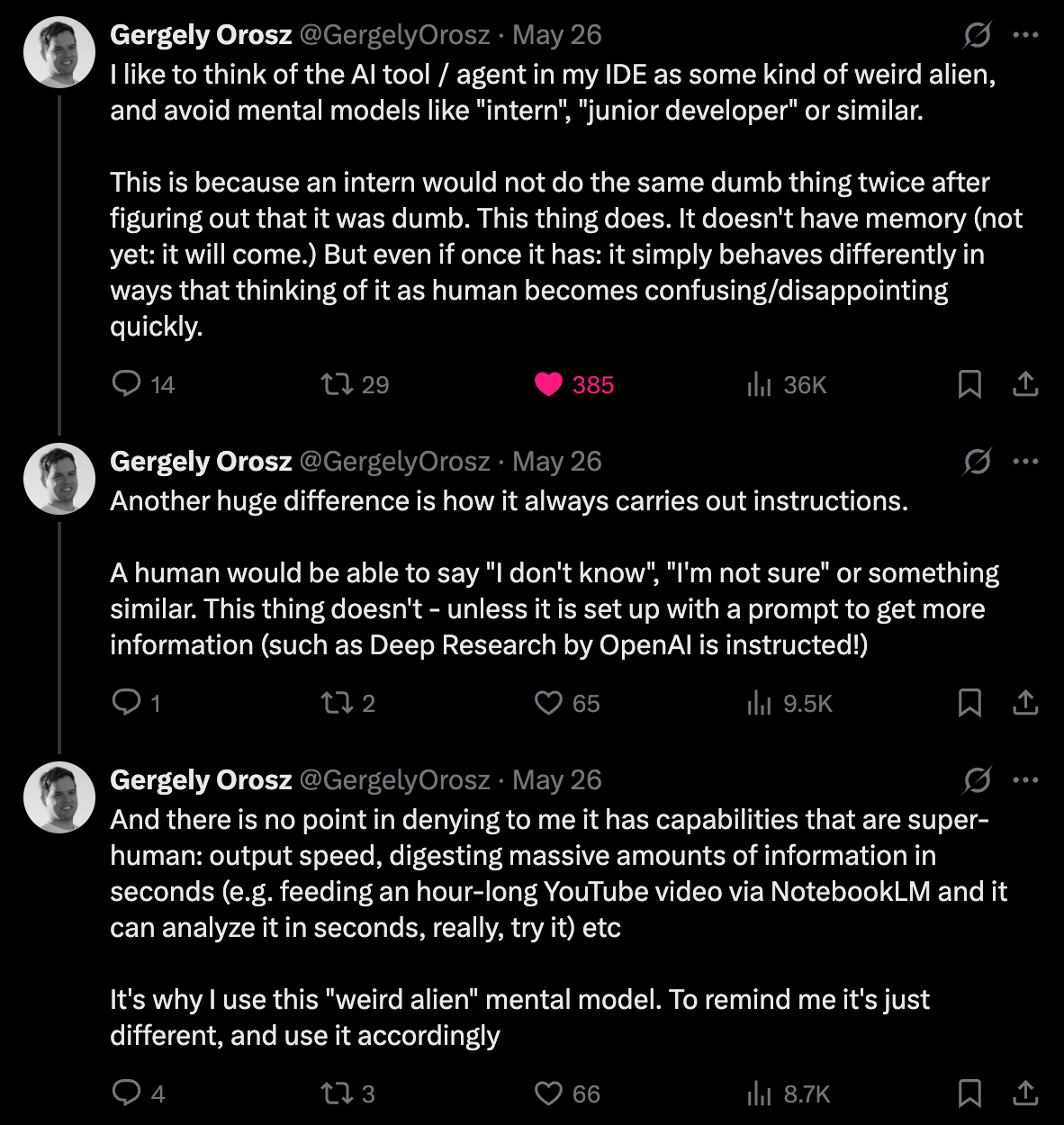
This is the reality of spiky intelligence—brilliant in one dimension, inconsistent in another. Opus 4 can sustain focus for hours, producing code that actually runs in a remarkable percentage of cases and even fixing very hard bugs. But the gains are spiky. They don’t always work. We live in a universe where people can complain and praise Opus 4 at the same time. And that typically means inconsistency!
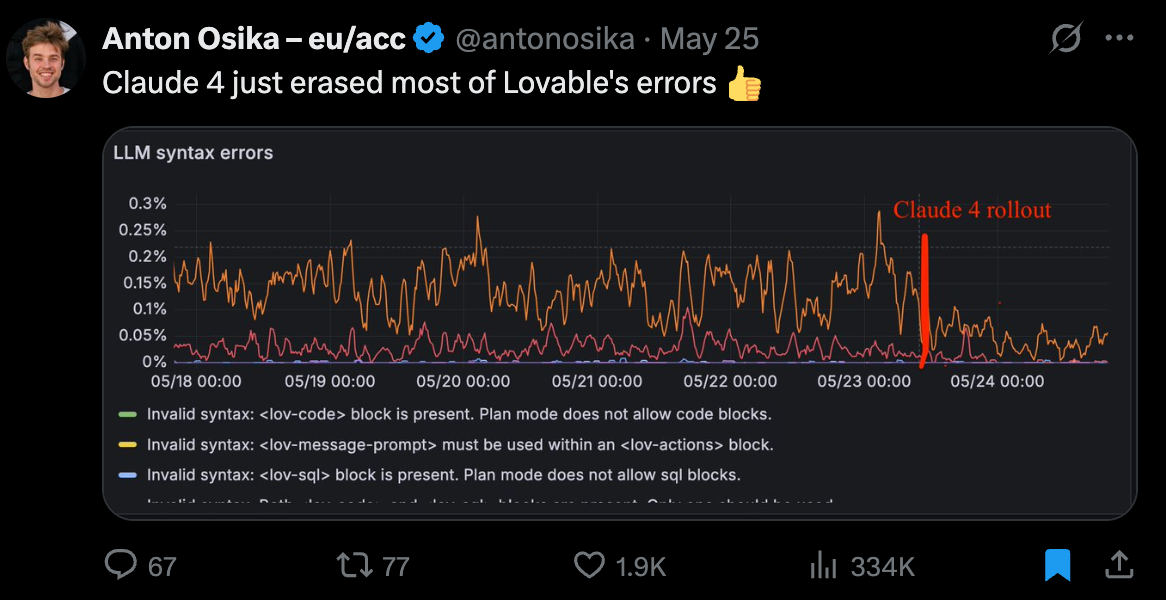

What’s going on here? First, this isn’t an Opus 4 issue! It’s an LLM issue. Frankly, we humans are also not all that consistent.
We're not in a 1:1 capability race anymore. There are things LLMs are better at than us, and (critically) vice versa. So I think it’s more interesting to say we’re mapping the topology of intelligence itself—finding the peaks and valleys, the smooth gradients and the sheer cliffs. And the most interesting terrain? The places where human cognition does something so weird, so inefficient, so magnificently context-dependent that it works.
1. The Metaphor Engine (Or: Why Your Brain is a Kleptomaniac)
As an example: Thursday, 3 AM, debugging a distributed consensus problem). The traditional approaches are failing. The academic papers are useless. The LLM is generating variations on themes that don't work. Then your sleep-deprived brain notices your daughter's friendship bracelet on my desk—those little beads that slide until you pull the strings tight—and suddenly you’re sketching a tension-based consensus mechanism that shouldn't work but does. (By the way, consensus problems have interesting applications in multi-LLM agent problems.)
This is the human superpower: grand theft cognition. We don't search our experience; we raid it. That sensor problem on tomorrow's Mars rover? Watch a human engineer steal from origami, from their coffee percolation, from the way their cat stretches after a nap. It's not analogical reasoning in any clean sense—it's conceptual piracy at scale. JRR Tolkien famously scribbled a nonsense phrase on the back of his exam papers that became the seed for one of the best-selling children’s books of all time: in a hole in the ground their lived a hobbit. That’s how human cognition works—it’s not how LLMs work.
LLMs interpolate brilliantly within their training manifold. They can blend concepts, vary parameters, explore the space between known points with superhuman finesse. But they can't reach into the void and grab something that has no business being there. They can't take a principle from mycorrhizal networks and slam it into a caching problem just because the shapes feel similar in some ineffable way.
The difference is visceral when you're in the thick of it. The model gives you correct solutions. The human gives you wrong solutions that turn out to be right for reasons nobody could have predicted.
2. The Courage to Create (Or: Backing the Wrong Horse Until It Wins)
There's a moment in most creative processes—I’ve seen it over and over again—where you have to choose the stupid option. Not the risky option. Not the innovative option. The stupid one. The melody that refuses to resolve. The architecture that breaks every best practice. The hypothesis that makes senior engineers do that thing with their eyebrows.
Amazon does this so much it’s an interview question. What would you change about the Amazon homepage? The correct answer is everything is tested to hell and back. And so even if a designer says it looks terrible (which it does). And it violates design principles—it doesn’t matter. It works.
As an example of stupid—where are the buttons on this page?

(Yes, I’m shopping for shelving.)
Look, this is especially true with design. LLM-generated designs are cleaner, more consistent, often have higher usability scores in testing. But they also cluster around the mid. They are not particularly creative.
LLMs don’t understand that wrongness can have a point, can be the point. It forces attention in exactly the right places.
Models can generate a thousand variations, each more polished than the last. They can even inject randomness, controlled chaos, calculated rule-breaking. What they can't do is fall in love with the wrong solution and nurse it through the valley of death on pure conviction.
Creativity isn't just generating options—any decent model can do that now. It's having the taste to recognize the ugly duckling and the spine to defend it until everyone else sees the swan.
3. The Weight of Consequences (Or: Why Humans Double-Check and Machines Don't)
An LLM has never sat in a blameless post-mortem that everyone knows is actually blameful. Never felt the specific texture of dread when Datadog starts lighting up at 11 PM on a Friday. Never had to explain to a room full of people why your "elegant refactor" just cost the company six figures in downtime.
This shapes everything. When I review work now, I'm not just checking correctness—I'm pattern-matching against every post-mortem I've ever attended, every hard conversation about a failed launch I’ve been a part of. That clever optimization? I've seen its cousin take down production. That innocent-looking customer request? It was tried four jobs ago and boy did that not go well.
The model sees code. I see scars.
This isn't about risk aversion—sometimes the scars tell you when to be more aggressive, not less. It's about the invisible physics of accountability. Every decision carries the weight of future explaining, future emails, future "quick sync" meetings that are never quick. That weight shapes the solution space in ways no training data captures.
Watch a senior engineer review a PR sometime. Half their feedback isn't about the code at all—it's about the humans who will maintain it, the on-call rotation that will debug it, the junior dev who will misunderstand it six months from now. They're optimizing for a loss function that includes their own future 3 AM self.
4. The View from 30,000 Feet (Or: Why Context is a Superpower)
Models excel at local optimization—give them a function, they'll find the gradient with brutal efficiency. But they can't hold the whole churning mess in view. The CEO's recent obsession with that competitor's blog post. The unspoken tension between frontend and backend after the last reorg. The way everyone's pretending the Q4 deadline is realistic when we all know it isn't.
Humans carry these massive, incoherent contexts in our heads. Not accurately—I once spent a month optimizing for a priority that had been deprioritized in a meeting I'd missed. But usefully. We feel the temperature of the room, sense the political undercurrents, know which technical debt will actually get paid down and which will metastasize.
There's a specific kind of knowledge that lives in the gaps between documented decisions. Why we never touch that particular service even though it's a mess. Which team actually owns that repo despite what the CODEOWNERS file says. The real reason we use that weird library (hint: it's not technical). Or the real reason we’re having so much trouble getting to WCAG compliance (hint, it’s usually not technical either).
This isn't intelligence in any clean sense. It's the accumulated scar tissue of living in the system, not just analyzing it. It's knowing that the elegant solution to today's problem creates next quarter's migration nightmare, feeling when the data is right but the timing is wrong, sensing when a technical victory would be a political disaster.
5. Stories All the Way Down (Or: The Compression Algorithm of Meaning)
Hand a board of directors a perfectly accurate 100-page analysis and watch their eyes glaze over by slide three. Tell them a two-minute story about a customer who almost churned but didn't, and watch them lean forward. This isn't a bug in human attention—it's our deepest technology.
Pattern recognition is table stakes now. Any frontier model can surface insights that would take human analysts months to find. And that’s amazing! But patterns aren't persuasive. Stories are. The ability to take a constellation of facts and thread them into a narrative that carries not just information but significance—that's how we turn analysis into action.
Stories aren't just good pedagogy. They're compression algorithms for meaning. They take the state space of all possible interpretations and collapse it to a single narrative trajectory. Beginning, middle, end. Tension, resolution. Character, change.
We're not just pattern-matching machines. We're meaning-making machines. And meaning travels at the speed of story. And stories have tremendous utility in business (just ask Steve Jobs).
6. The Uncomfortable Choice (Or: Calculating Regret in Base Human)
Here's where it gets interesting. Revenue projections say launch. Technical debt says refactor. Team morale says slow down. Market window says speed up. The model says A/B test. Your gut says something's wrong but can't articulate what.
This isn't a problem to be solved. It's the human condition.
Models can enumerate options, calculate probabilities, simulate outcomes with error bars. But they can't choose which regret you're willing to carry. They can't weigh your personal risk tolerance against your team's burnout against your startup's runway against your own imposter syndrome at 4 AM.
I've made too many of these calls. The worst ones were sometimes the most "correct" by any objective measure. The best ones often looked insane on paper but felt right in some ineffable way. Not because intuition is magic—because it's running calculations in a base we don't have notation for.
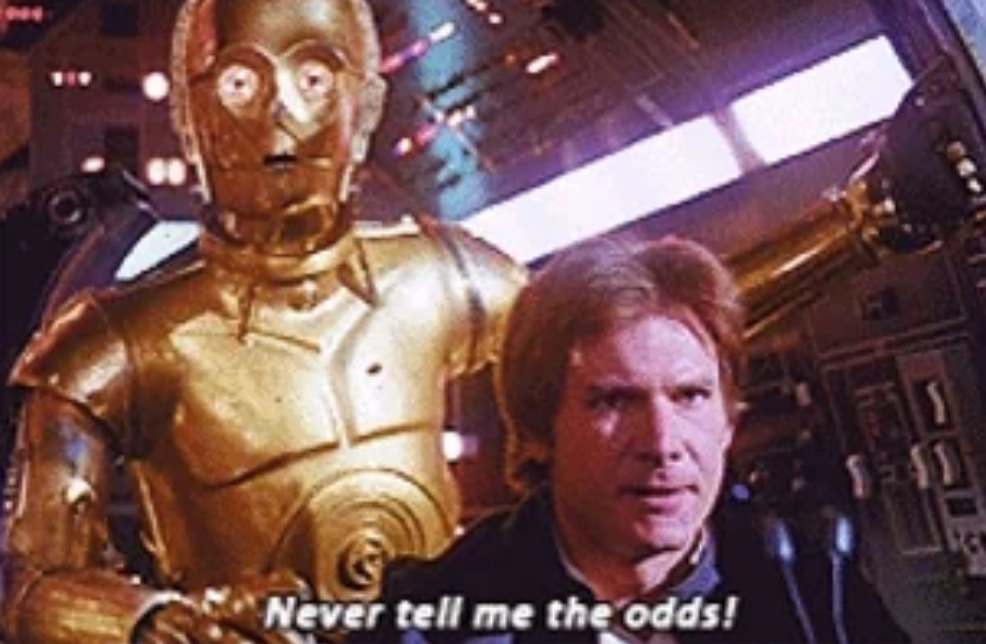
These aren't decisions in the clean, algorithmic sense. They're judgments—messy, value-laden, context-drenched judgments that only make sense if you're the one who has to live with them. The model can tell you the odds. Only you can decide which dice to roll.
The Partnership Proposition
So where does this leave us? The bleeding edge right now is learning to work with spiky intelligence—models that are breathtakingly capable in one dimension while blind in another. Claude 4 Opus can sustain coding focus for hours, producing volume and complexity that would burn out a human team. But someone still needs to ask: will this actually deploy? Will the tests catch the edge cases? Does this solve the real problem or just the one we articulated?
The future isn't about protecting human jobs from AI encroachment—that ship has sailed, caught fire, and sunk. It's about recognizing that intelligence was never one thing. It's a symphony of capabilities, and we're just starting to learn which instruments play which parts.
The models are getting scary good at the measurable stuff: pattern recognition, optimization, generation, transformation. They'll own these territories completely within two years. Meanwhile, humans are retreating upmarket into the ineffable: the leap, the story, the judgment call, the accountability, the meaning.
The most powerful systems won't be pure AI or pure human, but the weird cybernetic centaurs that emerge when both parties play to their strengths. When models do what they do best—process, pattern-match, and propose—while humans do what we do best—connect, create, and choose.
That vertigo I mentioned at the start? It's not about being replaced. It's about discovering that we've been playing the wrong game. We thought intelligence was about getting the right answer. Turns out it's about asking the right question. And sometimes, more importantly, knowing when the right answer is actually wrong.
I'm collecting edge cases where human judgment beats model intelligence. Send me your weirdest examples—especially the ones that make no sense until they do.
For more on AI, subscribe and share!
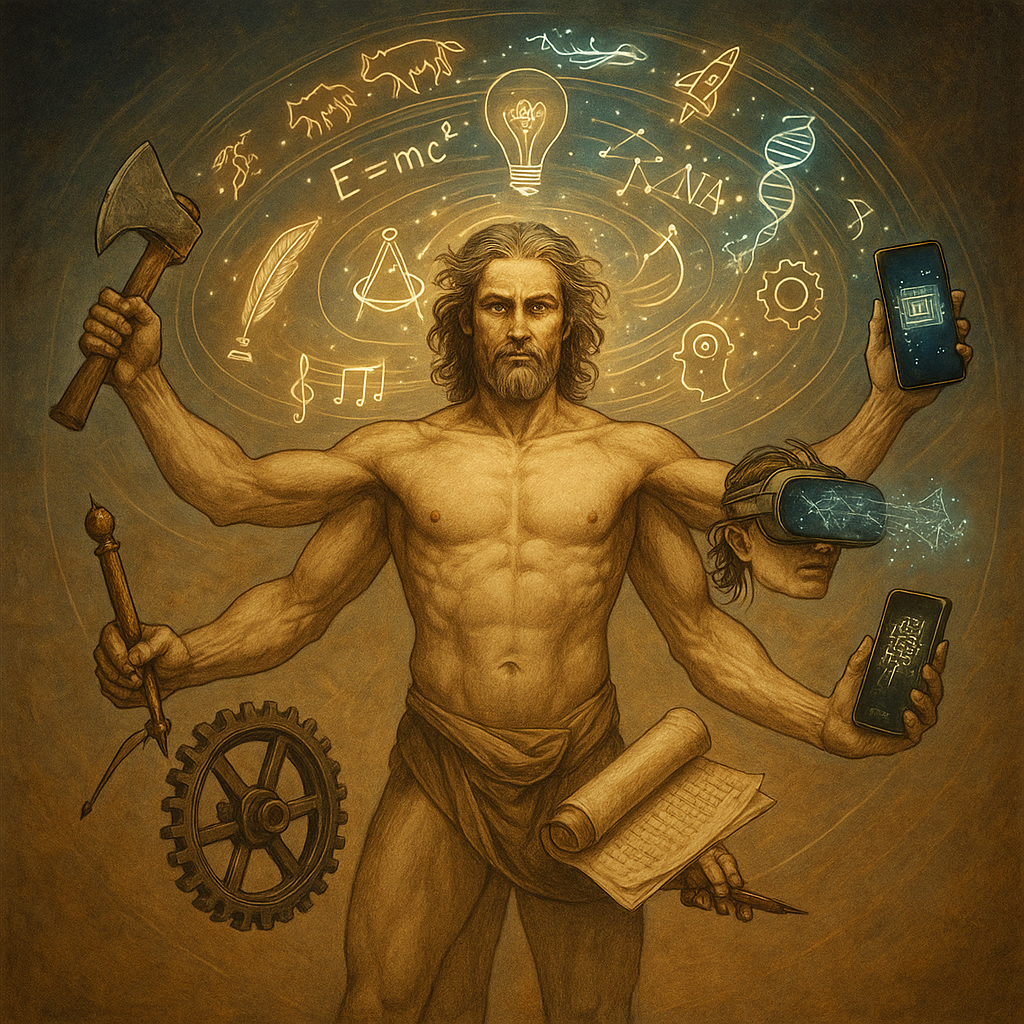
\a new Vitruvian man…\