ChatGPT 5 is going to change everything. I dive deep into the strategic logic behind OpenAI's plans and how this move reshapes the entire AI landscape.
By Nate
Published: 2025-02-13
URL: https://natesnewsletter.substack.com/p/chatgpt-5-one-model-to-rule-them
Sam Altman tweeted his roadmap today. Which is apparently how you communicate major roadmaps now. Big news is that Orion (confirmed at GPT 4.5) will be the last separately named model for OpenAI. The company will then turn its attention to GPT 5, and everything will wrap under that name. That means o3 isn’t going to be released. That means Deep Research wraps under GPT 5. And a whole lot more! Besides the news (and there’s plenty to dig into there), I thought the strategy behind the play was much more interesting than the news itself. Here’s how it resets the AI chessboard for players from DeepSeek to Google…
First, the full news…
OpenAI is making a bold play to unify its AI models and features into a single powerhouse platform – and it’s doing so with the swagger of a market leader who knows the stakes. In a recent roadmap reveal, CEO Sam Altman said OpenAI will “return to [a] magic unified intelligence” by eliminating the confusing model menu in ChatGPT. I have six models and counting right now, so I mean confusing.
Subscribers get all these posts!
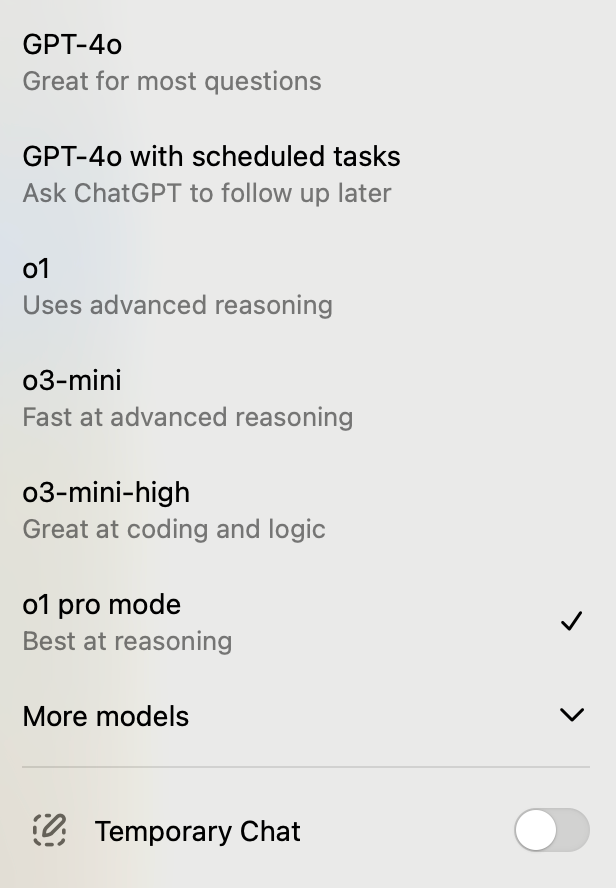
Oh, and one more thing – Altman dropped the bombshell that even free ChatGPT users will get unlimited access to GPT-5 (at a default setting) once it arrives. What does that mean for Pro users? Completely unclear.
This isn’t just a UX improvement or a generous giveaway; it’s a strategic masterstroke prompted by DeepSeek (and others). OpenAI’s unification strategy is both an offensive blitz to expand its dominance and a defensive shield to protect its flank. But you know me here on the blog—we don’t tolerate a cheap truism like that.
Below, we’ll pour a drink and dive deep into the sharp strategic reasons behind this move – and what it means for the AI industry’s major players. In essence, OpenAI is pulling a Mr. Miyagi and playing offense and defense at the same time, and doing so with a style that has the whole industry watching.
The Offensive Ambition: “One AI to Rule Them All”
From an offensive standpoint, OpenAI’s unification is about consolidating power and setting the pace. By fusing capabilities into a single platform, OpenAI is creating an AI experience that is incredibly hard to match. ChatGPT will no longer be just a clever chatbot – it’s evolving into a Swiss Army knife of AI. It can chat, code, analyze data, generate images, and even speak, all in one place. Altman himself confirmed GPT-5 and its siblings will incorporate voice, a canvas for images, web search, “deep research” tools, and more . This all-in-one approach makes ChatGPT the default destination for an ever-wider range of tasks. Why use one tool for writing, another for image generation, and yet another for searching the web, when ChatGPT can do it all under one roof?
Making AI easier and more magical for users isn’t just a nice-to-have — it’s a land grab. OpenAI is moving the goalposts for what an AI platform should offer. By delivering a unified AI that “just works” without the user worrying about which model or plugin to use, they’re setting a user experience standard that competitors will struggle to meet quickly. This is a classic Silicon Valley play: bundle features to raise switching costs. Just as Microsoft once bundled a web browser with Windows to dominate the internet era, OpenAI is bundling multiple AI capabilities into ChatGPT to dominate the AI assistant era. The convenience factor means users (and developers building on OpenAI) become increasingly locked in. If your go-to AI can handle everything, you’re far less tempted to try an alternative for any single feature.
Unification also positions OpenAI as a true AI platform, not just a model provider. Custom GPTs were an early attempt at this, and I expect Sam to wrap in that attempt into a more mature ecosystem play as GPT 5 levels up what a GPT chatbot can do. The unified model strategy complements this by ensuring the underlying “OS of AI” is powerful and simple to use. It’s an offensive push for platform dominance: OpenAI wants to be for AI what Apple is for smartphones – an integrated hardware/software (in this case, model/interface) platform with a vibrant third-party ecosystem. By the time rivals catch up, the network effects and data advantages (from millions of users interacting in multifaceted ways) could be overwhelming.
There’s also a forward-looking offensive angle: unification is a stepping stone toward more advanced AI behavior. GPT-5 is slated to take on more “agentic” tasks , meaning it could act on instructions autonomously – think of it as giving ChatGPT the ability to not just answer questions, but execute decisions or multi-step operations on your behalf. That potentially depositions tools like LangChain. Combining all models and tools into one AI makes it easier to embed such agent-like functionality. OpenAI is essentially saying, “We’re building one brain that can handle it all.” If it sounds dystopian, it should. If successful, this leapfrogs the competition and inches closer to the holy grail of a general AI assistant that can handle anything you throw at it. Offensive moves don’t get much bolder than that.
Finally, offering the latest and greatest model (GPT-5) to free users is a power move to grab market share. It’s counterintuitive – why give away your top tech for free? – but the strategic logic is razor sharp. By flooding the market with GPT-5 level intelligence at no cost, OpenAI can saturate consumer adoption and brand itself as the default AI everyone uses, before competitors can even monetize their similar models. OpenAI is using those deep pockets to turn DeepSeek’s strategy back on itself.
It’s reminiscent of Google giving away Android for free to ensure Google’s dominance, or when Netscape made its browser free in the 90s to get widespread adoption. OpenAI is betting that grabbing mindshare and massive usage now will pay off in long-term dominance (and plenty of ways to monetize once you’re the incumbent). In short, it’s playing offense with a generous facade – conquer the market today, worry about profit tomorrow. And importantly, it sets a bar that if you’re a new AI company trying to charge for access, well, good luck competing with free GPT-5 quality. OpenAI is effectively telling the world: we’re willing to cannibalize our short-term revenue (Plus subscriptions) to win the long game. That’s an aggressive stance only a confident (and well-funded) leader can afford to take. SoftBank’s funding is clearly in the bag.
The Defensive Maneuver: Fortifying the Moat and Fending Off Rivals
Every offensive play in tech is also about shoring up defenses. OpenAI’s unification strategy is as much about protecting its lead and covering vulnerabilities as it is about expansion. They may be on top now, but the competition isn’t sitting still – and OpenAI knows it. By unifying models and simplifying the user experience, OpenAI is closing off angles that rivals could exploit.
First, consider the threat from open-source and low-cost challengers. In the past year, the AI world has seen a surge of open-source models (like Meta’s LLaMA and others) and new entrants offering surprisingly advanced AI at a fraction of the cost. A prime example is the upstart DeepSeek and its R1 model, which burst onto the scene boasting it was open, cheap, and transparent – three qualities OpenAI’s models lacked. DeepSeek’s model came with dramatically lower pricing, on the order of a few dollars per million tokens, undercutting OpenAI’s API prices which were as high as $60 per million tokens for its older models (like o1). That kind of price difference is an existential threat; it’s like a budget airline suddenly offering transatlantic flights for 1/10th the fare of incumbents. OpenAI’s response was telling: they rapidly slashed prices and introduced more efficient models (o3-mini came in at just $4.40 per million tokens, nearly a 90% drop in cost) to narrow the gap. They even started exposing a bit more of their models’ reasoning process (a nod to the transparency that open models like R1 offer) to appease developers.
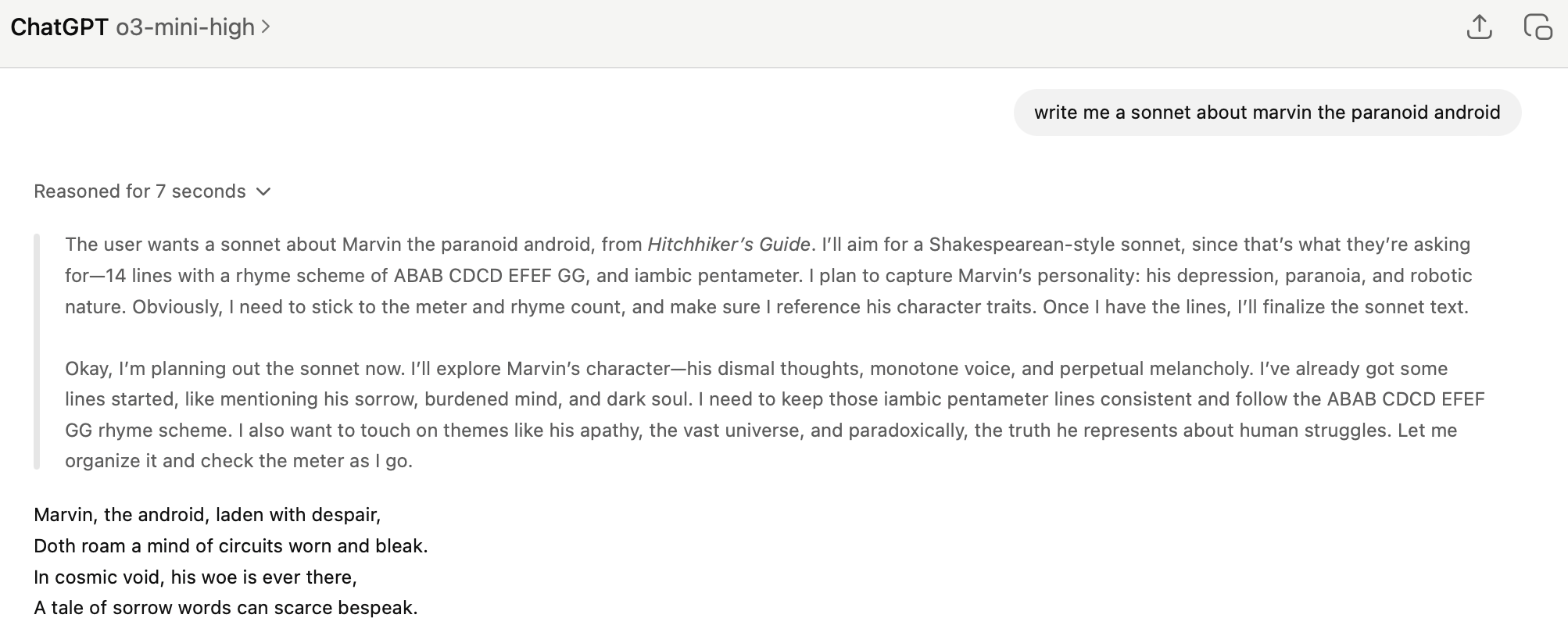
\Yes we have fun with the examples here\
Unification is the next defensive step in this dance. By folding the “o-series” (optimized for cost and speed) into the mainline GPT, OpenAI ensures that even free users get the benefit of those optimizations. It neutralizes one of DeepSeek & company’s big selling points: cost. If everyone can use a fast, decent version of GPT-5 for free (or the cost differences become invisible to the end user), the price advantage of open competitors diminishes. In one swoop, OpenAI is saying: we’ll match your price (free) and raise you integration and quality. The focus on a “simple and accessible” unified model is also explicitly aimed at countering these challengers – this move is key to calming investor nerves amid rising competition sparked by DeepSeek’s low-cost entrance. In other words, OpenAI is reassuring stakeholders that it can defend its turf on both quality and cost, heading off the narrative that open-source will inevitably eat its lunch. That’s relevant as the SoftBank round hasn’t quite closed yet.
Secondly, there’s the looming presence of tech giants and well-funded rivals. Google, for one, has been brewing its answer to GPT, launching on a similar cadence and a pace or two behind (currently Gemini 2.0). Like OpenAI, Google offeres multiple modes or versions of Gemini for different tasks (a bit like OpenAI’s model picker approach). Worse, you can’t even get all the models in one place. Google model in Google is different from Docs is different from their Google AI Studio, etc.
OpenAI’s unification preempts that by removing complexity entirely – a subtler jab at Google: “we’ve simplified, can you?” Moreover, Google has massive distribution (Android phones, Search, Gmail, you name it). The best defensive position for OpenAI is to make ChatGPT so ubiquitous and indispensable that users stick with it, even when Google inevitably bakes Gemini into every product. Sam is already tweeting about running down Google, so he has his eye on search. By offering top-tier AI with baked in search to everyone now, OpenAI is trying to lock in user loyalty before Google’s full-court press begins. It’s a defensive race to build switching costs: if you’ve integrated ChatGPT (with GPT-5 brains) deeply into your workflows and if you get search that just works, you’ll be less inclined to shift to Google’s offering later – even if it comes preinstalled on your Pixel phone or in your Google Docs.
Other rivals are also in the mix. Anthropic’s Claude has made waves with extraordinary coding prowess and great personality, prompting users to wonder why and how it performs so well. In my view, Claude is a great example of the limitations of benchmarks—Claude feels better than it performs.
OpenAI’s answer to Claude? Relentlessly scale GPT 5 intelligence and integrate “deep research” capabilities and tool use natively. Intelligence means getting better at coding. Unification means a user asking GPT-5 for a complex research task might seamlessly invoke a browse/search mode or an analysis tool behind the scenes, covering the kind of use cases where competitors hoped to stand out. By knitting in web browsing, code execution, and domain-specific experts (via custom GPTs) into one system, OpenAI is defensively covering all bases. There’s less room for a competitor to say “aha, we do X that ChatGPT can’t” – because ChatGPT will do X, Y, and Z by default.
Finally, bundling everything is a defensive move against the fragmentation of user attention. AI is a new frontier with countless startups offering point solutions – image generators, coding assistants, AI video creators, etc. Any one of those could have matured into a serious competitor or eroded a chunk of OpenAI’s value proposition. By absorbing those use cases into ChatGPT early (either via native features like DALL·E 3 for images, or plugins, or the upcoming GPT App Store), OpenAI cuts off the air supply for would-be competitors.
Why go use some other service when you can do it in ChatGPT with one click? This is defensive moat-building 101: integrate or perish. OpenAI chose to integrate – and in doing so, made its moat that much wider. It’s not just about adding features, it’s about denying competitors a beachhead. Even if a rival has a slightly better image model or voice system, most users won’t bother if ChatGPT’s built-in option is “good enough” and far more convenient. Convenience and integration can trump technical perfection in the market. OpenAI knows this playbook well and is executing it with clear intent.
To summarize the defensive strategy in play, OpenAI’s unification is targeting multiple threat vectors at once:
• Open-Source Upstarts: By matching them on price and openness (free GPT-5, more transparent reasoning), OpenAI blunts their key advantages . The message: we’ll beat you at your own game of cheap and open (to the extent we can while still staying proprietary).
• Big Tech Rivals: By setting a high bar on integration and user experience, OpenAI forces companies like Google to play catch-up on OpenAI’s terms. It’s a preemptive strike so that when Google, Meta, or others roll out their next-gen AI, the narrative will be “Does it measure up to ChatGPT’s unified experience?” – a favorable comparison for OpenAI.
• Niche AI Tools and Startups: By bundling capabilities (image generation, coding assistance, voice interaction, etc.), OpenAI is sweeping the leg of many single-focus AI products. Those startups now face the daunting task of being not just better, but significantly better, to entice users away from the default one-stop shop that ChatGPT has become. Many will struggle to compete with “free & integrated” as a value proposition. As Sam said:
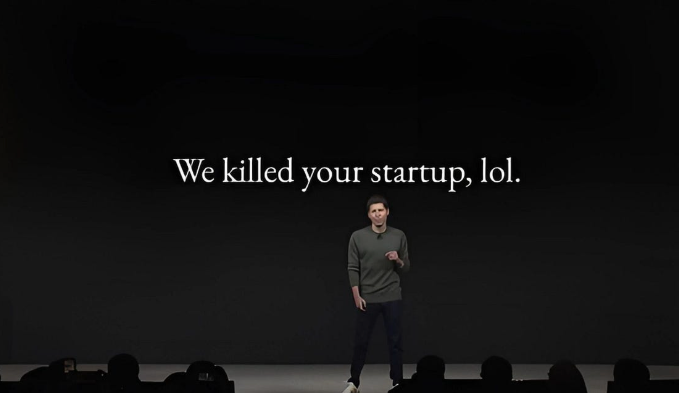
\Yes it’s real\
In short, the unification is a defensive wall built to protect OpenAI’s kingdom from all sides, even as that kingdom expands.
The New AI Landscape: Inside Moves and Implications
So what does this all mean for the AI industry chessboard? By executing an offensive and defensive strategy simultaneously, OpenAI is redrawing the boundaries of the AI market. It’s a power move that insiders will recognize as profoundly significant. We’re not just watching a product update; we’re witnessing a platform war unfolding in real-time. OpenAI is leveraging its lead to grab even more territory, while also digging trenches to defend it. That dual approach will have ripple effects:
Competitors are being forced to respond on multiple fronts. Google, for example, may need to accelerate its own integration plans – perhaps unifying its Bard and Gemini efforts into a more cohesive offering – to avoid looking fragmented. We can expect Google to double down on leveraging its unique assets (Android, Search, YouTube) to distribute its AI widely, since going feature-for-feature against a unified ChatGPT might not be enough.
Meanwhile, companies like Anthropic and Meta (with its open-source strategy) will feel pressure to differentiate so sharply that they occupy a distinct niche unassailable by a do-everything ChatGPT. One possible outcome is an increased emphasis on specialization as a counter-strategy – e.g., an AI that only does medical diagnostics but does it far better than any generalist. However, even those niche players must be eyeing OpenAI’s moves warily, knowing that if their niche shows promise, it could be absorbed into the ever-hungry ChatGPT ecosystem next. One of the question marks here is how far deep intelligence scales—o3 beat o1 Pro in Codeforces even though o1 Pro was specifically trained on the test and o3 wasn’t.
The balance of power might tilt further towards platform owners and away from model creators. OpenAI’s strategy highlights that owning the user interface and ecosystem (the platform) is as important as, if not more than, having the best model weights. This is a page from the Apple playbook, where integration and ecosystem lock-in created a durable advantage. And OpenAI plans to build on it further with a device. It’s the kind of playbook that likely may make Sam the world’s first personal trillionaire in a few years.
For AI professionals and businesses deciding where to invest time and resources, this suggests that building on OpenAI’s platform could be safer (in the short term) than building against it. In fact, OpenAI likely wants to channel the energy of the developer community into its ecosystem (with the promise of reaching ChatGPT’s user base), which in turn reinforces its platform. It’s a virtuous cycle for the leader – and a vicious one for outsiders. We’re essentially seeing the emergence of a dominant AI walled garden in real-time, albeit one that still faces strong challengers in an extremely dynamic field. Sam is leveraging his “temporary” intelligence edge into setting the terms of the game everyone else has to play.
Finally, one cannot ignore the “coopetition” dynamic with OpenAI’s key partner, Microsoft. Microsoft benefits from OpenAI’s prowess (it integrates GPT-4 into Bing, Office 365 Copilot, etc.), but Microsoft also has its own AI aspirations. OpenAI’s unification strategy will raise expectations for all AI experiences, including Microsoft’s products. This could inadvertently put pressure on Microsoft (and others using OpenAI’s tech) to keep up in terms of seamless integration. However, given their deeply intertwined relationship (and Microsoft’s investment), this move largely strengthens the pair’s hand against the rest of the field. It’s a kind of alliance power-up: OpenAI makes the tech leap, Microsoft pipes it into Windows, Office, and Azure, and together they stand taller against Google or an open-source insurgency. In that sense, the unification is also a defensive play as a team – ensuring the OpenAI/Microsoft alliance remains the center of gravity in AI.
Final Thoughts
Pull up a chair and take a sip — here’s the bottom line. The truth is, OpenAI is confident — confident that this two-pronged approach will cement its position at the top of the AI world. By making one AI to rule them all, OpenAI is not only advancing what its technology can do, but also cleverly shielding itself from those who would challenge its throne. It’s a complete performance, sort of like the Eagles last weekend.
Will it work? The coming months and years will reveal if this strategy indeed builds an unassailable lead. Competitors are certainly not going to roll over, nor is it correct to say that startups are doomed as a class; we’re likely in for an AI arms race of features, integrations, and deployment. And the space is big enough to have many winners. But one thing is certain: OpenAI just changed the game and upped their odds of taking the lion’s share of the chips on the table, and everyone in the industry is now recalibrating.
If you’re an AI-obsessed nerd like me, this is a can’t-miss moment — the kind that makes you feel like you’ve gotten an inside peek at how the chess masters are moving their pieces. And from where I sit it sure looks like OpenAI just yelled “check” — in the AI platform wars. Competitors, your move.
For more on AI, subscribe and share!

\Yes we are reading the Lord of the Rings at our house\