Google's latest AI doesn't just respond to commands – it sees your screen, learns your habits, and jumps in before you ask. It's a full-fledged talkative code parrot—and that changes everything.
By Nate
Published: 2024-12-12
URL: https://natesnewsletter.substack.com/p/gemini-20-the-code-parrot-will-give
Look code parrot is a weird metaphor. I get that. My previous title was “The AI that watches you code,” and then that was just too creepy to publish. I think one of our unsung issues in 2025 is finding appropriate metaphors for LLM applications.
Back to the point.
Regardless of what you name it, Google's Gemini 2.0 just transformed how we'll work with computers. On the face of it, this is just another week another incredible model launch. Gemini 2.0 codes. It talks. It listens. It can see your screen. It does all of those things well.
But the sum is greater than the parts here. This isn't about faster processing or smarter algorithms. It's about an AI that has enough modalities that you can start to stack the workflow in interesting ways. Gemini now can (at your choice!) watch your screen and understand what you're doing, like a human colleague who anticipates your next move. Stacking voice plus a text interface plus screen awareness together with other AI tooling on a computer marks a fundamental shift in how AI assists us – from a tool we command to a partner that works alongside us. I felt it today—it was one of those holy shit moments because it felt like someone was working with me.
Here's what makes it different: You're writing code, and you make a change. Without a word from you, Gemini notices and responds. It just reads it and sees what’s going on. Maybe it spots an error, or notices an issue it ties back into the previous part of your conversation, maybe it suggests an improvement. It's the difference between a chat program and a skilled programmer who works beside you, seeing your work in real-time. One developer described coding with Gemini 2.0 as "pair programming with an expert who never gets tired and remembers everything we've done."
The technical achievements behind this are significant. Google built Gemini 2.0 on custom Trillium TPUs – specialized AI processors that handle complex tasks at twice the speed of previous models. But the real breakthrough is how it processes information. It doesn't just understand text and code; it processes images, video, and audio simultaneously. When you're explaining a problem, it can hear your voice, see your screen, and read your code all at once – just like a human would.
It’s more than just the AI on your shoulder, though. Google built Gemini 2.0 to think ahead and act on its own – with your permission. Through Project Mariner, it navigates websites and completes tasks automatically. Need to research and compare products across multiple sites? Gemini can do that. Through Project Astra, it helps with real-world navigation and daily work, understanding context and remembering your preferences for up to 10 minutes of conversation. The AI has evolved from a simple question-answerer to a digital assistant that gets things done.
This shift will reshape how we work. Soon, Gemini 2.0 will integrate with Google Search and Workspace. Picture working on a presentation where your AI partner sees your slides, hears your comments, and helps pull everything together. It doesn't just automate tasks – it collaborates with you, understanding context and offering relevant help. For developers, there's Jules, an AI coding agent that integrates directly with GitHub workflows, helping manage issues and develop solutions under your supervision.
I sound like an ad, and really I’m not here. I don’t think Google is the only company solving these problems. I just sometimes have moments where I’m in awe of how the stack comes together and Gemini 2.0 gave me one today.
When you have an agentic tool like I’m describing here, you can start to stack tools in interesting ways. I can get Gemini to look at what another LLM is thinking about and give its opinion. I can move from this modality of a single chat window to a community of expert LLMs that all have opinions that help me work better.
The implications go beyond just getting work done faster. The jump I felt today represents a new way of interacting with computers – more natural, more intuitive, and more collaborative. Google is already testing how these capabilities can help in gaming, where AI agents can understand game mechanics just by watching the screen, and in robotics, where they can apply spatial reasoning to physical tasks.
We're entering an age where AI becomes a true workplace partner, and it feels surprisingly natural already. While Google is rolling this out carefully to developers first, it marks a crucial step toward more natural human-AI teamwork. If you want to try it, look in Google AI Studio and check it out!
Today’s sharp thought: watch for wonder. If you’re looking for moments when you feel awe you’re likely to catch technical breakthroughs that are more than the individual technical components—that add up to a shift in human experience. I think Gemini 2.0 could be one of those moments. NotebookLM was one of those. Obviously ChatGPT. There’s a lesson around awe for product builders I think—how much awe is your product invoking these days?
Good luck! In the meantime, I’ll be arguing with Gemini over how to structure my Windsurf code.
If you enjoyed this, subscribe and share!
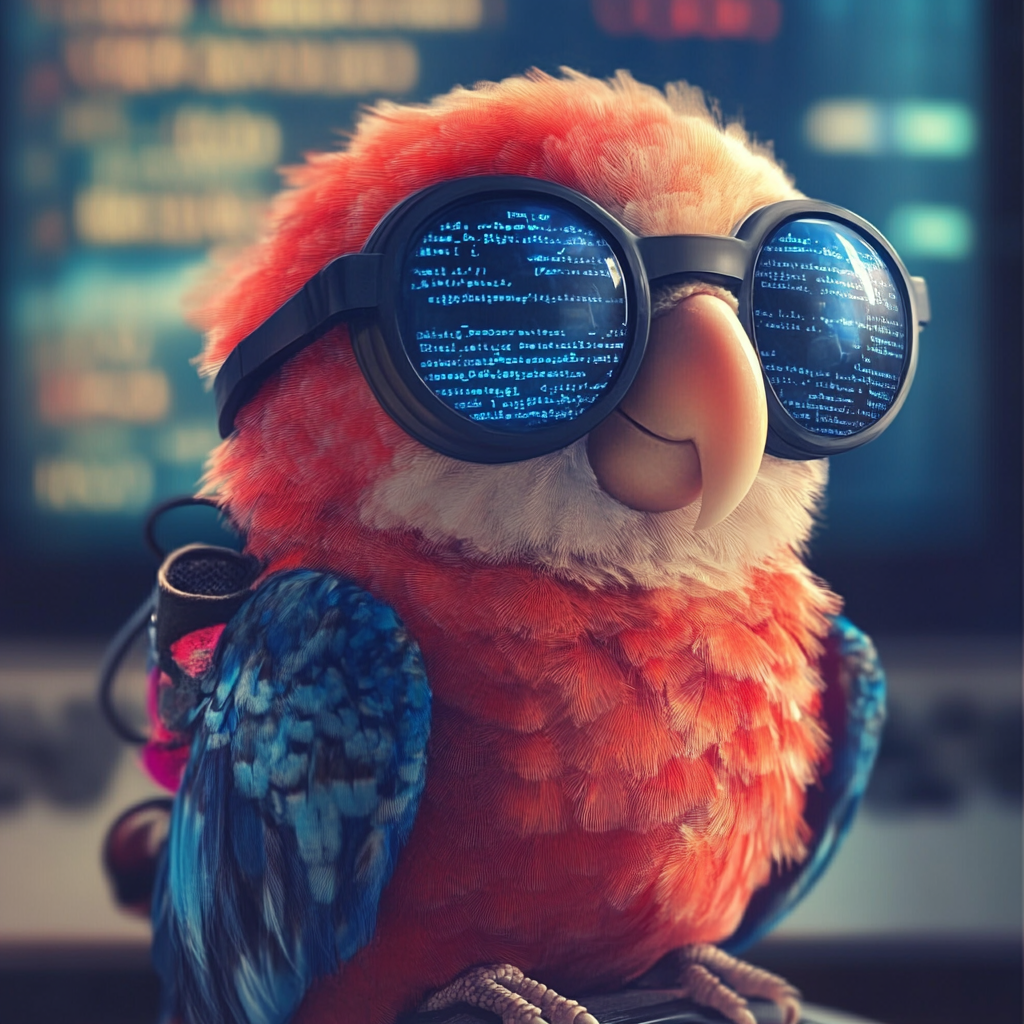
\Look at this cute little code parrot!\