The 267% bill increase was never a household bill, and the water people are counting is twelve times smaller than the water nobody sees. The shortage, though, is real
By Matija Vidmar
Published: 2026-09-06
URL: https://mvidmar.substack.com/p/data-center-real-power-water-numbers-ai-architect-weekly-011
AI Architect Weekly — August 31–September 6, 2026
This week three things that were never for sale found out what they cost.
This week
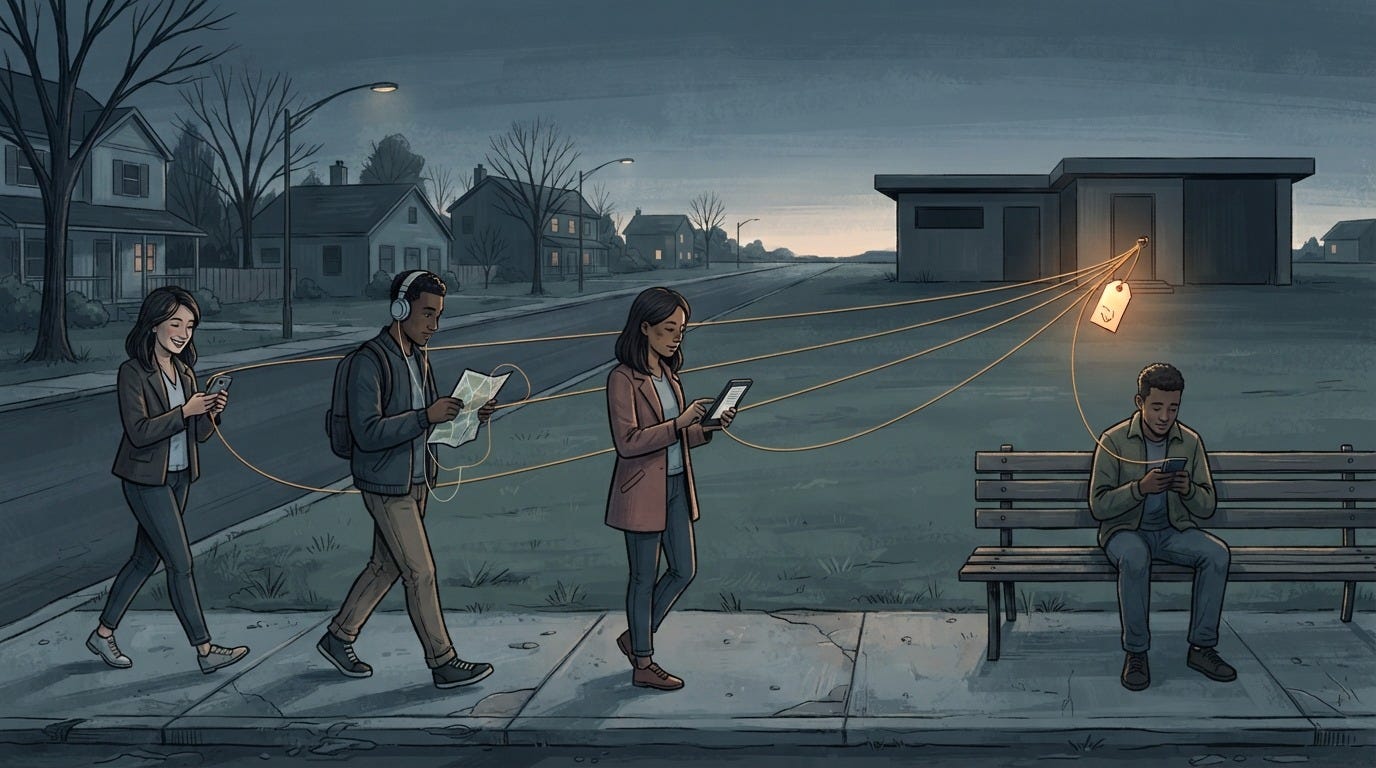
This morning you checked the weather, followed a map, maybe an app suggested something to buy before you even searched for it. None of that felt like a decision about artificial intelligence. It was one: the loudest argument of the year is about the exact infrastructure you used without noticing.
This week a poll measured how many Americans want a new data center near their home: almost nobody. The public shelf the whole world downloads finished AI models from changed owners for almost 13 billion dollars. An automated researcher did, in a few hours, at four dollars an hour, work that until now required a specialist paid a hundred and fifty.
These are three separate stories only if you read them separately. What follows corrects two numbers you have probably already heard, both wrong, and leaves you with the question the debate never asks: how much of the thing you are against did you already use this morning?
THE SERVICE YOU ALREADY USE
We are not deciding whether to build AI infrastructure. We already use it, almost all of us, every day, without calling it that. We are deciding whether to build enough of it to carry the load, and we are deciding it by arguing over two numbers that are both wrong.
Gallup polled 3,975 American adults, margin of error 2.6 points. Asked whether they used AI products: yes, said 36%. Then it checked actual use of six common products: 99% use at least one every week. 64% do not realize they are using it. Weather 87%, streaming 83%, online shopping 82%, social media 81%, navigation 81%, voice assistants 50%. Among people who swore they did not use AI, half used five or six of the six, and another 37% used three or four. This is not misinformation. It is a service that works so well it disappears.
The numbers worth arguing over come from the International Energy Agency: the world’s data centers consumed 415 terawatt hours in 2024, 1.5% of global electricity, rising to roughly 945 by 2030, just under 3%. In the US it was 4% in 2023, expected to reach 7 to 12% by 2028. National averages hide the local cases: Virginia 26%, Ireland about 21%, Dublin alone at 79%. The comparison that matters, again from the IEA: in global electricity demand growth between 2024 and 2030, data centers account for 530 terawatt hours, 8% of the total. Air conditioners account for 651, electric vehicles 838: the growth in air conditioning alone is bigger than the growth in data centers.
On water, a fact sheet from the Environmental Law Institute.pdf), January 2026: direct use went from 21.2 billion liters in 2014 to 66 billion in 2023, the pipe neighbors are protesting. But the water consumed to generate the electricity those data centers run on is 800 billion liters, twelve times as much: the big number sits upstream, inside the power plant, with no gate in front of it to picket. Evaporative cooling, still the most common, loses about 80% of the water it touches; newer facilities increasingly use direct-to-chip or immersion cooling, using very little. Most existing data centers, though, still draw drinking water from municipal systems: that is the legitimate part of the protest.
Two false numbers, one from each side. Senator Elizabeth Warren said people living near a large data center have seen their bill rise as much as 267% in five years. PolitiFact rated it mostly false in June 2026: the 267% is the wholesale price on specific grid nodes between April 2020 and April 2025, not a household bill, and wholesale is only 30 to 50% of what a customer pays. The real increase: residential bills up an average of 42% in five years, spikes in Washington DC (94%), Maryland (74%), Maine (73%), New York (58%). Data centers are a factor, not the factor: PJM Interconnection estimates 9.3 billion dollars in higher capacity costs tied to their demand for 2025-26, up 174% against a scenario without, alongside 1.4 trillion in planned grid investment through 2030 (up 27% in a year), plus 4.4 billion for wildfire damage and 2.7 for hurricanes. On the other side, Commerce Secretary Howard Lutnick said data centers do not use water: false, same as the 267%.
This piece takes apart the false numbers, not the problem. 1.5% of global electricity is an order of magnitude, not an acquittal: Virginia at 26% and Dublin at 79% say the problem is local even when the national average looks small.
Without building more of it, these services do not hold up. In March 2026 Google told Meta it could not sell it all the capacity it wanted, despite a cloud deal worth over 10 billion signed seven months earlier; other customers faced milder restrictions. This week Anthropic announced a permanent 25% increase to Claude Code’s weekly limits, but compared to today it is a 17% cut: the temporary 50% bonus expires September 13, new limits start the next day. Users did the math in public, the company deleted the post and reposted it admitting the cut.
Whoever is angry their subscription limit just got cut, and whoever is angry about the windowless building two miles from home, are fighting over the same scarcity, from opposite sides. One wants more capacity. The other does not want it there. Neither knows they are arguing with the other.
This is where the price of permission comes in. According to a Wall Street Journal analysis picked up on September 5, an Economist/YouGov poll from August 28-31 found only 20% of Americans support new data centers: 14% among Democrats, 31% among Republicans. Nearly two thirds oppose one in their own community: it is bipartisan, and that is rare. Opposition rose from 49% to 75% between March and July 2026. Over the same period the AI industry put 265 million dollars into super PACs for the midterms: 50 million from Andreessen Horowitz, 25 combined from OpenAI president Greg Brockman and his wife, at least 40 from Anthropic through Public First Action. The Leading the Future super PAC raised 140 million on its own.
In New York’s 12th congressional district, 27 million dollars were spent on one race: over 13 from a committee tied to Public First backing Alex Bores, over 8 from one tied to Leading the Future against him. Bores lost. Micah Lasher won, and said he would not take direction from the companies that intervened. On the other side, building trade unions, according to Newsweek, threaten to pull support from candidates who block projects: Rhode Island AFL-CIO, Climate Jobs Illinois, International Union of Operating Engineers Local 150, Minnesota State Building and Construction Trades Council, Climate Jobs Colorado. Dan McConnell, of the Minnesota building trades, as Jacobin reports: “If we just say, ‘No we don’t want these things,’ you can’t have a conversation about how to make the project better”.
On August 28, X said roughly 200 China-linked accounts, inside a suspected 200,000-account network, were amplifying opposition; a June OpenAI report documented the same pattern. But 200 accounts sit inside a movement already at 75% opposition: amplification, not origin. Goldman Sachs reports electricity up 6.9% year over year as of February 2026. A Vals AI analysis picked up by Bloomberg on September 3 estimates a long agentic task can have an environmental impact up to 10,000 times a simple query, one web app equal to two and a half hours of a household’s electricity; the authors themselves caution it covers only open weight models, that 14 of the 16 measured are Chinese because closed American models cannot be measured this way, and that it relies on assumptions about hardware, energy mix and efficiency.
The cost you do not see is about to become a price you will. When a resource turns political, sooner or later it gets rationed or priced, and the first form of rationing already showed up on your subscription as a weekly limit. Whoever knows what they use can choose where to cut. Whoever does not gets cut by someone else instead.
For one day, note every time you open something running on a data center that you do not call AI: weather, maps, your feed, shopping suggestions, the spam filter, face recognition in your photos, fraud checks on your card. In the evening, cross out the three you would actually give up. If you cannot find three, you are not against data centers. You are against where they put them, a different, far more useful argument.
The number we argue about is the small one. The big one has no gate to picket.
The AI Architect is a reader-supported publication. To receive new posts and support my work, consider becoming a free or paid subscriber.
Also this week
Claude formalized Fermat’s Last Theorem in Lean in eleven days About 13 million lines of code, 30,300 theorems proved (29,500 used in the final proof), roughly 6 billion tokens of output; Anthropic notes the novelty is the verification, not the math, and failed attempts account for about 7% of non-scaffolding lines.
The EU AI Act moves from drafting to enforcement The Commission sent its first formal requests to more than 30 general purpose model providers on safety, independent external evaluations, post-market monitoring and training data summaries, with fines up to 15 million euros or 3% of global revenue.
The Financial Stability Board puts AI at the top of its risk list for the G20 Frontier models now rank above everything else the body monitors for global financial system stability.
The employment gap for AI-exposed jobs hits 19% for ages 22 to 25 According to Revelio Labs, employment in the most exposed occupations has fallen 6% relative to the least exposed since before ChatGPT; among 22 to 25 year olds the gap is 19%. The US economy added 36,500 jobs in August.
Europe buys instead of renting: 387.8 million euros for a sovereign AI supercomputer The LUMI-AI system, built in Finland on AMD hardware, targets European research and industry and comes online in 2027.
What is under the wall
What you just read is a price paid in public, on something visible: land, a vote, a bill. The next two stories are the same price on two things nobody thought were for sale: one you assumed belonged to everyone, one you assumed was yours.
The public shelf the entire world downloads finished AI models from, the one behind the AI features in apps you use without knowing it, changed owners on September 3 for 12.93 billion dollars. The buyer was the company that sells the chips those models run on.
The work of catching where AI gets it wrong, until now the reason a human was still needed, was this week done by an AI better than 28 expert researchers, in just over six hours, at four dollars an hour against 150. Between the first and second version of the paper, the title changed too.
Below you will also find Monday’s exercise: three twenty-minute steps to put a number on the real cost of the task you delegate to AI most often, and know what you lose the day someone cuts it.
Subscribe to read the rest. This is the eleventh edition of this series, and it keeps handing you real prices where the rest of the debate hands you headlines.