The founder of Ticket Fairy, Ritesh Patel is the explaining the tech behind event organization in 2026 and his new launch. Check them in the episode!!
By Paraskevi Kivroglou
Published: 2026-02-02
URL: https://kivroglouparaskevi.substack.com/p/episode-45-ai-and-blockchain-platform
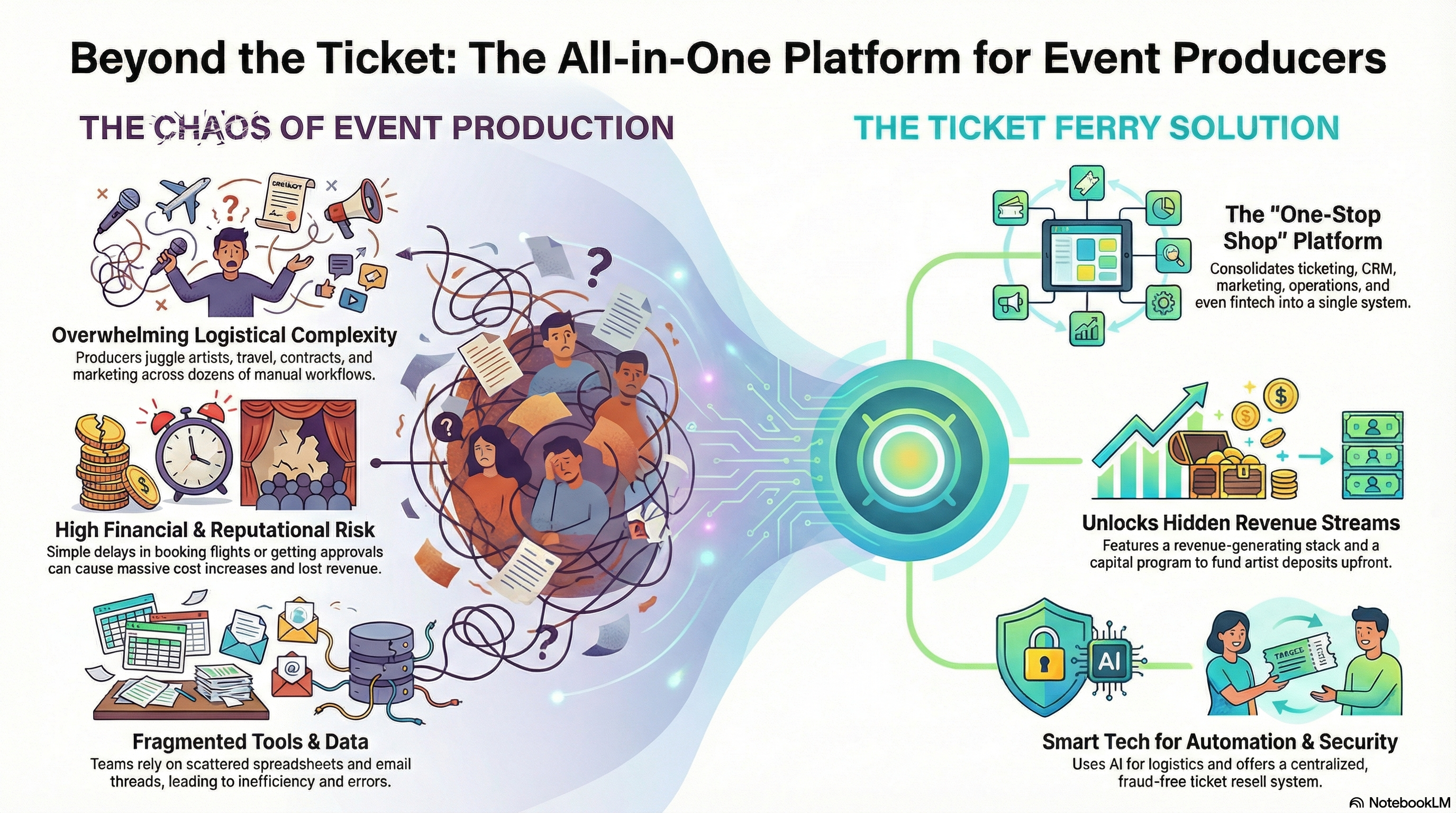 \How Ticket Fairy transforms events (created with NotebookLM)\
Ritesh Patel is one of those founders who built the thing he wished existed when everything was on fire. For years he lived in two modes: clean, logical tech at work, and absolute chaos as an event producer trying to wrangle spreadsheets, email threads, and last‑minute logistics. Ticket Fairy is what happens when you finally say, “I’m not doing this manually ever again,” and turn that pain into product.
The big idea behind Ticket Fairy
Ritesh doesn’t describe Ticket Fairy as “a ticketing platform.” He calls it a revenue stack for event producers, a system that hard‑codes what actually makes money instead of just processing payments. The ambition is simple but big: if you’re running events, you should be able to run the whole business on one OS, not hop between ten tools and guess what’s working.
There’s a clear thought leadership stance here:
- Events are not “vibes only”; they’re small, complex businesses.
- Ticketing isn’t just a checkout, it’s the front door to your P&L, your data, and your relationship with the audience.
- Tools should ship with opinions that protect your margin and your reputation, not just features you have to figure out under pressure.
Who he’s really building for
He’s obsessed with a very specific user: the tiny event team that’s actually pretty good at running a night, but bad at treating it like a business.
- One or two people, usually with a full‑time job on the side.
- Great at curating talent and experience.
- Not great at funnels, attribution, or building a data layer.
That leads to a simple strategic angle: Ticket Fairy is not a “how to run your first event” tool. It’s for the mid‑level producer who’s already shipping shows and feels the ceiling: “I know I’m leaving money and professionalism on the table, I just don’t have the time or systems to fix it.”
The Mexico stress test: where the philosophy was forged
The OS mindset didn’t come from a whiteboard; it came from a multi‑day festival in Mexico that nearly broke everything.
- 50–60 artists, flying in from the US and Europe.
- Dozens of agents, all with opinions about flyer placement and billing.
- Contracts in different formats, email threads everywhere, flights getting booked late.
Small frictions turned into huge problems: a one‑month delay on the event announcement (which means a one‑month delay on ticket cashflow), flight costs jumping by ~50% when booked late, and the constant risk that a missed email meant a headliner simply wouldn’t make it.
Here’s the thought leadership layer:
If you treat events like art only, your logistics will quietly kill you. The real leverage is in reducing coordination drag and turning unstructured chaos (emails, attachments, arguments) into structured decisions with clear deadlines. That’s what an “OS for events” is really doing, less romance, more reliability.
Opinionated tech: fraud, blockchain, and saying no to hype
Ritesh is very clear that Ticket Fairy is “opinionated on how things should be,” and that’s not just branding, it shows up in the product.
On resale, they built a centralized, zero‑fraud system long before it was trendy:
- Tickets are tied to names.
- The platform acts as escrow.
- The original QR gets killed and a new one is issued to the buyer.
This isn’t just a feature; it’s a statement: if artists, agents, and fans are going to trust you, you can’t outsource integrity to “the market.” You enforce it in code.
On blockchain, he takes a pretty contrarian stance for a tech founder. Tokenized tickets? He calls that a gimmick for this specific problem and argues that secure resale is simply better solved centrally. Decentralization is a tool for when you genuinely can’t trust the counterparty, not a default.
This is where his thought leadership shows up most clearly: he literally turned down a VC who was happy to fund half a million in legal fees just to spin up a token. When your existing investors include founders from Twitch, YouTube, and Reddit, you don’t need to chase speculative hype; you can optimize for long‑term trust instead.
He’s not allergic to blockchain; he’s selective:
- Token‑gated access – NFTs as keys for real‑world perks, like Steve Aoki fans connecting their wallet to unlock event access.
- Proof of attendance – tokens as “I was there” receipts that can later unlock merch, early-bird access, or special drops.
The underlying principle: use technology where it deepens the relationship between artist, fan, and producer, not where it just makes the pitch deck sexier.
The AI layer: workforce leverage, not buzzwords
The future Ritesh is aiming at is very clear: a producer should be able to run their events business on Ticket Fairy and not feel under‑resourced, even with a tiny team. AI is a core part of that, but again, in a very grounded way.
He talks about AI as “workforce leverage”:
- AI Co‑Pilot – a secure, chat‑based assistant inside the platform that can actually act: chasing artwork approvals, surfacing deadlines, nudging you before something slips. Think project manager plus operations analyst, without the headcount.
- High‑scale customer service – voice and text agents for 100,000‑person events that handle the repetitive stuff (timings, orders, access), so humans deal only with edge cases and high‑stakes issues.
- Automated logistics from messy inputs – AI that reads contracts and email chains, extracts dates, obligations, and actions, and turns the infamous “50‑email thread with unstructured attachments” into a clean action list.
The thought leadership here is subtle but strong:
The real AI win in events isn’t “creative AI.” It’s using AI to make sure flights are booked on time, contracts are honored, artists get paid, and announcements don’t slip by a month. Reliability scales revenue.
What his philosophy boils down to
If you boil Ritesh’s approach down, you get a clear, human playbook other founders can learn from:
- Build for the version of you who almost broke under the weight of your own manual systems.
- Have opinions about the “right” way to do things and ship them as defaults, not just as blog posts.
- Treat hype (whether it’s blockchain or AI) as a cost center unless it clearly reduces chaos or increases margin.
- Aim for “single source of truth” in messy industries where everyone else is still relying on screenshots and spreadsheets.
That’s what makes Ticket Fairy interesting: it’s not just a tool for selling tickets, it’s a very specific worldview about how creative businesses should run when they finally decide to grow up without losing the soul that got them started.
Ritesh & Ticket Fairy Links:
🎫 <https://www.ticketfairy.com/>
🎫 <https://www.ticketfairy.com/event-ticketing/>
💼 <https://www.linkedin.com/in/riteshdpatel/>
📸 @theticketfairy
X: @theticketfairy
My Links:
🌐 <https://techbreakbyfriday.com/>
📸 @tech.break.by.friday
✍️ Substack: <https://kivroglouparaskevi.substack.com/>
AureliaEdge is an AI & automation agency. We help businesses optimize their workflows and increase ROI using AI and automation. Get Your AI Business Audit: <https://www.theaureliaedge.com/contact>