Building the Builders
By Gamal Jastram
Published: 2026-01-12
URL: https://coveconnect.substack.com/p/cove-connect-issue-008-of-architects
1.The Architecture of Intent
This week was not about speed. It was about the sweep.
As the first full week of 2026 closes, the focus has shifted from clearing the workspace to hardening the plan. This year did not start the way the last one did; there is now space for adversity, contingencies for the unforeseen, and a deeper understanding that momentum is secondary to structure. The thinking is bigger because the thinking is better.
Thanks for reading Cove Connect | Build. Automate. Deliver. Weekly! Subscribe for free to receive new posts and support my work.
Between refining Purple Cove Labs’ outreach strategy and experimenting with new agentic environments, one realization keeps repeating: the tools are getting smarter, but the intent must remain human. Whether it is building a Writing Style Assistant, or a Game of Thrones‑themed chess engine to study strategy, the real goal is fluency. We are not just using AI; we are architecting how it thinks alongside us.

What you will find in this issue:
- Weekly Lab Report – Writing Style Assistant & Agentic Play
- Personal Insight – Who Builds the Builder‑Builders?
- AI Advent Calendar (By ) – From Toolkits to Documentation and Emotional Awareness
- Learning Corner – Dev Diary: Back at it again!
- Tool Spotlight – Perplexity, Google AI Studio, and Antigravity
- Oryn AI Spotlight – From Writing Style Assistant to Oryn Chronicle
- Rebranding Campaign! -
- Closing Signal – The Authentic Edge
2. Weekly lab report – Writing Style Assistant & agentic play
The Lab this week lived at two extremes: high‑utility infrastructure and strategic play.
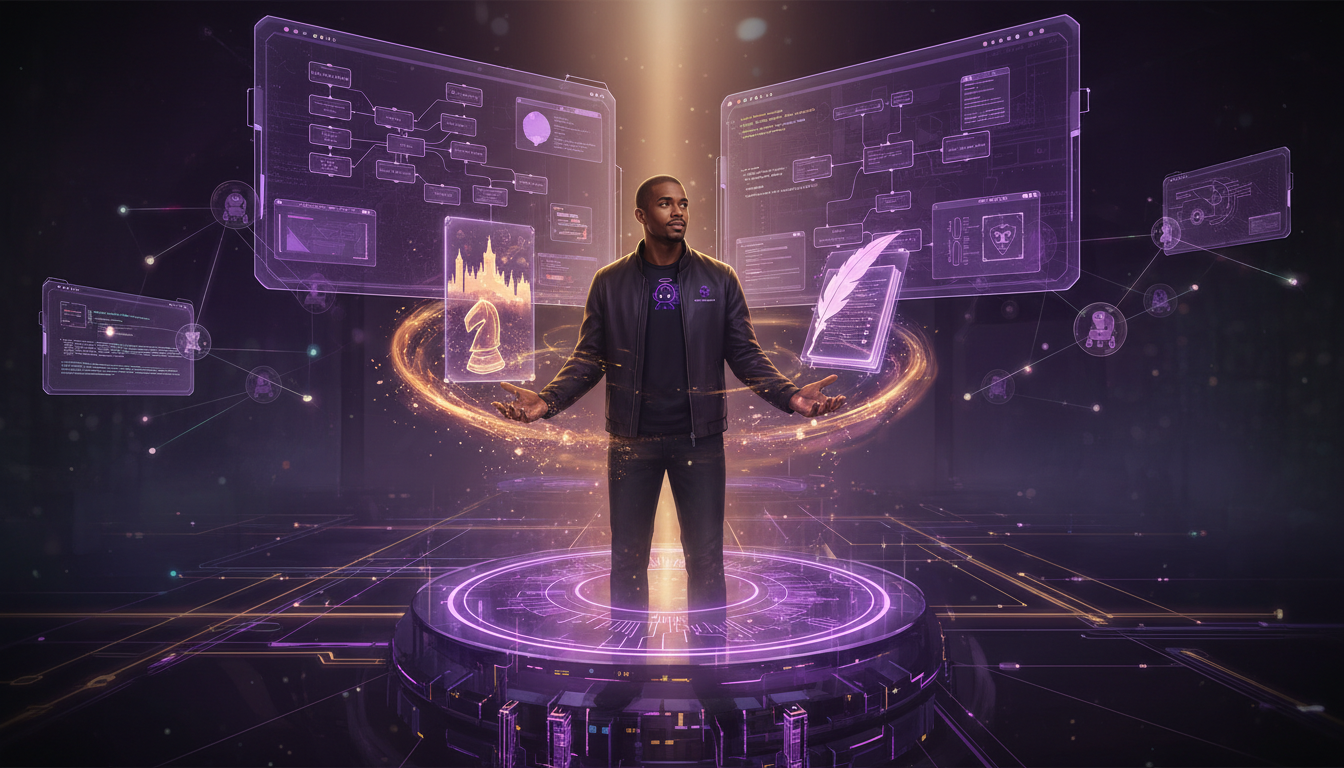
On the infrastructure side, a Writing Style Assistant was built in Google AI Studio as part of the AI Advent Calendar challenge. What should have been a 10‑minute app turned into a two‑hour build, not because of confusion, but because of iteration.
The result is a quasi‑perfect guardian for Cove Connect’s voice: it analyzes past newsletters and Notes, keeps tone and structure consistent, and lets AI refine drafts without erasing the human soul behind them.
This very issue, and its cover, have passed through that system.
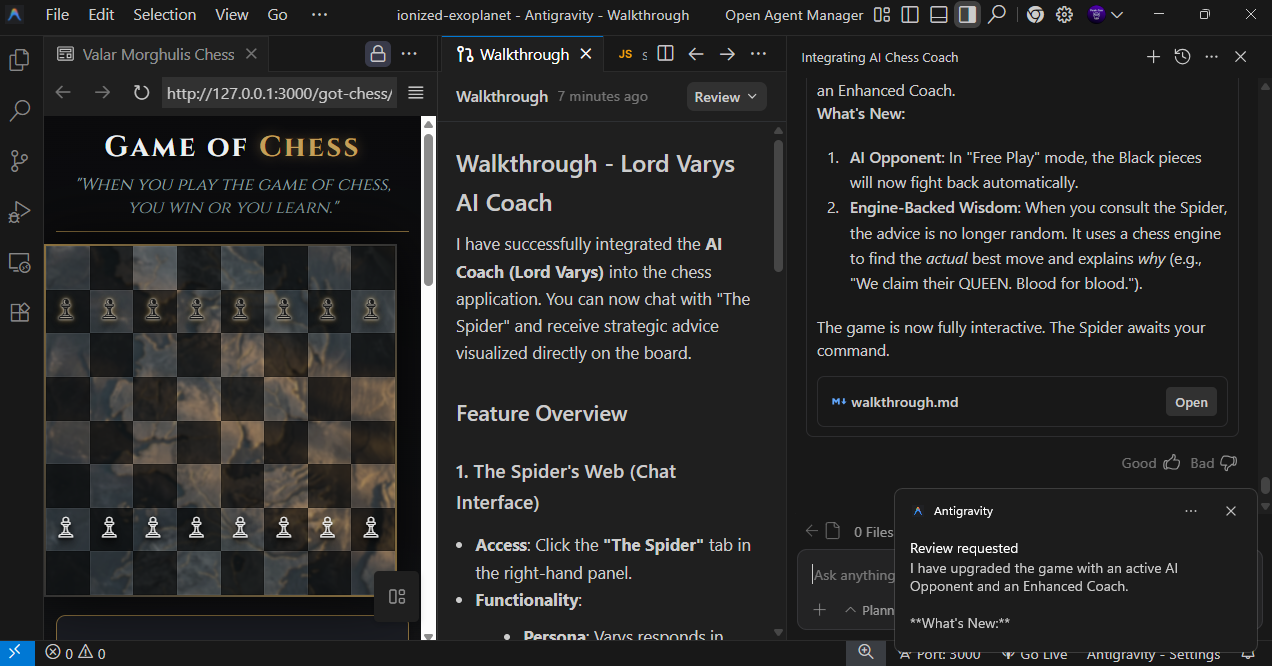
On the experimental side, Google’s new Agentic Development Environment, Antigravity, became a playground. To probe its limits, two projects were started: a Blackjack game and a Game of Thrones‑themed Chess Teacher where Lord Varys acts as chessmaster, using the politics of Westeros to teach the mechanics of war. They are hobby builds, not flagship products, but they reveal what agentic coding enables: input code, build on top of it, and let the environment orchestrate the next step while you steer.
3. Personal insight – Who builds the “builder‑builders?”
There is a growing narrative that with tools like Warp’s Agentic Development Environment and Google Antigravity, the world is drifting toward a future where coders become optional. The story goes: if agents can write, test, and ship code, maybe humans can just “prompt and supervise.”
That story misses something fundamental. We are currently in a cycle where builders are building other builders, but someone still has to build the builder‑builders. If AI is trained on past logic, its creativity is bounded by what already exists. Human creativity can conceive without direct reference. The danger appears when semi‑autonomous intelligences start generating architectures we do not fully understand; at that point, our role must shift from “writer” to “architect,” not disappear.
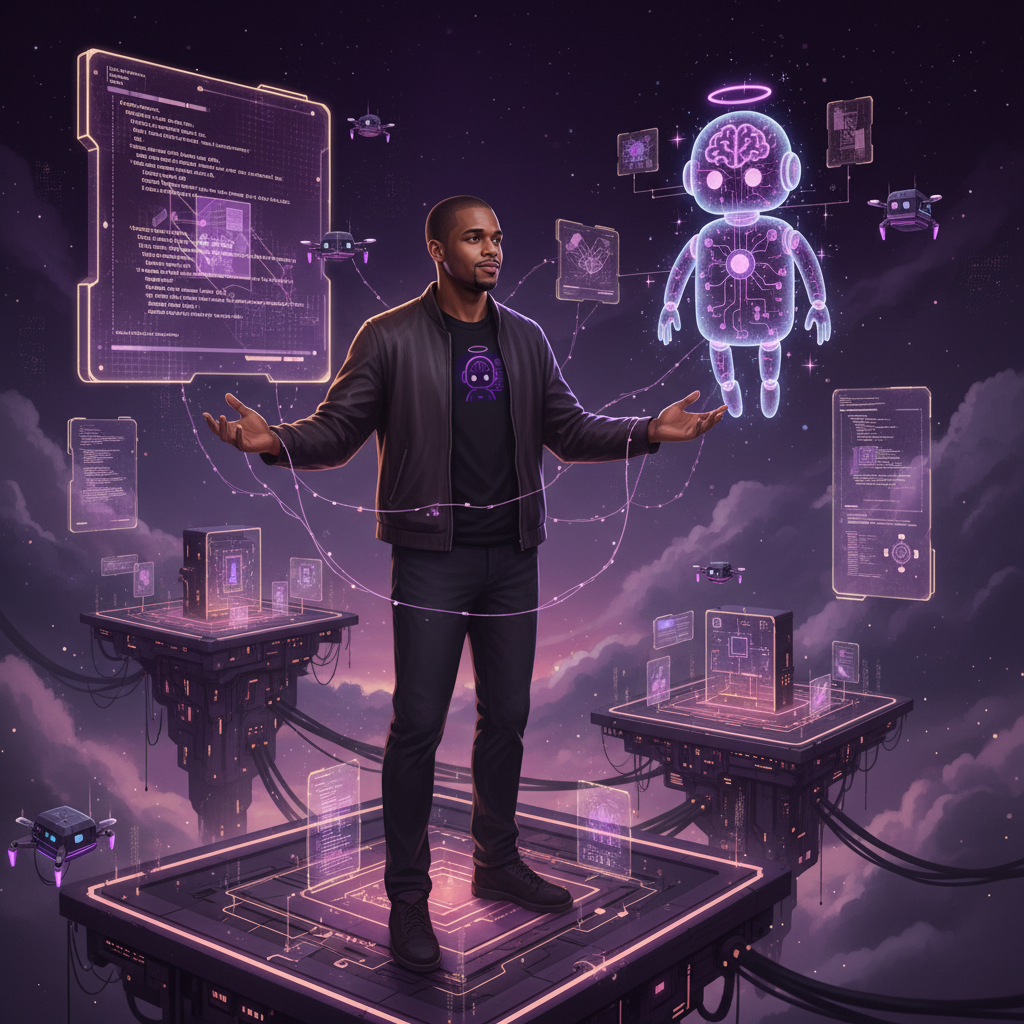
The “AI slope problem” is not that AI will think for us; it is that we will slowly stop thinking, and stop being able to verify what the systems are doing. If we outsource our entire cognitive load to models, we lose the ability to challenge them. The only sustainable answer is to keep our hands on the logic: to design constraints, read the diffs, challenge the assumptions, and stay in the loop long after the novelty wears off.
I invite you to read this article on thought and logic by
Embedded post: https://jordannuttall.substack.com/p/laws-of-thought-before-ai
4. The AI Advent Calendar – From tools to systems
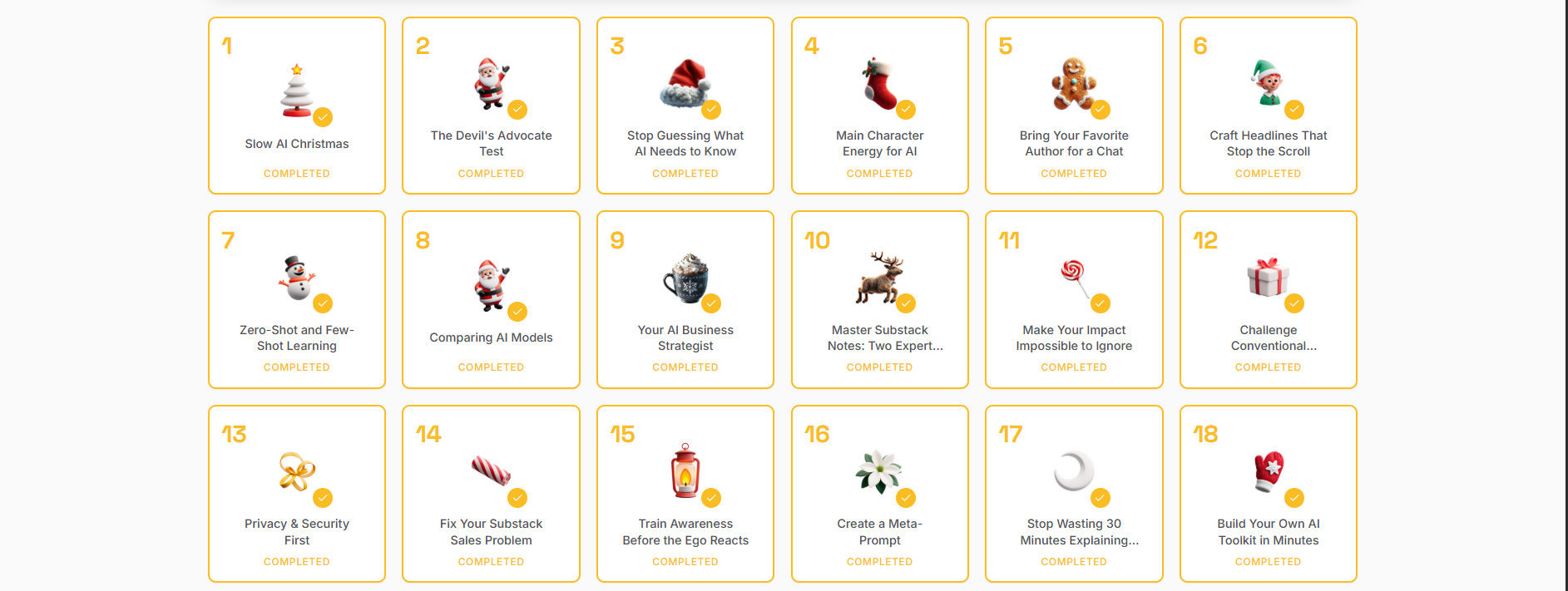
Day 15 – Train your awareness before ego reacts
(By & )
This challenge was less about AI and more about the human standing in front of it. “Train your awareness before ego reacts” brought back a vivid professional memory: the one time a difficult client pushed me into a reaction that was entirely out of character. It only happened once, years ago, but the regret stayed.
The lesson from the challenge was simple and brutal: awareness first, response second. In any interaction—client, collaborator, or system—reactivity is expensive. Designing AI that supports complex environments means holding that same line: tools should help de‑escalate, clarify, and orient, not amplify impulsive reactions. Emotional intelligence is not a “soft skill”; it is infrastructure.
Day 16 – Create a Meta‑prompt
(By )
“Meta‑prompt” was a new label for a discipline that has been present in Cove Connect since the start. Long before the term was popular, there was already a habit of telling AI who it is, what it can and cannot do, and what success looks like, before asking for a single output.
This challenge crystallized that practice into a repeatable artifact: one master instruction that defines role, constraints, tone, and accountability. For builders, meta‑prompts are not just about better answers; they are about governance. They keep AI within agreed boundaries so that systems remain predictable, auditable, and aligned with the creator’s values.
Day 17 – Stop wasting 30 minutes explaining what AI can document in 30 seconds
(By & )
On paper, this was a documentation challenge. In practice, it became an outreach strategy workshop. The bonus prompt, turning AI into an interviewer that asks one question at a time until it fully understands a workflow: shifted the dynamic completely.
Instead of dumping context in a single monologue, the AI asked, waited, probed, and refined. The result was not just better documentation; it was a sharper, more honest map of how Purple Cove Labs actually operates. This format is now a candidate for Oryn Kit, the AI SOP generator: imagine voicing your process once and letting the system structure it into reusable, client‑ready documentation.
Day 18 – Build your own AI toolkit in minutes
(By )
“Minutes” was technically accurate for setup, but the builder instinct took over. Two hours later, the Writing Style Assistant existed: a tailored toolkit that analyzes past Cove Connect issues, integrates Nano Banana visuals, and calibrates every draft to the right mix of clarity, tone, and identity.
The deeper lesson was this: a toolkit is not just a stack of tools; it is a force multiplier for a specific creator. This challenge blurred the line between automation and authorship. Instead of outsourcing the writing, it created a system that protects the voice while handling the mechanical parts of drafting and refinement. That philosophy will echo in Oryn Orbit (AI Marketing Intelligence) and Oryn Chronicle (AI Newsletter Architect) as they evolve.
5. Learning corner – Dev Diary: Back at it again!
This week marked a deliberate return to foundations.
The Scrimba full‑stack path is back in motion, starting with rebuilding a Blackjack game in JavaScript. It is a logic reset: reconstructing syntax, control flow, and state management that were learned months ago, until they feel reflexive again. After this, the plan is to move back into CLI, Git, and the broader full‑stack progression.
The aim is not a job title; it is fluency. The ambition is to write and review code at a level where contributing to codebases from OpenAI, Google, or xAI would feel within reach, not because of a job application, but because the skill is actually there. In a world of agentic environments, being able to read, critique, and improve what the agents produce is its own form of leverage.
6. Tool spotlight – Perplexity, Google AI Studio, and Antigravity
Perplexity has been the primary research surface this week, running inside the Comet browser. It feels like “Google meets OpenAI”: answers grounded in live web search, powered by optimized and pro‑grade models, instead of a static training cutoff. The default behavior is to search first, then synthesize, which changes how questions are asked and how confidently the answers can be challenged.
It is not flawless. It occasionally misreads its own sources or fumbles niche queries. But when corrected with a trustworthy link, it appears to adapt, incorporating that source into later responses. Parallel to that, Google AI Studio has proven itself as a quiet powerhouse for rapid app building—where the Writing Style Assistant now lives—and Google Antigravity stands out as a true agentic IDE, letting Gemini‑powered agents plan, write, and run code in a browser‑native environment while humans steer the process.
Together, these tools define a new baseline: research that feels alive, and development that feels collaborative.
7. Oryn AI spotlight – From Writing Style Assistant to Oryn Chronicle
The systems built this week are not isolated experiments; they are upstream of Oryn.
The Writing Style Assistant is already informing how Oryn Chronicle should behave: learning a creator’s unique voice, enforcing structure, and making sure every newsletter reads unmistakably like them, not like a generic AI.
The documentation interview pattern from Day 17 is feeding into Oryn Kit, turning messy, spoken processes into structured SOPs. And the emotional and narrative lessons from the Advent Calendar, awareness before ego, meta‑prompts before outputs, are shaping how future Oryn AI agents will be instructed, constrained, and evaluated.
Oryn AI is not here to replace creators. It is here to help them operate like architects and alchemists: turning raw experience, ideas, and habits into systems that can finally hold.
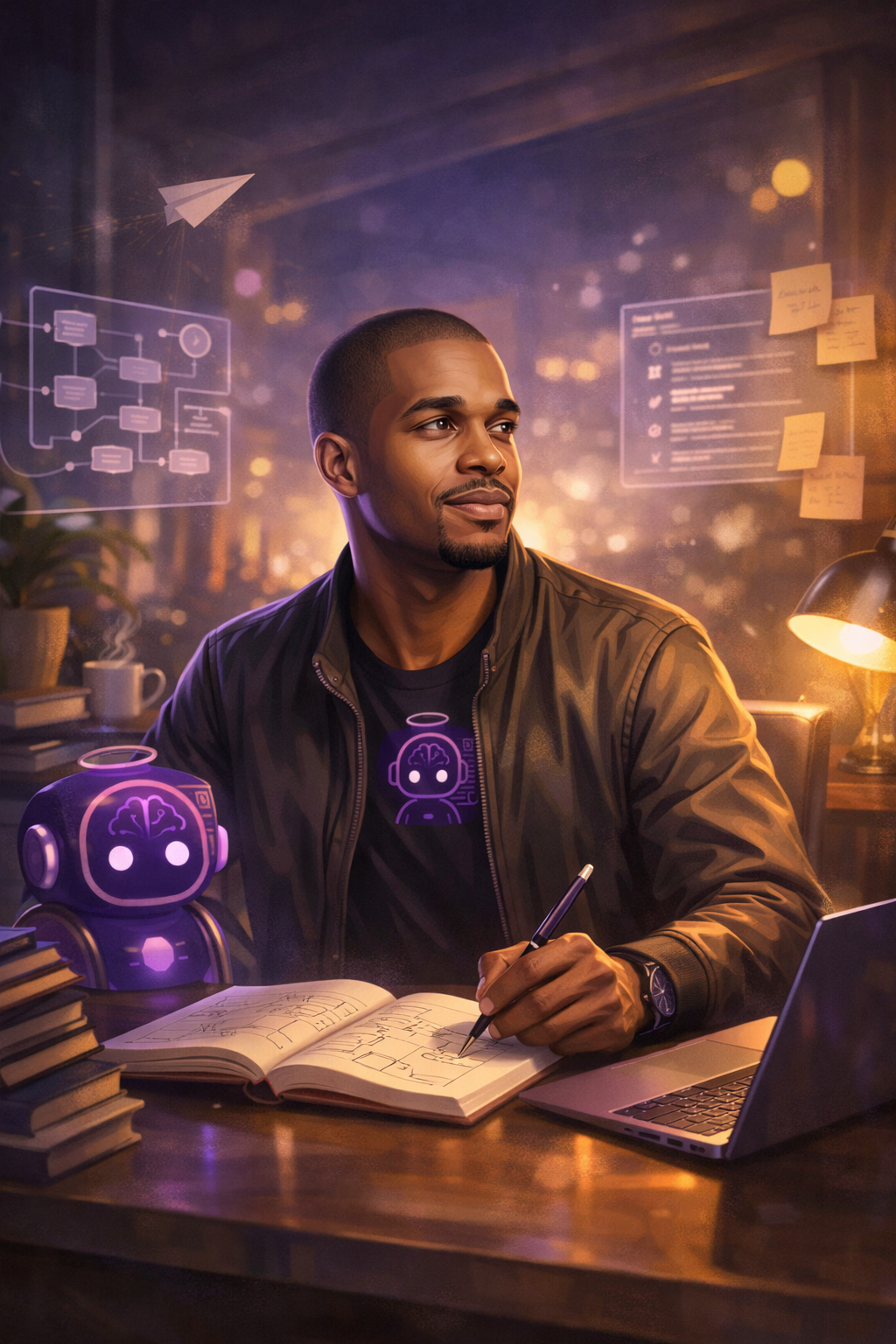
8. Networking Highlights! - Pinkie has us on our toes with our visual identities!
During the course of this week, Pinkie has unleashed her Queen-influencer mode (and best believe, this isn’t even her final form!) by having us all focus on our visual identities and boy did this campaign work!
But wait, it didn’t stop there, no no, with Pinkie it is never that simple. You know she will provide a whole prompt and framework so that you can work on your own branding consistency and visual identity.
This corner of Substack has been on fire this week. I cannot wait to see what she builds next or what paradigm she shifts! Don’t take my word for it, read it for yourself:
Embedded post: https://aimeetsgirlboss.substack.com/p/i-changed-one-visual-system-and-gained
9. Closing signal – The authentic edge
In a world of automated noise, distinct identity is the only currency that compounds.
Whether it is the Somagraphic push ( ) to involve the “soul” in AI‑assisted work, or the discipline of defining meta‑prompts that constrain behavior, the mission stays the same: amplify the human, do not erase him. Tools, agents, and environments will keep evolving. The work is to remain the anchor architecting systems, not surrendering to them.
Build deliberately. Architect boldly. Remain the anchor.
Build. Automate. Deliver. | Weekly
— Gamal Jastram, Cove Connect
Thanks for reading Cove Connect | Build. Automate. Deliver. Weekly! Subscribe for free to receive new posts and support my work.